You’re probably thinking tuna’s a solid protein boost for your chickens, and you’re not wrong — it genuinely is. But here’s the thing: mercury bioaccumulates silently, and one in five canned tuna tins already exceeds safe guidelines. Your flock can’t warn you when damage starts. Stick to canned light tuna in water, keep portions tiny and infrequent, and always skip the additives. Keep going and you’ll know exactly how to do this safely.
Can Chickens Eat Tuna?
If you’ve ever stood there holding a can of tuna, wondering whether to toss some to your chickens, you’re not alone — and the answer isn’t as simple as a straight yes or no. Here’s the thing: chickens are omnivores, so tuna absolutely fits their natural fishutrient balance. They’ll eat it happily, and honestly, they’ve got strong taste preference for it too.
Now, the form matters. Fresh tuna? Generally fine as an occasional treat. Canned tuna swimming in brine? That’s where things get complicated fast.
Obviously, you want your flock healthy, not just fed. Tuna offers real protein and omega-3 benefits — but only when you’re smart about how you offer it. When choosing canned tuna, opt for varieties packed in olive oil, as it provides healthy fats that benefit your flock. So let’s break that down properly.
Why Mercury in Tuna Is So Risky for Chickens
Here’s the thing — mercury isn’t just another “too much of a good thing” concern you can brush off by cutting back portions. Mercury is a neurotoxin that accumulates in the body over time, and your chickens’ developing or stressed nervous systems are especially vulnerable. We’re talking fine motor problems, coordination issues, and neurological damage that quietly compounds with every exposure.
Now, here’s what makes this trickier for bird health — one in five canned tuna tins contains mercury spikes exceeding safe guidelines. You can’t eyeball that. Your chickens can’t tell you something’s wrong until damage is already done.
And egg quality? Mercury bioaccumulates, meaning what your hens absorb ends up in what you eat. That’s the real trade-off nobody mentions.
Fresh Tuna vs. Canned Tuna: Which Is Safer?
So now that you know mercury quietly compounds with every exposure, the obvious question becomes: does the form tuna comes in actually change anything? Honestly, yes — and it matters more than you’d think.
Here’s the thing: fresh tuna carries higher mercury risk because nothing’s been processed out. Canned light tuna goes through precooking that removes strong oils, slightly reducing contaminant concentration. That’s a real trade-off worth knowing.
Now, protein safety isn’t your concern here — tuna delivers quality protein either way. Your concern is cumulative exposure in a small bird.
Obviously, neither option is completely risk-free. But if you’re occasionally supplementing your flock’s diet, canned light tuna in water is the smarter, lower-risk starting point. Fresh tuna simply isn’t worth it.

DELICIOUS, CLASSIC TUNA: A true all-American classic, Chicken of the Sea tuna in water is perfectly seasoned with salt and packed in water for the freshest, best taste

DELICIOUS, CLASSIC TUNA: A true all-American classic, Chicken of the Sea tuna in water is perfectly seasoned with salt and packed in water for the freshest, best taste
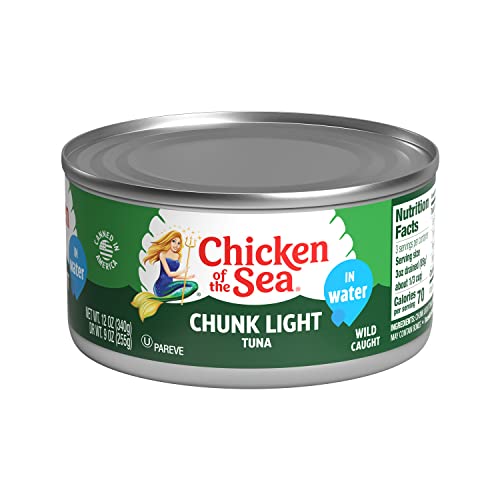
RICH, DELICIOUS FLAVOR: Chicken of the Sea Chunk Light Tuna in Water is perfectly seasoned with salt and packed in water for the freshest, best taste.
How Much Tuna Can Chickens Eat Without Getting Sick?
Wanting to toss your chickens a little tuna without accidentally poisoning them is a completely reasonable instinct — and honestly, you’re already ahead of most people just by asking the question. Here’s the thing: no expert has pinned down an exact safe amount. What you *do* know is that protein-nutrient balance matters enormously for hens, and tuna tips those scales fast. Too much disrupts everything. Now, diet-cycling considerations help here — think tiny, infrequent portions rather than scheduled servings. A small flake occasionally? Probably fine. A regular scoop? You’re gambling with mercury buildup and kidney strain. Obviously, canned tuna with additives makes this worse. Keep it rare, keep it plain, and keep watching your flock afterward. Small and seldom is genuinely your smartest move.

GREAT FLAVOR, LESS MESS: A true all-American classic just got even easier to love; Chicken of the Sea solid tuna filets are packed in a no-drain can, which means you get all the flavor with a lot less mess

One (1) 12.5 oz can of Swanson White Premium Chunk Canned Chicken Breast in Water

DELICIOUS, CLASSIC TUNA: A true all-American classic, Chicken of the Sea tuna in water is perfectly seasoned with salt and packed in water for the freshest, best taste
Safer Fish to Feed Chickens Instead of Tuna
Tuna’s risky enough in small doses that you might be wondering if fish is even worth the hassle — and that’s a fair place to land. Here’s the thing: better options exist. Sardines are your best low alternative, low mercury, cheap, and loaded with omega-3s your hens actually use. Now, trout and tilapia are solid picks too — both bring real nutrient balance without the mercury baggage. Pollock and sunfish round out the fish variety nicely if you want rotation options. Obviously, stick to plain water-packed canned versions or simply boil fresh fish without seasoning. Remove large bones. That’s it. You’re not overthinking this — you’re just making smarter choices. Switch to sardines this week and watch your flock thrive.

RICH, SAVORY FLAVOR: Our wild-caught Chicken of the Sea Sardines in Water are a perfect starting point for your favorite recipes (and delicious all by themselves).

DELICIOUS PINK SALMON: Chicken of the Sea canned salmon contains high quality cuts of boneless, skinless wild salmon that are perfectly seasoned with a hint of salt and packed in spring water for a delicious, clean flavor

100% SIMPLE INGREDIENTS: Chicken of the Sea Mackerel in Oil packets contain only premium cuts of wild caught mackerel perfectly seasoned with salt and packed in soybean oil for a rich, delicious flavor. It is also gluten-free with no preservatives.
How to Prepare Fish for Your Chickens Safely
Preparing fish for your chickens isn’t complicated, but getting it wrong means seasoned leftovers, sharp bones, or raw pathogens landing in your flock’s feeder — and none of that ends well.
Here’s the thing — bone safety matters more than most people realize. You don’t need to go full surgeon, but removing large, sharp bones before serving prevents choking. Smaller bones? Crush them. Your chickens actually benefit from the calcium.
Now, cook it plain. Boiled, baked, steamed — all work great. Obviously, skip the garlic butter situation entirely.
For seasonal feeding, occasional fish treats fit naturally into spring and summer routines when variety matters most. Freeze raw fish briefly beforehand to kill parasites, portion it small, and you’re genuinely doing right by your flock. A maggot bucket system using hay, meat scraps, and drilled holes can also produce a steady free feed source for your chickens throughout the warmer months.

Delivers concentrated nutrition with chicken treats made from dried shrimp and freeze dried minnows, providing a natural protein supplement with 62 percent crude protein to support egg production, molting, and overall hen health without changing daily chicken feed.

【Innovative 3-Layer Design for Effortless Serving】: Unlike traditional shredders, our unique three-layer structure features a removable middle plate. This chicken shredder allows you to scoop out and transfer shredded meat directly without disassembling the entire unit. It significantly simplifies your cooking process, saving you valuable time and effort in the kitchen.

【Innovative 3-Layer Design for Effortless Serving】: Unlike traditional shredders, our unique three-layer structure features a removable middle plate. This chicken shredder allows you to scoop out and transfer shredded meat directly without disassembling the entire unit. It significantly simplifies your cooking process, saving you valuable time and effort in the kitchen.
Signs Your Chicken Has Mercury Poisoning From Tuna
If your chicken starts wobbling like it forgot how to be a chicken, that’s not quirky behavior — that’s a red flag worth taking seriously. Mercury poisoning hits fast and mean. You’ll notice tremors, unsteady walking, and seizures before things escalate to paralysis or worse.
Here’s the thing — your bird’s gut goes haywire too. Vomiting, diarrhea, and blood in the stool aren’t things you dismiss. Kidney damage follows, showing up as unusual thirst, frequent urination, or blood in urine.
Now, researchers actually use feather testing to detect mercury bioaccumulation in chickens — the same principle behind soil bioaccumulation studies in mining zones. If you’re feeding tuna regularly, watch your flock closely. Early symptoms caught fast genuinely save lives.