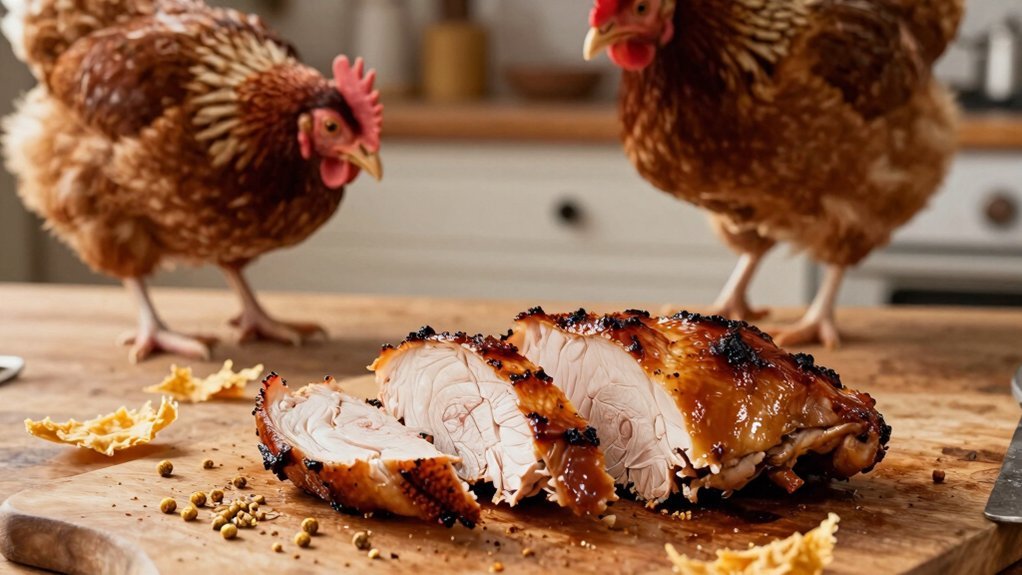
You’re probably wondering if a few pieces of cooked turkey are safe for your flock, and the short answer is yes—just keep it plain, tiny, and occasional. Cook the breast to 165 °F, shred it into bite‑size bits, and give each adult no more than a bite a week; chicks get a teaspoon once a week, and grower birds a tablespoon a few times a month. Remove uneaten scraps within 30 minutes, keep water, grit, and calcium available, and you’ll avoid nutrient dilution and digestive upset. Now, if you keep these simple rules in mind, you’ll see how turkey can boost protein without harming your chickens.
Chickens Can Eat Cooked Turkey: The Quick Answer
Can chickens eat cooked turkey? You’re probably wondering if that holiday leftover can become a tasty protein boost for your flock. The quick answer: yes, plain cooked turkey works fine, as long as you’ve used safe cooking methods and avoided risky raw considerations.
Here’s the thing: chickens are omnivores, so a bite of fully cooked, unseasoned meat adds protein without upsetting their diet. Skip sauces, salt‑heavy brines, and processed deli slices—those introduce raw‑type concerns like excess sodium or additives. While federal laws strictly regulate feeding meat waste to pigs, state-dependent restrictions may apply to poultry operations regarding food scraps containing animal by-products. Just as fish high in fats should be limited, avoid giving chickens turkey skin or fatty trimmings to prevent overwhelming kidneys or causing obesity.
Now, treat turkey as a supplement, not a staple. Offer small, shredded pieces, keep them refrigerated until you serve, and discard anything with a sour smell or mold. This approach ensures the meat serves as a beneficial protein supplementation rather than replacing the balanced nutrition required for healthy egg production.
Takeaway: plain, properly cooked turkey is a safe, occasional treat. Next, ask yourself which turkey parts you’ll give—bone‑in or boneless?
Safest Turkey Parts for Chickens
One of the biggest questions you have is which turkey bits won’t hurt your flock. The safest choice is plain, skinless white meat from the breast. It’s lean, easy to shred, and chickens digest it quickly. Fresh preparation matters—use meat that’s just cooked, not sitting out. Organic sourcing helps you avoid hidden salts or additives that could irritate their guts. Since chickens are naturally omnivorous, they can safely consume cooked meat provided it is fresh and not heavily seasoned. Just as securing feed prevents attracting rats, offering clean scraps avoids drawing pests that threaten chicks and spread disease. Cooking meat significantly reduces the risk of transmitting harmful pathogens like Salmonella or E. coli to your flock health.
What about the carcass?
You can offer clean bits from around joints, but skip any moldy or rotting sections. Small, boneless pieces work best; large bone fragments pose a choking hazard. Remember, carcass scraps should complement, not replace, a balanced diet.
Should you give skin or fat?
A tiny amount of unseasoned skin is okay, but limit it. Fatty trimmings can cause loose droppings and digestive upset, especially in backyard flocks.
Takeaway: Stick to fresh, lean, unseasoned breast meat and clean carcass bits; avoid skin, fat, and any spoiled parts. Next, learn how to prepare those turkey pieces safely for your chickens.
How to Prepare Turkey Meat for Chickens Without Risks
If you’re wondering how to turn a cooked turkey into a safe chicken treat, you’ve asked the right question. Cook turkey thoroughly to at least 165 °F, then cool it quickly. Plain, unseasoned meat is best—skip salt, garlic, onion, sauces, butter, and any curing agents. Use a clean board and knife, then shred or dice the meat into bite‑size pieces, removing all bones, skin, and excess fat.
If you’re preparing turkey after a processing session, remember that the hot water dunk helps keep the meat free of contaminants.
Now, think about seasonal varieties of turkey you might have; they’re all fine as long as you keep them plain. Respect any dietary restrictions your flock has by offering only a small amount mixed with regular feed. Just as sweet potatoes are safe for your birds unlike white potatoes, cooked turkey serves as a beneficial protein supplement when prepared correctly. Similar to how large fish can accumulate toxins, avoid feeding chickens any turkey that has been heavily processed or contains high levels of added preservatives. Since chickens are omnivores that can handle meat, ensure the treat remains occasional to prevent health issues from salt intoxication.
All right, serve the shredded turkey as a supplemental treat, not a staple. The takeaway: cook, cool, plain, and cut safely, then watch your birds’ response. Ready to move on to portion guidelines?
Portion Guidelines by Age and Production Stage
You’ve just learned how to prep turkey safely; now you’re wondering how much you can actually feed it to your flock. You’re confused about balancing treats with starter feed, so let’s break it down.
How much can a chick handle?
Chicks eat about 1 oz daily for the first two weeks. Keep turkey scraps under a teaspoon per bird—treat frequency should stay at most once a week. Anything more risks diluting the high‑protein starter they need.
What about grower birds?
From week 5 to 8, grower feed drops to 14‑20 % protein. Offer a tablespoon of cooked turkey per bird a few times a month, aligning with breeding schedules that may shift feed types.
When hens start laying?
Layer hens consume roughly ¼ lb of balanced feed daily. Treats become a rare garnish—no more than a bite per bird weekly—so calcium‑rich layer feed stays primary. While an adult chicken typically eats about 120 grams of complete feed per day, this baseline ensures treats do not disrupt their nutritional balance. It is crucial to maintain fresh water access at all times, as consistent hydration is a fundamental part of a healthy feeding regimen alongside proper nutrition.
Takeaway: Scale turkey portions to age and stage; keep treats occasional and tiny. Next, ask yourself how you’ll store leftovers safely.
To support strong eggshells and digestion, ensure your flock always has access to supplemental calcium and grit alongside their regular diet.
Storing Leftover Turkey Safely for Chickens
You’re probably wondering whether those tasty scraps can sit in the fridge without turning into a health hazard for your chickens. First, refrigerate cooked turkey within two hours, then move it to shallow containers. Separate the meat from stuffing and gravy, and keep each in its own covered dish. This speeds cooling and avoids cross‑contamination. You can store the meat for three to four days, but if you can’t use it that quickly, freeze it. Always discard any scraps showing signs of growth, as moldy feed can produce dangerous toxins that cause fatal liver damage or disease in poultry. Feeding chickens food with visible mold is particularly risky because moldy food contains compounds that can lead to severe health problems or death. Even though turkey is different from bread, introducing toxic molds through any spoiled scrap significantly increases health risks and should be avoided to protect the flock’s wellbeing.
How long can you freeze it?
Cooked turkey stays safe for three to four months—those are the freezing limits you’ll want to remember.
What’s the safest way to thaw?
Plan to thaw in the refrigerator overnight, or place the sealed bag in cold water, changing it every half hour. Never leave it at room temperature.
Takeaway
Cool quickly, store shallow, freeze if needed, and thaw safely before feeding. Next, watch for any illness signs after you’ve given the turkey to your flock.
Illness Signs After Feeding Turkey and What to Do?
Now, you’re probably wondering what to watch for the turkey hits the coop. Here’s the thing: if a bird refuses feed, looks lethargic, or fluffs its feathers, that’s an early red flag. Diarrhea—watery, mustard‑yellow, or bloody—signals digestive upset, and you should act fast with digestive interventions.
All right, respiratory clues matter too. Sneezing, coughing, or swollen sinuses mean a deeper issue, so isolate the turkey‑fed chickens and stop the leftovers. Collect fresh droppings for veterinary diagnostics; a vet can run tests for coccidiosis, coronaviral enteritis, or bacterial infections. While coccidiosis in chickens is rarely zoonotic, maintaining clean poultry environments helps prevent the spread of other serious bacterial risks like Salmonella. Just as relying on dog food long-term can cause malnutrition in chickens, feeding inappropriate meat scraps regularly may lead to similar nutrient imbalances and health problems. Remember that treating confirmed bacterial infections often requires a veterinarian’s prescription to ensure safe and legal antibiotic use.
Obviously, quick action saves the flock. Take a sample, call an avian vet, and watch for weight loss or lameness. Your next step: get professional advice before the problem spreads.
Nutritional Benefits of Turkey for Growing & Molting Hens
You’re probably wondering if turkey scraps actually help your hens grow and molt, and you asked the right question. Turkey packs lean, high‑quality protein that boosts growth protein levels, so your pullets get the amino acids they need for muscle and tissue development. It also supplies complete animal protein, filling gaps left by grain‑only rations.
How does it aid molting? During feather loss, hens need extra keratin building blocks; turkey’s protein supports molting feather regrowth and speeds recovery. The B‑vitamins, selenium, zinc, and iron act like a multivitamin, keeping metabolism humming and immune defenses strong while feathers reappear. To further optimize these benefits, consider pairing meat scraps with quality protein supplements designed to maximize digestibility and support overall flock productivity.
Takeaway: A modest handful of cooked turkey once or twice a week can lift both growth and molting performance. Next, ask yourself how often you’ll incorporate these scraps into a balanced diet.
Common Mistakes to Avoid When Feeding Turkey Scraps
Scrap confusion? You might think any leftover turkey works, but toxic ingredients and unsafe meats hide in spoiled or heavily seasoned bits.
How do I keep turkey fresh?
Now, keep scraps cool and toss anything that looks moldy, rancid, or has sat over two hours in warm coop. Remove uneaten pieces within 30 minutes to stop bacterial growth.
What about bones?
Here’s the thing: cooked turkey bones splinter like glass, so only give tiny, boneless chunks. Large or jagged pieces can pierce the crop or gut, causing choking or internal injury.
How much should I feed?
Obviously, turkey is a supplement, not a replacement. Limit scraps to 10 % of the daily ration; overfeeding dilutes nutrients and crowds out balanced feed. Just as you must avoid high-fat and high-salt items to prevent health problems, ensure turkey treats do not lead to nutrient dilution in your flock’s overall diet.
Takeaway: Fresh, plain, bite‑size turkey boosts health, but avoid toxins, bones, and excess. Ready to plan a safe feeding schedule? High‑production breeds should have scraps limited to 10 % of diet to avoid nutrient depletion.
How Turkey Compares to Other Chicken Protein Treats
Turkey treats alternatives
If you swap chicken for turkey, stick to plain, cooked pieces—no skin, gravy, or seasoning. Dark meat adds fat, so treat it like a richer scrap. The lower‑calorie, low‑fat turkey breast fits well as an occasional protein boost without over‑feeding.
Takeaway
Turkey works as a lean, easy‑to‑digest alternative to chicken treats, especially when you need a gentler option. Next, decide whether you’ll offer breast or dark meat based on your flock’s body condition.
Top Reader Questions on Feeding Turkey to Chickens
If you’re wondering whether turkey is safe for your flock, you’ve hit the right topic.
Can I feed raw turkey?
Obviously, raw turkey carries Salmonella and other pathogens, so you should never give it to chickens. Cook it thoroughly, keep it fresh, and serve plain pieces.
What about bones?
Turkey bones splinter and can puncture throats or guts. Remove them entirely; if you ever offer a small piece, supervise closely.
Is skin or fatty scrap okay?
Skin adds fat and seasoning, which can upset digestion. Offer only tiny, plain bits as an occasional treat, not a staple.
Do organ meats work?
Hearts and livers boost protein and micronutrients, but too much vitamin A can cause imbalance. Cook plain organs and give them sparingly.
How should I source turkey?
Choose fresh, unseasoned turkey from reputable suppliers; avoid moldy, processed, or heavily seasoned leftovers.
Takeaway
Stick to fully cooked, plain turkey meat, skip bones, limit skin, and use organs in moderation. Next, decide which safe leftovers you’ll prepare for your chickens.