You’ll boost your flock’s protein intake to 52% on a dry-matter basis with dried mealworms, which outperform fishmeal and meat meal in digestibility. They’re packed with essential amino acids like lysine and methionine while delivering antimicrobial properties that reduce pathogens in feed. You can supplement at 5–10% daily to enhance egg production, support molting, and strengthen overall flock health. Uncover how proper feeding guidelines and sustainability benefits make them an exceptional choice.
Nutritional Profile: What Makes Mealworms a Protein Powerhouse
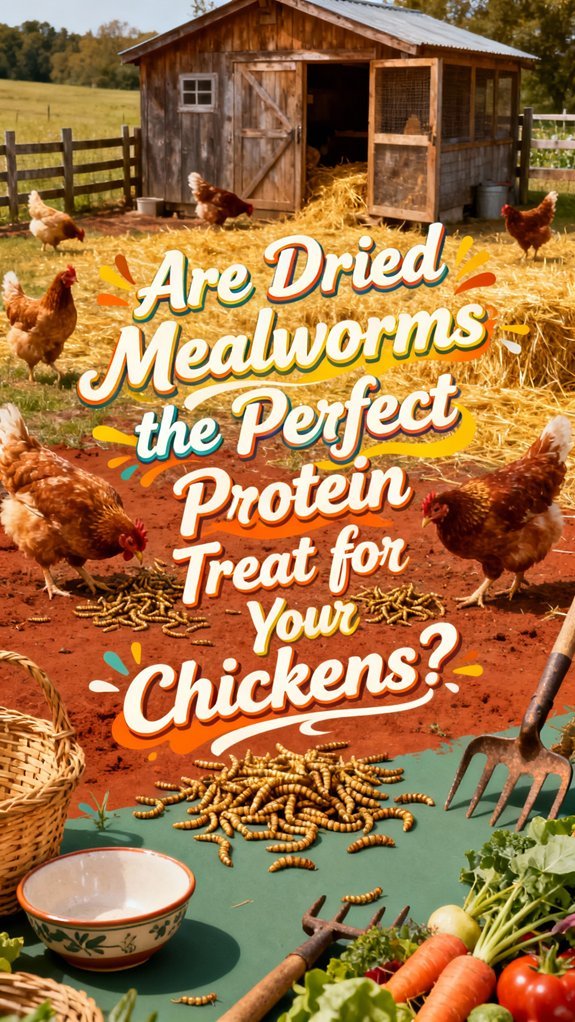
Dried mealworms pack a nutritional punch that makes them stand out as a poultry feed supplement. You’ll find crude protein levels ranging from 46% to 52% on a dry-matter basis, positioning them as a high-density protein source superior to conventional feedstuffs. Nutritional comparisons reveal that mealworm protein digestibility exceeds that of fishmeal, meat meal, and poultry meal in controlled trials, ensuring efficient utilization by your birds. Our US-grown dried mealworms are 100% all natural and non-GMO, providing you with confidence in the quality of what you’re feeding your flock. Additionally, when used appropriately as a treat, mealworms can improve egg quality and support overall flock health.
The amino acid benefits you gain include a broad spectrum of essential amino acids—lysine, methionine, and leucine—that enhance the overall amino acid profile of mixed diets. This makes mealworms particularly valuable when supplementing poultry rations, allowing you to replace up to 10% of feed protein without greatly increasing feed volume. You’re getting concentrated nutrition per unit weight.
Boosting Egg Production and Quality With Dried Mealworms
Three key mechanisms—elevated protein intake, enhanced nutrient bioavailability, and improved amino acid profiles—make mealworms particularly effective for maximizing laying hen performance. You’ll notice significant egg production improvements when you supplement your flock’s diet with 5-10% dried mealworms, as the 46-53% protein content directly supports reproductive function. Additionally, ensuring hens receive necessary calcium supplements like oyster shells can further enhance their egg-laying capabilities. It’s also important to consider dietary requirements for your specific chicken breed, as this can influence their overall health and egg production. Furthermore, incorporating dried Black Soldier Fly larvae into your hens’ diet can provide additional calcium benefits, further supporting egg production. This is particularly crucial, as consistent calcium intake from oyster shells helps hens maintain optimal bone health while producing eggs. However, it’s essential to note that feeding dried mealworms is illegal in the UK and EU, which poses a compliance risk for chicken keepers.
For quality enhancement, you’ll achieve measurable results across multiple parameters. The fatty acids and essential amino acids enhance yolk color and nutritional density, creating market-appealing eggs. Meanwhile, chitin supports gut health, indirectly strengthening eggshell formation and thickness. The higher digestibility of dried mealworms compared to other protein sources leads to beneficial shifts in gut microbiota and improved digestive efficiency throughout your flock.
You’ll maximize benefits by adjusting inclusion rates based on your hens’ production stage. Peak-laying hens perform best at 10% supplementation, while pre-laying birds benefit from less than 5%. This age-stratified approach guarantees you’re delivering precisely what your flock needs for sustained productivity and superior egg quality.
Supporting Molting, Growth, and Recovery in Your Flock
While your flock navigates molting, growth phases, and recovery periods, dried mealworms deliver concentrated nutritional support that’s difficult to replicate through conventional feed alone. During molting stages, chickens experience significant protein depletion as they regenerate feathers. Mealworms’ up to 50% protein content replenishes these reserves, accelerating feather recovery and reducing health strain. You’ll notice smoother shifts through seasonal molts when supplementing with one teaspoon daily.
The essential amino acids, B vitamins, iron, and selenium in mealworms strengthen feather replacement while supporting immune function under molting stress. For growing flocks, this high-quality protein promotes ideal development from chicks through adulthood. Additionally, injured or ill hens benefit from mealworms’ recovery-enhancing nutrients, which expedite healing without excessive digestive burden—except for birds with kidney issues. The fiber content in mealworms aids in digestion, ensuring your chickens can efficiently process and absorb these vital nutrients during recovery phases.
Practical Feeding Guidelines and Inclusion Rates
Now that you understand mealworms’ nutritional benefits during critical life stages, you’ll want to implement feeding strategies that maximize those advantages without disrupting your flock’s overall diet balance. Portion control is essential—limit dried mealworms to 5–10% of daily feed, roughly 10–15 per bird daily. You can adopt two feeding frequency approaches: offer small measured amounts daily or allocate specific treat days twice weekly. During high-demand periods like breeding or cold weather, increase portions to 20–30 per bird while maintaining nutritional balance. Incorporating homemade chicken treats during these times can further enhance their diet and well-being. Additionally, chickens can benefit from sourdough bread in moderation, which also contributes to their overall health by providing beneficial nutrients. It’s also important to remember that providing a restful environment, with adequate darkness for your chickens, contributes to their overall health. Additionally, incorporating Pekin Bantam chickens into your flock can provide friendly companions that may also benefit from the added protein. Purchasing bulk mealworms from reputable sources can also assure quality and value, ensuring your flock receives optimal nutrition. Weight-based calculations matter too; since dried mealworms contain ~50% protein, incorporate them into ration calculations to prevent exceeding target protein levels. To ensure freshness and safety, store mealworms in airtight containers in cool, dry places away from direct sunlight and humidity before incorporating them into your feeding regimen. Blend measured amounts into feed or scatter for foraging to control intake and enable monitoring.
Health and Safety Considerations for Your Birds
Because dried mealworms offer concentrated nutrition, you’ll need to balance their benefits against potential health risks to your flock. Microbial safety depends heavily on sourcing from reputable suppliers with validated processing controls. Commercial products undergo heat or freeze-processing protocols that reduce pathogenic loads like Salmonella and Campylobacter, whereas home-reared or wild-harvested mealworms carry elevated biosecurity concerns. Additionally, ensuring that you provide a high-protein, balanced diet for your chickens is crucial to their overall health and productivity. Implementing proper biosecurity measures, such as using automatic waterers, can help minimize health risks by maintaining water cleanliness and reducing exposure to contaminants.
Contamination risks arise from substrate quality used in mealworm cultivation and improper storage conditions. You’ll want to verify supplier transparency regarding feed sources and verify moisture-controlled, oxygen-proof packaging prevents mold growth and mycotoxin development. Excessive protein intake can impair calcium metabolism in laying hens, potentially reducing eggshell quality. Monitor feeding rates carefully to maintain dietary balance and optimize both safety and performance for your birds. Mealworms should represent about 10% of daily diet to prevent nutritional imbalances and maintain your flock’s overall health.
Sustainability and Economic Benefits of Insect Protein
Insect protein production delivers substantial environmental and economic advantages that make it an increasingly viable alternative to conventional livestock feeds. You’ll reduce your operation’s environmental footprint considerably—insect chains avoid 75-93% of compound feed impacts on global warming and land use compared to traditional livestock. Cricket production demands merely 1.7 kg feed per kilogram of protein versus 25 kg for beef, maximizing your resource efficiency. Additionally, high-protein layer feed is essential for maintaining healthy hens, making insect protein a valuable supplement. Proper feeder space can further enhance the benefits of integrating insect protein by minimizing competition and optimizing growth. The use of fermented feed can also boost nutrient absorption, complementing the advantages of insect protein. Furthermore, Georgia Leghorns thrive on nutrient-rich diets, which can be complemented with beneficial treats like dried mealworms. Research shows that antimicrobial properties of insect protein can also enhance overall flock health by reducing pathogens in the feed.
You’ll also benefit from circular economy principles. Insect farming utilizes food waste residues that’d otherwise reach landfills, while post-rearing substrates serve as organic fertilizers for crops. This closed-loop sustainable farming approach reduces your import dependence on fishmeal and soy while lowering overall production costs. Black soldier fly grubs specifically consume pre-consumer food waste, further amplifying the waste reduction benefits of your operation. By integrating dried mealworms into your poultry feed, you’re simultaneously achieving economic savings and environmental responsibility.