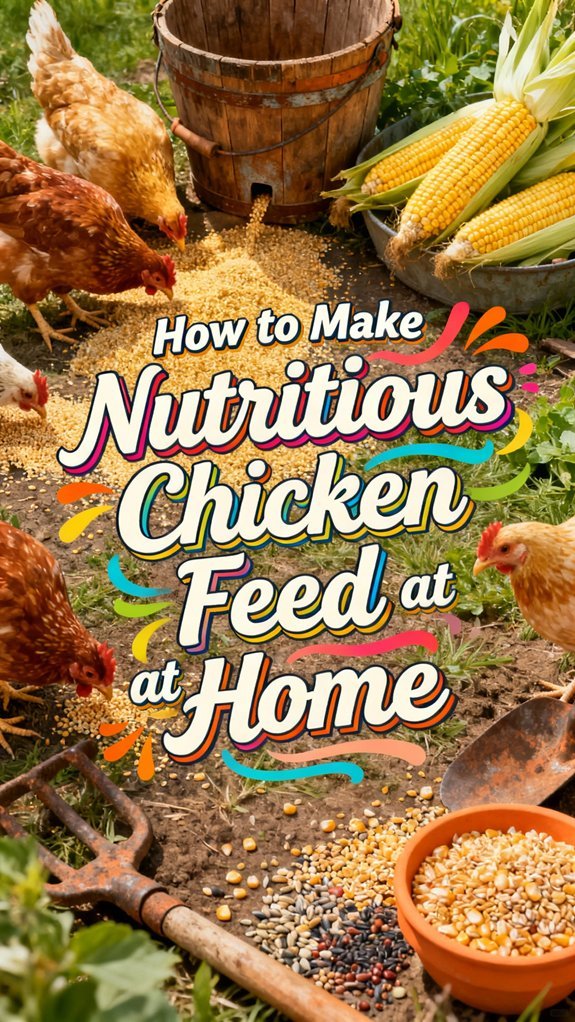
You’ll create nutritionally complete chicken feed by balancing five critical nutrient categories: calcium-to-phosphorus ratios (maintain 4:1 to 7:1), amino acids, crude protein (minimum 16%), vitamins-minerals, and metabolizable energy. Combine quality protein sources—fish meal, soybean meal, field peas—with grains like corn (55-59%), wheat, and oats. Add seeds and vegetable oils (2.6-2.7%) for omega fatty acids. Store your homemade blend in airtight, opaque containers below 70°F and consume within 1-2 months. A deeper exploration reveals how seasonal adjustments optimize your flock’s specific developmental stages.
Understanding Essential Nutrients for Layer Hens
Five critical nutrient categories—calcium and phosphorus, amino acids, protein, vitamins and minerals, and energy—work synergistically to sustain egg production and maintain your hens’ health. You’ll need to maintain a 4:1 to 7:1 calcium-to-phosphorus ratio, targeting 3-4% calcium and 0.4-0.5% phosphorus in your layer diet. Calcium sources like oyster shells or oven-dried eggshells at 350°F for ten minutes support eggshell formation, while phosphorus requirements remain essential for bone development. Crushed eggshells provide essential calcium that is crucial for strong eggshells, contributing to overall egg quality and reduced breakage. Additionally, efforts to protect hens from predators—such as proper secure coops—can further enhance their well-being and productivity. Your hens require 16% or more crude protein, with amino acids including 800-851 mg/bird/day lysine and 860-920 mg/bird/day arginine. Additionally, you’ll provide 2500-2600 kcal metabolizable energy per kilogram, 1.10-1.60% linoleic acid, and trace minerals including zinc, manganese, and selenium for peak performance. Homemade feeds may require extensive nutritional knowledge to properly balance all these components and avoid nutrient deficiencies that could reduce egg production or compromise flock health.
Selecting Quality Protein Sources
Protein sources form the foundation of your layer feed formulation, and you’ll find that choosing high-quality options directly impacts your hens’ egg production and overall health. You’ll achieve superior results through protein diversity by combining animal-based and plant-based sources. Fish meal (60–72% crude protein) and dried mealworms (50%+) provide complete amino acid profiles, while dried mealworms also support feather regrowth while soybean meal (40–48%) and field peas (20–25%) offer plant-derived alternatives. When sourcing sustainability, prioritize certified organic or non-GMO options that minimize environmental impact. Examine feed labels for crude protein percentages exceeding 16%, reviewing the first three ingredients for quality indicators. Evaluate lysine and methionine content to confirm complete amino acid profiles. High protein content becomes especially critical during molting, peak egg production, and growth stages when your flock’s nutritional demands increase significantly. Strategically blending multiple protein sources maximizes nutritional density while supporting egg production and molting cycles.
Choosing the Right Grains and Carbohydrates
Grains and carbohydrates form the energetic backbone of your layer feed, comprising 62–78% of the total diet and providing the fuel your hens need for consistent egg production and daily metabolic functions. You’ll want to prioritize grain quality by selecting corn as your primary carbohydrate source at 55.4–58.8% of your recipe, delivering 3300 kcal/kg ME—the highest energy among available grains. High-quality commercial feed is crucial for ensuring your hens receive balanced nutrition. It is also beneficial to include fresh greens in their diet to enhance yolk quality and overall health. Additionally, while formulating your feed, consider incorporating balanced protein levels, which are essential for muscle and bone development in your flock. To support their health and egg production, ensure you provide essential nutrients in their diet as well. It’s advisable to select premium quality layer pellets to guarantee that hens are receiving essential vitamins and minerals that support egg production. Maintain carbohydrate balance by incorporating wheat at no more than 50% due to amino acid deficiencies, ensuring you grind it coarsely to prevent palatability issues. Consider barley and oats for supplementary energy, limiting each to 25% maximum. You can substitute sorghum for corn while maintaining similar nutritive value. Feed manufacturers typically adjust grain usage based on availability and price, as sudden changes in ingredient sourcing can result in digestive disturbances in your flock. Avoid cereal by-products like wheat bran due to their high fiber content and low metabolizable energy, which compromises overall diet efficiency.
Incorporating Seeds and Healthy Fats
While grains deliver the metabolizable energy your flock requires, you’ll need to incorporate seeds and healthy fats to optimize nutrient absorption, support reproductive health, and enhance egg quality. Seed benefits include omega-3 enrichment; flaxseed provides 45-52% alpha-linolenic acid, while hempseed offers a balanced 3:1 omega-6:omega-3 ratio. Fat sources—vegetable oils, oilseed meals, and fish oil—serve dual purposes: they provide 9 calories per gram, double that of carbohydrates or proteins, and facilitate absorption of fat-soluble vitamins A, D, E, and K. Incorporate 2.6-2.7% vegetable oil into homemade recipes, and maintain minimum crude fat at 4% in layer feeds. Limit flax to 10% to avoid hepatic complications while maximizing omega-3 profiles in eggs and meat. Long-term flaxseed supplementation can correlate with increased liver hemorrhages in laying hens, underscoring the importance of careful dosage management.
Adding Supplements and Minerals
Three critical mineral categories—macrominerals (calcium, phosphorus, sodium, magnesium, chlorine), microminerals (zinc, manganese, copper, iron, iodine, cobalt, selenium), and vitamin D3—won’t naturally occur in sufficient quantities within grain and protein bases alone, so you’ll need to formulate precise supplementation into your homemade rations to prevent deficiencies that manifest as poor feathering, skeletal deformities, reduced hatchability, anemia, and compromised eggshell integrity. Incorporate crushed oyster shell or dicalcium phosphate as mineral sources for balanced calcium-to-phosphorus ratios (approximately 2:1 for layers); oyster shells are particularly crucial for maintaining healthy bones and ensuring reliable eggshell quality, as they provide a critical slow-release source of calcium needed during the egg formation process. Chickens also require grit to aid in the digestion of their feed, which enhances nutrient absorption. Adequate space in a coop is also essential for overall health, as stress can further impact their nutrient needs. Add chelated trace mineral premixes at specified inclusion rates for superior bioavailability over inorganic alternatives. Products like Hühnerland Mineral Kraft contain fine oyster shell grit that mixes easily into daily feed and ensures healthy bone growth while supporting eggshell formation. Additionally, including optimal protein levels in your chicken feed recipe helps enhance their overall nutritional balance. Timing matters: growers require lower calcium with elevated phosphorus and trace minerals supporting skeletal development, whereas layers demand 3.5–4.0% calcium for eggshell production. Monitor sodium chloride inclusion carefully, as cumulative salt from treated water or concurrent feeds risks toxicity.
Simple Homemade Feed Recipes
Once you’ve established your mineral and supplement strategy, you’re ready to formulate complete rations using whole food ingredients that’ll deliver the protein, energy, and micronutrient profiles your flock requires.
You can employ a percentage-based approach: combine 30% corn for energy, 30% wheat for protein, 20% peas for elevated protein content, 10% oats for fiber, and 10% fish meal for amino acids. Additionally, providing a high-protein starter feed will support the rapid growth needs of your chickens during their early development. Alternatively, you’ll benefit from the 16% protein no-fish-meal blend utilizing wheat berries, oats, cracked corn, split peas, and lentils for sustained chicken health. Dried meal worms can replace fish meal as an essential protein source while maintaining the required nutritional profile for your flock.
For cost efficiency and feed consistency, hard red wheat varieties exceed soft wheat at 15% protein. You’ll maximize nutrient balance by rotating recipes seasonally, adjusting corn ratios upward during winter months to provide essential fats and warmth your birds require.
Storage and Feeding Best Practices
Your carefully formulated feed recipes won’t maintain their nutritional integrity without proper storage and handling protocols. You’ll need airtight, opaque containers—metal or durable plastic—elevated on pallets to prevent moisture absorption and pest intrusion. Maintain cool, dry conditions below 70°F with consistent ventilation to inhibit mold proliferation and bacterial colonization. For effective pest management, seal containers completely and regularly inspect for rodent activity, insects, or contamination. Storing feeds away from the chicken coop further reduces mold risk in your storage area. You should consume homemade feed within 1-2 months to preserve nutrient bioavailability, implementing first-in, first-out rotation. Label all containers with formulation type, preparation date, and expiration. Discard any feed showing signs of rancidity, discoloration, or off-odors. By adhering to these feed storage protocols, you’ll maximize nutritional delivery and minimize pathogenic risks for your flock.