
If you’re wondering whether your chickens are drinking enough — or way too much — you’re already ahead of most flock keepers. A healthy adult hen drinks roughly 500 ml, about two cups, daily. That number climbs fast in summer heat, sometimes quadrupling. Too little water means sunken eyes and dropping egg production; too much means soggy litter and a swollen crop. Stick around, because there’s a lot more nuance worth knowing.
How Much Water Do Chickens Drink Per Day?
If you’ve ever stood over a waterer wondering whether your chickens are drinking enough — or too much — you’re not alone. Here’s the thing: most adult chickens drink around 500 ml daily, roughly two cups, under normal conditions. Think of it as your baseline hydr pond — the starting point before weather, diet, or laying status shifts everything.
Now, laying hens nudge that number toward 250–300 ml minimum, sometimes higher. Your water‑temperature matters more than you’d think — warmer days spike intake fast.
Water‑track your flock by refilling waterers daily at one pint per bird. Seasonal‑ration adjustments keep things honest across summer and winter. Active birds, bright eyes, steady laying — that’s your green light. Dehydration can show up as lethargy, reduced movement, and a noticeable drop in egg production. Simple, right?

Heavy-Duty Automatic Chicken Waterer – Built to last! These sturdy, heavy-duty chicken water cups ensure a constant water supply for your flock. Compatible with any coop or enclosure, create a 5-gallon chicken waterers, making it the perfect addition to your poultry setup.
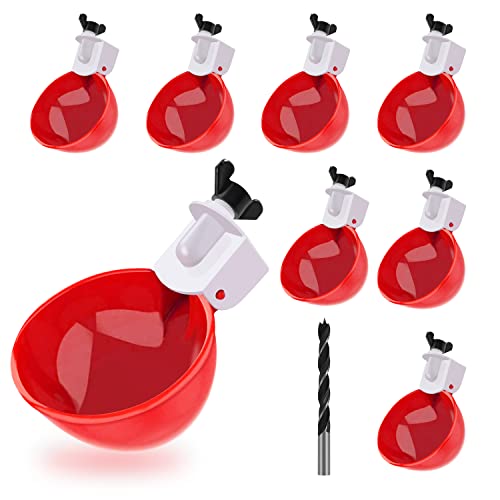
【Chicken Water Feeder】Automatic chicken waterers are the perfect addition to your coop. Our chicken water cups provide a constant supply of drinking water for your flock, and can be used with a 5-gallon chicken waterer or any other container.

ELIMINATE DAILY COOP CHORES: No more lugging heavy waterers every morning or worrying about thirsty birds during weekend trips; this gravity fed chicken waterer system automates your homestead hydration by maintaining a steady fresh supply whenever the water level drops
How Much Water Do Chicks Need Compared to Adult Hens?
Adult chickens drinking around 500 ml daily is a clean number to work with — until you’ve got a brooder full of day-old chicks staring at you and suddenly that baseline means nothing.
Here’s the thing — chick growth happens fast, and water efficiency looks completely different at each stage. A day-old chick drinks roughly 3 grams of water per gram of feed. By day 7, that same chick has consumed over eight times its body weight in water. Now compare that to your adult hen casually sipping 500 ml daily.
Obviously, you can’t manage both groups the same way. Chicks need proportionally more water earlier. Get that right, and you’re building the foundation for every pound of growth that follows.
How Heat and Cold Affect How Much Chickens Drink
Temperature is the single biggest variable that’ll throw your chicken’s water intake completely off — more than breed, more than age, more than almost anything else you’re tracking. Here’s the thing: heat stress can flip your water-to-feed ratio from a normal 2:1 up to a brutal 8:1 when temperatures hit 38°C. Your flock’s basically panting constantly, losing moisture fast, and desperately compensating. You need cool water under 25°C flowing at strong pressure — minimum 70 mL per minute per nipple.
Now, cold stress flips everything opposite. Your birds cluster together, skip the drinkers, and eat more while drinking noticeably less. That’s normal — frustrating, but normal. Slightly warmer water in winter nudges intake back up. Once you understand both extremes, managing your flock’s hydration gets genuinely straightforward.

✅Fully Automatic Water Supply Design, Minimizing Manual Intervention To The Greatest Extent Possible. Utilizing gravity to achieve 24-hour continuous water supply, meeting the stable drinking water needs of poultry such as chickens and ducks.

【Stop the Mess, Keep the Coop Dry】 Tired of soggy bedding and constant cleaning? Our Gravity-Fed Automatic Chicken Waterer Cups feature a precision-engineered drinking valve that refills only when the water level drops. This prevents overflow and leaking, ensuring your coop floor stays dry and your poultry enjoys a cleaner environment

【Save Your Time and Effort】Our chicken waterer system connects directly to your tap water pipeline, providing a continuous supply of clean water to your poultry. This means your chickens will be well cared for even if you are away on long trips, significantly reducing the time and effort required for daily maintenance.
Do Laying Hens Need More Water Than Non-Laying Hens?
Laying hens are doing something non-layers simply aren’t — they’re manufacturing an egg roughly every 24 to 26 hours, and that biological workload hits their water demands hard. Here’s the thing: about 40 grams of water goes directly into every single egg your hen produces. That’s your egg ratio reality right there — 20% of her daily intake exists purely for egg production. Non-layers don’t carry that cost.
Now, your laying girls need 250-300 ml daily, with intake peaking sharply right after oviposition and staying elevated for about 12 hours. They’re drinking little but often, mostly mornings. The bulk of daily water consumption occurs in the first 10 to 12 hours after egg laying, making early access to adequate watering systems critical for production.
If you’re not giving laying hens consistent, clean water access, you’re not just risking hydration — you’re directly tanking egg production. That’s an easy problem to prevent.
How Feed Type and Diet Change Your Chickens’ Water Intake
What your chickens eat directly controls how much they drink ****— and if you’ve ever scratched your head wondering why your flock’s water consumption suddenly spiked or crashed, the feed is almost always the culprit.
Here’s the thing about diet fiber: hens eating high-fiber wheat middlings drank 50% more water than those on corn-soy diets. That’s not a small jump. Now, the diet water linkage goes deeper — more fiber means more faecal dry matter, doubling what they excrete. Protein level shifts and early calcium introduction also temporarily spike intake.
All right, so what does this mean for you? Monitor feed changes closely. If you switch diets and water consumption surges, don’t panic — just verify the new feed’s composition first.

MEDICATED CHICK STARTER FEED: This complete chicken feed is made with added Amprolium to aid in the prevention of coccidiosis, and contains 18% protein for weight gain, our chicken food is essential for your young birds.
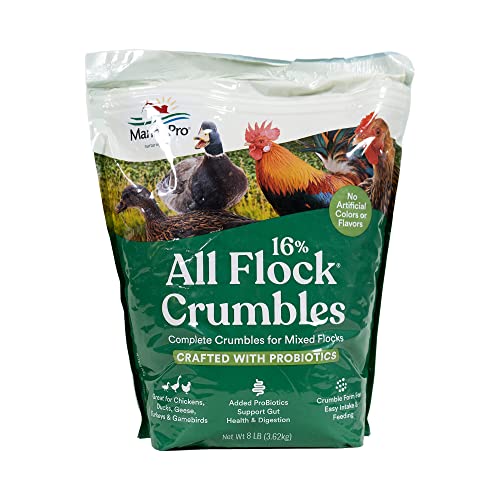
COMPLETE ALL FLOCK FEED FOR MIXED BACKYARD FLOCKS: Versatile poultry feed & all flock feed designed to support chickens, ducks, turkeys, geese, & more; a balanced bird food that simplifies feeding a diverse species in your backyard or homestead

Premium Quality Chicken Treats: Specially formulated, high-quality chicken snacks for laying hens, ensuring only the best for your pet chickens
Signs Your Chicken Is Drinking Too Much or Too Little
Knowing whether your chickens are drinking too much or too little can feel like reading tea leaves — but once you know the signs, it’s actually pretty straightforward. Watch your water source closely. Low intake shows up fast: sunken eyes, dry combs, poor feather condition, thick droppings, and tanking egg production. Your birds’ energy levels drop noticeably too. Temperature stress above 80°F makes everything worse, faster.
Now, excessive drinking is equally telling. Wet litter moisture, a swollen crop, and continual drinking without pauses often signal disease detection opportunities you shouldn’t ignore — kidney issues or infections frequently show up this way first.
Here’s the thing: hydration monitoring and feed balance go hand-in-hand. Catch these signs early, and you’ll protect your whole flock before problems escalate.
What Abnormal Drinking Patterns Tell You About Flock Health
Abnormal drinking patterns aren’t random quirks — they’re your flock’s version of a distress signal, and learning to read them is one of the most practical skills you’ll develop as a keeper. Here’s the thing: drinking behavior works like a diagnostic dashboard. When water consumption drops suddenly, you’re looking at potential pathology clues — respiratory infections, crop issues, digestive disorders, even neurological weakness. Dehydration indicators like pale combs and lethargy rarely appear alone. They cluster. Now, disease correlation matters here because abnormal intake often precedes visible symptoms by days. You’ll catch problems earlier through health monitoring than waiting for dramatic signs. Flock stress compounds everything — bullying, unsanitary conditions, contaminated water accelerate decline fast. Trust what the waterer tells you. Implementing routine probiotic supplementation alongside consistent water access helps maintain gut health and supports the immune resilience that keeps drinking patterns stable in the first place.
How Water Cleanliness Affects How Much Chickens Drink
If you’ve ever watched your chickens walk up to the waterer, sniff around, and walk away — that’s not pickiness, that’s a warning. Your birds are detecting something you can’t see. Bacterial load above 100 bacteria per mL actively suppresses their drinking instinct, and even a 10% reduction in water intake triggers serious physiological stress. Now, chemical toxicity is equally sneaky — chlorine-heavy treatments leave behind taste and odor that push birds away from the water entirely, defeating the whole purpose. Here’s the thing: contaminated water doesn’t just reduce drinking, it reduces eating too, because your birds are trying desperately to maintain fluid balance. Clean water isn’t optional equipment. It’s the foundation everything else runs on. Fix this first.

【Stop the Mess, Keep the Coop Dry】 Tired of soggy bedding and constant cleaning? Our Gravity-Fed Automatic Chicken Waterer Cups feature a precision-engineered drinking valve that refills only when the water level drops. This prevents overflow and leaking, ensuring your coop floor stays dry and your poultry enjoys a cleaner environment

Complete Chicken Drinking Set: This Automatic Poultry Water System come with Complete PVC Pipelines stainless steel Pipeline and Chicken Waterer Cups.Also include float valve, water tank connector,mounting drill bit and all fittings required during installation.All you need is an extra bucket and a drill, and you’ll be well on your way to making your own DIY chicken waterer system.
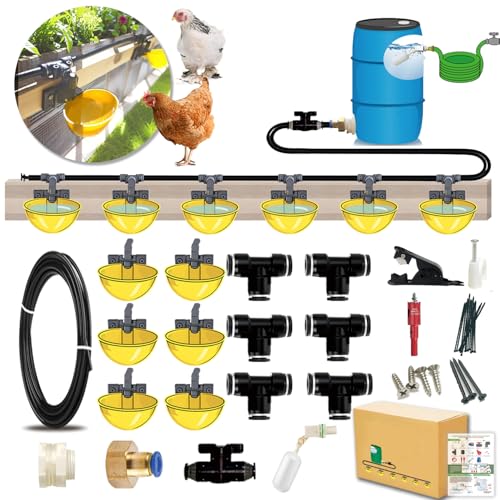
【The simplest and fastest installation healthy chicken water system】The 2025 New-Type Pipeline Automatic chicken Water System. Just insert the water pipe into the quick-connector, it will be automatically locked, preventing leaks without the need for glue. It can be installed as easily as LEGO, simplicity, speed, and diverse water line configurations. It uses the same pipes and connectors as water purifiers and coffee machines, making it the healthiest water system available. U.S. invention patent #US71****82**
How to Keep Your Chickens’ Water Fresh in Every Season
Clean water is the foundation — now let’s talk about actually keeping it that way when the seasons are actively working against you. Spring means algae. Summer means bacteria doubling overnight. Winter means ice blocks where water used to be. Each season has its own agenda, and honestly, it’s exhausting.
Here’s the thing — your seasonal water strategy doesn’t have to be complicated. Elevate waterers to shoulder height, add apple cider vinegar in spring, shade containers in summer, and use thermostatically controlled deicers when temperatures drop. Automated dispenser maintenance matters too — nipple systems stay cleaner longer and cut your daily workload dramatically.
You’ve already identified the problem. Now you just need a seasonal system that actually works without demanding your entire morning. In winter, emptying your water pan at night prevents freezing and expansion damage that can crack or warp your containers before you even wake up.

【Prevents Water from Freezing】-- The poultry water heater base is made of a safety standard power cord that has passed multiple quality tests, which will not melt the plastic and scald the chickens when in use. Heating base of the chicken waterer is made of galvanised steel, making it resistant to rust and corrosion. There is no need for you to go outside every day in the cold weather to change the frozen water.

Deicer for Poultry Watering: Keep your chickens, turkey, and geese hydrated all winter long with this de-icer designed to keep their water from freezing in nipple-style drinkers and buckets
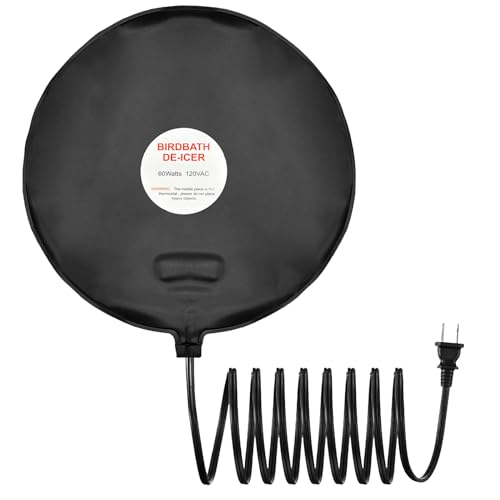
Durable Materials - The bird bath heater shell is made of corrosion-resistant, waterproof and durable PVC. The edges of the housing are pressure-sealed as well as a double waterproof design that prevents the fountain de-icer from short-circuiting due to water seepage