
You’re worried your coop setup might hurt your birds, and honestly, that fear is spot on. Bantams easily hop four feet, but your heavy Jersey Giants risk painful thuds landing from anything over two feet. Obviously, size dictates everything here; small breeds need eighteen inches while massive Orpingtons stay under three feet to save their legs. If you match the perch to your specific flock’s weight, you’ll avoid bumblefoot and frostbite instantly. Stick around, and you’ll see exactly how to build the perfect setup for every bird you own.
How High Do Bantam Chickens Roost?
Ever wonder why your tiny bantams are sleeping on the coop floor instead of up high where they belong? You’re probably offering perches too low for their impressive aerial skills. These little guys jump up to four feet easily, so standard setups often bore them. If you want successful bantam perching, you need jump friendly roosts placed at least eighteen inches off the ground. Honestly, they’d prefer even higher spots since their small size boosts agility. Don’t worry about ramps; they’ll fly or hop up without help. Just guarantee you give them eight to ten inches of space each so wings don’t flap awkwardly. Place bars higher than nest boxes to keep things clean. Now, stop guessing and install those high bars tonight. Your flock will thank you with dry feathers and better sleep immediately.

Chicken Perch with Swing Sets:With a fun hanging swing perch and 5 level chicken roosting bars at different heights, this chicken perch setup promotes natural climbing,balancing,and perching behaviors,keep your chickens healthy,leading to higher-quality eggs

Train Young Chickens To Roost Naturally: Designed as a beginner-friendly perch for pullets, young chickens and bantams, helping birds develop natural roosting and balancing behavior before transitioning to permanent coop roosts
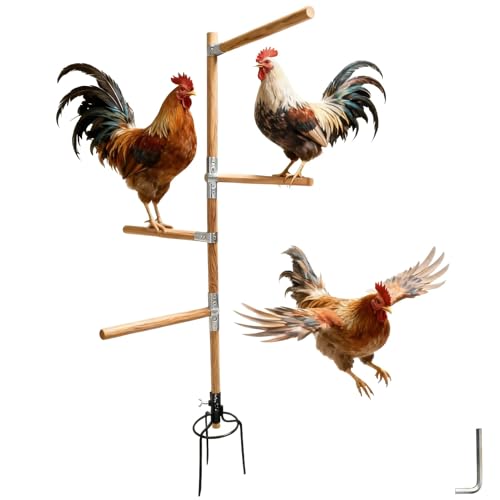
Adjustable Chicken Roost for All Chicken Sizes: Chicken perch for coop can hold up to 4 wooden bars for your flock to roost on. Its key advantages include: freely adding or removing wooden bars, rotating each bar to any angle, and adjusting the spacing between bars. Paiaojia chicken toys for coop are perfect for frequent use by bantams, standard hens, roosters, and chicks
What Are Roost Heights for Small Breeds?
Why are your small hens still sleeping on the coop floor when they’re perfectly capable of flying higher? You’re probably worried about perch safety or per stability, but honestly, you’re just overthinking it. Start your ladder at six inches, then step up to eighteen. Heavier small breeds need lower spots around twelve inches to prevent leg injuries, obviously. Give them eight inches of space each so nobody gets bullied off the edge. Use two-by-two lumber with rounded edges; anything narrower risks keel bone damage. Keep roosts twelve inches apart horizontally and vertically for easy hopping. If you stagger bars like stairs, guarantee the first rung sits two feet up. Lighter breeds love height, but don’t force it. Now, stop guessing and build that proper setup tonight. Your flock will thank you by morning, and you’ll finally sleep soundly too.
How High Can Large Chicken Breeds Roost?
Since your heavy hens are landing with a thud that sounds like a bag of bricks hitting the floor, you’re probably wondering if you’ve built their roosts too high. You definitely have. Big birds like Jersey Giants struggle jumping down from heights over three feet, risking serious leg strain. Your roost design must respect breed specific height limits; keep Orpingtons and Brahmas under three feet, while Giants need spots no higher than two. Obviously, lower perches prevent foot and leg strain in these massive ladies. For perching safety, install wide 2×4 boards so their feet rest flat without curling. If you absolutely must go higher, build step roosts to break the fall. These injury prevention strategies save your flock from unnecessary pain. Don’t guess with their weight; drop those bars low today. Your hens will thank you with healthy legs tomorrow.

【Chicken Perch with Ladder & Swing】This chicken activity center features a chicken perch chicken ladder and a chicken swing, which are important chicken toys for coop. It also functions as a great chicken enrichment, providing an area for chickens to have fun and satisfy their flying needs. Furthermore, its versatile design also suits other animals such as parrots, ducks, and pigeons.

Multi-Level Design That Keeps Flocks Active — The built-in ladder lets birds climb to elevated perches, the wide top beam provide roosting perch that relieves foot pressure., and the hanging swing adds playful enrichment. This 3-in-1 activity center encourages exercise, exploration, and social interaction.

【CHICKEN-APPROVED COMFORT】 Natural solid wood perches satisfy roosting instincts, no more hot feet in summer, cozy warmth in winter. Not only does it provide chickens with a natural resting environment, but it also helps trim their beaks and claws, strengthens their leg and foot muscles, provides them with a place to play, and encourages them to learn to fly.Happy hens lay better!
Where Do Jersey Giants Prefer to Roost?
You’ve just lowered those roosts to save their legs, but don’t act surprised when your Jersey Giants still ignore the bars and crash into the nesting boxes instead. These heavy birds genuinely possess a stubborn low‑roost preference, often choosing soft nests over proper perches regardless of your setup. Their massive weight limits flight, making high jumps dangerous and painful for their feet. You’ll need persistent roost‑height training to break this bad habit before winter hits. Place wide, flat 2×4 boards just two feet off the ground to support their twelve-pound frames comfortably. Narrow rounds cause bumblefoot, so avoid them entirely. Obviously, they won’t adapt overnight, but consistency pays off. Stop fighting their biology and start accommodating it with safe, accessible spots. Once you accept their quirks, your flock stays healthier, happier, and firmly off your expensive nesting linens tonight. Recent observations confirm that adjusting the roost height to 12 inches above the floor specifically accommodates the needs of Jersey Giants compared to other birds.
Which Cold-Hardy Breeds Need Low Roosts?
How do you keep your heavy, cold-hardy flock from freezing their toes off while they sleep? You install low roosts. Breeds like Orpingtons and Wyandottes pack serious weight, so jumping high risks leg injuries. Instead, place wooden 2×4 boards just twelve inches off the floor. This specific cold roost design lets them cover their feet completely with bellies for warmth. Obviously, metal perches are a terrible idea since they conduct cold straight to the bone. Your birds rely on thick feather insulation, but they still need help trapping that heat overnight. Don’t force these heavy dual-purpose birds to leap like agile bantams; they aren’t built for it. A flat, low surface prevents frostbite and keeps everyone cozy without strain. Now, grab some lumber and build them a safe, warm spot to snooze. It’s the smart move for winter survival. Providing roosts keeps chickens off cold floors to ensure they stay warm throughout the night.
How Does Chicken Size Dictate Roost Height?
You just finished building those low, warm roosts for your heavy Orpingtons, but don’t assume that same setup works for the rest of the flock. Here’s the thing: your tiny Bantams will struggle immensely if you force them up eight feet like a Jersey Giant. Their roost genetics simply don’t support high jumps, so keep them safe at two feet max. Obviously, medium layers like Ameraucanas need four feet or higher to feel secure overnight. You can’t ignore breed height when designing your coop; weight directly impacts jump capability. Heavy birds handle elevation better, while small ones risk injury falling from too high. Adjust your bars specifically for each group’s physical limits. Don’t guess with their safety. Match the perch to the bird’s natural ability, and everyone sleeps soundly. It’s really that simple once you see the logic.