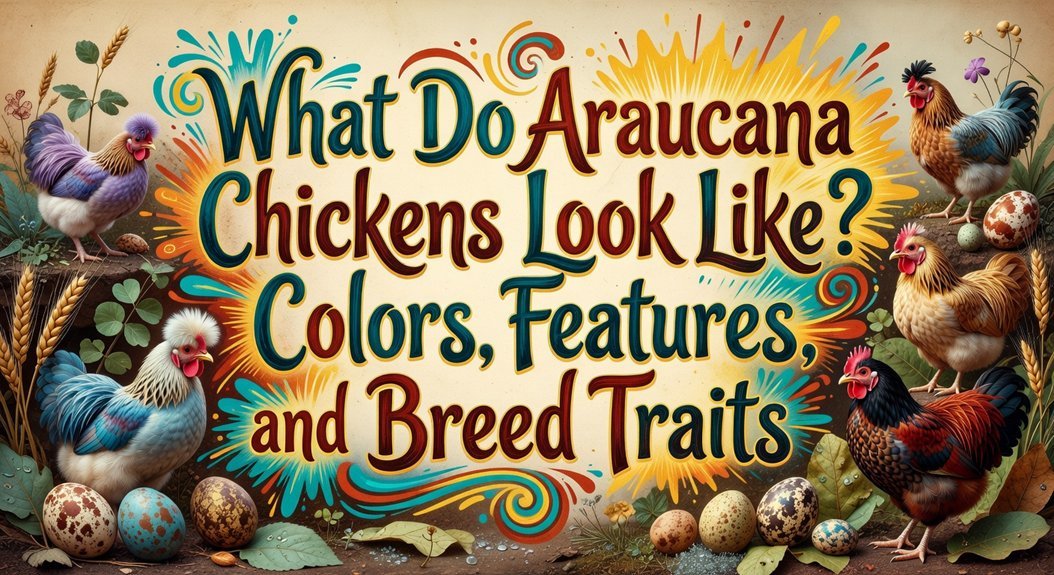
You’re staring at chicks, unsure which is the real deal. All right, spot the rumpless body, pea comb, and those wild ear tufts. You’ll see blacks, whites, and blues, though splash patterns hide in backyards. Obviously, only tufted parents risk losing embryos, so breeding takes care. These friendly foragers fit your free-range life perfectly if you want blue eggs without the fuss. Stick with standard colors for show, or grab a splashy pet for fun. Keep going to nail exactly which bird fits your coop.
What Colors Do Standard Araucana Chickens Come In?
If you’re standing at the hatchery counter paralyzed by a rainbow of feather options, you aren’t alone, and frankly, it’s exhausting trying to decode which colors actually count. You want specific answers, not vague promises about pretty birds. Here’s the thing: standardized feather patterns vary wildly depending on your location. In the US, you’re looking at just five official choices like Black, White, or Silver Duckwing. But cross the pond to the UK, and suddenly Blue, Crele, and Cuckoo join the party. Obviously, color genetics play tricks on breeders, creating non-standard splashes or lavenders that don’t quite make the cut for shows yet. You might see Golden Duckwing or Black-Red, but remember that offspring often surprise you with diverse hues. Don’t let confusion stall your purchase; pick the variety your local club recognizes if showing matters, or grab that unique Splash if you just love backyard quirks.
How Large Do Araucana Chickens Actually Grow?
Why are you still guessing whether these birds will fit your coop or just dominate it? You need real numbers, not guesses. Standard hens hit four pounds while roosters reach five. They’re medium-sized, not giants. Obviously, bantams weigh way less, barely cracking two pounds. Their growth size stays modest because they put on weight slowly. Don’t expect massive birds here. Since they stay fairly small, you only need four square feet per bird inside. That’s a relief for tight spaces. Now, about egg production: their manageable frame doesn’t stop them from laying well, but remember, they aren’t meat birds. If you want huge roasters, look elsewhere. But if you need efficient layers that won’t crush your roost, these fit perfectly. You won’t regret choosing a breed that actually matches your available space. Just pick your size and get building.
Why Do Araucanas Have Unique Ear Tufts?
So you’re staring at those weird feather clusters near the ears and wondering how a chicken ends up looking like it’s wearing tiny, fuzzy earmuffs? Here’s the thing: those tufts aren’t just cosmetic flair; they’re a genetic gamble. Tuft genetics involve a dominant allele that creates those cool peduncles, but it comes with a nasty catch called embryonic lethality. If a chick inherits the gene from both parents, it usually dies before hatching due to severe deformities. That’s why only about twenty-five percent of chicks actually sport the look while the rest stay clean-faced. You’re basically breeding for a specific mutation that rearranges ear canals, which sounds wild but works if you manage your flock carefully. Obviously, this trait demands respect, not just admiration. Want that unique silhouette? Just remember nature charges a steep price for style, so plan your breeding pairs wisely today.
What Distinctive Head and Leg Traits Define Them?
You’ve wrapped your head around the genetic roulette of those ear tufts, but don’t think you’ve seen the whole picture just yet. Look closer at that head. You’ll spot a low-set pea comb resembling a string of pearls, with the middle row standing tallest. It’s subtle, unlike those flashy single combs you see elsewhere. Now, glance down at their legs. While some breeds strut around with bare limbs, true Araucanas often sport feathered shanks that add extra fluff to their unique silhouette. Don’t expect every bird to look identical, though; tufts might appear on one side, both, or not at all. That’s the genetic lottery in action. If you want a chicken that breaks the mold with a rumpless body and quirky facial furniture, this breed fits your flock perfectly. Just embrace the wild variation.

【Funny Chicken Toys】7 Pcs chicken coop accessories contains: 2 x chicken swings, 1 x chicken xylophone, 1 x chicken pecking toy, 1 x chicken mirror with bells, 2 x hanging chicken feeder

Eat Anywhere To Supplement Nutrition: You can pour chicken nesting herbs in the chicken house; litter; nest box; feeder; dust bath area, and the chickens can eat it anytime and anywhere. Nesting herbs for chicken coop can be mixed with other chicken feeds to make a perfect snack supplement, supplementing chickens with multiple vitamins; minerals; calcium and trace elements, etc., which is beneficial to the health of chickens and improves the quality of eggs

Chicken Perch for Coop Set: Crafted with a stable triangular frame design, this set includes 6 smoothly pine wooden sticks, each pre-slotted for hassle-free installation. The complete kit comes with a matching screwdriver and screws, providing everything you need for quick, tool-free setup
Do All Araucana Hens Lay Blue Eggs?
Everyone loves the idea of a rainbow egg basket, but nothing kills that dream faster than buying a “blue egg” chicken only to get brown ones. You worry you’ll get duped, right? Here’s the thing: if you buy a true Araucana, you get blue eggs. Period. Unlike Easter Eggers, every single purebred hen lays blue or blue-green shells because oocyanin pigment permeates the entire shell thickness. You won’t find brown ones here. While feather pigmentation varies wildly across the flock, egg production genetics stay rock-solid consistent for this breed. You’ll grab about three medium eggs weekly, even in winter. Obviously, crossbreeding ruins this trait, so verify your source carefully. This bird is for you if you demand guaranteed blue without gambling on mixed breeds. Stop hesitating and secure those genuine layers today for your colorful collection. Note that egg production slows or stops in winter and resumes with warmer weather, though the blue shell color remains constant.
Where Did the Rumpless Araucana Breed Originate?
If you’re hesitating because the origin story sounds murkier than a puddle after a storm, you aren’t alone. Scientists still argue whether these birds arrived before Columbus or with later Europeans. However, you’ll find strong ties to Chile’s Araucanía region and deep Mapuche heritage. Indigenous people there likely bred early blue-egg layers long ago. Now, here’s the thing: modern rumpless origin stems from crossing Colloncas and Quetros in the early twentieth century. This mix created today’s unique bird, though some debate persists about Polynesian influences versus Dutch introductions. Obviously, exact genetic paths remain fuzzy, but Chile stands as the definitive home. You get a fascinating history lesson with every egg. Don’t let the historical confusion stop you; the breed’s distinctiveness is real. Embrace that mystery and bring these historic layers to your coop today.
Are Araucana Chickens Friendly and Easy to Handle?
Worrying about a coop full of skittish birds stopping you from pulling the trigger is a valid fear, especially when you’ve heard rumors of flighty temperaments. Here’s the thing: while some act independent, most Araucanas are surprisingly calm, curious, and genuinely friendly. You’ll find they bond quickly through consistent handling, becoming sweet pets that kids love. Obviously, roosters might squabble, but hens integrate smoothly into mixed flocks without much drama. Their friendlyliness shines during daily aviary interaction, where they explore confidently yet stay approachable. Catching free-ranging birds proves tricky since they’re athletic, but confinement doesn’t stress them if space exists. They’re quiet enough for backyards and hardy everywhere. If you want intelligent, quirky companions who tolerate cuddling after socialization, this breed fits perfectly. Don’t let occasional flightiness scare you off; these birds thrive with engagement. You’re ready to welcome them home now, knowing they’ll reward your effort with personality and ease.

【Chicken Perch with Ladder & Swing】This chicken activity center features a chicken perch chicken ladder and a chicken swing, which are important chicken toys for coop. It also functions as a great chicken enrichment, providing an area for chickens to have fun and satisfy their flying needs. Furthermore, its versatile design also suits other animals such as parrots, ducks, and pigeons.

Chicken Perch with Swing Sets:With a fun hanging swing perch and 5 level chicken roosting bars at different heights, this chicken perch setup promotes natural climbing,balancing,and perching behaviors,keep your chickens healthy,leading to higher-quality eggs

𝐄𝐧𝐜𝐨𝐮𝐫𝐚𝐠𝐞𝐬 𝐍𝐚𝐭𝐮𝐫𝐚𝐥 𝐁𝐞𝐡𝐚𝐯𝐢𝐨𝐫 & 𝐄𝐱𝐞𝐫𝐜𝐢𝐬𝐞 With 2 swings and 3 chicken roosting bars at different heights,this chicken perch setup promotes natural climbing, balancing, and perching behaviors.Chickens stay physically engaged,reduce boredom,and develop better coordination and leg strength
How Does the Tufted Gene Impact Breeding Ratios?
Although you might dream of a flock where every chick sports those iconic ear tufts, breeding two tufted Araucanas together guarantees a heartbreaking 25% of your eggs won’t hatch. That lethal homozygous gene kills embryos before they even pip, creating significant tufted mortality you can’t avoid with double-tufted pairings. You’ll get half tufted babies, quarter clean-faced ones, and those lost quarters. Now, if you cross just one tufted parent with a clean-faced bird, you dodge that death sentence entirely. Your inheritance ratios shift to a safe fifty-fifty split between tufted and plain chicks, with zero in-shell losses. Obviously, you want those fluffy ears, but chasing them aggressively costs lives. Smart breeders accept mixed flocks to keep hatch rates high. You’ve got to decide if perfect looks matter more than healthy numbers. Choose your pairs wisely, and you’ll raise happy, thriving birds without the sadness.