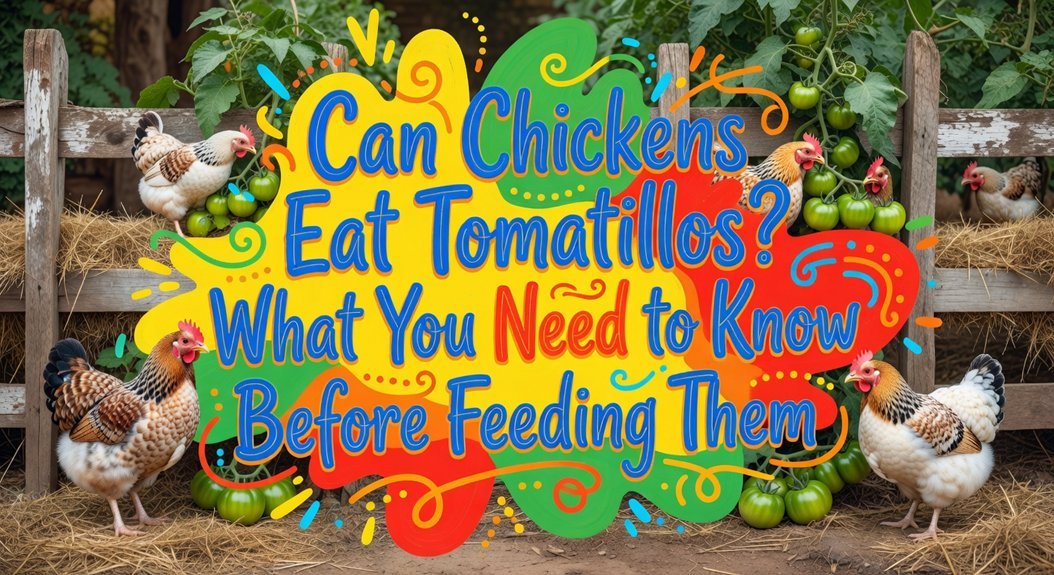
You’re staring at those sticky husks, wondering if you’re about to poison your flock or just waste good fruit. Here’s the thing: you can absolutely feed them ripe purple or yellow tomatillos, but those green ones pack solanine that’ll wreck their digestion. Strip the husk, wash the fruit, and chop it up for a safe treat. Obviously, skip the leaves and stems entirely. Stick to these rules, and your hens will thank you as you uncover exactly how to prep them below.
Can Chickens Safely Eat Ripe Tomatillos?
Ever stare at those sticky, husked fruits in your garden and wonder if tossing them to your flock is a recipe for disaster or a delicious treat? You’re not alone; that sticky residue freaks everyone out initially. Here’s the thing: once you strip that papery husk and wash the fruit clean, ripe tomatillos are totally safe for your chickens. Unlike their green, toxic cousins, these golden gems lack solanine, just like ripe tomatoes. You’ll love boosting their diet with this nutvitamin content, packed with C and folate. Obviously, you shouldn’t overdo it. Keep your feeding frequency moderate, offering them as occasional treats rather than main courses. Cut them up for easier eating and watch your hens go wild. This approach works perfectly if you want happy, healthy birds without the guesswork. So, grab those ripe fruits and start feeding confidently today.
Why Are Unripe Tomatillos Toxic to Chickens?
Although you might be tempted to toss those hard, green tomatillos to your flock to clear out the garden, doing so invites a toxic nightmare because unripe fruits pack a dangerous punch of solanine and tomatine that ripe ones simply don’t have. You see, your chickens struggle with solanine metabolism when these glycoalkaloids hit their system, causing immediate digestive havoc and slowed pulses. Moreover, rapid tomatine absorption triggers nasty cramps, nausea, and severe diarrhea that no bird deserves. Obviously, young chicks or elderly hens face the worst outcomes here, but even healthy adults aren’t immune. The toxins naturally decrease as the fruit ripens, turning a potential poison into a safe treat. So, hold off on feeding anything green. Wait until those husks split and the fruit turns yellow or purple. Your flock will thank you for skipping the sickness and sticking to safe, ripe snacks instead. Just as you must avoid green tomatoes, you should also ensure you discard any spoiled or moldy tomatillos to prevent exposing your birds to harmful mycotoxins.
Which Tomatillo Parts Must You Avoid Feeding?
Since you’re already sweating over which garden scraps could turn your coop into an emergency room, let’s cut the guesswork and talk about exactly what stays out of the feed bowl. You must strictly avoid leaves and stems because they harbor dangerous solanine levels that trigger poisoning. Obviously, those green vines pack a punch, so stem toxicity remains a genuine threat you can’t ignore. Don’t even think about tossing unripe fruits or papery husks into the mix either, as they hold hidden toxins too. Your flock might naturally dodge the foliage, but you shouldn’t test their instincts. Keep every green part far away from their beaks to prevent painful cramps or worse. All right, now you know exactly which bits to banish. Stick to ripe fruit only, and you’ll keep your chickens safe, happy, and clucking without any scary garden surprises today.
How Do You Prepare Ripe Tomatillos for Chickens?
You’ve just banned the toxic green stuff, so now you’re probably staring at a pile of ripe tomatillos wondering if you need to peel, seed, or perform surgery before tossing them in the coop. Relax, you don’t. Start by stripping those papery husks completely; they’re sticky and useless. Rinse the fruit well to wash away dirt, ensuring total safety for your flock. Obviously, no peeling is needed since the skin is firm. Now, here’s a trick: roast that tomatillo at 400°F until soft and browned. This preparation softens the texture, making it easier for hens to digest. Blend the cooled mixture into a savory puree if you want to mix it thoroughly with feed. Just let it cool completely before serving; hot food burns crops. This simple process turns a confusing fruit into a tasty treat without any fuss or risk. While humans often cook down this roasted base with garlic and onion to create a thick sauce, chickens benefit most from the plain, softened fruit without those added seasonings.

Healthy Material - The Tifanso heavy-duty turkey roasting pan with rack is made of high-quality, non-toxic stainless steel and contains no chemical coatings, ensuring that no harmful substances leach into your food. This turkey roasting pan can withstand temperatures up to 450℉ and is corrosion-resistant, promising a long service life without easy deformation. The oven pan heats quickly and distributes heat evenly, allowing you to make delicious gravies directly on an induction stove.

EXCEPTIONAL DESIGN: The Cuisinart 16-inch rectangular roaster is made with a high-performance stainless steel exterior and riveted stainless steel handles. The steel rack is large enough to handle a big Thanksgiving turkey and perfect for slow-roasting root vegetables

VERSATILE ROASTING PAN – A cookware essential. This big 15 inch roaster is ideal for cooking turkey, chicken or beef, along with other meats and vegetables.
What Other Nightshades Can Chickens Eat Safely?
That nightshade family tree is a tangled mess of delicious fruits and deadly leaves, and it’s totally normal to feel paralyzed staring at your garden wondering what’s safe to toss to your flock. You worry about solanine poisoning your birds, and honestly, that fear keeps them alive. Most nightshade alternatives simply don’t exist because leaves and stems kill chickens fast. You might hear rumors about a safe foreggplant fruit, but the facts say eggplant remains risky due to high alkaloid content. Even those colorful pepper pods contain toxins you shouldn’t gamble with. While ripe tomatoes work occasionally, cooking breaks down dangers in potatoes, yet raw greens remain deadly. Obviously, avoiding the entire family prevents accidental raids on your vegetable beds. Stick to known safe treats instead of testing toxic limits with your flock’s health today.

CHICKEN SCRATCH THAT SUPPORTS STRONG, PROTECTIVE EGGSHELLS: Daily chicken treat that is enhanced with added calcium to help support firm eggshell formation and healthy laying hens.

HIGH PROTEIN POULTRY TREAT: Nutrient-rich blend of mealworms and beetles providing 45% all-natural protein, delivering a high-energy treat for poultry that supports healthy growth, vitality, and overall well-being while encouraging natural foraging.

Nature's Own Superfood - Doc Eddie’s Chicken Supplement is a human-grade, plant-based treat packed with essential omegas 3 & 6 that transform your backyard flock into vibrant egg-laying hens with glossy feathers and exceptional health without artificial additives.