The sun beats down on your pasture, and the fence sputters, leaving a nervous herd to wander. You’ve tried a few chargers, but the voltage drops when the grass gets thick, and you’re tired of guessing which model will actually hold the line. Here’s the thing: you need a charger that matches your perimeter, terrain, and the animals you protect, so you can finally trust the fence to do its job without constant tinkering.
| Gallagher S12 Solar Electric Fence Charger (4 Miles) | 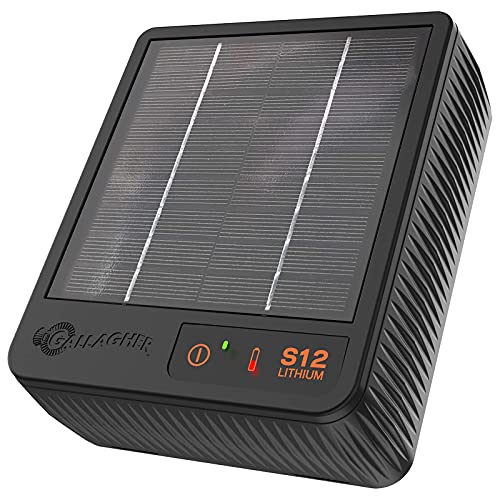 | Small‑Pasture Pro | Power Output (Joules): 0.12 J | Coverage Range (Miles): 4 mi (single‑wire) | Power Source: Solar (lithium battery) | VIEW LATEST PRICE | Read Our Analysis |
| Andmon MINI400 20‑Mile Solar Fence Charger |  | Long‑Range Solar | Power Output (Joules): 0.4 J | Coverage Range (Miles): 20 mi | Power Source: Solar + 12 V/4.5 AH sealed lead‑acid battery | VIEW LATEST PRICE | Read Our Analysis |
| Zareba 25 Mile AC Electric Fence Charger (EAC25M‑Z) |  | Heavy‑Duty Power | Power Output (Joules): 1.0 J | Coverage Range (Miles): 25 mi (ideal) | Power Source: AC mains (120 V) | VIEW LATEST PRICE | Read Our Analysis |
| Zareba ESP5M-Z Solar Fence Charger – 5 mi Low Impedance Black | 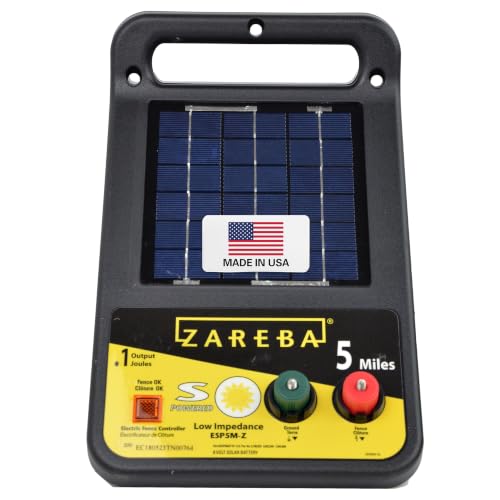 | Low‑Impedance Specialist | Power Output (Joules): 0.15 J | Coverage Range (Miles): 5 mi (ideal) | Power Source: Solar (rechargeable battery) | VIEW LATEST PRICE | Read Our Analysis |
| 10-Mile Solar Electric Fence Charger Portable Waterproof |  | Portable Ten‑Mile | Power Output (Joules): 0.18 J | Coverage Range (Miles): 10 mi | Power Source: Solar (integrated battery) | VIEW LATEST PRICE | Read Our Analysis |
| Electric Fence Charger 110V AC Plug-in for Gardens |  | Plug‑In Simplicity | Power Output (Joules): 0.25 J | Coverage Range (Miles): 2 mi | Power Source: AC mains (110 V) | VIEW LATEST PRICE | Read Our Analysis |
| Ortis 12,000V LCD Electric Fence Energizer (3J) |  | High‑Voltage Elite | Power Output (Joules): 3 J | Coverage Range (Miles): 6.2 mi (ideal) | Power Source: AC mains (120 V) + battery backup | VIEW LATEST PRICE | Read Our Analysis |
More Details on Our Top Picks
Gallagher S12 Solar Electric Fence Charger (4 Miles)
All right, if you’re juggling a few acres of chickens, goats, or a garden and need a fence that won’t quit, the Gallagher S12 Solar Electric Fence Charger is the small‑pasture pro you’ve been hunting for. You’ve probably tried cheap imports that fizz out after a storm; this one runs on solar lithium, stores 0.12 joules, and covers up to 4 miles of single‑wire fence on 18 acres when the sun’s generous. Obviously you’ll need solid grounding—drive the rod 18 inches deep, keep connections clean, and let it charge two days in full sun before you go live.
Now, picture your chickens hopping over a weak line; the S12’s steady output keeps them inside without shocking you with high voltage. It’s built from alloy steel, weighs 2.4 lb, and mounts right onto the grounding rod, so you won’t wrestle with extra hardware. If your fence has multiple wires or dense vegetation, expect coverage to drop to 0.6 miles, so a higher‑powered model might suit larger hobby farms.
Here’s the thing: you’ll love the durability and the three‑year U.S. warranty, especially when you’re on a remote homestead. You’ll find the panel’s weather‑ready design handles rain, wind, and dust without fuss. This charger is for you if you need a portable, low‑maintenance solution for a modest paddock, and you’re okay with the trade‑off of reduced range on complex fences.
All right, you’ve got the facts, the setup steps, and the real‑world limits. Pick the S12 if you want reliable, solar‑powered containment without the hassle of a big battery bank. It’s a smart, simple choice that lets you focus on caring for your animals, not troubleshooting your fence.
- Power Output (Joules):0.12 J
- Coverage Range (Miles):4 mi (single‑wire)
- Power Source:Solar (lithium battery)
- Weather Protection Rating:Weather‑ready, durable alloy steel
- Mounting/Installation Method:Ground rod mount with built‑in earthing
- Warranty / Support:3‑year manufacturer warranty, U.S. support
- Additional Feature:Alloy steel construction
- Additional Feature:3‑year U.S. warranty
- Additional Feature:Portable super‑tough design
Andmon MINI400 20‑Mile Solar Fence Charger
You’ve got a sprawling pasture and the last thing you need is a fence that quits when clouds roll in. Andmon MINI400 handles that worry. It delivers 0.4 joule pulses, enough to guard up to 20 miles of fence, and runs on a 12 V/4.5 AH sealed‑lead‑acid battery that lasts two weeks without sun. The 3 W solar panel keeps the battery topped up, and the day/night mode saves power when livestock rest.
All right, the charger’s IPX4 waterproof ASA shell survives rain, snow, and temperatures from –20 °C to 80 °C, so you won’t be chasing malfunctioning gear. You’ll need to connect the red and black cables manually before you power up, but that’s a one‑time safety step. USB connectors let you troubleshoot with a phone or laptop if you’re tech‑savvy.
Here’s the thing: this unit fits you if you have a large acreage, need long‑range coverage, and can tolerate a slightly heavier 2.7 kg device. It isn’t the lightest option, and the lead‑acid battery isn’t as sleek as lithium, but its durability and low cost win out for rugged farms. Choose the MINI400 and you’ll sleep easier knowing your fence stays live, rain or shine.
- Power Output (Joules):0.4 J
- Coverage Range (Miles):20 mi
- Power Source:Solar + 12 V/4.5 AH sealed lead‑acid battery
- Weather Protection Rating:IPX4 waterproof ASA casing
- Mounting/Installation Method:Manual battery connection, USB connector
- Warranty / Support:Manufacturer warranty (unspecified)
- Additional Feature:IPX4 waterproof casing
- Additional Feature:Manual battery connection
- Additional Feature:USB connector type
Zareba 25 Mile AC Electric Fence Charger (EAC25M‑Z)
You’re battling a sprawling pasture where weeds and weather keep short your fence’s punch, and you need a charger that can push through. The Zareba 25 Mile AC Electric Fence Charger (EAC25M‑Z) delivers up to 25 miles in perfect conditions, drops to 12 miles with light weeds, and still covers 6 miles when weeds thicken. Its 1.0 joule output handles cattle, horses, pigs, goats, exotics, and even deters predators, so you won’t have to worry about a broken line letting anything wander.
Now, the heavy‑duty metal cabinet protects the internals from rain, snow, and UV, while the AC plug means you never chase solar panels or batteries. It works with high‑tensile, polywire, and standard fences, so you can mix and match wire types without hassle. The unit is UL‑listed, weighs 3.1 lb, and comes with a two‑year limited warranty that even covers lightning damage—obviously a big plus for storm‑prone regions.
Here’s the thing: if your pasture is weed‑heavy and you want a reliable, plug‑in solution, this charger fits the bill. If you prefer a solar‑only setup or need a portable battery pack, you’ll look elsewhere. All right, you’ve got the facts; pick the Zareba if you value rugged durability, consistent power, and a warranty that backs you up.
- Power Output (Joules):1.0 J
- Coverage Range (Miles):25 mi (ideal)
- Power Source:AC mains (120 V)
- Weather Protection Rating:Rugged metal cabinet, UL‑listed
- Mounting/Installation Method:Plug‑in to standard 2‑prong outlet
- Warranty / Support:2‑year limited warranty (lightning coverage)
- Additional Feature:UL‑listed, plug‑in
- Additional Feature:Heavy‑duty metal cabinet
- Additional Feature:2‑year lightning warranty
Zareba ESP5M-Z Solar Fence Charger – 5 mi Low Impedance Black
If you’re battling weeds that constantly short your fence, you need a low‑impedance specialist that keeps the charge flowing. This Zareba ESP5M‑Z delivers 0.15 J at 8.6 kV, energizing up to five miles under perfect conditions and still covering 2.5 mi when weeds creep in. It runs on 6 VDC, stores two weeks of power in its internal battery, and works with steel, aluminum, poly wire, rope, and tape—though poly cuts power roughly in half.
All right, the 360‑degree rotating bracket lets you mount on T‑posts, Y‑posts, or round wood and swivel toward the sun all day. The weather‑proof case resists rain, hail, and accidental damage, and you only need a three‑day full‑sun charge before it’s ready. Obviously, you’ll want to test voltage regularly; the unit supports 4000–5000 V for deer and predators, down to 700 V for pets.
Now, consider your herd. If you have horses, pigs, or cows, the ESP5M‑Z gives the right 2000–3000 V range, while bulls and bison need a bit more. It’s built in the USA, includes a one‑year lightning warranty, and you can add a diverter or choke for extra storm protection. This one’s for you if you need reliable, low‑impedance power for a medium‑sized pasture and you don’t mind a short initial charge period. Choose it, and you’ll keep your livestock safe without constant fence‑maintenance headaches.
- Power Output (Joules):0.15 J
- Coverage Range (Miles):5 mi (ideal)
- Power Source:Solar (rechargeable battery)
- Weather Protection Rating:Weather‑resistant case, rain‑proof
- Mounting/Installation Method:360° rotation bracket for T‑/Y‑posts
- Warranty / Support:1‑year limited warranty (lightning coverage)
- Additional Feature:360° rotation mount
- Additional Feature:Low‑impedance technology
- Additional Feature:1‑year lightning warranty
10-Mile Solar Electric Fence Charger Portable Waterproof
All right, you’re juggling a sprawling pasture with no power outlet, and you need a fence that never sleeps. This 10‑mile solar charger slaps a thick, tempered‑glass panel on the ground, soaking sun all day and stashing charge for ten night‑time days. You’ll get 0.18 J, 5700‑10200 V, enough to keep elk, bears, deer, and stray dogs at bay.
Now, you love portability. At 3.1 lb and just over ten inches long, you can toss it on a trailer, a hill, or a remote garden without a sweat. It’s waterproof, snow‑resistant, and anti‑collision, so storms won’t knock it out of service.
Here’s the thing: it shines for large farms, horse pastures, and temporary fencing where grid power’s a myth. If you only need a few hundred feet for a chicken coop, you’ll be paying for mileage you’ll never use.
Obviously, the internal battery holds a full charge for ten days, so you won’t scramble for sunlight when clouds linger. The trade‑off is you can’t swap the battery for a larger one—this kit is all‑in‑one.
If you’re okay with a single, rugged unit that covers up to ten miles and works rain or shine, this charger fits your setup perfectly. Choose it, and you’ll enjoy hands‑off protection without hunting for spare parts.
- Power Output (Joules):0.18 J
- Coverage Range (Miles):10 mi
- Power Source:Solar (integrated battery)
- Weather Protection Rating:Waterproof, snow‑resistant, anti‑collision
- Mounting/Installation Method:Portable, all‑in‑one kit, no external battery
- Warranty / Support:Manufacturer warranty (unspecified)
- Additional Feature:Tempered glass panel
- Additional Feature:Snow‑resistant design
- Additional Feature:All‑in‑one battery
Electric Fence Charger 110V AC Plug-in for Gardens
A backyard chicken coop or a small garden can become a predator magnet, so you need a reliable fence that won’t drain your wallet. You’ve probably tried solar chargers that flicker when clouds roll in, leaving your birds exposed. This 110V AC plug‑in charger delivers a steady 0.25 joule pulse, so you never wonder if the power’s on.
All right, the unit plugs straight into any outlet, powers up to two miles of single‑wire fence, and works with electric wire, poly wire, or poultry netting. You’ll love the weather‑resistant housing and its 14‑ounce weight—easy to mount on posts, walls, or even indoors. The dimensions fit snugly in tight corners, and setup takes minutes, not hours.
Now, the trade‑off is that you need a nearby outlet, so it isn’t perfect for remote paddocks. If you have a garden close to house power, this one’s for you. Built by a Missouri family business, it’s engineer‑tested and backed by industry‑leading service, so you can trust it won’t quit when you need it most. Choose it, and you’ll keep predators at bay without breaking the bank.
- Power Output (Joules):0.25 J
- Coverage Range (Miles):2 mi
- Power Source:AC mains (110 V)
- Weather Protection Rating:Weather‑resistant housing
- Mounting/Installation Method:Mounts on posts, walls, indoor/outdoor
- Warranty / Support:Family‑owned business, industry‑leading service
- Additional Feature:14‑ounce lightweight unit
- Additional Feature:Indoor/outdoor mounting
- Additional Feature:Family‑owned Missouri maker
Ortis 12,000V LCD Electric Fence Energizer (3J)
You’re battling a sprawling pasture that stretches past the fence line, and you need a charger that won’t quit on you. The Ortis 12,000V LCD Energizer pumps 12,000 V with 3 J pulses, covering up to 6.2 miles, so you can finally protect that extra field without hunting for a second unit. All right, the backlit LCD shows real‑time voltage, and a red LED flashes each pulse—clear even in bright sun, and it stops flashing the moment a fault appears. Obviously, you’ll love the twist‑to‑tighten terminals; no tools, no hassle, just a quick connection.
Now, think about the animals you’re keeping safe. The pulse technology deters dogs, poultry, rabbits, raccoons, foxes, and skunks without harming them, making it ideal for mixed‑species farms. If you need a rugged, flame‑retardant shell that survives rain and dust, this unit fits the bill, though you’ll want a waterproof cover for long‑term outdoor use. This one’s for you if you value instant fault alerts and a sunny‑readable display over a cheaper, non‑LCD model.
Here’s the thing: the Ortis offers solid performance for most soil types, but if you have extremely acidic ground you might need a voltage booster. Still, most growers find the 3 J pulse energy enough to keep livestock and predators at bay. Choose it, and you’ll get a dependable, low‑maintenance charger that lets you focus on grazing, not troubleshooting.
- Power Output (Joules):3 J
- Coverage Range (Miles):6.2 mi (ideal)
- Power Source:AC mains (120 V) + battery backup
- Weather Protection Rating:Waterproof cover recommended, flame‑retardant shell
- Mounting/Installation Method:Twist‑to‑tighten terminal knobs, optional waterproof cover
- Warranty / Support:Manufacturer warranty (unspecified)
- Additional Feature:Backlit LCD voltage display
- Additional Feature:Red pulse‑indicator LED
- Additional Feature:Flame‑retardant housing
Factors to Consider When Choosing an Electric Fence Charger
You’re probably worried about whether the charger will actually power your whole perimeter without draining the battery or frying the fence. Here’s the thing: match the output energy capacity to your vegetation and fence type, check the coverage range limits against your layout, and decide if solar or mains power fits your grounding and installation constraints. Obviously, if you need a rugged, low‑maintenance solution for a sprawling pasture, go for a high‑voltage, solar‑ready unit; if it’s a small garden with easy access to electricity, a modest mains‑powered charger will do the trick.
Output Energy Capacity
All right, you’re probably staring at those joule numbers and wondering which one actually keeps your fence humming when weeds and critters start fighting it. The higher the joules, the more voltage you can push through vegetation and poor ground, so a 1.0‑joule charger can handle 25 miles of single‑wire fence versus a 0.12‑joule model’s 4 miles. In real life, multi‑wire setups or thick weeds shave that range down to a quarter, so you’ll need a safety margin above your minimum calculation.
Now, if you have a modest pasture with light growth, a 0.5‑joule unit gives you headroom without overpaying. For sprawling ranches, dense brush, or multiple pens, bump up to 1.0 joules or more; you’ll avoid voltage drops when animals lean on the wire.
Here’s the thing: pick a charger that exceeds your ideal length by at least 20 % to cover seasonal weed spikes and animal pressure. That way you stay confident the fence stays live, no matter what nature throws at it.
Coverage Range Limits
All right, you’ve probably seen those glossy range specs and wondered why your fence dies when weeds show up. The advertised maximum range assumes a single wire on clean, dry ground, but vegetation can slash that distance by more than half. If you’ve got a multi‑wire system, expect the coverage to shrink even further—often to under a mile—because each extra wire draws current and dilutes voltage.
Now, look at joule output. Higher joules mean the charger can push a stronger pulse over longer runs and through stubborn animals. Low‑impedance tech helps preserve voltage, resisting the short‑circuit effect of weed contact and keeping battery drain low. Manufacturers usually list three scenarios: ideal, light weeds, heavy weeds. Use those numbers to match your terrain, not the best‑case headline.
Here’s the thing: if you have a sprawling pasture with mixed vegetation, choose a charger with a high joule rating and low‑impedance design. If your fence is a compact, single‑wire setup on mostly dry ground, a modest‑power unit will suffice. Pick the one that fits your real‑world conditions, and you’ll avoid surprise dead zones.
Grounding and Installation
If your fence keeps flickering out after a rainstorm, the culprit is almost always a weak ground. You’ll need a grounding rod driven at least 18 inches deep, deeper if your soil’s dry or sandy. The charger’s housing should attach straight to a clean, unpainted metal rod—this gives you both support and a solid electrical path.
All right, now check every connection. Tight, corrosion‑free bolts keep voltage steady; loose or rusty links are the most common power losers. Low‑impedance chargers help, especially when vegetation touches the fence, because they waste less battery life.
Here’s the thing: a 360‑degree rotating bracket lets you mount on any post and angle a solar panel toward the sun. If you want flexibility on uneven terrain, this design’s for you. Otherwise, a fixed mount may suit a simple fence line.
Obviously, you’ll feel confident once the ground is rock‑solid and the wiring is tight. Choose a charger that matches your terrain, and you’ll see reliable shock delivery without constant tinkering.
Vegetation and Fence Type
Your fence’s performance drops the moment weeds or brush touch the wire, and you’ll see the voltage dip dramatically—sometimes by more than 75 %. All right, dense vegetation acts like a giant resistor, shaving off three‑quarters of your range. Now, if you’ve got a multi‑wire setup with poly tape or rope, expect the energizer’s effective reach to halve because each strand adds load. Here’s the thing: low‑impedance chargers fight those shorts, keeping voltage steadier when foliage makes contact. Obviously, poultry need only 500‑900 V, but deer and predators demand 4,000‑5,000 V, so you’ll size the charger to the animal and wire count. This one’s for you if you have a long, multi‑wire perimeter; a higher‑powered unit will hold the line firm. Choose a low‑impedance model for brush‑heavy pastures, and you’ll avoid the dip without extra hassle.
Solar vs. Mains Power
When you’re stuck between a solar panel and a wall outlet, the biggest headache is reliability versus convenience. You’ve got a remote pasture, no power lines, and you need a charger that won’t quit when clouds roll in. Solar units use rechargeable batteries; high‑capacity models can run two weeks without sun, but you must position them for max exposure. That’s the trade‑off: you save cable costs, yet you gamble on weather.
Now, mains‑powered chargers plug into a standard outlet and deliver steady joules, perfect for demanding fences. No batteries, no sun‑dependency, but you’ll need a reliable power source nearby and possibly a long, buried cable. Obviously, the choice hinges on your site’s layout.
Here’s the thing: if you’re far from electricity and can mount a panel in full sun, go solar—just keep a spare battery on hand. If you have a wall outlet within a few meters and need consistent power for heavy livestock, pick a mains unit. All right, you’ve got the facts; pick the one that fits your farm’s geography and you’ll be set.
Durability and Weather Resistance
All right, you’ve probably seen a charger get fried after a sudden downpour or a snowdrift, and that’s maddening when you need a reliable fence. The thing is, an IPX4 rating means water splashes won’t ruin the electronics, so you can trust it during rainstorms. A housing built from ASA or heavy‑duty metal absorbs impacts, keeping the unit intact when a stray branch hits it.
Now, think about temperature extremes. If you farm from -20 °C to 80 °C, you need a charger that stays functional without overheating or freezing. Flame‑retardant, sealed compartments add safety and long‑term durability, especially when you leave the fence up year‑round.
Here’s the thing: choose the model with a rugged, weather‑ready design if you want minimal maintenance. You’ll avoid costly replacements and keep your livestock secure, no matter the weather.
Animal Species Compatibility
All right, you’ve got a charger that survives rain and snow, but now you need to match its voltage to the animal you’re keeping. You’ll notice poultry and chickens only need 500‑900 V, so a low‑output unit will keep them out without shocking your neighbors. If you’re dealing with deer, predators, or exotic species, you’ll need 4000‑5000 V and higher joules to pierce thick hides and discourage pressing.
Now, think about fence design. Multi‑wire setups for goats or pigs draw more power, shrinking effective range compared to a single‑wire line. An advertised “maximum fence length” assumes ideal conditions; vegetation or animals leaning on the fence will cut that length dramatically.
Here’s the thing: small‑pasture chargers suit chickens, goats, and small pets, while larger‑pasture models target cattle, horses, and pigs. Choose the one that aligns with your species’ size, hide thickness, and behavior, and you’ll avoid under‑powering or over‑paying for unnecessary capacity.
Warranty and Support Options
All right, you’ve probably hit the wall of “warranty fine” and wonder if that three‑year lightning‑damage guarantee is worth the extra cost. You’re worried about storms frying your charger, and you want peace of mind without paying for a pipe‑dream. A longer warranty usually signals the maker trusts its own hardware, but read the fine print—some policies exclude “act of God” damage despite the headline.
Now, you need fast help when a fence quits. U.S.-based tech support means you won’t wait weeks for a reply; you get real people who know the wiring and can walk you through troubleshooting. If the company routes calls through a call‑center overseas, you’ll feel the frustration of time‑zone lag and language barriers.
Here’s the thing: direct customer service is a game‑changer. When you call, you’ll hear a knowledgeable rep who can verify a warranty claim on the spot, ship a replacement part, or walk you through a firmware update. That speed translates into less downtime for your livestock and fewer sleepless nights.
Obviously, not every charger needs a three‑year plan. If you’re on a tight budget and live in a low‑storm area, a one‑year limited warranty might suffice. Just make sure you understand what’s excluded—corrosion, misuse, or accidental damage often slip through the cracks.
This one’s for you if you value confidence over cost, want quick U.S. support, and can handle a slightly higher upfront price for a longer guarantee. If you’re okay with modest coverage and can troubleshoot yourself, a shorter warranty can still work. Choose the option that matches your risk tolerance and time constraints, and you’ll feel secure without second‑guessing later.