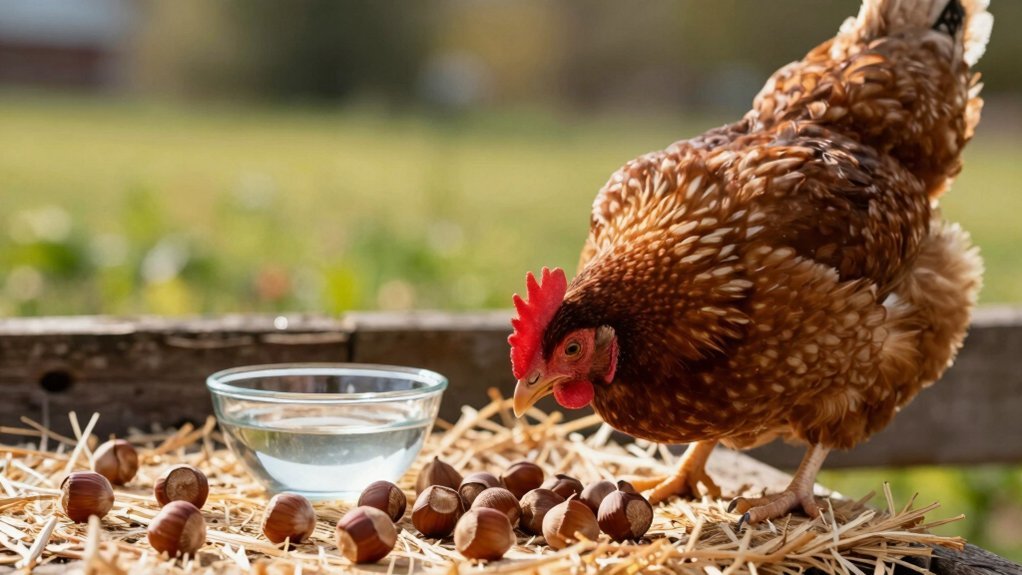
You’re right to wonder if hazelnuts fit into a chicken’s diet, and the short answer is yes—if you strip the shells, roast or crush them, and keep the portions tiny and occasional. Here’s the thing: give each bird three to five unsalted, unflavored kernels once or twice a week, which is roughly a handful, and never let treats exceed 10 % of their daily intake. Obviously, watch for weight gain, softer shells, or crop issues; if any appear, cut back immediately. Now you know the basics, and the next step is learning how to prep them for maximum enjoyment.
Can Hazelnuts Be a Safe Treat for Chickens?
All right, watch choke hazards. Whole nuts can get stuck in a small bird’s throat, especially for younger or bantam breeds, so break the nuts into bite‑size pieces or crush them lightly. Obviously, moderation matters: a handful per flock per day keeps calories in check and prevents weight gain. Takeaway: fresh, properly sized hazelnuts are fine, but guard against mold and choking. Next, consider how to prep them safely. The project showed that sprouted grain mixing dramatically increased hazelnut consumption among the flock. Just like pistachios, you must ensure shells are removed before feeding to prevent digestive issues since chickens cannot break down hard nut shells in their gizzards. While treats like nuts are enjoyable, remember that hens still require unlimited access to a complete feed daily to meet their primary nutritional needs and maintain productivity. Just as metal nesting boxes facilitate sanitation and protect eggs in the coop, providing clean and safe treat options supports overall flock health.
How to Prepare Hazelnuts for Chickens
You’re probably wondering how to turn raw hazelnuts into a safe, tasty treat for your flock. First, preheat your oven to 350‑400°F and spread the nuts on a tray. Roast for 10‑12 minutes, shaking halfway, until they brown lightly—this roasting technique brings out aroma and loosens skins.
Now, let the nuts cool just enough to handle, then rub them with a tea towel; the thin brown skins should slip off easily—simple skin removal makes the kernels cleaner for birds.
Next, crush the nuts coarsely with a mortar or food processor; pieces stay big enough for pecking but small enough to swallow. It is also vital to remove hard shells beforehand, as they can pose a choking hazard or cause crop impaction in chickens.
Finally, mix the crushed kernels with a splash of water or feed mash so they stick and your chickens accept them readily, ensuring you avoid adding any harmful additives like salt which can be dangerous for poultry.
Takeaway: Roast, rub off skins, coarsely crush, and lightly moisten—your flock will love the nutritious snack. Ready to decide how much to feed? Just as with cashews, you must ensure the nuts are unsalted and unflavored to avoid health risks for your poultry.
How Much Hazelnut Should I Feed My Chickens?
If you’re wondering exactly how many hazelnuts to give your chickens, you’re on the right track.
How many nuts per bird?
A handful—about three to five hazelnuts—once or twice a week keeps calories in check. That’s roughly 10 % of a bird’s daily intake, so you stay within the treat limit.
What about flavored nuts?
Avoid salted hazelnuts and chocolate hazelnuts; the added salt and sugar can upset digestion and add unnecessary fat. If you must, offer a single plain nut and discard the rest.
How to control access?
Scatter a few nuts on the ground for a short period, then remove leftovers. This prevents binge‑eating and keeps your flock’s regular feed consumption steady. Just as selecting high-quality commercial feed matched to your birds’ age ensures proper nutrition, managing treat portions prevents dietary imbalances. Always ensure the nuts are properly shelled to avoid choking hazards or digestive issues before offering them to your flock.
Takeaway
Stick to a few plain hazelnuts a couple of times weekly, and you’ll give a tasty treat without compromising nutrition. Remember that treats should never replace a quality layer feed which provides the essential 16-18% protein and calcium required for optimal health and egg production.
Do Hazelnuts Provide Calcium for Strong Eggshells?
limestone, oyster shell, or crushed eggshell powder deliver the 92‑96 % calcium carbonate hens need. Eggshell calcium is highly bioavailable—up to 94 %—and far outpaces the low‑fat, high‑energy profile of hazelnuts. Baking shells at 300°F for 5 to 10 minutes effectively dries them and reduces bacterial risks while preparing them for crushing. Unlike quick-absorbing fine particles, large particle calcium releases slowly overnight to support shell formation when dietary sources are depleted. All right, store any leftover nuts in a cool, dry place—nut storage recommendations suggest airtight containers to keep fats fresh. For real shell strength, rely on scientific supplementation like commercial calcium or properly prepared eggshell powder.
Takeaway: Hazelnuts won’t boost shell quality; use proven calcium supplements instead. Next, ask yourself whether your feed already meets those calcium needs.
How to Detect Over‑Feeding Hazelnuts?
When you wonder if you’re feeding too many hazelnuts, start by watching your birds’ bodies. Rapid weight gain shows up first—feel the breastbone and note a thickening fat cover. If your hens sit more and move less, that’s a red flag.
Here’s the thing: check egg‑laying performance. A sudden dip in quantity or quality, like larger but weaker shells, often means the nuts are crowding out balanced feed. Egg binding risk climbs when extra fat adds pressure during laying.
Now look for digestive changes. Loose, watery droppings or a sour‑smelling crop signal stress. Impacted crop or stasis also points to over‑feeding. Ensuring your flock has access to clean fresh water is also vital, as proper hydration supports digestion and helps mitigate the stress of dietary changes.
Takeaway: monitor weight, eggs, and droppings daily; if any shift appears, cut hazelnuts back to about 10 % of the diet. Next, consider how to keep treats balanced without disrupting normal feed. Remember that adult chickens typically require 120 grams of complete feed daily to maintain healthy growth and production, so excessive treats can easily displace this essential nutritional baseline. Since treats should not dilute essential nutrients, ensure your flock still receives age-appropriate feed to support their specific growth and production needs.
Enrichment Ideas: Feeding Hazelnuts Without Disrupting the Diet
You’re probably wondering how to give hazelnuts as a fun treat without throwing off your flock’s nutrition.
How do I keep hazelnuts from crowding out regular feed?
Offer only a handful of chopped, unsalted nuts a day—about 5 g per bird. Scatter feeding on the yard mimics natural foraging and keeps the nuts a minor supplement. Rotate the nuts with shredded carrots or berries each week; seasonal rotation prevents any one food from dominating the diet.
What texture makes hazelnuts more appealing?
Soften pieces with a splash of water or a drizzle of apple juice, then toss them into the litter. The moist coating encourages peck‑and‑scratch behavior and improves palatability.
How can I make enrichment safe and clean?
Check each nut for mold, discard shells, and store in an airtight container. Keep the treat occasional—once or twice weekly—so you maintain balanced nutrition. Like homemade scratch grain, these nuts should serve as a supplement to add variety and pleasure rather than replacing the main diet. Incorporating ingredients like sunflower seeds alongside nuts can further support digestion and immunity while encouraging natural foraging behaviors. You can also hang the prepared nuts in a hanging snack dispenser to further engage your chickens’ instinctual foraging behaviors.
Takeaway: tiny, moist, scattered hazelnuts added to a varied, seasonal rotation give your chickens enrichment without upsetting their diet. Ready to try a quick scatter feeding tomorrow?