You’re right to wonder if home remedies can truly help coryza, because it’s a bacterial infection that spreads fast and usually needs antibiotics, yet supportive care can ease symptoms and buy you time. First, isolate the sick birds, give fresh water with electrolytes, and boost ventilation to cut humidity and ammonia. Add 4 tsp apple cider vinegar per gallon and a daily garlic‑water mix for mucus relief, but remember these are only supportive. If swelling, nasal discharge, or dropping egg production worsens within 48 hours, call a vet for a prescription—otherwise, keep the flock clean, quarantine new arrivals for two weeks, and monitor daily for early signs. Next, you’ll learn how to prevent future outbreaks.
Understand Coryza and Why Natural Care Falls Short
Why does natural care alone‘t cure coryza? You’re right to wonder, because the disease isn’t just a “bad day” for chickens. It’s a bacterial infection that spreads through close contact and contaminated litter, so herbs can’t erase the pathogen. Viral pathogens don’t cause coryza, but they can weaken the flock’s immunity, making bacterial invasion easier; that’s why vaccination strategies target both bacterial and viral threats.
Here’s the thing: natural remedies like garlic or apple cider vinegar may soothe a bird’s throat, but they don’t kill *Pasteurella multocida*, the primary culprit. Obviously, delays in proper antibiotics let the bacteria linger, keeping the flock contagious. While supportive measures such as maintaining good ventilation help reduce airborne bacteria and alleviate symptoms, they cannot eliminate the underlying infection without veterinary-guided treatment. Although antibiotics can alleviate symptoms of diseases such as infectious coryza, they may not completely eradicate infections due to antibiotic resistance concerns necessitating supportive care such as quarantine and gut health management. Effective treatment often requires specific prescriptions like lincomycin combined with spectinomycin to ensure timely recovery without an egg withholding period.
All right, think of it like a leak in a roof. You can put a bucket under it, but without fixing the roof, water keeps dripping. Natural care is the bucket; antibiotics are the roof repair.
Takeaway: supportive herbs help, but they’re not a cure. Next, ask yourself whether your flock’s vaccination plan covers the bacterial strains you’re seeing. Immediate isolation of sick birds is essential.
Isolate Sick Birds, Hydrate & Boost Airflow
You’re probably wondering why the “bucket” of herbs isn’t enough when a bird shows a runny nose or swollen eyes. The answer is simple: you need isolation, hydration, and airflow before any remedy works.
How do I keep sick birds separate?
Move any bird with discharge or swelling to a dedicated pen far from the flock. Use only its feeders, waterers, and bedding. Limit foot traffic and disinfect boots and tools after each visit. Direct airborne transmission can spread the infection quickly if not contained.
What can I do to keep them hydrated?
Place fresh water within a few steps of the pen. Add electrolytes if the bird looks lethargic. Offer several water points in larger pens so timid birds can drink without competition.
How does airflow help?
Boost ventilation to lower humidity and ammonia. Keep air moving gently—no direct drafts at bird level. Remove wet litter promptly and replace it with dry bedding. Just as harmful ammonia buildup in dirty coops causes stress and halts egg production, poor air quality in isolation pens can severely delay recovery from respiratory illnesses. Incorporating agricultural lime into your bedding routine can further absorb moisture and neutralize odors, creating an alkaline environment that inhibits the growth of harmful bacteria and fungi. Applying this substance helps raise the pH of the litter, which actively kills pathogens and reduces odors to support a healthier recovery space.
Takeaway: Isolate, hydrate, and condition the environment before adding herbs. Next, consider which natural respiratory boosters you’ll use.
Herbal Respiratory Boosters for Coryza: Garlic, Ginger, Oregano, Thyme
Takeaway: A simple blend of garlic, ginger, oregano, and thyme offers broad‑spectrum support for coryza. Specifically, oregano provides powerful antibiotic and anti-parasitic properties that help protect chickens from illnesses, while thyme supports respiratory health with its own antibacterial effects. Chickens will willingly eat fresh oregano leaves to naturally boost their immune health and egg quality without the need for antibiotics. The active compounds carvacrol and thymol found in oregano oil work synergistically to reduce infections and support natural antibody production in the flock. Next, consider how you’ll source fresh herbs for your flock. The ventilation of the poultry house must be adequate to prevent the buildup of ammonia and dust that exacerbate respiratory infections.
Gentle Water Additives for Coryza Relief: Vinegar, Garlic & Tonic Mixes
What can a gentle water additive actually do for coryza? You’re probably wondering if a splash of vinegar or a garlic‑infused drink really helps. Here’s the thing: a modest acid balance shift can loosen mucus, while hydration support keeps the flock drinking and absorbing nutrients.
How much vinegar?
Use 4 tsp per gallon, or 2 qt per 100 qt, for 2–3 days. The acid helps clear throat coating and improves nutrient uptake.
Garlic water basics
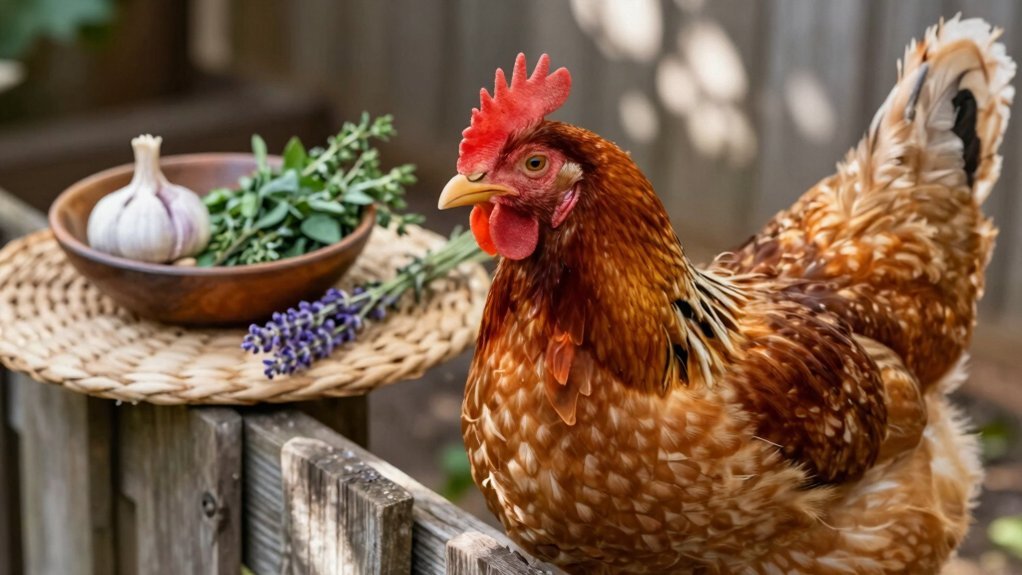
Add a few crushed cloves to fresh water, change it daily. Garlic can foul water quickly, so you’ll need frequent refreshes. Beyond hydration, garlic acts as a natural antimicrobial agent that creates an environment hostile to the bacteria causing respiratory issues. Incorporating herbs like oregano into their diet can also help fight harmful bacteria alongside these water treatments.
Electrolyte tonic tip
Mix one scoop of a Hydro‑Hen style tonic per gallon for short stress periods; it supplies electrolytes and hydration support.
Takeaway
These additives are supportive, not curative. Offer them in clean drinkers, monitor intake, and switch back to plain water once birds feel better.
Next, consider when to call the vet if symptoms persist.
Aloe vera and garlic immune boost can also aid recovery. While these liquids help, adding turmeric to feed acts as a natural antibiotic that further supports immune function and disease resistance without adverse effects when dosed correctly.
When to Call the Vet for Coryza? Spot Antibiotic Need
You’ve probably wondered whether a simple water additive can replace a vet visit when coryza shows up. The truth is, early coryza signs—swollen eyes, foul nasal discharge, sneezing—are easy to miss, but they signal you should act fast. If you see those signs in more than one bird within 24‑72 hours, that’s a contagious outbreak indicator and you need professional help.
All right, here’s the thing: antibiotics only work when a bacterial infection like *Avibacterium paragallinarum* drives the disease. You’ll know you need them if facial swelling worsens, appetite drops, or egg production plummets despite supportive care. A vet can confirm with PCR or culture and prescribe flock‑level treatment. Since January 2017, obtaining water-soluble antibiotics for your flock legally requires a veterinarian’s prescription due to FDA regulations restricting over-the-counter purchases. While many conditions require specific prescriptions, some treatments target chronic respiratory disease caused by distinct pathogens like *Mycoplasma gallisepticum* using specialized formulations such as Tylan 50.
Obviously, you should call a vet immediately when multiple birds show swelling, purulent discharge, or rapid spread. The takeaway: watch for early signs and contagious patterns, then let a professional guide antibiotic use. Next, consider how you’ll monitor the flock for those triggers. Just as with salpingitis, treatment success relies on early detection before the infection becomes severe and unresponsive to standard antibiotics.
Prevent Future Outbreaks: Quarantine, Biosecurity, Management
You’re probably wondering why a simple quarantine feels like a hassle when you could just mix new birds right away. The truth is that a short isolation period saves you from costly disease outbreaks later. Keep new arrivals separate for at least two weeks, watching for sneezing, nasal discharge, or lethargy. During quarantine, practice strict biosecurity: change shoes, disinfect equipment, and limit human traffic. Daily disease monitoring lets you spot early signs before they spread to the main flock. Once cleared, introduce the birds using a gradual flock rotation, swapping a few individuals at a time to let immunity build. Consistent sanitation, proper ventilation, and regular health checks round out a solid management plan that keeps your chickens thriving throughout every season for safety. You should also introduce multiple new hens at once rather than adding a single bird to significantly reduce bullying and stress during integration. Sourcing your replacement birds from local hatcheries can further reduce disease risk by providing breeds suited to your specific climate and minimizing shipping stress. Selecting chicks from reputable sources offering shipping guarantees ensures your new flock arrives healthy and ready for integration without the added stress of transit-related illness.