You’re juggling temperature charts, altitude worries, and egg‑age quirks; you want a single guide that cuts the guesswork. Here’s the thing: the sweet spot sits at 99.5°F (37.5°C) with a tight ±0.5°F band, but you’ll bump to 100°F at high elevations and add half a degree for eggs older than a week or larger breeds. Now, if you can keep that range steady, you’ll dodge developmental hiccups and boost hatch rates—so let’s immerse ourselves in the seven temperature tweaks that fit every hatch‑hobbyist’s setup.
| 12 Egg Incubator with Auto Turn Temp/Humidity Display Hatch Alert |  | Precision Pro | Capacity (Eggs): 12 eggs | Automatic Turning: Auto‑turn, interval 60‑210 min, stops 4 days before hatch | Temperature Control: 68‑104 °F (20‑39.5 °C), 0.5 °F accuracy | VIEW LATEST PRICE | Read Our Analysis |
| APDOE Egg Incubator with Automatic Turning 12+30 Eggs |  | Versatile Capacity | Capacity (Eggs): 12 chicken + 30 quail eggs (dual trays) | Automatic Turning: Auto‑turn, interval 1‑3 h, stops during lockdown (final 3 days) | Temperature Control: Adjustable, alerts optional | VIEW LATEST PRICE | Read Our Analysis |
| APDOE Egg Incubator with Temperature Humidity Turning Controls | 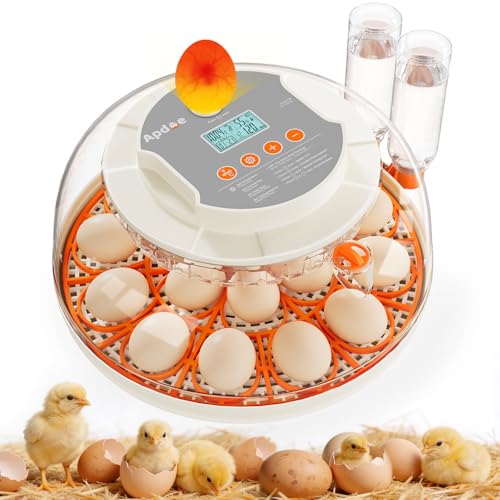 | All‑Rounder | Capacity (Eggs): 18 chicken / 50 quail / 8 duck‑goose‑turkey eggs | Automatic Turning: Auto‑turn, interval 1‑3 h, stops during lockdown (final 3 days) | Temperature Control: Adjustable, alerts optional | VIEW LATEST PRICE | Read Our Analysis |
| 12 Egg Incubator with Auto Turning & Temp/Humidity Control | 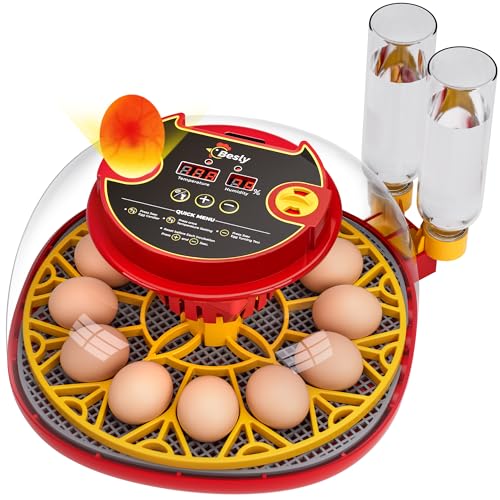 | Compact Performer | Capacity (Eggs): 12 eggs | Automatic Turning: Auto‑rotate, 6 times day, stop 3 days before hatch | Temperature Control: Adjustable, no specific range given | VIEW LATEST PRICE | Read Our Analysis |
| Incubator with 12 Egg Capacity Automatic Turner Temp/Humidity Control 360° Viewing (Grey) |  | Clear View | Capacity (Eggs): 12 eggs | Automatic Turning: Auto‑turn, interval 60‑180 min, stop 3 days before hatch | Temperature Control: LED display, adjustable, no range specified | VIEW LATEST PRICE | Read Our Analysis |
| Incubator for Hatching Eggs – Automatic Turning & Humidity Display |  | Heavy‑Duty | Capacity (Eggs): 120 eggs | Automatic Turning: Auto‑turn every 90 min, stop 3 days before hatch | Temperature Control: 4 automatic + 1 constant mode, alarm for deviation | VIEW LATEST PRICE | Read Our Analysis |
| Automatic Egg Incubator 12‑Egg Capacity with Digital Display and 360° Turner |  | Premium Choice | Capacity (Eggs): 12 chicken/duck / 40+ quail eggs | Automatic Turning: Auto‑turn, interval 60‑180 min, stop 72 h before hatch | Temperature Control: 77‑103 °F, ±0.5 °F accuracy (PID) | VIEW LATEST PRICE | Read Our Analysis |
More Details on Our Top Picks
12 Egg Incubator with Auto Turn Temp/Humidity Display Hatch Alert
All right, if you’re juggling a small flock and need a hands‑off solution, this 12‑egg incubator is a precision pro that keeps temperature at 99.5‑100.5 °F with ±0.5 °F accuracy. You’ll love the adjustable range from 68°F to 104°F, so you can dial in exactly what your breed needs. The 300 ml water bottle holds enough moisture for a 21‑day cycle, and the humidity stays between 20% and 75% with ±1% precision.
Now, the automatic turner saves you endless hours of manual work. It rotates twelve eggs at intervals you set—60 to 210 minutes—then stops four days before hatch, boosting hatch rates. You can pull the tray out after chicks emerge, and the candling light lets you peek without opening the lid.
Here’s the thing: the alarm sounds if temperature drifts beyond ±2°F or humidity swings over 10% after two hours, so you stay in control. The four‑button panel handles everything—temp, humidity, days, water refill, turning, candling—without a steep learning curve. If you need a compact, sturdy unit for home or classroom use, this one fits your budget and space.
Obviously, it isn’t for massive commercial farms; you’ll outgrow twelve eggs quickly. But for a hobbyist or small‑scale breeder, it delivers reliable, low‑maintenance incubation. Choose it and you’ll spend less time tinkering and more time watching fluffy chicks hatch.
- Capacity (Eggs):12 eggs
- Automatic Turning:Auto‑turn, interval 60‑210 min, stops 4 days before hatch
- Temperature Control:68‑104 °F (20‑39.5 °C), 0.5 °F accuracy
- Humidity Management:20‑75 % RH, ±1 % accuracy, 300 ml water bottle
- 360° Viewing / Transparent Lid:360° dome, candling light, clear observation
- Material / Build:Plastic housing, 3 mm thick lid
- Additional Feature:Candling light integrated
- Additional Feature:Two water ports tray
- Additional Feature:Removable bottom tray
APDOE Egg Incubator with Automatic Turning 12+30 Eggs
You’ve probably wrestled with cramped incubators that can’t handle both chicken and quail eggs without constant juggling. That frustration ends with the APDOE 12+30 model. It gives you two separate trays, one for twelve chicken eggs and another for thirty quail eggs, so you never mix sizes or waste space.
All right, the automatic horizontal turner lets you pick 1‑, 2‑, or 3‑hour intervals, and it pauses during lockdown, the final three days when you need a still environment. You set the incubation day manually, and if you move eggs mid‑cycle, you can correct the day with a quick dial turn.
Now, humidity and temperature stay on point thanks to an external water bottle that refills itself, usually only two or three times per run. Adjustable vents and multi‑level water channels give you fine control, and you can mute alerts if you prefer a quieter incubator.
The 360‑degree transparent lid lets you watch embryos without opening the door, and the built‑in candler flags infertile eggs early. You’ll clean quickly by pulling out the removable tray—just rinse, no dishwasher.
If you value orange‑bright ABS durability, a three‑year warranty, and lifetime tech help, this unit fits your kitchen lab. It’s not for ultralight backpackers, but for anyone who wants reliable, hands‑off hatching at home. Choose it, and you’ll feel confident your eggs are in good hands.
- Capacity (Eggs):12 chicken + 30 quail eggs (dual trays)
- Automatic Turning:Auto‑turn, interval 1‑3 h, stops during lockdown (final 3 days)
- Temperature Control:Adjustable, alerts optional
- Humidity Management:Adjustable vents, multi‑level water channels, auto‑refill (2‑3 refills)
- 360° Viewing / Transparent Lid:360° transparent lid, candling built‑in
- Material / Build:ABS (Acrylonitrile Butadiene Styrene)
- Additional Feature:Dual‑tray capacity (chicken & quail)
- Additional Feature:3‑year warranty + lifetime support
- Additional Feature:ABS construction
APDOE Egg Incubator with Temperature Humidity Turning Controls
If you’re juggling multiple egg batches and need a set‑and‑forget solution, the APDOE incubator is the all‑rounder you’ve been hunting for. You’ll love the automatic turning with 1‑, 2‑, or 3‑hour intervals and a countdown that tells you exactly when the next spin happens. The lock‑down mode kicks in for the final three days, so you won’t waste time manually stopping the motor.
All right, the capacity fits 18 chicken eggs, 50 quail, or 8 larger duck, goose, or turkey eggs, thanks to two interchangeable trays. The 360° transparent lid lets you peek without opening, and the ABS shell stays sturdy at just 5.9 lb.
Now, humidity stays steady thanks to an external water bottle that refills itself, needing only two or three top‑offs per cycle. You can tweak the vent and water channels for precise control, and the optional alerts keep you informed without buzzing constantly.
Here’s the thing: the built‑in candler shows embryo progress, so you spot infertile eggs early, and the detachable design makes cleaning a breeze—just pull out the fan and use the included brush.
Obviously, the three‑year warranty and lifetime technical support give you peace of mind. This one’s for you if you want a hands‑off incubator that still lets you fine‑tune temperature, humidity, and turning on your terms. Go ahead and trust it; you’ve earned a hassle‑free hatch.
- Capacity (Eggs):18 chicken / 50 quail / 8 duck‑goose‑turkey eggs
- Automatic Turning:Auto‑turn, interval 1‑3 h, stops during lockdown (final 3 days)
- Temperature Control:Adjustable, alerts optional
- Humidity Management:Adjustable vents, multi‑level water channels, auto‑refill (2‑3 refills)
- 360° Viewing / Transparent Lid:360° transparent lid, candling built‑in
- Material / Build:ABS
- Additional Feature:Supports 50 quail eggs
- Additional Feature:Detachable fan with cleaning brush
- Additional Feature:Real‑time countdown display
12 Egg Incubator with Auto Turning & Temp/Humidity Control
A compact performer, the 12‑egg incubator fits on any countertop while delivering pro‑level control. You’ve probably wrestled with bulky units that hog space and still miss temperature spikes. This one stays under 4 lb, so you can slide it onto a kitchen shelf and still see a crystal‑clear dome that lets you watch embryos without lifting a lid.
All right, the auto‑turning cradle spins six times a day, mimicking a hen’s nest and preventing the embryos from sticking. You’ll need to pull the tray out during the last three days, but that’s a tiny trade‑off for hands‑free consistency.
Now, humidity is a two‑channel system linked to 300 mL reservoirs; you’ll only swap water bottles once or twice during a full hatch. The dual trays keep moisture even, and the snap‑clean design lets you scrub everything in ten minutes.
Obviously, this model suits home hobbyists, classroom demos, and small farms that need reliable results without a full‑size cabinet. If you value a tidy footprint, visual monitoring, and low‑maintenance climate control, this one’s for you. Go ahead—your eggs deserve a pro‑level incubator that fits your space.
- Capacity (Eggs):12 eggs
- Automatic Turning:Auto‑rotate, 6 times day, stop 3 days before hatch
- Temperature Control:Adjustable, no specific range given
- Humidity Management:Dual‑channel, 300 ml reservoirs, 1‑2 changes per cycle
- 360° Viewing / Transparent Lid:Panoramic dome, 360° SmartView
- Material / Build:PVC shell, modular snap‑clean design
- Additional Feature:Dual‑channel humidity trays
- Additional Feature:Snap‑clean modular design
- Additional Feature:Panoramic dome observation
Incubator with 12 Egg Capacity Automatic Turner Temp/Humidity Control 360° Viewing (Grey)
All right, you’ve probably spent hours worrying whether you’ll see those tiny embryos developing without constantly opening the incubator. You need a unit that lets you watch without disturbing, and this grey 12‑egg model gives you a full 360° view through clear plastic. The LED readout shows temperature in Fahrenheit, and the external water reservoir keeps humidity steady without you having to pry the lid open.
Now, the automatic turner saves you from manual flipping; you can set it every 60, 120, or 180 minutes, and it stops three days before hatch, mimicking nature. If you’re hatching chickens, ducks, or quail, the built‑in candling lets you check development without breaking the seal. The ABS construction is lightweight yet durable, and the disassemblable design means cleaning is a breeze—just pull the upper cover and rinse the lower tray.
Here’s the thing: this incubator fits small‑scale hobbyists perfectly, but if you plan to hatch more than a dozen eggs at once, you’ll outgrow it quickly. It’s ideal for you if you value visual monitoring, hands‑off turning, and easy maintenance without sacrificing temperature precision. Obviously, you’ll appreciate the calm confidence of a stable environment, and the grey finish hides any kitchen spills. Choose it if you want a reliable, low‑maintenance partner for your next clutch, and you’ll feel smart for avoiding constant door‑opening drama.
- Capacity (Eggs):12 eggs
- Automatic Turning:Auto‑turn, interval 60‑180 min, stop 3 days before hatch
- Temperature Control:LED display, adjustable, no range specified
- Humidity Management:External water fill, stable humidity, no range given
- 360° Viewing / Transparent Lid:360° transparent design
- Material / Build:ABS plastic (grey)
- Additional Feature:LED temperature display
- Additional Feature:External water filling system
- Additional Feature:Removable upper cover
Incubator for Hatching Eggs – Automatic Turning & Humidity Display
You’ve probably spent countless nights worrying whether the temperature will stay steady while you’re away, and that stress is real. Now, the Chalixion incubator eases that by offering five incubation modes—four automatic and one constant‑temperature—plus an alarm that screams if temps drift. The humidity display keeps you in the loop, and an external water refill tank stops temperature spikes when you top it off.
Here’s the thing: automatic turning every 90 minutes boosts hatch rates, and you can see the exact turn interval on the screen. Adjustable rollers let you fit anything from quail to turkey eggs, but the 120‑egg capacity means it’s a bit bulky for tiny kitchens.
All right, the built‑in day counter and egg candler let you track progress and cull unfertilized eggs without turning on lights. Power worries vanish thanks to the included 110 V cord and 24 V battery cable, so a blackout won’t ruin your batch. If you need a reliable, hands‑off setup that fits a modest backyard hatchery, this one fits you perfectly.
- Capacity (Eggs):120 eggs
- Automatic Turning:Auto‑turn every 90 min, stop 3 days before hatch
- Temperature Control:4 automatic + 1 constant mode, alarm for deviation
- Humidity Management:Humidity display, external refill device, no range given
- 360° Viewing / Transparent Lid:No explicit 360° lid mentioned (standard lid)
- Material / Build:ABS (manufacturer Chalixion)
- Additional Feature:5 incubation modes
- Additional Feature:Built‑in egg candler for dark inspection
- Additional Feature:12 V battery backup
Automatic Egg Incubator 12‑Egg Capacity with Digital Display and 360° Turner
If you’re juggling a backyard hatchery and need reliable, hands‑off incubation, this premium 12‑egg unit is the perfect fit. You’ll love the digital display that shows temperature from 77‑103 °F and humidity 40‑80 % RH with ±0.5 °F accuracy, so you never guess. The PID system holds 99.5 °F±0.5 °F and 360° airflow kills hot spots—obviously a lifesaver for delicate embryos.
All right, the automatic 360° turner runs on 60, 120, or 180‑minute intervals and stops 72 hours before hatching, flashing a reminder. The 3 W LED candle lets you peek without opening the lid, keeping temperature steady. This is for you if you hate manual turning and want consistent rotation.
Now, humidity stays in the sweet spot of 55‑65 % RH thanks to dual 500 ml water tanks that need only a couple refills per cycle. Transparent level indicators and adjustable vents give you control without fuss. If you’re okay with a modest water‑tank size, this system works beautifully.
Here’s the thing: the ABS shell with 5 mm insulation, child‑safe lock, and silicone seal keep the incubator safe and quiet. Removable 304 stainless steel trays are dishwasher‑safe, and the IP44 panel resists splashes. You’ll appreciate the emergency power‑off memory and error diagnostics if you’re prone to power hiccups.
This one’s for you if you want a compact (11×12.4×6.7 in) yet robust incubator that handles chicken, duck, quail, or pigeon eggs without extra accessories. Choose it, set the presets, and let the machine do the heavy lifting—your hatchery will thank you.
- Capacity (Eggs):12 chicken/duck / 40+ quail eggs
- Automatic Turning:Auto‑turn, interval 60‑180 min, stop 72 h before hatch
- Temperature Control:77‑103 °F, ±0.5 °F accuracy (PID)
- Humidity Management:55‑65 % RH, dual 500 ml tanks, 2‑3 refills
- 360° Viewing / Transparent Lid:360° transparent lid, LED candler
- Material / Build:Food‑grade ABS, 5 mm insulation walls, stainless steel trays (dishwasher‑safe)
- Additional Feature:Child‑safe locking lid
- Additional Feature:Dishwasher‑safe stainless trays
- Additional Feature:IP44 waterproof control panel
Factors to Consider When Choosing Temperature for Incubating Chicken Eggs
You’re probably worried that hitting the “right” temperature feels like guessing, but the ideal range for chicken eggs is narrow and species‑specific, so you need a calibrated incubator that stays spot‑on. Now, remember humidity and airflow aren’t just side notes—they interact with temperature, and a model with precise ventilation will keep the eggs from overheating or drying out. Here’s the thing: if you want a set‑and‑forget system that matches your budget and space, pick the one that lets you fine‑tune temperature while tracking humidity, and you’ll feel confident moving forward.
Optimal Temperature Range
All right, you’re probably wondering why the temperature can swing a few degrees and still hatch healthy chicks—because the right range balances embryonic metabolism and moisture loss, and it’s not a one‑size‑fits‑all. You’ve seen 99.5 °F (37.5 °C) pop up everywhere, but you’ll also hear 100 °F (37.8 °C) suggested for high‑altitude farms. Here’s the thing: the sweet spot sits between 99°F and 100.5°F, with 99.5°F being the safest default for most backyard incubators. If you keep the environment within that band, you’ll avoid stalled development and excess evaporation, which both kill embryos.
Now, think about your setup. A digital incubator with tight temperature control lets you hug 99.5°F, while a DIY box with a simple thermostat may drift a couple of degrees. If you can’t guarantee ±0.2°F stability, aim for the middle of the range—around 100°F—to give yourself a buffer. Obviously, a stable humidity level pairs with this temperature; otherwise you’ll see soggy or desiccated chicks.
Here’s the thing: if you’re a hobbyist who checks the thermometer twice a day, the 99.5°F setting works fine; if you run a small hatchery with continuous monitoring, you might push to 100.5°F for a slightly faster hatch. Pick the temperature that matches your equipment’s precision and your willingness to fine‑tune. You’ll feel confident knowing you’ve matched the range to your reality, making the decision feel obvious and smart.
Species Specific Needs
All right, you’ve probably noticed that the “one‑size‑fits‑all” temperature myth falls apart once you start looking at breed quirks—some layers like Leghorns thrive at the lower end of the range, while heavy‑set Rhode Island Reds need a touch more heat to keep their larger embryos from stalling. Now, you’re juggling the fact that heritage breeds such as Plymouth Rocks demand a steadier 99.5 °F to avoid premature cooling, yet modern hybrids can tolerate a few degrees lower without loss of hatchability. Here’s the thing: if you raise a mixed flock, you’ll set a middle ground, then tweak humidity to compensate for each breed’s metabolic rate. Obviously, you’ll notice slower development in larger eggs, so you may need to add a half‑degree for extra energy. This one’s for you if you love variety and don’t mind a small temperature dial. Choose the breed that matches your space, then lock in the temperature that keeps your embryos humming. Feel confident—your eggs will thank you.
Incubator Calibration Accuracy
All right, you’ve probably noticed that the “one‑size‑fits‑all” temperature myth falls apart once you start looking at breed quirks—some layers like Leghorns thrive at the lower end of the range, while heavy‑set Rhode Island Reds need a touch more heat to keep their larger embryos from stalling. The problem you face is a drifting sensor that tells you 99.5 °F while the eggs sit a degree cooler, and that tiny error can shave hatch rates. Here’s the thing: grab a certified thermometer, nest it among dummy eggs, and compare readings daily. If you see more than ±1 °F variance, you need a recalibration or a better controller. High‑end units use PID loops and 360° airflow to keep you within ±0.5 °F, and they sound an alarm when the drift exceeds ±2 °F for two hours. That alert is your safety net, not a nuisance. Now, remember that room temperature, vent tweaks, and the incubator’s age all tug at the sensor, so schedule checks every week. If you’re a hobbyist who can’t spare a week, a mid‑range model with a reliable alarm will still protect you. This one’s for you if you want confidence without a lab coat. Adjust, verify, and let the eggs do the rest—your decision becomes obvious and stress‑free.
Humidity Interaction Effects
If your incubator’s temperature drifts even a degree, the eggs’ metabolism shifts and the humidity you set no longer reflects the true moisture loss—so you end up with either a shriveled chick or a soggy hatchling.
All right, you’ll notice that a 45‑55% RH range works when the temperature stays near 100°F. A degree hotter speeds water vapor loss, so you must raise humidity a notch to keep the 11‑13% weight‑loss target. Conversely, a cooler day lets the eggs retain moisture; lower humidity prevents the air cell from swelling too much.
Now, the final three days demand about 65% RH because the membranes are ready to separate. If you stay at 55% you risk chicks sticking to the shell; if you overshoot, you get weak, malpositioned hatchlings.
Here’s the thing: you’ll need a hygrometer that reacts quickly to temperature shifts, otherwise you’ll be guessing. Pick a model with automatic compensation if you want hands‑off precision; a manual gauge works if you’re diligent about checking twice daily.
Obviously, you don’t have to be a scientist—just keep the temperature steady, adjust humidity accordingly, and you’ll hit that sweet spot. Go ahead, set the dial, and trust the process.
Ventilation and Airflow
Ventilation isn’t just a side note; it’s the bridge between steady temperature and healthy embryos, so you’ll notice the difference when you finally get the airflow right.
You’re probably frustrated watching embryos stall because oxygen’s scarce, and you’ll see the hatch rate climb once you fix it. All right, keep the intake vent open enough for fresh air but not so wide that you lose heat; a 1‑inch opening per 100 eggs works for most small incubators.
Now, watch the exhaust side. Too much outflow can dry the shell, too little causes CO₂ buildup. Position the exhaust opposite the intake, and adjust with a simple flap or a small fan on low speed.
Here’s the thing: if you’re using a commercial incubator, you’ll have built‑in fans—just set them to a steady, low hum. If you DIY with a cardboard box, a small computer fan on a 12‑V supply does the trick. Obviously, you’ll need a hygrometer to confirm humidity stays in range because airflow and humidity interact.
You’ll feel confident when the eggs hatch with strong chirps and minimal malformations. Choose the airflow setup that matches your space, budget, and patience level, and you’ll see results without guesswork.
Egg Age and Storage
You’ve probably noticed that eggs you keep a week or more start losing their spark, and you wonder why the hatch rate drops even when you nail the temperature and humidity. The problem? Older eggs need a tiny temperature bump—about 0.5 °F (0.3 °C)—to offset the natural decline in viability. You’ll also want to keep them cool, between 55 °F and 65 °F (13 °C‑18 °C), and at 75‑85 % humidity so they don’t dry out. Store them with the air cell up; that keeps the yolk in the right spot and preserves embryo health.
Now, every extra day past seven chips the hatch rate by roughly 0.5‑1 %. If you’re willing to accept a modest drop, you can still incubate at the standard 99.5 °F. If you need the best odds, aim for fresh eggs or plan a 0.5 °F increase. All right, keep those storage conditions tight, and you’ll feel confident that your temperature choice matches the egg’s age.
Power Supply Stability
Power outages make you panic because a single dip can wreck an embryo’s development. You’ve seen the temperature gauge wobble and felt the dread. Your incubator needs a rock‑solid power source, otherwise those tiny lives suffer.
All right, choose a model with a backup battery cable connection. It kicks in instantly, keeping heat steady while the grid recovers. Some even have an emergency‑off memory that restores your exact settings—no re‑calibration needed. Obviously, this adds cost, but the peace of mind outweighs a few extra dollars.
Now, think about voltage stability. Fluctuating lines strain heating elements and skew temperature accuracy. If you live in an area with frequent surges, a 12 V secondary battery or a quality surge protector is worth the investment. This setup suits hobbyists who can’t afford a power outage.
Here’s the thing: you don’t need a full‑blown generator unless you expect hours without power. A reliable battery backup plus a stable outlet covers most scenarios. Pick the solution that matches your outage risk, and you’ll keep embryos on track without second‑guessing.
Monitoring Technology Integration
You’re watching the temperature gauge jitter while a power glitch looms, and the thought of losing a clutch of embryos makes your stomach drop. All right, you need a display that never blinks. Continuous digital screens give you ±0.1 °C accuracy, so you’ll see each tiny shift before it hurts the hatch.
Now, you’ll want alarms that actually shout. Integrated audible or visual alerts trigger when you drift beyond ±1 °C, keeping you awake and the eggs safe. If you’re a night‑owl, pick a system with flashing LEDs and a phone push‑notification option.
Here’s the thing: smart PID controllers constantly tweak heating elements, locking the environment at 99.5 °F. Programmable profiles let you set day‑by‑day curves, so you won’t have to manually adjust.
If you fear a runaway heater, choose a unit with over‑temperature protection that cuts power at a safe limit. This one’s for you if you value hands‑off safety over cheap simplicity.
Pick the kit that matches your comfort with tech, and you’ll feel confident that the eggs stay on track without you hovering over the incubator.