You’re probably wondering how Old English Game chickens fit into your flock, and you asked the right question. They’re compact (4‑5 lb roosters, 3.5‑4 lb hens), hardy in cold, and come in 30‑plus color varieties; they lay 100‑160 small white eggs a year and are excellent mothers, yet roosters can be aggressively territorial. Give them a secure 8‑10 sq ft run, predator‑proof coop, and daily handling, and you’ll enjoy their bold, active spirit while managing occasional flightiness. If you keep reading, you’ll learn how to start a breeding program and pick the best lines.
Old English Game Overview: History, Size & Color Varieties
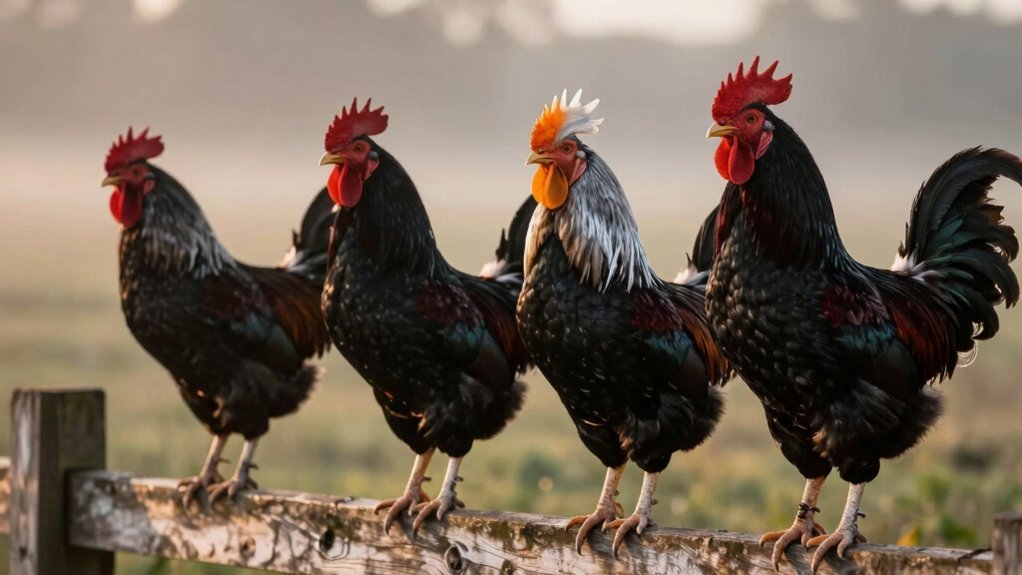
What’s the story behind Old English Game chickens? You’re probably wondering why these birds look so timeless. How did ancient genetics shape them? Romans brought early cockfighting birds to Britain in the 1st century, and their ancient genetics survived through centuries of selective breeding. The breed’s form barely changed; roosters stay around 4 lb, hens about 3.5 lb, and bantams drop to 1.3–1.6 lb. What colors can you expect? The Poultry Club of Great Britain lists 13 Carlisle and 30 Oxford colors, while the Entente Européenne recognizes 33, and the American Poultry Association 28. Do standards differ across the pond? Yes—British continental standards separate Carlisle and Oxford types, whereas U.S. standards favor a smaller, narrower bird for exhibition. Takeaway: You get a compact, historic fowl with a massive palette of colors, all rooted in ancient genetics and shaped by continental standards. Next, explore how those standards affect your show‑bird choices. They thrive in cold environments, tolerating low temperatures better than heat. Although originally bred for fighting, many enthusiasts now keep these birds for their hardiness and ornamental value rather than for combat. While modern game fowl like the Brown Red were developed in the United States through crosses of Spanish game fowl and Northern Irish lines, the Old English Game retains its distinct ancestral purity from the original British stock. Unlike cold-hardy breeds that rely on dense, insulating feathers to survive harsh winters, the Old English Game depends more on its compact size and active nature to tolerate low temperatures.
Temperament & Behavior: Active, Flighty & Aggressive Traits
Why do Old English Game chickens seem so restless? You’re probably wondering why they sprint, squawk, and test every fence. It’s because they’re extremely active, energetic, and alert—like a tiny, feathered athlete on caffeine. Their upright carriage and bold movement make them look confident, but that confidence translates into flighty behavior; they’ll dash through low enclosures the moment a gap appears. These birds are driven by highly motivated instincts to perform natural behaviors like foraging and dust bathing, and preventing these actions can lead to frustration or harmful habits.
How do you keep them from turning your yard into a battlefield? You’ll need independent handling and firm, consistent interaction. Regular, gentle restraint teaches them you’re not a threat, yet they’ll still challenge other birds. Males especially guard territory, sparking aggressive territorial interactions that can injure rivals. While their aggression is often about dominance, limited resources can escalate these natural pecking order behaviors into dangerous attacks requiring intervention.
What’s the bottom line? Expect high stamina, noisy antics, and strong territorial instincts. Provide secure runs, limit male competition, and handle them daily. This will curb escape attempts and reduce fights. Next, consider how their free‑range cravings shape coop design. Their low heat tolerance means they thrive in cooler climates and can endure cold temperatures. Despite their game bird heritage, these birds are calm and bear confinement well, making them suitable for smaller spaces if managed correctly.
Old English Game Egg Production & Brooding: Yield, Egg Traits & Mothering
You’re probably wondering how many eggs an Old English Game hen actually lays and whether she’ll sit on them. You’ll get roughly 100‑160 eggs a year, about 2‑4 per week, so don’t expect a high‑output layer. The eggs are small‑to‑medium, mostly white with occasional creamy tints, and they’re prized for freshness rather than volume. This white shell color aligns with the breed’s white earlobes, reflecting the genetic link between earlobe pigmentation and egg color found in many chicken varieties.
Here’s the thing about brooding. These hens are natural setters; they’ll go broody and guard their clutch fiercely, sometimes acting aggressive toward intruders. Their mothering is excellent, and you’ll see good clutch consistency when you let them incubate naturally.
Now, about hatchability. Fertility hovers around 40‑55 % with a 6‑to‑1 hen‑to‑male ratio, and hatchability rates depend heavily on line quality and handling. If you manage the flock well, you’ll enjoy respectable hatch success.
Takeaway: Expect modest egg numbers, small white eggs, strong brooding instincts, and decent hatchability when you provide proper care. Ready to plan your breeding schedule?
Unlike Silkie chickens, which lay pale cream eggs and start production later at 7 to 9 months, Old English Game hens offer a slightly different profile in both timing and shell coloration. It is worth noting that while Silkies possess turquoise earlobes, this distinct feature does not dictate their egg color, just as the white earlobes of Old English Games correlate with their white shells.
Old English Game Meat Quality & Dual‑Purpose Potential
What can you expect from an Old English Game on the table? You’ll see a compact, muscular bird that yields 4‑5.5 lb roosters and 3.5‑6.5 lb hens. The meat is fine‑fibered, rich, and a touch gamey, making it a “very good” table bird despite the modest carcass size.
Here’s the thing: you’ll typically slaughter at 20‑24 weeks, when the muscle is firm but the bird hasn’t over‑aged. Adjust feed rations to a balanced starter then a protein‑rich grower; a slight increase in protein boosts flavor without excess fat.
All right, you can also count on 100‑160 eggs a year, so the breed offers limited dual‑purpose value. It’s not a high‑volume meat producer, but for a backyard homestead it delivers tasty meat and respectable eggs.
Takeaway: Expect flavorful, game‑style meat at a modest size and a modest egg output, ideal for niche, heritage cooking. Next, consider how you’ll manage feeding and timing to hit that ideal slaughter age. Unlike fast-growing broilers harvested at 6 to 10 weeks, this heritage breed requires a longer growth period to develop its unique meat quality and justify a premium price point based on flavor rather than weight efficiency. While modern operations often prioritize fast growth to reach processing weight quickly, the Old English Game demands patience to achieve its distinct culinary profile. In contrast, commercial broilers are genetically selected for rapid growth to reach slaughter weight in just 5 to 7 weeks, a trait that often leads to skeletal and heart issues.
Housing & Care Essentials: Free‑Range Setup, Fencing & Flock Integration
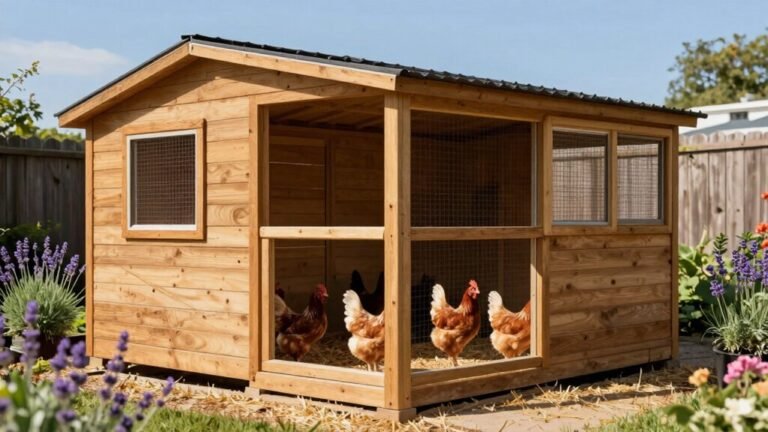
A lot of people wonder how to give Old English Game chickens the space they need without turning the yard into a chaos zone. You’ll need at least 8‑10 sq ft of run per bird, preferably a larger secured yard if they spend most daylight outside. A roofed run or higher fence stops short‑flight escapes, and you can clip wings for extra safety.
How do I keep predators out?
Nighttime containment in a predator‑proof coop is non‑negational. Secure latches, buried wire, and covered vents keep foxes and raccoons out, while a solid roof protects against hawks. It is critical to use ¼ inch hardware cloth instead of standard chicken wire, as the latter is easily breached by raccoons and other determined predators. Since foxes are primarily nocturnal hunters, locking chickens in a secure coop at night is critical, and adding sensor lights can serve as an effective additional deterrent.
What about flock dynamics?
Old English Game birds are bold; roosters may challenge each other in tight spaces. Introduce new birds gradually, use separate pens for initial acclimation, and keep daily supervision to spot bullying early. While managing their bold nature, remember that feeding them raw steel cut oats requires caution due to soluble fiber that can interfere with nutrient absorption if not cooked first.
Takeaway: Provide ample, fenced free‑range space, a sturdy night coop, and watch them each day. Next, think about how you’ll manage breeding lines and color choices.
Starting a Breeding Program: Selecting Lines, Color Choices & Reputable Breeders
If you’re wondering which Old English Game lines to start with, you’re asking the right question.
Which strain fits my goal?
You’ll compare Oxford’s lean, active build with Carlisle’s heavier, compact form. Oxford shines in speed and performance; Carlisle excels in show‑type conformation. Choose the strain that matches your aim—show, breeding, or preservation.
How do I pick colors that work?
Color genetics follow predictable patterns; spangled, black‑breasted red, and duckwing (silver/gold) are popular for inheritance. Color‑sorting hens and cocks lets you lock in desired traits, and you can trace trait inheritance through a few generations. While crossbreeding different strains can introduce genetic diversity to enhance specific characteristics, achieving stable outcomes often requires multiple generations of careful selection. Modern breeding programs increasingly utilize DNA tests during health screenings to identify and avoid genetic diseases while selecting the best-performing birds.
Where can I find trustworthy breeders?
Breeder verification matters. Look for hatcheries like Cackle Hatchery, whose 52‑year record produced 18 standard colors, nine now in the APA Standard. Check references, health records, and fertility stats before buying.
To ensure long-term success, you should select only the top 10% of your flock as breeding stock to maintain vigor and improve overall quality.
Takeaway: Pick a strain, set clear color goals, verify breeders, and you’ll build a solid breeding program. Next step: write down your primary goal and shortlist three breeders to contact.