You’re right to wonder what a natural diet looks like—think of it as 90 % balanced grain‑legume mix (30 % corn, 30 % wheat, 20 % split peas, 10 % oats, 10 % fish meal) plus a 2 % vitamin‑mineral boost, and under 10 % treats. Add fresh forage like clover or alfalfa twice a week, a handful of leafy greens, and protein treats such as 10–15 mealworms or a sprinkle of black‑soldier‑fly larvae daily. Offer free‑choice oyster shells after the afternoon feed for calcium, and keep water fresh; this combo supports strong eggs, healthy bones, and happy hens. If you follow this plan, you’ll see the benefits and learn more about fine‑tuning it.
Natural Chicken Diet: Leafy Greens (Kale, Spinach, Chard, Lettuce, Turnip)
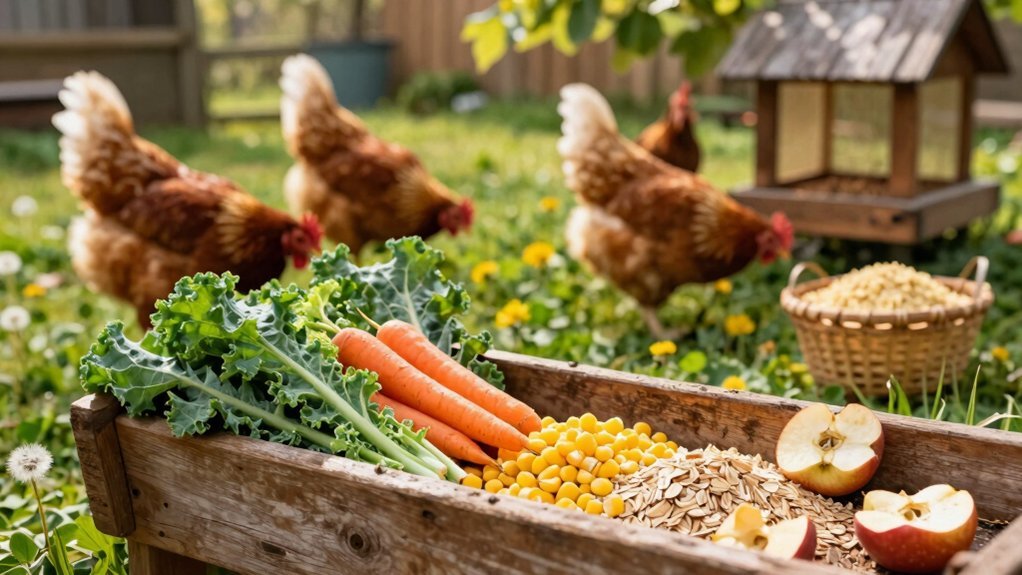
What makes leafy greens a good supplement for my chickens? You’re probably wondering why you shouldn’t just dump a bunch of lettuce in the coop. Here’s the thing: kale, spinach, chard, lettuce, and turnip greens pack vitamins A, C, E, K, calcium, magnesium, and antioxidants that brighten feathers and boost eggshell strength, while also delivering hydration on hot days. However, because spinach contains high levels of oxalic acid that can bind with calcium and lead to soft-shelled eggs, it is best fed only in small, occasional amounts rather than as a staple. How do you keep greens fresh? Proper greens storage means washing, patting dry, and stacking in a breathable container in the fridge for up to three days. If you want a steady supply, try greens hydroponics—grow lettuce or kale in water‑rich trays, harvest every two weeks, and avoid spoilage entirely. What amount works best? Feed a handful per bird twice a week, never free‑choice. Moderate portions prevent oxalate buildup from spinach and kale and avoid watery lettuce causing diarrhea. Takeaway: leafy greens enrich your flock without replacing feed. Next, decide whether a small hydroponic kit or simple garden harvest fits your space. Just like mustard greens, these vegetables should be introduced gradually to prevent upsetting your chickens’ digestive systems. Always ensure kale is thoroughly washed to remove dirt and pesticides or grown organically to avoid harmful chemicals before serving it to your flock.
Natural Chicken Diet: Protein‑Rich Treats (Mealworms, Black‑Soldier‑Fly Larvae, Earthworms, Eggs, Soybeans, Unsalted Nuts)
You’re probably wondering why you can’t just toss a bag of mealworms into the coop and call it a day. The truth is, treats stay supplemental—about ten percent of daily intake. Ten to fifteen dried mealworms per bird works fine, but more crowds out balanced feed and triggers calcium interaction concerns that thin shells over time.
How do you balance protein and calcium?
Treats like black‑soldier‑fly larvae or earthworms boost protein during molting or laying, yet you must watch protein digestion tips: offer them in small portions, mix with grit, and keep regular feed available. Hard‑boiled eggs with crushed shells deliver protein and calcium together, solving interaction worries in one bite. Opting for USA-made mealworms ensures superior freshness and nutritional value compared to imported alternatives while supporting domestic agriculture. Feeding cooked eggs instead of raw prevents chickens from developing the habit of eating their own eggs. Dried mealworms are particularly valuable during molting because they support feather regrowth by providing the essential proteins needed for rapid recovery.
What plant‑based options work?
Sprouted soybeans and unsalted nuts add protein and fat, but keep portions tiny—no more than a handful a day—to avoid excess calories and sodium. Remember, nuts are high‑fat, soy needs cooking to neutralize anti‑nutrients. The large bag of dried black‑soldier‑fly larvae provides a long‑lasting, high‑protein source.
Takeaway: Use protein‑rich treats as occasional enrichment, not the main menu. Offer them sparingly, pair with calcium sources, and monitor feed intake. Next, explore how to encourage natural foraging without over‑relying on treats.
Natural Chicken Diet: Foraging Basics (Grass, Weeds, Seeds, Berries, Safe Free‑Range Habits)
You’re probably wondering why your flock seems to ignore the grass you left out, and that’s a great question. Chickens naturally scratch and peck, but they prioritize fresh, low‑lying greens like Kentucky bluegrass when it’s tender. If the lawn is mowed too short or treated with chemicals, they’ll skip it, so give them untreated, moist clippings for a quick boost. Consuming grass can also improve egg quality by producing richer yolks and providing essential micronutrients. Allowing chickens to roam outdoors freely promotes lower stress levels and supports their overall health alongside a varied natural diet.
How do weeds fit into the diet?
Clover, alfalfa, and chicory pack protein, calcium, and vitamins, making them perfect foraging flock behavior flock Seasonal availability matters—plant these in early spring, and you’ll see steady interest through summer. However, you must carefully identify plants before feeding them, as toxic weeds like poison ivy and foxglove can be potentially deadly to your birds.
What about seeds and berries?
Scattered seed heads and fallen mulberries add variety and nutrients. Harvest fruit before it ferments to avoid mold.
How can you keep free‑range safe?
Rotate pasture sections weekly, supervise outings, and avoid pesticide‑treated zones. This protects health and keeps forage fresh.
Takeaway: Offer untreated grass, protein‑rich weeds, and seasonal seeds or berries; rotate areas to sustain seasonal availability and encourage natural foraging. Next, consider how to balance these free foods with supplemental protein.
Natural Chicken Diet: Whole‑Grain Scratch Options (Oats, Corn, Wheat, Cracked Corn, Oatmeal)
Why does scratch feel like a dessert, and how much should you really give? You’re probably wondering why birds swoop on oats, corn, and wheat like it’s candy. Here’s the thing: treat scratch as a treat, not a staple. Stick to carb amount guidance—no more than 10 % of the total daily ration—so you don’t displace balanced pellets.
Which whole grain works best?
Whole corn stores longest, costs less, and fuels winter heat. Wheat offers more protein and excites birds more than corn. Oats are fine after six weeks, but avoid them as a primary chick feed. Cracked corn gives quick energy in cold weather, yet it molds fast, so use it promptly. Remember that proper grit is necessary to help chickens digest cracked corn effectively. While whole corn is safe, feeding it in moderation prevents obesity risks since the grain lacks adequate protein and fat. Hard wheat varieties generally provide higher protein levels than soft wheat, making them a superior choice for dietary protein when formulating your mix.
How should you store grain?
Keep whole grains in airtight containers in a cool, dry place; they stay fresh for months. Coarsely cracked corn can sit a few weeks, but fine cracks attract mold. Rotate stock and label dates.
Takeaway
Offer a modest handful of mixed whole grains each day, respecting the 10 % rule, and store them wisely. Next, consider how to blend these grains with greens and legumes for a balanced DIY mix.
Natural Chicken Diet: DIY Feed Mix Recipes (Combining Grains, Legumes, Greens, and Supplements)
Mixing grains, legumes, greens, and supplements can feel overwhelming, but you’re asking the right thing.
What base should I start with?
A solid DIY mix begins with a 30% corn, 30% wheat, 20% split peas, 10% oats, and 10% fish meal foundation. Add 2% poultry nutri‑balancer for vitamins and trace minerals. This combo hits about 17% protein, enough for laying hens. Note that while dried peas are hard to digest, soaked or cooked split peas improve digestibility and prevent digestive issues in your flock.
How do I boost protein without breaking the bank?
Swap part of the fish meal for lentils or dried mealworms; 5 % lentils raises protein by roughly 2 % and keeps costs low. Sprinkle black oil sunflower seeds occasionally for extra amino acids.
Can I add garden greens safely?
Sure—mix in chopped alfalfa pellets, clover, or seed sprouts. A handful per batch supplies fiber and micronutrients without diluting energy.
What about fermentation tricks?
A short corn fermentation (12‑24 h) improves digestibility and adds probiotics; just soak corn in warm water, cover, and drain before mixing.
Takeaway: Start with a grain‑legume base, tweak protein with lentils or mealworms, toss in greens and a quick corn fermentation, then finish with a mineral balancer. Ready to try a batch? Consistent access to fresh water is a fundamental part of any healthy feeding regimen to ensure proper digestion and overall flock vitality.
Whole oats can be added for extra fiber and sprouting potential. It is also essential to provide free-choice calcium sources like oyster shells separately to support strong eggshell formation and overall bird health.
Natural Chicken Diet: Mineral Boosters (Crushed Eggshells, Kelp, Sunflower Seeds)
What’s the best way to add minerals without overcomplicating the diet? You’re probably wondering how to boost nutrient absorption while keeping egg quality high. Obviously, a free‑choice bowl of finely crushed, baked eggshells gives laying hens calcium on demand, preventing thin shells and letting them self‑regulate intake. Since calcium-deficient hens will draw from their own bones, providing this supplement prevents skeletal problems and supports long-term health. While finely crushed shells offer quick absorption, offering large particle calcium separately allows hens to slowly release minerals overnight for optimal eggshell formation. It is crucial to provide these supplements separately from regular feed to prevent kidney damage in non-laying birds like young pullets caused by excess calcium consumption.
How can kelp help? A pinch of dried kelp each day supplies iodine, magnesium, and potassium—trace minerals grain‑heavy feeds lack. Use just a tablespoon per ten birds; excess iodine can stress the thyroid, so keep it modest.
Why add sunflower seeds? Black‑oil seeds deliver vitamin E, selenium, and magnesium, plus extra calories for cold weather or molting. Offer a handful in a separate feeder, not more than 5 % of total feed.
Takeaway: Mix crushed shells, kelp, and sunflower seeds in small, separate dishes alongside your balanced base diet. Next step: try a trial week, observe shell strength, and tweak portions as needed.
Natural Chicken Diet: Essential Fatty Sources (Vegetable Oils, Animal Fats, Linoleic‑Rich Nuts)
You’re probably wondering how to keep your hens happy and productive now that you’ve nailed the mineral boosters. Fat is the energy powerhouse in a chicken’s diet, and you need linoleic acid because they can’t make it themselves. Vegetable oils like corn, soy, and sunflower give plenty of ω‑6, while fish oil omega 3 boosts egg yolk DHA.
What oils should you pour in? Unsaturated oils digest quickly, so a splash of canola or sunflower oil raises calories without bloat. Animal fats—poultry fat or a spoonful of lard—add energy, but saturated sources digest slower, so keep them modest.
Which nuts and seeds work best? Walnuts, chia, and especially flaxseed provide alpha‑linolenic acid; milled flaxseed creates flaxseed enrichment, turning eggs richer in ω‑3s. Hemp seeds also offer a potent natural source of essential fatty acids that support immune health and improve egg quality alongside their high protein content. While seeds are nutritious, feeding black oil sunflower seeds in moderation prevents dietary imbalance caused by their high fat and calorie density.
Takeaway: Mix a modest amount of unsaturated oil, a pinch of animal fat, and a handful of linoleic‑rich nuts or flaxseed daily. Next, check how these fats affect your flock’s egg quality.
Natural Chicken Diet: Safety Checklist (Avoid Mold, Rot, Pesticides, Nightshade Toxins)
Avoiding mold, rot, and toxins is the first thing you need to master before worrying about nutrients. Here’s the thing: mold spoilage can hide in nuts, corn, apples, and any wet feed. If you see fuzzy patches or a sour smell, toss it. Mycotoxins from mold can damage livers, suppress immunity, and even kill a flock.
All right, pesticide residues are another silent threat. Chickens love to forage, but never let them graze on grass or weeds sprayed within the last 48 hours. Wash garden trimmings, but remember washing won’t erase heavy sprays.
Now, nightshade plants—tomato leaves, green potatoes, eggplant stems—contain solanine. Those parts cause digestive upset and breathing issues. Only feed ripe fruit, never the green parts.
Takeaway: Keep feed dry, inspect every scrap, and avoid any plant that looks or smells off. Next, map your safe foraging zone and set a routine inspection schedule.
Natural Chicken Diet: Treat‑Balancing Guidelines (Keep Treats < 10 % of Total Intake)
You’re probably wondering how to keep treats tasty without sabotaging your hens’ nutrition. First, remember the 90/10 rule: 90 % of each hen’s intake should be a complete layer feed, and treats stay under 10 %. Treats like cracked corn, oats, or fresh lettuce are great enrichment, but they’re not fortified. Offer them in a separate dish and keep portions to a handful per day, so the base feed never gets crowded out.
Now, think about natural chicken diet: foraging basics. Let your flock peck at hanging cabbage heads or grass patches for a few minutes each morning; this adds variety without breaking the 10 % cap. When you mix your own batch, follow natural chicken diet: diy feed mix recipes that blend grains, seeds, and a pinch of dried herbs, then add only a small scoop of kitchen scraps as a topping.
All right, track body condition and egg output. If hens stay plump and laying consistently, you’re hitting the sweet spot. The takeaway: treat sparingly, keep them separate, and always let the complete feed dominate. Next, consider how seasonal weather will tweak your treat choices—what will you add for summer heat or winter chill?
Natural Chicken Diet: Laying‑Hen Tweaks (Extra Calcium and Protein Strategies)
If you’re wondering why your hens sometimes lay thin‑shelled eggs, you’re on the right track. Calcium timing matters because most shell formation happens overnight. Offer coarse oyster shells or limestone in a free‑choice feeder after the afternoon feed, so they can munch before roosting.
How does extra protein fit in? Black‑soldier‑fly larvae give both calcium and high‑quality protein, boosting egg size without sacrificing shell strength. A handful a meals—about 2 % of daily intake—keeps bone health solid and keeps older hens from depleting medullary reserves.
What should you avoid? Mixing small‑particle calcium into the whole feed dilutes its effect; keep it separate.
Takeaway: Separate, evening‑time calcium plus a protein‑rich supplement keeps shells thick and bones strong. Ready to add a feeder for oyster shells tonight?