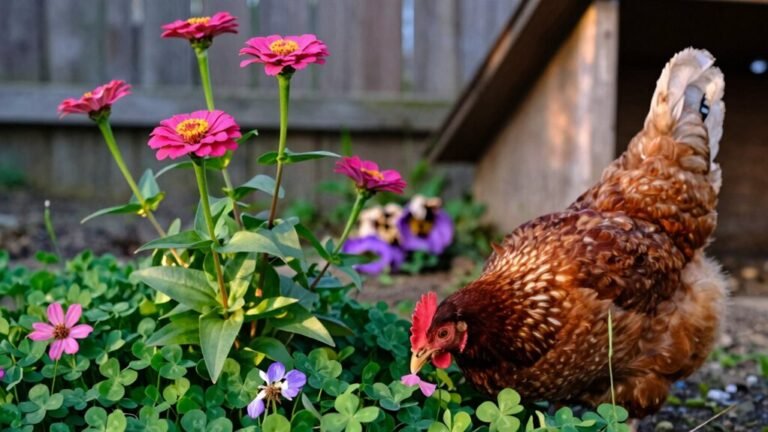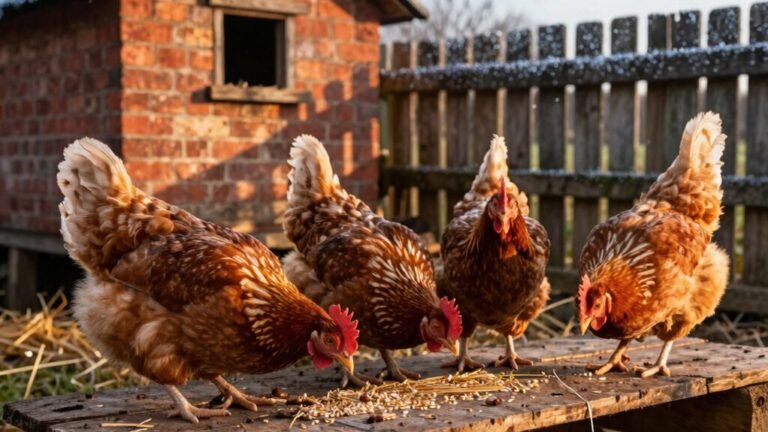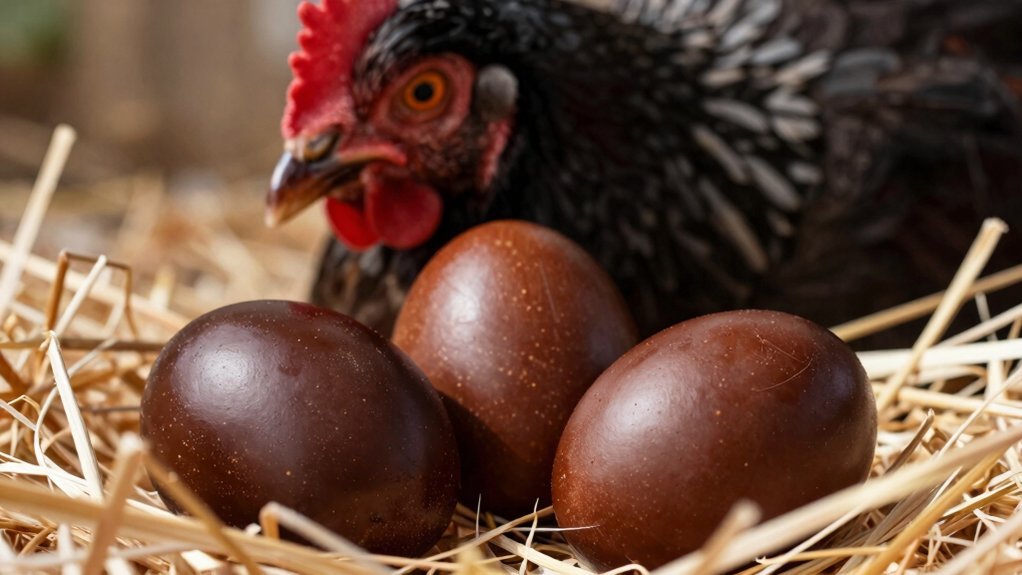
You’re probably wondering which hens actually give you those deep chocolate shells, and you’ve asked the right question. Marans—especially Black Copper and Blue Copper—lead the pack, laying 250‑300 dark brown eggs a year; Welsummers and Barnevelders follow closely, producing rich, speckled chocolates. If you need a bit more volume, Black Sex‑Link or Hy‑Line Brown hybrids match heritage darkness while keeping high output. Remember, pigment peaks between 20‑40 weeks, so fresh pullets keep the color intense. Now you know the top breeds, and the next step is to match them to your flock size and space.
What Are the Top 5 Heritage Breeds for Chocolate‑Brown Eggs?
You’re probably wondering which heritage chickens actually give you those rich, chocolate‑brown shells you’ve seen in pictures. Eggshell formation factors and egg color genetics work together, so you’ll see the deepest hues from breeds that naturally deposit more protoporphyrin in the shell membrane.
Marans
Why do they dominate? Their French lineage evolved to lay dark chocolate shells, especially the Black Copper line, which can produce up to 225 medium‑dark eggs a year. The genetics favor high pigment deposition, giving you that true chocolate look. Although not all individuals lay pitch-dark eggs, the breed is renowned for its calm, sociable nature alongside its distinctive egg hues. Historically from southwestern France, these birds exhibit rustic strength and winter hardiness while providing flavorful meat. Potential buyers should verify breeding standards to ensure authenticity, as the distinct features and dark egg color of this heritage breed are highly valued and sometimes imitated.
Welsummer
These Dutch birds lay large brown eggs speckled with darker spots, often appearing chocolate‑brown. Their genetics boost pigment in the outer layer, and they reliably lay spe, speckles eggs‑.
Rhode Island Red
While not always the darkest, some lines lay deeper brown shells thanks to strong pigment genes. Expect around 300 eggs annually, with a solid, hardy bird for any backyard.
New Hampshire
A Rhode Island Red descendant, they mature early and lay 4‑5 eggs a week. Their shells are lighter brown but still richer than many commercial breeds.
Barred Plymouth Rock
A classic dual‑purpose, they produce large brown eggs, often tinted. Their genetics keep pigment consistent, making them a dependable choice for steady output.
Takeaway: These five heritage breeds combine the right eggshell formation factors and egg color genetics to give you genuine chocolate‑brown shells. Next, compare their production rates to decide which fits your flock size.
Which Hybrid Layers Produce Dark Brown Eggs Comparable to Heritage Breeds?
You’ve probably wondered why some hybrids can match heritage birds in that deep chocolate‑brown shell. The answer lies in hybrid selection criteria that prioritize dark shell genetics over sheer volume.
Which hybrids hit heritage‑level darkness?
Black Sex‑Link, a Barred Rock × Rhode Island Red cross, consistently lays about 250 large, chocolate‑brown eggs yearly. Hy‑Line Brown and Bovans Brown also score high on dark shell genetics, delivering uniform, almost‑black shells while maintaining strong production.
Why do they compare so well?
These lines were bred to emphasize shell pigment, not just egg count. The genetics that deepen melanin deposition in the shell mirror those of heritage layers, so you see speckled, rustic tones similar to old‑world breeds. While hybrid genetics drive this consistent darkness, it is important to remember that variations in egg shell color result solely from genetics rather than diet or environment. Specifically, the protoporphyrin IX pigment responsible for these brown hues is applied in the shell gland primarily on the outer layers of the egg. This breed’s robust shell strength further enhances its value by ensuring high-quality eggs that contribute to profitability and broad market appeal.
Takeaway: If you want heritage‑style egg color without sacrificing reliability, choose a hybrid built on dark shell genetics like Black Sex‑Link or Hy‑Line Brown. Next, explore how age, diet, and light further influence that darkness.
How Do Age, Diet, and Light Influence Egg Darkness?
Why does a hen’s age change the shade of her eggs? You’re wondering why younger pullets lay lighter shells while mid‑life hens produce deep chocolate tones. Hen aging effects mean pigment deposition peaks around 20‑40 weeks, then slows; older birds often bleach‑down at shell ends.
Now, how does diet play in? Feed deficiencies impact pigment directly—lack of methionine, calcium, or vitamin D yields paler, mottled shells. Too much calcium without balanced phosphorus or magnesium can wash out color, while antioxidant‑rich feeds keep the shell gland healthy but don’t darken shells. Beyond pigment, mycotoxin contamination and other nutritional gaps can compromise shell integrity, leading to fragile surfaces that may appear uneven or faded. Severe calcium shortages can also trigger bone weakness and fractures, further indicating the critical need for balanced minerals beyond just shell coloration.
All right, what about light? Stable long‑day photoperiods (14‑16 hours) keep pigment consistent; sudden short‑day drops or irregular lighting stress hormones and produce lighter eggs.
Takeaway: Age, balanced nutrition, and steady lighting together shape egg darkness. Next, compare specific dark‑brown breeds to see which maintain hue best.
It is also important to remember that egg color does not affect the nutritional quality or healthiness of the egg, as the shade is purely a result of genetic pigment deposition.
Welsummer vs. Marans: Which Gives Dark Brown Eggs the Deepest Hue?
Next step: Compare your flock’s lighting and diet to see which breed fits your egg‑color goals. Cold‑hardy Welsummers thrive in cooler climates, making them ideal for farms with lower ambient temperatures. Alternatively, the Blue Copper Marans breed offers adaptability to various climates while producing the darkest chocolate-brown eggs with strong shells. These birds are also known for their docile temperament, making them suitable for families and first-time chicken keepers. The intensity of this dark shell is determined by the amount of protoporphyrin IX pigment deposited on the egg during its formation.
Which Breed Fits a Backyard Flock vs. a Commercial Operation?
How do you decide which dark‑brown layer belongs in your backyard versus a commercial barn? You’re weighing temperament against output, so start with space requirements and noise levels. For a backyard flock, pick docile, friendly breeds like Cuckoo Marans or Barnevelders; they thrive in modest yards, handle foraging, and keep clucking to a pleasant hum. Their moderate 150‑225 eggs per year match family needs without crowding the coop. The Silver Spangled Hamburg is another notable option known for its speckled feathers and consistent egg production of up to 250 white eggs annually.
Now, for a commercial operation, prioritize high, and uniformity. Rhode Island Reds, Black Australorps, and Golden Sex Links each lay 250‑300 eggs annually, tolerating dense housing and steady noise. Their hardy nature cuts feed and climate costs. Notably, industrial strains of Rhode Island Reds offer higher yields than their heritage counterparts, making them particularly valuable for maximizing production volume. These birds possess a robust, hardy nature that allows them to maintain strong egg production even on marginal diets and in varied climates.
Obviously, the right choice hinges on how much space you have and how much sound you can tolerate. Choose a backyard‑friendly breed if you cherish a relaxed, low‑noise garden; opt for a high‑output breed if you need volume and consistency.
What Practical Steps Keep Egg Shells Dark Consistently?
You’re probably wondering why some brown eggs stay deep while others fade, and that’s a great question.
How do you keep the shells dark?
Pick the right age group. Younger hens, especially in their first two years, lay the richest chocolate shells. Rotate your flock so fresh pullets replace older layers regularly.
What nutrition helps?
Feed a balanced diet with 18 % protein, adequate calcium (about 3 % of feed), and clean water. Consistent nutrition lets pigment deposit steadily. Providing crushed oyster shells ensures a slow-release calcium source that supports strong shell formation without depleting the hen’s bone reserves. To prevent kidney damage in non-laying birds like roosters and young pullets, you should offer these shells separately from regular feed so hens can self-regulate their calcium intake.
How should you handle and store the eggs?
Collect eggs twice daily, then use gentle cleaning tips—wipe with a dry cloth, avoid soaking. Store them point‑side‑up in a cool, dry place at 55‑60 °F. This protects the natural dye from moisture and stains.
Takeaway:
Maintain young, healthy hens, give them solid feed, and handle eggs with care. The result? Consistently dark brown shells. Ready to set up a rotation schedule?
While specific breeds like Marans are genetically predisposed to laying dark eggs, proper management ensures the natural dye remains vibrant throughout the laying cycle.
How Are Dark Brown Egg Colors Actually Formed?
You’re probably wondering why some eggs turn a deep chocolate hue while others stay light brown. The secret lies in pigment genetics and the formation timeline inside the hen’s shell gland. Protoporphyrin IX, the main brown pigment, floods the outer shell during the last 4–6 hours of the roughly 26‑hour egg‑making cycle, coating the surface like a thin paint.
How does the pigment get there? As calcification finishes, the gland releases pigment‑rich fluid that settles on the shell’s exterior, forming a cuticle about 90 minutes before the egg is laid. This late‑stage deposition keeps the interior white. While the pigment coats the outside, the eggshell underneath is made primarily of calcium carbonate with thousands of tiny pores allowing air and moisture exchange.
Why do some breeds produce darker shells? Breeds such as Marans and Barnevelders carry multiple genes that boost pigment production, so their eggs receive a richer coating.
Takeaway: Dark brown shells result from genetics‑driven pigment release late in the formation timeline, giving the outer shell a chocolate hue while the inside stays white. Ready to explore which breed fits your flock? The uterus, also known as the shell gland, is where this hard outer shell and its pigment are formed over a period of 20 hours.