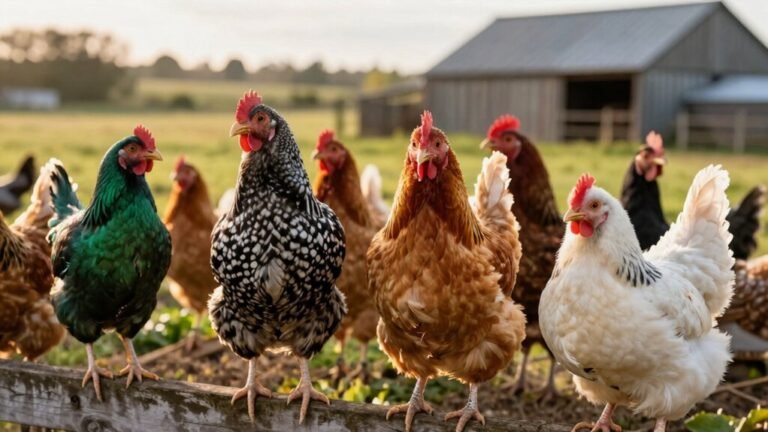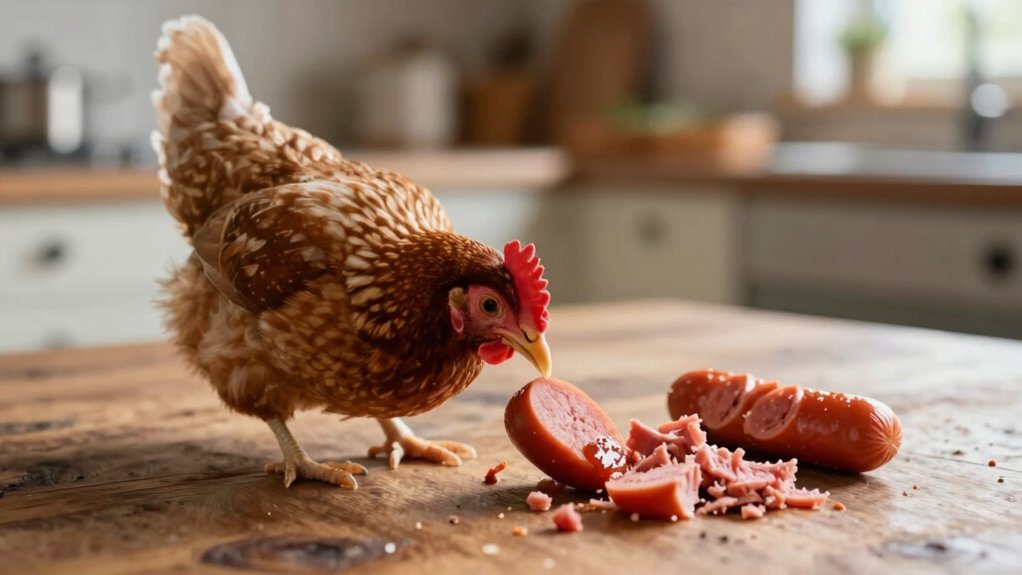
You’re right to wonder if hot dogs are a safe treat for your hens, and the short answer is: only a tiny, occasional bite, and even then it’s risky. Processed meats pack about 500 mg of salt per link—far more than a chicken needs—and they often contain nitrates, spices like onion or garlic, and excess fat that can cause dehydration, digestive upset, or even anemia. If you do give a hot dog, steam or boil it to 165 °F, cut a single tablespoon‑size piece, and limit it to once a month; otherwise, stick to safer protein treats like boiled eggs or mealworms.
Can Chickens Safely Eat Hot Dogs?
Can Chickens Safely Eat Hot Dogs?
You’re probably wondering if a slice of hot dog harms your flock. Here’s the thing: cooked hot dogs, cut into bite‑size pieces, are fine as an occasional treat, but raw hotdogs can introduce salmonella or listeria, risking pet chicken health. Obviously, you don’t want a sick bird, so always steam the dog until it’s hot all the way through.
What’s the right amount?
Now, give only a few small pieces once a week. Too many can crowd out balanced feed and add excess salt and fat, leading to obesity or heart issues. A plain, low‑sodium all‑beef dog is the safest pick. Experts warn that processed meats contain high preservatives and spices that can cause digestive issues or organ damage in chickens. Furthermore, relying on such scraps instead of a complete diet can result in malnutrition and poor egg quality. Just as excess salt in a bird’s diet can cause dehydration and poisoning, the high sodium content in hot dogs poses a similar threat if fed too frequently.
Takeaway:
Treats stay tiny, infrequent, and fully cooked. Next, ask yourself how often you’ll offer this treat without upsetting your chickens’ regular diet.
What Makes Hot Dogs Risky for Chickens?
Why do hot dogs pose a risk for your flock? You’re probably wondering why that tasty, processed texture seems harmless. The answer lies in the hidden chemistry and timing of contamination.
What’s the sodium story? A single link can pack 500 mg of salt, far above a chicken’s daily need. Too much sodium spikes thirst, dehydrates, and strains kidneys—just like giving a dog a salty snack.
Why does fat matter? Hot dogs are loaded with fatty cuts that upset a bird’s delicate digestion, leading to diarrhea and rapid fluid loss. While chickens can consume animal fats, it is crucial to ensure the fat is not spoiled or rotten to avoid health issues.
What about additives? Nitrates, nitrites, and mystery spices linger in the meat. Those compounds can interfere with oxygen transport and even cause anemia.
And the safety side? Processed meats invite bacterial growth if storage or handling slips, so contamination timing becomes critical. Furthermore, just as moldy food contains toxins that can kill chickens, spoiled processed meats introduce dangerous pathogens that your flock cannot safely digest. It is crucial to remember that dangerous toxins produced by fungi in damp feed can also cause fatal liver damage, highlighting how easily contaminated food sources threaten poultry health.
Takeaway: The combination of high sodium, excess fat, preservatives, and unpredictable seasonings makes hot dogs a risky treat. Next, consider which flavors and add‑ins you should avoid.
Which Hot‑Dog Flavors and Add‑Ins Should You Skip?
You’re probably wondering which hot‑dog flavors actually make the cut for your chickens, and that’s a smart question. Obviously, plain, low‑sodium franks are the safest, but many flavored varieties hide trouble.
Which flavors should you skip?
Onion‑ or garlic‑based hot dogs irritate a chicken’s crop, so avoid any product listing onion powder, garlic, or “smoky” seasoning mixes. Artificial smoke flavoring and heavy spice blends also contain unknown flavoring compounds that can upset digestion. Since these ingredients belong to the Allium family, they contain sulfur compounds that are toxic to chickens and can cause serious health issues like anemia. Consuming these compounds can damage red blood cells and lead to onion toxicity in your flock. Just as garlic bread is dangerous for poultry due to its toxic properties, any meat product containing garlic poses a similar risk of causing health problems such as anemia in your flock.
What add‑ins are a no‑go?
Relish, ketchup, chili dogs, cheese‑filled or bacon‑wrapped franks add sugar, excess salt, and fat—none of which belong in a flock’s diet. Even “light” or “reduced‑sodium” labels may still hide those harmful additives.
Takeaway: Stick to plain, low‑sodium hot dogs and read every ingredient. If you see onion, garlic, smoke, or complex seasoning mixes, skip it. Next, consider how to serve the safe option safely.
How to Cook Hot Dogs Safely for Chickens?
If you’re unsure whether a hot dog can be safely reheated for your chickens, you’re asking the right question. First, pick a fully cooked dog from the fridge. Boil it in water until the water reaches a rolling boil—about 212 °F—and keep it there for two minutes. That guarantees the interior hits an internal temperature of at least 165 °F, killing any lingering germs.
Now, steam the dog for three minutes if you prefer a softer bite. After steaming, you can pan‑sear briefly just for color; the heat must already have penetrated fully. Cut the dog into chick‑size pieces while it’s still warm, then let it cool to room temperature before serving.
All right, keep utensils clean and discard any leftovers that sit too long. The takeaway: heat the dog until it’s steaming hot and reaches proper internal temperature, then slice and cool before feeding. Next, decide how often you’ll treat your flock with this occasional snack. The meat paste should be kept smooth and uniform to ensure even cooking. While federal law does not comprehensively ban feeding meat scraps to backyard flocks, you should verify state restrictions as some areas impose specific rules on animal by-products to prevent disease. Since processed meats often contain heavy seasonings that are unsafe for poultry, it is crucial to avoid feeding them heavily seasoned products to protect your flock’s health. Because bacon and similar processed meats have high fat and salt content, they should only be given in very small amounts as an occasional treat rather than a regular part of the diet.
How Often and How Much Hot‑Dog Treat Is Safe?
One bite‑size hot‑dog treat per hen once a month is plenty. You’re probably wondering how often you can slip a snack into the coop without upsetting the balance. Here’s the thing: treat frequency should stay rare, and you must practice strict portion control.
How many times a month?
Now, aim for no more than one tiny piece per hen every four weeks. That keeps sodium, fat, and additives from creeping into their daily diet. Obviously, you’ll still feed the 90 % complete feed and only let treats fill the remaining 10 %. Overfeeding such scraps can lead to nutrient dilution which prevents hens from getting the essential proteins and vitamins found in their primary diet. Just as rose petals provide immune health benefits when sourced naturally, avoiding chemically treated foods ensures your flock remains safe from harmful substances. Since processed meats like ham carry high salt levels that can cause salt intoxication, limiting these risky snacks is critical for preventing dehydration and other health issues.
How big should the piece be?
All right, think one tablespoon of chopped hot dog, roughly a bite‑size cube. Scale it to flock size so one bird doesn’t hog the whole treat. This tiny serving fits within the 2‑tablespoon daily treat limit for laying hens.
Takeaway
Treat frequency stays low, portion control stays tight. Offer a single bite‑size piece once a month, and your flock stays healthy while enjoying a rare indulgence. Next, consider what safer protein treats you can rotate in.
What Are Safer Protein Treats for Chickens (Aside From Hot Dogs)?
Exploring safer protein treats feels overwhelming, but you’re on the right track. You’re probably wondering which foods give a quick protein boost without the risks of hot dogs. Here’s the thing: cooked eggs top the list. Scrambled or hard‑boiled eggs deliver high‑quality protein and calcium from crushed shells, perfect for molting recovery and cold weather.
What animal‑based treats work best? Mealworms, black‑soldier‑fly larvae, and crickets pack lean protein and extra calcium for laying hens. Offer a handful a day; they complement, not replace, your balanced feed. Dried mealworms are particularly effective, offering approximately 53% protein to support your flock’s dietary needs. For those seeking larger quantities, bulk mealworm options from specialized suppliers provide cost-effective ways to stock up on these nutritious treats.
Can plant proteins help? Cooked peas, lentils, and beans become safe after boiling, providing a vegetarian protein source. Use them sparingly, as they lack some essential amino acids found in commercial feed.
Any other quick boosters? Unsweetened yogurt supplies protein and probiotics, while pumpkin seeds or chia add protein and omega‑3s. Keep portions small to avoid digestive upset.
Takeaway: Mix eggs, insects, cooked legumes, or a dash of yogurt into your flock’s diet during molting or chilly months, but always keep the main ration as their nutritional backbone. Just as lettuce should be fresh and unseasoned, ensure all protein treats are free from harmful additives like salt or oils.
Next, think about how often you’ll rotate these treats to keep your chickens healthy and happy.
What’s the Quick Checklist for Feeding Hot Dogs to Backyard Chickens?
You’re probably wondering whether a hot dog ever belongs in a chicken’s diet, and that’s a smart question.
Is it safe?
Obviously the biggest red flag is toxic ingredients—excess salt, sodium nitrate, nitrite, and heavy seasonings. Those preservatives can upset a hen’s digestive system and harm egg quality.
What should you check?
First, read the label for added salt and nitrates. Skip any dog with onion, garlic, or spice blends. Make sure the meat isn’t stale, moldy, or greasy.
How to serve it?
Cut the hot dog into tiny pieces, remove all packaging, and place it in a clean feeder. Offer only a few bites once a month, never as a regular feed.
When to stop?
If you see reduced appetite, abnormal droppings, or any upset, stop immediately.
Takeaway
Treat hot dogs as a rare, carefully prepared snack, not a staple. Next, decide if you’ll keep layer feed as the main diet and reserve treats for special occasions. Unlike processed meats, cooked meats without harmful additives like salt or spices are generally safe and nutritious protein treats for chickens when given in moderation. While concerns about cannibalism exist, feeding fresh cooked chicken is largely considered safe by many keepers since cooking reduces disease risks and chickens naturally consume animal protein.