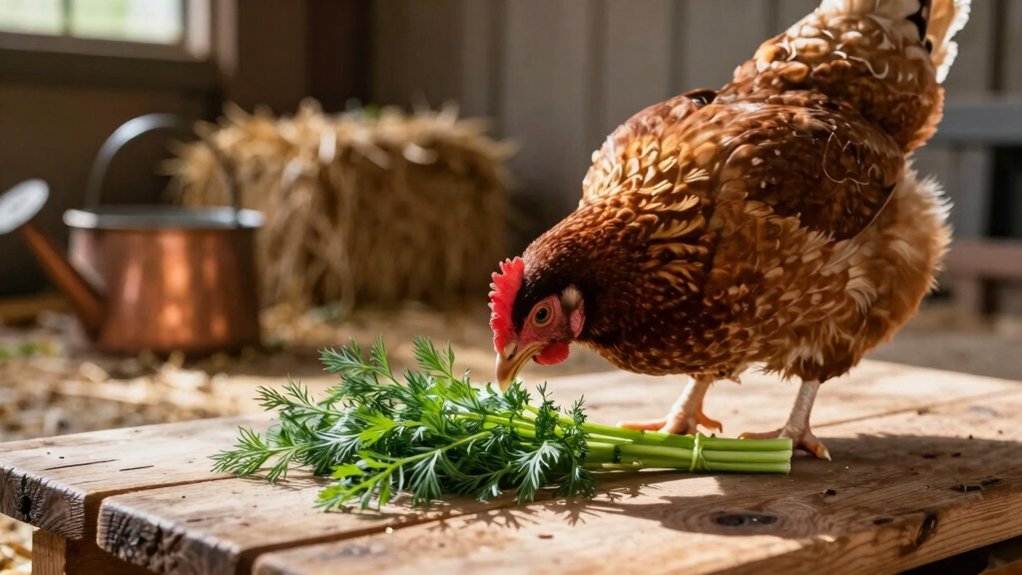
You’re right to wonder if dill is safe for chickens, and the answer is yes—fresh, plain dill leaves, stems, and seeds are non‑toxic and can boost feather health, eye brightness, and digestion when fed in moderation. Start with a pinch of chopped fresh dill or a teaspoon of dried herb per bird a week, and watch droppings for any softness; if you see loose droppings or reduced appetite, cut back. Now, you can sprinkle it over feed, add it to homemade flock blocks, or grow a small batch near the coop for a fresh, inexpensive supplement.
Can My Chickens Eat Dill Safely?
Can My Chickens Eat Dill Safely? You’re probably wondering if that fresh sprig you found in the garden will upset your flock. The short answer: yes, dill is non‑toxic and safe when you treat it as a supplement, not a main meal.
How much is too much?
Here’s the thing: keep dill to 5‑10 % of the daily treat budget. A handful of chopped leaves mixed into feed or a few fresh sprigs scattered on the ground works fine. Overfeeding can trigger digestive reactions, like soft droppings, because any herb in excess may upset gut balance.
What forms work best?
All parts—leaves, stems, flowers, seeds—are feedable. Fresh dill, dried weed, or a pinch of seeds are all fine; just avoid pickles, salted mixes, or anything cooked with onion or garlic. Similar to how dandelion provides minerals and antioxidants for flock wellness, dill can serve as a nutritious occasional addition when offered correctly. Just as other herbs like oregano support intestinal health, dill acts as a gentle digestive aid when fed in moderation. As with all treats, ensure the dill is free from harmful additives like salt or spices before offering it to your flock.
Takeaway
Introduce dill slowly, watch appetite and droppings, and keep the feeding frequency low. If your birds handle it well, you’ve added a safe, occasional treat. Next, you might ask what nutritional perks dill actually offers.
What Nutritional Benefits Does Dill for Chickens Provide?
What good does dill actually give my chickens? You’re probably wondering if that little herb does more than add flavor. It packs vitamins A, C, K and B‑complex, so you’ll see brighter eyes, stronger feathers and steadier energy from feed. Folate and zinc boost immune support, while calcium and manganese help bone and eggshell formation, key for reproductive health.
Here’s the thing: dill’s fiber and carminative compounds keep the gut calm, reducing gas and improving nutrient absorption. Its polyphenols and flavonoids act as antioxidants, protecting cells during stress. Essential oils like carvone and limonene fight off bacteria, which can aid respiratory comfort. Much like how lavender and rosemary repel insects in nesting boxes, dill’s aromatic properties contribute to a healthier environment by deterring pests naturally. Similar to how rosemary offers liver protection for poultry, dill supports organ health through its potent antioxidant profile.
Bottom line: dill supplies micronutrients, gut ease, and disease‑fighting power, all of which support immune health and egg production. Just as herbs like parsley and cilantro aid in digestion, dill offers similar digestive benefits while enhancing overall flock wellness. Ready to try a pinch in the mash?
What Precautions Should I Take When Feeding Dill for Chickens?
If you’re wondering how to keep dill a safe treat for your flock, you’ve hit the right spot. First, start with a pinch of fresh or dried dill and watch your birds. Notice droppings, appetite, and activity; stop if you see loose stools or weird behavior. Increase only after several calm feedings, especially with baby chicks.
Now, keep dill plain. Never mix it with onion, garlic, salt, pepper, sugar, butter, oil, or any harmful seasonings. Avoid pickles and spicy blends because they bring toxic contamination and excess sodium. This caution is vital because toxic sulfur compounds found in allium family members like onions can cause anemia and digestive upset in chickens. Remember that kitchen scraps should only serve as a supplement to a balanced layer feed rather than replacing the primary diet. Even small amounts of these unsafe vegetables can lead to onion toxicity which damages red blood cells and poses serious long-term risks to your flock’s health.
Here’s the thing: wash store‑bought dill, choose organic when you can, and inspect for mold. Chop into tiny pieces or sprinkle seeds into feed for easy pecking.
Takeaway: introduce slowly, keep it additive‑free, and stay vigilant—your next step is to monitor the first few feedings and adjust as needed.
How Much Dill for Chickens Is Safe to Feed?
You’re probably wondering exactly how much dill you can safely slip into your flock’s diet.
Fresh dill works as a treat, not a staple. Aim for 1–2 tablespoons of leaves per chicken per day, or split a modest handful among ten birds. If you prefer dried dill, cut back to about 1 teaspoon per bird daily, because the herb concentrates when it loses moisture.
Here’s the thing: treats should stay under 5–10 % of total intake, so many guides suggest offering dill once or twice a week instead of every day. Space out feeding intervals to keep your chickens from over‑eating and to avoid crowding out balanced feed. Just as high-sugar fruits are limited to prevent digestive issues, overfeeding herbs can similarly disrupt your flock’s health. Like pumpkin seeds which offer dual benefits of nutrition and pest control, dill provides flavor and enrichment but requires moderation to maintain overall health. Remember that essential nutrients from their primary feed can become diluted if treats make up too large a portion of the diet. If you notice loose droppings or reduced appetite, cut back immediately. The takeaway: stick to tiny portions, keep to occasional, and monitor your flock’s response. Next, you might wonder how to serve fresh, dried, or seed dill without waste.
How to Add Fresh, Dried, and Seed Dill for Chickens to Feed?
One cup of chopped fresh dill, a tablespoon of crushed dried dill, or a pinch of seed can each be tossed into a chicken’s daily ration without overloading the diet. You’re probably wondering how to actually add those forms without turning feeding time into a mess.
How do you mix fresh dill?
Now, chop the leaves and stems into bite‑size pieces, then sprinkle them over the feed or stir them in. The chopped bits act as coop enrichment, keeping hens curious, and they give a mild flavor enhancement that makes the ration more appealing.
What about dried dill?
Here’s the thing: crush the dried herb between your fingers or in a mortar, then blend it into the grain mix. A tablespoon spreads the aroma evenly, so you get flavor enhancement without over‑seasoning.
And dill seed?
Obviously, a pinch mixed into layer feed or scratch grain works best. The seed’s concentrated punch offers gut‑health benefits while still serving as a subtle flavor boost and a fun coop enrichment element.
Takeaway: Use the right amount, crush or chop for even distribution, and treat dill as a tasty, enriching add‑on. For a more substantial snack, you can incorporate these herbs into baked flock blocks alongside ingredients like oats and sunflower seeds to create sturdy treats that encourage natural foraging behavior. Incorporating binders like coconut oil into these treats helps hold the block together while providing additional nutrients to support flock health year-round. Just as organic guides emphasize replacing conventional corn with diverse options, adding dill complements a balanced diet featuring organic feed ingredients. Next, you might ask how to store these herbs for year‑round use.
How to Grow Dill for Chickens Near the Coop?
You’re probably wondering how to keep dill fresh for your flock without turning the coop yard into a mess. You need a sunny spot, at least six hours of direct light, and well‑drained soil. Pick a raised bed or container near the coop, keep it protected from strong winds, and amend the soil with compost in the fall—this compost timing gives the microbes a head start.
Now, choose a good seed selection. Direct‑seed after the last frost, waiting a week if you can, when soil warms to 60‑70°F. Scatter seeds thinly, then thin seedlings to nine‑twelve inches apart. Water lightly until the top inch dries, then let mulch hold moisture.
All right, plan succession sowing every two to three weeks through midsummer. This keeps a steady supply of fresh leaves for your chickens. The takeaway: a sunny, well‑drained site, fall compost, and regular thinning give you a thriving dill patch right by the coop. Ready to sow? Just ensure you clean up any spilled seeds immediately, as unsecured feed can attract rats to the area. Remember that rodent-proof environment is essential because relying on chickens to control these pests is ineffective and risky. Since rats may attack vulnerable birds when food is scarce, maintaining a rodent-proof feeder system nearby helps prevent desperate pests from targeting your flock.