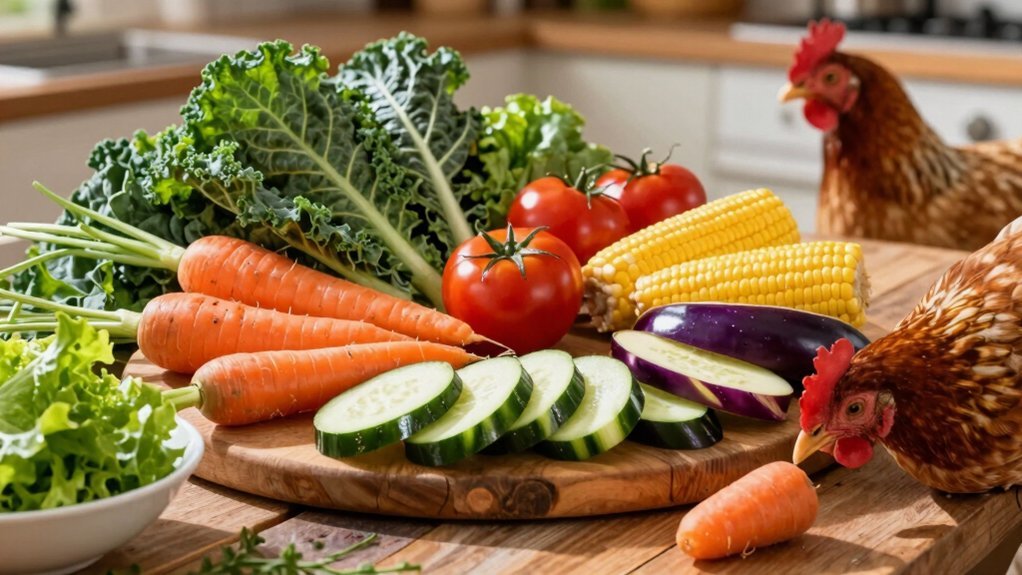
You’re probably wondering which fruits and veggies are truly safe for chickens, and you asked the right question. Here’s the thing: fresh berries, apples (seed‑free), bananas (¼ per bird), melons, lettuce, kale, Swiss chard, broccoli (cooked), carrots, zucchini, pumpkin, and herbs like parsley and dill are all fine in bite‑size pieces, while you should keep high‑sugar treats under two tablespoons daily and avoid pits, avocado, green potatoes, and raw beans. Obviously, wash everything, cut it small, and watch for loss of appetite or puffed‑up comb as warning signs. Now you have a clear list to start feeding your flock, and the next step is learning how to rotate oxalate greens and balance weekly treats.
Safe Chicken‑Friendly Fruits for Daily Feeding
What fruits can you safely give your chickens every day? You’re probably wondering which treats won’t tip their diet into a sugar overload. Here’s the thing: keep fruit a treat, not a staple, and practice portion control. Offer a handful of berries—blueberries, strawberries, raspberries—each day; they’re tiny, antioxidant‑rich, and low‑risk for choking. Blueberries specifically provide immune system support while remaining a safe, moderate treat for your flock.
Now, apples work well if you do seed removal and slice them thin. A couple of bite‑sized pieces give texture without excess sugar. Bananas, mashed or sliced, supply potassium; limit to one quarter of a banana per bird per day. You can also offer melons like watermelon, cantaloupe, and honeydew melon as hydrating, safe options for your flock.
All right, remember to wash everything, chop into small chunks, and rotate fruits to avoid monotony. The takeaway: small, seed‑free, fresh fruit portions keep chickens happy and healthy. Ready to try a daily fruit rotation? Providing extra grit alongside these fruits aids digestion and ensures the treats are processed safely.
Seasonal Chicken‑Friendly Fruit Treats to Offer Weekly
You’re probably wondering why you can’t just give chickens fruit every day without thinking about the season. Here’s the thing: fruit that’s abundant and cool in summer works best as a weekly treat, while autumn’s orchard windfalls keep the flock happy without overloading nutrition.
What’s a good summer treat?
Offer frozen enrichment like cubed watermelon, cantaloupe, or frozen berries. The ice‑cold pieces slow eating, lower heat stress, and provide pecking fun. Aim for a handful per bird, twice a week.
How do orchard windfalls fit in?
When apples, pears, figs, or persimmons drop, chop them into bite‑size pieces. They’re cheap, hydrating, and naturally seasonal. Serve them in shade, limiting intake to a few slices per chicken. You can also offer ripe kiwi fruit as a sweet, vitamin-rich treat, ensuring you avoid unripe varieties that may cause gastric issues due to their acidity. While the flesh and skin are safe, you must remove pear seeds before feeding because they contain cyanide that can cause digestive issues. Similarly, plums are a nutritious option rich in antioxidants and fiber, but you must always remove plum pits to prevent cyanide poisoning from the amygdalin they contain.
Takeaway
Rotate chilled or frozen fruit with fresh orchard finds each week, keeping portions modest and timing consistent. This pattern gives hydration, enrichment, and variety without replacing balanced feed. Ready to plan your next weekly fruit schedule?
Always‑Safe Chicken‑Friendly Vegetables
If you’re wondering which veggies you can toss into the coop without a second thought, you’ve hit the right spot.
Which leafy greens are always safe?
Romaine, green leaf, and red leaf lettuce give you hydrating treats and gentle fiber sources. Kale adds calcium and vitamins A, C, and K, while Swiss chard and spinach round out the mix. Offer them in small handfuls alongside feed.
What cruciferous veggies can you trust?
Broccoli florets and stems, cabbage, bok choy, and cauliflower are all low‑fat, antioxidant‑rich, and easy to chop. They boost fiber without overwhelming the digestive system. Cooking broccoli helps reduce sulfur compounds that can otherwise cause gas and bloating in your flock. While plain cabbage is a healthy treat, you must avoid feeding coleslaw containing harmful dressings like mayonnaise or excessive salt that can cause health issues.
Which roots and squash are reliable?
Carrots, beets, turnips, radishes, zucchini, and pumpkin flesh supply beta‑carotene, antioxidants, and moisture. Slice them thin to prevent choking.
What hydrating, soft picks work best in heat?
Cucumbers, celery leaves, and asparagus shoots act as cooling, low‑calorie snacks that keep hens hydrated.
Takeaway: Stick to these vegetables daily; they’re safe, nutritious, and keep your flock happy, but remember that leftover scraps can attract pest infestations if not managed properly. Ready to plan a weekly veggie schedule?
Daily Chicken‑Friendly Greens & Herbs for Nutrition
You’re probably wondering which greens and herbs you can safely feed every day without overcomplicating your routine. Here’s the thing: a daily greens overview should mix lettuce, kale, and Swiss chard for vitamins A, C, E, riboflavin, and calcium. Add a handful of nutrient‑rich herbs like oregano, parsley, and dill to boost immune health and egg production. Edible flowers and herbs like pineapple sage are also nutritious and beneficial for chickens, offering health benefits like improved digestion and brighter egg yolks.
What greens work seasonally? In spring, toss tender spinach and chickweed; summer calls for kale and beet greens; fall shifts to hardy collards; winter you can grow indoor herbs or offer sprouted grains. Ensure you thoroughly wash kale to remove harmful chemicals before feeding it to your flock to maintain proper hygiene.
How do you serve them? Chop fresh herbs into feed, hang whole lettuce heads, or let chickens free‑choice peck.
Takeaway: rotate leafy greens and sprinkle herbs daily for balanced nutrition. Next, explore safe prep for fruit and veggie snacks. Other recommended vegetables like broccoli, carrots, and bell peppers provide additional nutritional value and serve as entertaining snacks for your flock.
Safe Prep for Chicken‑Friendly Fruit & Veggie Snacks
You’ve probably wondered how to turn fresh produce into safe, bite‑size snacks for your flock without turning the coop into a mess. First, wash everything under running water, strip stickers, and discard any moldy or soft spots. Then, cut fruits and veggies into bite‑size pieces or grate hard roots so chickens can peck without choking. Remove pits, avocado skins, and tough peels that could hurt their beaks.
Now, here’s the thing: you can serve most produce raw, but a quick steam for carrots or beets makes them easier to chew. Use proper drying methods if you want to store leftovers—spread them on a clean tray, flip often, and keep the area ventilated. Finally, any scraps that sit too long belong in compost pile feeding, not the coop, to keep pests away. Just as maintaining disease-free birds is critical for a strong breeding program, ensuring your flock’s diet is free from spoilage supports their overall health and vigor. Remember that washing cucumber peels removes pesticides before offering this hydrating treat to prevent digestive upset. To prevent nutritional imbalances, always ensure these treats make up no more than 10% of your chickens’ daily diet alongside their complete layer feed.
Takeaway: clean, cut, and dry produce, then feed promptly and compost the rest. Ready to try a new fruit batch tomorrow?
Moderation Tips for Sugar‑Rich & Oxalic Foods
Because a handful of sweet fruit or high‑oxalate greens can quickly tip the treat‑to‑feed balance past the 10 % safe limit, and that can upset digestion, crowd out nutrients, and even cause weight gain, you wonder how to keep treats safe.
How much sugar is too much?
You should keep sugary treats under 2 tablespoons per day for a laying hen—about 10 % of the diet. Think of it like a coffee limit: one small cup is fine, but two can jitter the system. Rotate fruit types, and count dried fruit alongside fresh berries, so you never exceed the sugar thresholds.
What about oxalic greens?
Oxalate rotation is key. Offer spinach or beet tops only once or twice a week, then switch to low‑oxalate veggies like peas, carrots, or broccoli. This prevents mineral binding and keeps the diet balanced. Regular consumption of these greens can lead to soft-shelled eggs due to calcium absorption issues, making safer leafy alternatives preferable for laying hens. While rotating greens, remember that some plants like parsnip contain phototoxic chemicals in their tops that are harmful to chickens, so only the roots should be fed.
Takeaway
Treats add enrichment, not nutrition. Stick to small portions, track total treats, and rotate oxalic foods. Always ensure foods are offered without harmful additives like salt or spices to maintain safety.
Next step
Try a weekly chart that logs fruit and green portions, then adjust as needed.
Foods to Avoid or Prepare Carefully for Chickens
Now, you’re probably wondering which foods you should keep far from your flock or treat with extra care. Avocado skins and pits, green tomatoes, and green potato skins all contain solanine or persin—toxins that can make chickens sick. Remove apple, peach, plum, cherry, and apricot pits before feeding the flesh. Raw beans, uncooked potatoes, and turnips must be cooked; otherwise hemagglutinin and solanine linger. Even the edible flesh of avocados may contain trace amounts of persin, so it should only be offered as an occasional treat in very small quantities if at all.
Here’s the thing: spoiled feed risks rise when you leave fruit rinds or wilted veggies out too long—mold and toxic fungi identification become a real danger. Citrus, onions, and garlic should stay limited because they upset digestion or egg flavor. You must also avoid plants like foxglove and yew, as they contain compounds that cause severe health problems or death in chickens.
All right, keep a clean feed area, discard any moldy or discolored pieces, and always cook the risky plant parts first. Your takeaway: safe, fresh, and properly prepared foods keep your chickens healthy and happy.
Spotting Toxic Reactions to Chicken‑Friendly Foods
How can you tell a chicken is reacting badly to a new treat? You’ll notice a sudden loss of appetite, droppings that turn watery, or a puffed‑up comb that looks pale. Oral irritants may cause excess salivation or a pecking‑at‑the‑beak habit, while digestive blockages show up as a swollen abdomen and reluctance to move.
All right, look for neurologic red flags: tremors, stumbling, or a wing that won’t lift. These signs can appear within minutes and spread fast across the flock.
Here’s the thing: if you see vomiting‑like behavior, diarrhea, or a bird that can’t stand, treat it as an emergency and call a vet.
Takeaway: Spotting the early GI and neurologic clues saves lives; act quickly and keep the coop clean.
Balanced Fruit‑Veggie Meal Plan for Your Flock
If you’re wondering how to turn fresh produce into a safe, tasty routine for your chickens, you asked the right question. Start with a flavor rotation schedule that limits treats to about 10 % of total feed. Mix one leafy green, one colored vegetable, and one fruit each serving, then vary texture—chopped, shredded, grated, or whole bite‑size pieces—to keep all sizes happy.
How do I keep it organized? Use a weekly produce chart: Monday‑rot greens, Tuesday‑cruciferous, Wednesday‑squash, Thursday‑root veg, Friday‑peas/beans, Saturday‑berries, Sunday‑melon bites. Pair high‑vitamin A carrots with low‑sugar cucumber to balance energy.
What’s the practical tip? Wash, trim, and portion everything before placing it in shallow pans or hanging greens. Discard leftovers within a day to avoid spoilage.
Takeaway: a simple schedule and chart give you balanced nutrition without waste. Next, try drafting your own chart for the coming week.