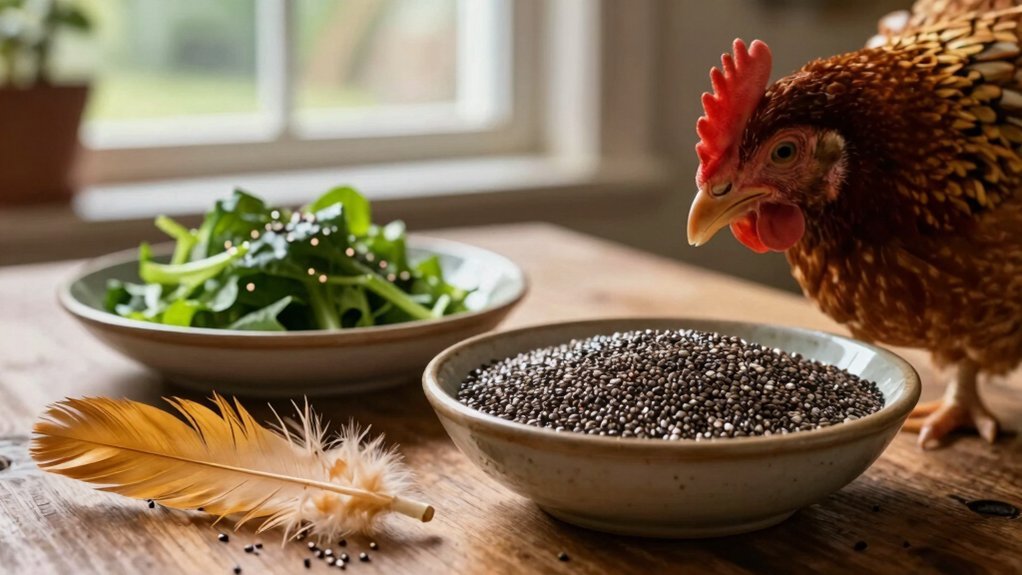
You’re wondering if chickens can safely eat chia seeds and what they get, and you’re right to ask. You can give a laying hen up to a quarter‑to‑half teaspoon daily (≈0.5 g) or about 2 % of the feed weight, and for chicks keep it under 1 % (≈0.1 g) and add a separate teaspoon of sprouted chia. The seeds boost omega‑3s, calcium, boron, protein, and antioxidants, improving yolk quality and bone strength without changing egg size. Start low, watch droppings, and you’ll see the benefits—next, learn how to mix them without upsetting the ration.
How Much Chia Seeds Are Safe for a Daily Chicken Supplement?
How much chia can you safely add to a chicken’s daily diet? You’re probably wondering if a sprinkle will help or hurt. Here’s the thing: keep chia under 10 % of the total feed, which for a laying hen eating 0.25 lb means about ¼–½ teaspoon per day. Start with the lowest dose, watch droppings and appetite, and never give a large dry handful that could swell in the crop. Since an adult chicken typically consumes 120 grams of complete feed daily, this baseline helps you calculate the precise 10% limit for supplements without disrupting their primary nutrition.
What if my birds are allergic? Chia allergies are rare, but if you notice swelling, sneezing, or abnormal droppings, stop immediately—this is a sign of an allergic reaction.
Can too much cause problems? Absolutely. A chia overdose can dilute nutrients, cause crop upset, and lead to digestive discomfort. Just as overfeeding treats leads to nutrient dilution, excessive chia can disrupt the balanced diet required for optimal health. Maintaining a quality layer feed as the foundation of their diet ensures that supplements like chia do not compromise essential protein levels needed for different life stages.
Takeaway: Sprinkle a tiny amount, monitor, and stay well below a tablespoon daily. Next, consider how the seed’s omega‑3 content might boost egg quality.
Omega‑3 Benefits of Chia Seeds for Chicken Eggs
If you’re wondering whether sprinkling chia into your hens’ feed really boosts egg nutrition, you’re on the right track.
How does chia change the yolk lipid profile?
Here’s the thing: adding 300 g/kg whole chia to a laying‑hen diet spikes yolk omega‑3 levels without fat total fat. The yolk lipid profile shifts toward more n‑3 fatty acids, improving the omega‑3/omega‑6 ratio. In a quail trial, just 3 g/kg chia oil raised the PUFA/SFA balance, giving a healthier fatty‑acid mix.
Is plant‑based enrichment worth it?
Obviously, chia offers a plant‑based enrichment that rivals flaxseed and fish oil. Some studies show chia‑fed hens produce more total n‑3 than flax‑ or fish‑oil groups, while keeping egg size and taste unchanged. While chia enhances yolk quality, remember that high calcium content is equally critical in the overall diet to support healthy eggshell formation and optimal laying capacity. To ensure shells remain strong, it is best to offer large particle calcium separately so hens can regulate their intake according to individual needs.
Takeaway
You can boost egg omega‑3 content with modest chia inclusion, achieving a better yolk lipid profile and a clean, plant‑derived label.
Just as brewer’s yeast provides essential B-complex vitamins and minerals to support overall poultry wellness, chia seeds offer a complementary nutritional boost for egg quality.
Next, you might ask what other nutrients chia supports in the shell and bones.
Why Calcium & Boron in Chia Seeds Keep Bones and Shells Strong
Why does calcium in chia matter for your hens’ bones and shells? You’re right to wonder—calcium sets the stage for strong shells and sturdy skeletons. In chia, calcium follows the calcium pathways that deliver mineral straight to the shell gland and bone matrix, so even a modest sprinkle boosts the pool your hens draw from daily.
Here’s the thing: boron synergies amplify that effect. Boron nudges calcium, magnesium, manganese, and phosphorus into the right spots, sharpening metabolism and preventing waste. Think of boron as a traffic cop directing mineral trucks to construction sites—your hens’ bones and shells get the materials they need, when they need them. While chia offers these nutrients, you can also support shell formation by providing baked eggshells that have been dried and crushed to a safe, digestible size. To ensure optimal absorption without risking deficiency, it is vital to offer large particle calcium separately so hens can regulate their intake overnight. Unlike fast-acting feed calcium, crushed oyster shells provide a slow-release source that resides in the gizzard to sustain shell formation while hens sleep.
Protein & Antioxidants in Chia Seeds Boost Chicken Health
What does protein in chia actually do for my hens?
You’re right to wonder—protein fuels muscle repair, egg formation, and feather development. Each bite supplies about 20 % protein, boosting tissue growth and helping your birds recover from daily wear.
Here’s the thing: chia’s antioxidants—quercetin, kaempferol, and others—act like tiny shields, offering cell protection against oxidative stress. During high‑metabolism phases, such as laying, these compounds neutralize free radicals, keeping cells healthy and meat quality stable.
Now, you can safely add chia as a treat, not a feed replacement. Aim for up to 5 % of the diet; you’ll see stronger feathers and better overall nutrient balance without harming meat quality. While chia offers a plant-based protein boost, it should complement a primary diet of quality layer feed to ensure hens receive the specific 16-18% protein and calcium levels required for optimal production. Remember that proper digestion is aided by providing grit to help grind food in the gizzard. Selecting a base ration with added amino acids further supports the growth and egg production benefits you seek from supplemental treats.
Takeaway: modest chia inclusion upgrades protein and antioxidant intake, supporting robust feather growth and cellular health. Ready to try a small batch in your flock’s diet?
Sprouted vs. Dry Chia Seeds: Which Is Better for Chicken Treats?
You’re probably wondering whether sprouted or dry chia makes a better treat for your hens. Sprouted chia feels like fresh greens; it’s moist, soft, and chickens peck at it avidly, especially when winter limits forage. You’ll need to rinse, drain, and keep sprouts in a shallow tray, which adds a prep step but gives a “living” treat that reduces the swelling risk dry dry seeds can cause in the crop. Much like sprouting lentils, this germination process breaks down anti-nutrients and increases the bioavailability of essential vitamins and minerals for your flock. This transformation ensures that any natural toxins potentially present in raw legumes are destroyed, making the sprouts a safe and nutritious option. All right, dry chia wins on storage considerations. It stays stable in a sealed jar for months, weighs more per scoop, and you can scatter it quickly without extra dishes. Just keep portion sizes tiny—one teaspoon per bird per day—to stay within safety precautions. Here’s the thing: sprouted chia shines when you have time for enrichment, while dry chia shines for convenience. Choose based on your schedule, and you’ll keep your flock happy and healthy. Incorporating this method alongside sprouting grains like barley or wheat can further enhance nutrition and reduce the overall quantity of commercial feed needed for your flock.
How to Mix Chia Seeds Into Chicken Feed Without Unbalancing the Ration
If you’re wondering how to add chia without throwing off your flock’s diet, you’re asking the right question.
How much chia should you use?
Start with 2 % of the total mix for layers and under 1 % for starters. That means 20 g chia per kilogram of feed for hens, and only 10 g per kilogram for chicks. Keeping the ratio low prevents fiber and fat from diluting protein, calcium, and phosphorus. *The mix should be well‑mixed to avoid clumping.*
What’s the best way to blend it?
Use a clean bucket and a sturdy whisk or hand‑held paddle mixer. Sprinkle chia over the base feed, then stir for 30–45 seconds until every pellet looks speckled. This even distribution stops birds from sorting out the tasty bits. Just as growing your own corn requires careful planning to ensure a balanced diet, integrating chia seeds demands precision to maintain appropriate protein and mineral levels for poultry health. Always verify that your final blend still meets the standard requirement for optimal protein levels to support robust health and efficient egg production. Remember that consistent access to fresh water is a fundamental part of any healthy feeding regimen when introducing new feed components.
How do you store the mix?
Store the finished ration in a cool, dry container with a tight lid. Add a small silica packet for extra moisture control—feed storage tips like this keep chia fresh and prevent clumping.
Takeaway:
Add a modest amount, mix it thoroughly with a whisk, and store it properly. Next, monitor egg quality and adjust the percentage if needed.
Preventing Fiber‑Related Digestive Problems in Chickens
You’ve just learned how to mix chia without upsetting the ration, and now you’re wondering why the same mix might cause gut trouble. The culprit is chia’s huge insoluble fiber load; a sudden jump can bloat the bird’s gut, slow passage, and even block the tract. Here’s the thing: you need a slow introduction and constant water access. Since chickens lack teeth, they rely on grit in the gizzard to mechanically grind down high-fiber foods like chia to prevent such blockages. While commercial feeds often include necessary minerals, offering insoluble grit separately is essential when feeding scratch grains or kitchen scraps to ensure proper digestion and prevent impaction.
How does water help?
When chia absorbs moisture, it swells. If birds can’t drink enough, the dry seed clumps and hardens, leading to constipation. Keep fresh water flowing and consider soaking chia for five minutes before adding it to feed.
What amount is safe?
Treat chia as a tiny supplement—no more than one teaspoon per ten birds per day. Watch droppings and appetite; if you see loose stools or reduced feed intake, cut back immediately.
Takeaway: Introduce chia gradually, guarantee unlimited clean water, and keep portions tiny to avoid digestive upset. Ready to move on to a step‑by‑step feeding plan?
Step‑by‑Step Guide to Adding Chia Seeds to Your Coop
When you wonder how to get chia into the coop without turning it into a mess, the answer is simple: start small, keep it moist, and use a shallow tray. First, pick a disposable pie pan or a plastic tub for your container setup. Line it with a damp paper towel, sprinkle ¼ cup chia, then cover with plastic wrap to hold humidity.
Now, place the tray in a bright spot but out of direct sun; after 48 hours, the seeds will form a gel. Add a splash of water daily, never submerging the sprouts.
All right, move the sprouting tray to your coop placement once the seedlings reach about an inch. Let the chickens peck at the fresh greens, and enjoy the boost of nutrients they’ll get.
Takeaway: a shallow, moist tray in a convenient coop spot gives chickens a tasty, low‑mess chia treat. Next, decide whether you’ll sprinkle a few sprouts onto their daily feed or serve the tray as a standalone snack.
Safe Chia Seed Ratios by Chicken Type (Layers, Broilers, Chicks)
You’re probably wondering how much chia you can safely give each type of bird after getting the sprouts onto the coop floor.
How much should a layer get?
A tablespoon per adult hen works for most backyard flocks. Treat chia varieties as a supplement, not a base feed, and keep seed storage cool and dry to preserve freshness. Too much fat or fiber can upset digestion, so stick to that modest amount.
What about broilers?
Add chia as a measured inclusion in the complete diet, roughly 1‑2 % of feed weight. Think of it like swapping a small portion of soybean with chia oil; you’ll see similar growth without heavy supplementation. Store the seeds airtight to avoid rancidity.
How do you feed chicks?
Offer about one teaspoon of sprouted or lightly ground chia, separate from adults. Their tiny guts can’t handle bulk fiber, so keep it occasional. Keep the seed container sealed and cool.
Takeaway: Use a tiny daily dose, store seeds properly, and watch your birds’ response. Ready to try a small batch and see the results?