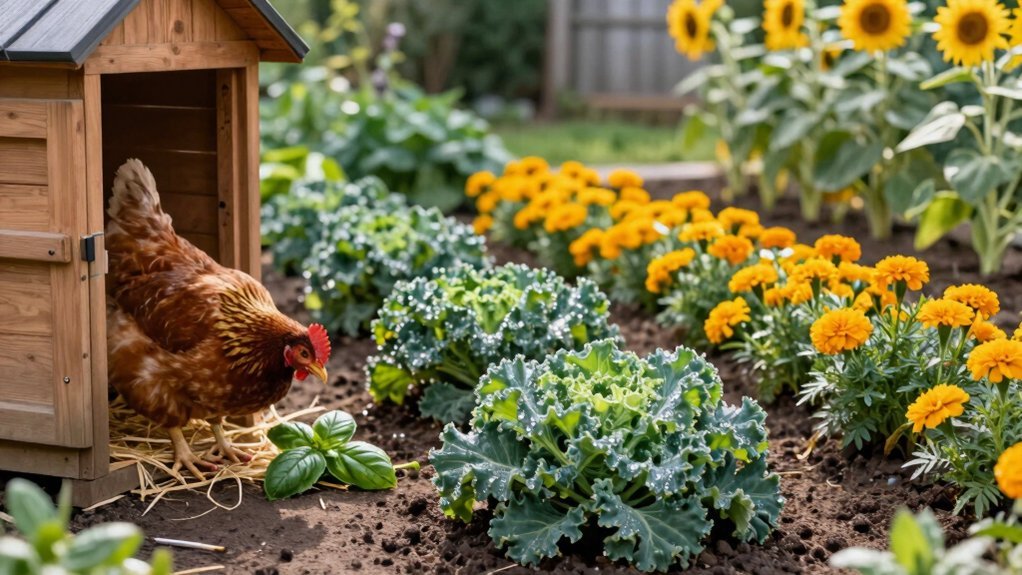
You’re probably wondering which plants are safe for chickens and still grow well in your garden, and you’re right to ask. Choose sunflowers, clover, kale, and berry bushes that match your USDA hardiness zone—sunflowers thrive in zones 5‑10, clover tolerates foot traffic, and kale gives winter vitamins. Plant them in raised beds with hardware‑cloth bottoms, add grit and fresh water, and rotate crops every few weeks to keep pests and parasites low. This setup gives you a continuous, nutritious feed source and a happy flock.
Pick Chicken‑Safe Plants for Your Climate
What plants actually survive in my zone? You’re probably wondering which zone specific perennials and climate appropriate shrubs won’t die on you. Here’s the thing: match USDA hardiness numbers to your last‑frost date, then pick plants that sit comfortably inside that range. For example, dogwood (zones 3‑8) and forsythia (5‑9) thrive in many temperate spots, while fig (7‑9) needs a warmer niche.
Now, think about sun exposure. Full‑sun perennials like butterfly bush (5‑10) give chickens shade and nectar, while shade‑tolerant herbs such as parsley fit partial‑light corners. Edible flowers like marigold and nasturtium offer health benefits such as improved digestion and brighter egg yolks for your flock.
All right, remember: a plant that’s both zone specific perennials and climate appropriate shrub will reduce loss and keep your flock fed. Next, list your frost dates and start a planting calendar. Crucially, you must carefully identify weeds before feeding them to your chickens, as common garden varieties like poison ivy and foxglove can be toxic and potentially deadly. You should also remove highly toxic species like rhododendron and yew from your garden entirely to prevent severe poisoning or death in your flock.
Plant Chicken‑Safe Perennials Like Sunflowers & Clover
You’re probably wondering which perennials actually feed your flock without dying on you. Sunflowers and white clover top that list. Sunflowers give you high‑value seed production—protein, omega‑3s, magnesium, vitamin E—while clover spreads as a living mulch, tolerating foot traffic and nibbling.
Here’s the thing: start with a sunny edge for sunflowers, sow seeds 1 inch deep, thin to 12‑inch spacing, and protect seedlings until they hit two feet. Plant clover in a mix of soil and compost, broadcast seed, lightly rake, and water consistently until it establishes.
Obviously, cut mature sunflower heads after bloom, dry them, and stash the seeds for winter feed. The thinner hulls of black oil sunflower seeds make them easier to digest compared to other varieties, ensuring your birds absorb more nutrients. Clover will keep growing year‑round, offering fresh protein and reducing bare soil. Takeaway: Combine sunflower seed heads and clover ground cover for continuous, low‑maintenance forage. Next, consider adding other perennial fruit shrubs to diversify your flock’s diet. While sunflowers are nutritious, their high fat content means they should be fed in moderation to prevent dietary imbalances in your chickens. You must also ensure you provide unsalted, unseasoned seeds to avoid health risks associated with added salts or flavorings.
Add Chicken‑Safe Leafy Greens for Year‑Round Vitamins
Why bother with leafy greens year‑round? You’re probably wondering if the effort pays off. The answer is yes—continuous green preservation keeps your flock’s vitamin rotation steady, preventing gaps that can weaken immunity or feather quality.
What greens should you grow? Plant kale, collard, and turnip greens for cold months; lettuce, pak choi, and microgreens for spring and summer. Succession sow lettuce every two weeks, and rotate kale with cabbage to keep calcium and vitamin K flowing.
How do you feed them safely? Wash each batch, then offer a handful per bird daily, mixing varieties to avoid overloading oxalates. Kale is a particularly excellent choice because it provides essential antioxidants that support immunity and reduce inflammation without containing toxic substances. It is also important to chop these greens into small pieces to avoid choking and ensure safe consumption for your birds. Additionally, always ensure your greens are free from pesticide treatments to prevent toxicity in your flock.
Takeaway: a simple schedule of fast‑growing greens guarantees year‑round nutrients. Next, decide which fast‑growing crop fits your climate and start sowing.
Incorporate Chicken‑Safe Berry Bushes and Fruit Trees
You’re probably wondering how berry bushes and fruit trees can fit into a chicken‑friendly garden. You can plant blueberries, raspberries, blackberries, currants, and gooseberries as dual‑purpose shrubs. They give chickens tasty treats and create natural fences that protect harvests from overbrowsing.
Which berries need special soil?
Blueberries demand acidic soil (pH 5.0‑5.5) and consistent moisture, while most brambles thrive in neutral, well‑drained loam. Choose the right spot, amend with peat or pine bark for blueberries, and you’ll meet their soil requirements without extra effort.
How do fruit trees help?
Mulberry and apple trees drop fruit into runs, so chickens snack on fallen berries while you harvest the rest. Use simple netting during peak ripening to keep your human harvests safe. While fruit provides treats, incorporating fast-growing greens like clover or mustard nearby ensures a continuous supply of nutritious forage that supports soil health and reduces feed costs. To ensure safety, you should cut larger berries in half to prevent choking hazards for smaller birds. Always serve fresh raw raspberries instead of cooked ones to maximize the vitamins and antioxidants your flock receives.
Takeaway: Plant a mix of thorny brambles for barrier‑ and acid‑loving blueberries for soil diversity, then add a mulberry or apple tree for year‑round forage. Next, think about arranging these plants to shade your free‑range zones.
Set Up Scratch‑Resistant Beds and Containers for Young Crops
Even though you’re wondering how to keep curious chicks from turning your seedling beds into a digging playground, the solution is simpler than you think. Use galvanized hardware cloth with ½‑inch squares as a surface barrier under every raised bed. Attach it up the sidewalls to form a basket‑like barrier, then secure it with sturdy support structures so the walls won’t bow under moist soil. Now, raise the bed a foot or two—bed elevation adds a physical hurdle and keeps chickens from easily reaching the soil. Cover the top with a thick layer of aged mulch; mulch application conserves moisture, smothers weeds, and discourages pecking. Finally, line the bottom of open‑bottom containers with the same mesh, or use closed‑bottom pots that need no extra liner. Takeaway: hardware cloth, higher beds, mulch, and solid framing keep young crops safe. Next, think about how to arrange your beds for easy access while keeping chickens out. Using soft wood for the frame can also reduce cost and improve durability. You can further protect your garden by installing permanent fencing made from materials like chicken wire to effectively exclude birds from vulnerable areas. Since chickens are opportunistic feeders that may eat mice if encountered but do not actively hunt them, relying on rodent control strategies like sealing entry points is essential for a healthy backyard ecosystem. Providing a designated area with loose soil satisfies their instinct to create dust baths and prevents them from digging up your protected crops.
Design a Chicken‑Safe Free‑Range Enrichment Zone
You’re probably wondering how to give your chickens a safe, fun yard without inviting predators or wrecking your garden.
How do I keep predators out while letting them roam?
Set up electric poultry netting around the perimeter and drape overhead netting to block hawks. Seal coop doors at night; any gap over ¼ inch invites trouble. Use covered physical passageways between coop, run, and forage zone so chickens move without exposure. Shuji ban wood preservation adds a fire‑resistant barrier to the coop’s exterior. These fences rely on a good earth connection to complete the circuit and deliver an effective deterrent shock to predators. You can also hang crisscrossed fishing lines above the run to break up open flying space and discourage hawk attacks by confusing raptor flight paths. Remember that while hawks are a threat, ground predators like raccoons and foxes often cause more overall loss.
What enrichment keeps them happy?
Add dust‑bath trays, multi‑height perches, and jungle‑gym style behavioral structures like ramps, bridges, and swings. Mix clover, dandelion greens, and herbs for foraging, and rotate patches weekly to prevent overgrazing.
How do I make cleanup easy?
Lay sand or dry substrate under shelter, place feeders under cover, and give each area a rest period to break parasite cycles.
Takeaway: Combine predator‑proof boundaries, varied behavioral structures, and smooth physical passages for a thriving, low‑maintenance free‑range zone. Ready to sketch your layout?
Create a Seasonal Planting Calendar for Continuous Greens
All right, you’re wondering how to keep a steady stream of fresh greens for your flock without constantly re‑planting.
When should I sow each batch?
Start early spring as soon as soil temperature monitoring shows 45 °F. Direct sow peas, parsley, and leafy greens in March‑April, then follow with collards in March‑April and a second sow in early June.
How do I stagger for continuous harvest?
Plant a new row every 2‑3 weeks. Use photoperiod adjustment considerations: shorter days in late spring trigger bolt‑resistant varieties like kale and mustard greens, while longer days in summer suit cucumbers and sunflowers.
What about fall and winter?
Late‑summer sowing of kale, collards, and mustard greens guarantees fall production through December. Add perennials like clover for year‑round nibbling. While homegrown greens are beneficial, remember that consistent access to fresh water is a fundamental part of a healthy feeding regimen alongside your planted crops.
Takeaway:
Map sowing dates to temperature and daylight cues, then repeat every few weeks.
Next step:
Sketch a month‑by‑month calendar and set reminders for soil checks.
Incorporating seasonal vegetables like cabbage and celery into your planting plan ensures a balanced diet that supports hydration and overall bird wellness.
Provide Grit, Water, and Proper Feeding Practices
Why do my chickens need grit, water, and a balanced diet?
You’re right to wonder—without grit they can’t grind seeds, and without water they can’t digest or lay eggs efficiently.
What grit should I give?
Pick feed‑grade grit, crushed granite sized for your birds’ age. Young chicks need fine particles; adults handle coarser stones. Spread it in a separate container so they can peck whenever they need it.
How do I keep water fresh?
Use cleanersers, water them daily, and place a few stations to avoid crowding. In hot weather, add ice cubes or a shallow trough to keep water cool; in winter, prevent freezing with a heated bowl.
How do I balance garden foods?
Treat greens, seeds, and scraps as supplements, not replacements for a complete feed. Offer chopped veggies in a basket, limit treats to 10 % of daily intake, and monitor droppings for any upset.
Takeaway: Provide age‑appropriate grit, maintain fresh water with proper watering techniques, and supplement a balanced ration with garden greens.
Next step: set up a grit feeder and clean waterers, then start adding a handful of chopped lettuce to your flock’s diet.
Common Issues & Quick Fixes for a Healthy Feed Garden
Now you’re wondering why a perfect feed garden can still turn into a mess. You’ve done lead testing and heavy metal screening, yet chickens still peck at risky soil. The answer is often hidden in garden design and plant choice.
What plants should I avoid?
Poison ivy, boxwood, nightshade, and even tomatoes can hurt your flock. Cocoa bean mulch contains theobromine, lethal at low doses. Swap those for clover, marigold, or basil—safe and tasty.
How do I protect seedlings?
Split‑rail fences let chickens hop inside. Use low‑profile mesh or a temporary hoop, and open the garden only a few hours a day. Pea gravel flooring reduces direct soil foraging.
What about soil health?
Raw manure spikes nitrogen and odor. Compost it first, then mix with straw or leaves for a deep‑litter system. Keep pH above 6.0 with lime to lock up lead.
Takeaway: Test, choose non‑toxic plants, fence wisely, and compost manure. Next, set up a simple, low‑cost fence and start a compost pile.