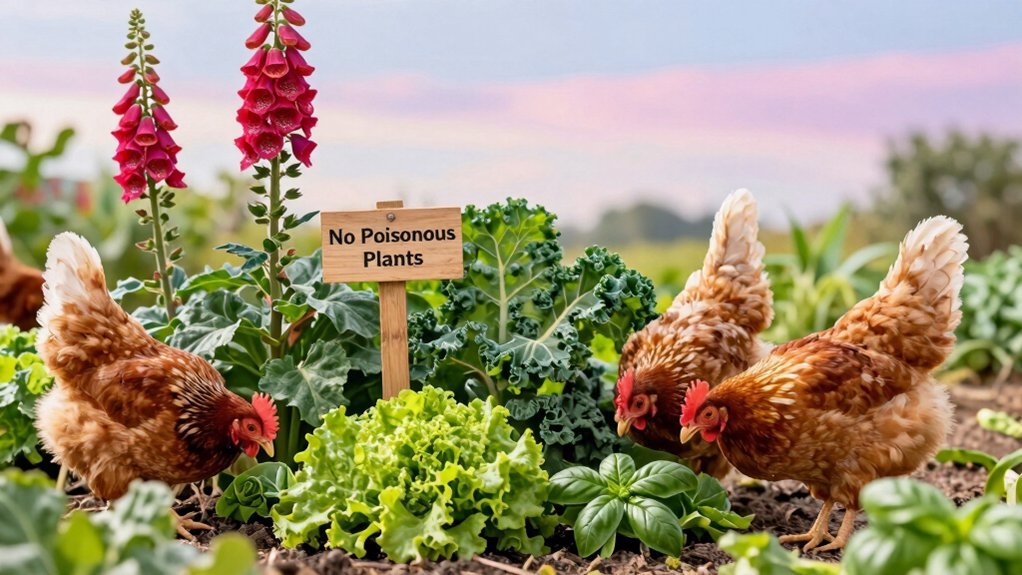
You’re probably wondering which greens are safe for your flock and which are a no‑go. Dark lettuce (romaine, butterhead), kale, spinach (in moderation), Swiss chard, cabbage, broccoli, bell peppers, cucumbers, pumpkin, squash, carrots, peas, and sunflower seeds all boost nutrition and keep chickens happy, while iceberg lettuce is just filler. Avoid poison ivy, foxglove, daffodils, nightshades, alliums, raw potatoes, rhubarb leaves, and any toxic bulbs—these can cause serious illness or death. Now that you know the basics, you’ll be able to design a thriving garden that feeds your birds safely and deliciously.
Safe Greens for Your Chicken Garden
If you’re wondering which leafy greens actually benefit your flock, you’re not alone—many backyard keepers mix up “safe” with “nutritious.” Here’s the thing: lettuce, kale, spinach, Swiss chard, and cabbage are all chicken‑friendly, but darker varieties like romaine, kale, and butterhead pack more vitamins and minerals than iceberg.
Which lettuce varieties should you grow?
Choose romaine, butterhead, or leaf lettuce. They hydrate and add crunch without excess calories. Iceberg offers water but little nutrition, so treat it as a filler, not a staple.
How do you keep spinach healthy for your hens?
Use spinach in a regular spinach rotation with kale and chard. Offer a handful a week, mixing it into a varied greens patch. Too much can bind calcium, so moderation protects eggshell quality. Remember that these garden treats should only supplement a balanced layer feed rather than replace it to avoid nutritional imbalances. Other recommended vegetables like broccoli and carrots provide additional nutritional value and serve as entertaining snacks for your birds. While spinach is nutritious, its high oxalic acid content can inhibit calcium absorption and lead to soft-shelled eggs if fed too frequently.
Takeaway
Darker lettuce varieties and a balanced spinach rotation give your chickens consistent nutrients while keeping the garden interesting. Next, explore other safe greens that boost feather health. Chickens love queen anne’s lace and will often prefer it over carrots.
Edible Wild Weeds for a Chicken Garden
You’re probably wondering why you should bother hunting down wild weeds when you already have lettuce and spinach in the garden.
Which wild greens are worth the effort?
Chickweed cultivation is a breeze: it forms low mats, opposite oval leaves, and tiny white flowers. Chickens love the soft texture and vitamin B boost. Smartweed identification is simple too—look for lady’s thumb’s rounded leaves and easy‑to‑pull stems. Both thrive in moist, disturbed soil, so you can snip a handful and toss it straight into the run. However, you must always avoid toxic plants like poison ivy, foxglove, and bracken fern that can be deadly to your flock. Integrating these safe forages helps you supplement their diet while reducing reliance on commercial feed. Additionally, planting fast-growing greens such as clover and alfalfa in protected areas allows them to establish before chickens access the run, ensuring a sustainable source of fresh forage.
How do you harvest and serve them?
Pull whole plants, bundle them on a fence, or scatter them on the ground for enrichment. Chickens peck the tender parts and leave tougher stems, keeping waste low.
Takeaway
Wild weeds like chickweed and smartweed give you free, nutrient‑dense feed and keep your flock entertained. Next, try a quick walk around your lawn to spot these easy‑to‑identify greens.
Health‑Boosting Herbs for a Chicken Garden
Which herbs actually boost your flock’s health? You’re probably wondering which greens really make a difference, and you asked the right question.
Which herbs give respiratory support? Oregano, thyme, and rosemary form a powerful trio. Oregano’s antimicrobial compounds fight coccidiosis and salmonella, while thyme’s antibacterial oils keep airways clear. Rosemary adds anti‑inflammatory relief and repels insects, making the coop air fresher.
How do herbs combat internal parasites? Thyme’s anti‑parasitic action pairs with oregano’s broad‑spectrum antimicrobial power to reduce worm loads. A pinch of fresh oregano mixed into feed can lower parasite counts without chemicals.
What’s a simple daily mix? Toss equal parts fresh oregano, thyme, and rosemary into a shallow dish each morning. Chickens will peck at them freely, gaining immunity and gut health.
Takeaway: Plant oregano, thyme, and rosemary together for natural respiratory support and parasite control. Next, consider how you’ll rotate these herbs to keep the garden thriving. Herb garden can also serve as a natural source of vitamins and minerals for the flock. Additionally, incorporating dandelion greens provides valuable antioxidants and minerals that further support overall chicken wellness. Both fresh and dried oregano are safe for chickens and offer antiparasitic properties that help prevent common illnesses while supporting a healthy flock without antibiotics. Herbs like lavender and mint can be added to nesting boxes to create a calming environment and repel pests.
Treat‑Time Veggie Guide for a Chicken Garden
Most backyard flock owners wonder which veggies actually keep chickens happy and healthy without turning the garden into a free‑for‑all buffet. You’re probably confused about balancing fresh treats with regular feed, so let’s clear that up.
Which leafy greens are worth the effort?
Hydrating vegetables like romaine lettuce, butterhead, and cucumbers keep birds cool in summer. Darker greens—kale, Swiss chard, collard and beet greens—pack vitamins A, C, and K. Offer a handful daily; chickens will peck them down in minutes, so harvest often.
What crunchy veggies add texture and nutrition?
Broccoli, cauliflower, bell peppers, and cabbage serve as enrichment toys. A few florets or pepper strips each morning give antioxidants and a satisfying snap. Rotate weekly to avoid boredom.
How do starchy treats fit in?
Seasonal crops such as pumpkin, squash, zucchini, and carrots provide carbs and fiber. Slice them thin, scatter on the run, and watch the flock gobble. Use pumpkin seeds sparingly for extra protein. Unlike white potatoes which can be toxic, sweet potatoes are safe for chickens to eat raw or cooked, including the skin.
What protein‑rich add‑ons boost the menu?
Peas and cooked green beans supply protein; a handful of sunflower seeds adds energy and feather support. Keep portions modest—no more than a quarter cup per bird per day.
Takeaway: Mix hydrating vegetables, fibrous greens, and seasonal crops for a balanced treat menu. Harvest small amounts daily, protect crops with netting, and you’ll keep your chickens satisfied without overgrazing. Incorporating grass can also improve egg quality by providing essential micronutrients and supporting natural foraging behavior when offered in moderation. Always chop produce into small pieces to prevent choking hazards and ensure safe digestion for your flock. Next, consider how to rotate these veggies to keep the garden thriving.
Plants to Avoid in a Chicken Garden
You’re probably wondering which garden plants could turn a tasty snack into a dangerous trap for your flock. First, do a toxic identification of common ornamentals: foxglove, azalea, rhododendron, lily of the valley, periwinkle, and lantana all contain cardiac glycosides or other poisons that can cause weakness, seizures, or death. Next, run a risk assessment on bulb plants—daffodils, hyacinths, irises, amaryllis, and narcissus—because the underground parts concentrate toxins that irritate digestive tracts and can be fatal.
Now, think about wild invaders. Hemlock, nightshades, ground ivy, buttercup, and bracken fern each pose a serious threat if chickens peck at them. Trees and shrubs like yew, oleander, horse chestnut, oak, and holly also belong on your “keep‑out” list; their leaves, berries, or seeds can cause organ failure or paralysis. You must also exclude alliums like leeks, as they contain n-propyl disulfides that damage red blood cells and potentially cause anemia in your flock. Be mindful that raw potatoes contain solanine, which can cause severe digestive and neurological symptoms in chickens.
All right, remember: any plant that looks appealing but has a known toxic profile should stay far from your coop. Be especially careful with rhubarb leaves, as they harbor oxalates that can lead to kidney failure in your birds. The takeaway? Identify and remove these hazards now, then you’ll keep your flock safe and healthy.
Protecting Your Chicken Garden
If you’re wondering how to keep your garden thriving while letting your chickens enjoy a safe for, you’ve hit the right spot.
What fencing materials work best?
Use welded wire or hardware cloth for at least 4‑foot height; 5‑6 feet helps with jumpers, small dogs, or raccoons. Bury the mesh 6‑12 inches deep or add an outward apron to stop digging, which is an instinctive behavior chickens use to create dust baths. For enhanced security against determined predators, consider supplementing physical barriers with electric poultry netting that delivers a harmless but effective deterrent shock.
How do you install barriers without hurting plants?
Set up hoop tunnels, cloches, or temporary netting over seedlings. Keep raised beds and container planters for high‑value greens; they stay out of reach of scratching. You can also place stones around the bases of vulnerable plants to discourage scratching and protect the soil from being disturbed.
When should you let chickens roam?
Keep them out until roots are established—usually a few weeks. Open access once plants are sturdy, then rotate zones so each patch rests and regrows.
Takeaway: solid fencing materials and thoughtful barrier installation protect soil, roots, and irrigation while giving chickens safe foraging zones. Ready to map out your garden zones? Chickens love greens because they provide variety in diet and promote health.
Balancing Grazing in a Chicken Garden
Balancing grazing in a chicken garden can feel like walking a tightrope, but you’ve asked the right question.
How do rotational systems keep my greens alive?
You’ll move chickens to a fresh patch every 2‑3 days, letting the previous area rest. This mimics a pasture where roots recover, and it spreads pecking pressure so no single plant gets wiped out.
What stocking density works best?
Aim for one chicken per 4‑6 sq ft of leafy area. Too many birds over‑graze, causing bare spots and disease; too few waste potential forage. Adjust the count as plants grow or as you add fast‑regrowing lettuce and kale.
How can I prevent damage while still feeding them?
Set a daily 30‑minute window for grazing, then close the fence. Use movable barriers to create “rest” zones, and stagger planting dates so some greens stay mature while others recover. While managing your plants, remember that chickens are natural foragers that will happily consume cabbage white caterpillars and other visible pests, providing them with essential protein while helping control your garden population.
Takeaway:
Rotational systems plus proper stocking density give you a steady, safe green supply without killing your garden. Next, consider how to boost egg production with those same plants. While domesticated birds often rely on commercial feed, introducing leafy greens and insects helps mimic the nutritional diversity of their wild ancestors.
Egg‑Boosting Nutrition From a Chicken Garden
You’re wondering which garden greens actually turn into bigger, richer eggs, and that’s a great question. Morning forage planning lets you sprinkle moringa, kale, and dandelion into the hens’ daily menu, boosting protein, calcium, and vitamins that directly feed yolk color and shell strength. Here’s the thing: adding a handful of omega‑3‑rich purslane or a few sun‑flower seeds can nudge the laying cycle adjustments, giving you steadier output during peak production.
Which plants give the biggest egg boost?
Moringa leaves top the list; they’re packed with nutrients that improve egg quality, while kale supplies calcium for sturdy shells. Nasturtium and marigold add vitamin C and antioxidants, supporting overall health. Takeaway: mix high‑value greens with protein seeds for balanced nutrition.
How to fit them into your garden routine?
Plan a rotation: sow quick‑grow lettuce and clover for daily forage, then interplant clinga and borage for occasional treats. All right, keep an eye on portions—over‑feeding any one item can upset digestion. Next step: map a weekly garden chart that aligns planting dates with your hens’ laying schedule. Adding leaf extract to the feed further deepens yolk color.