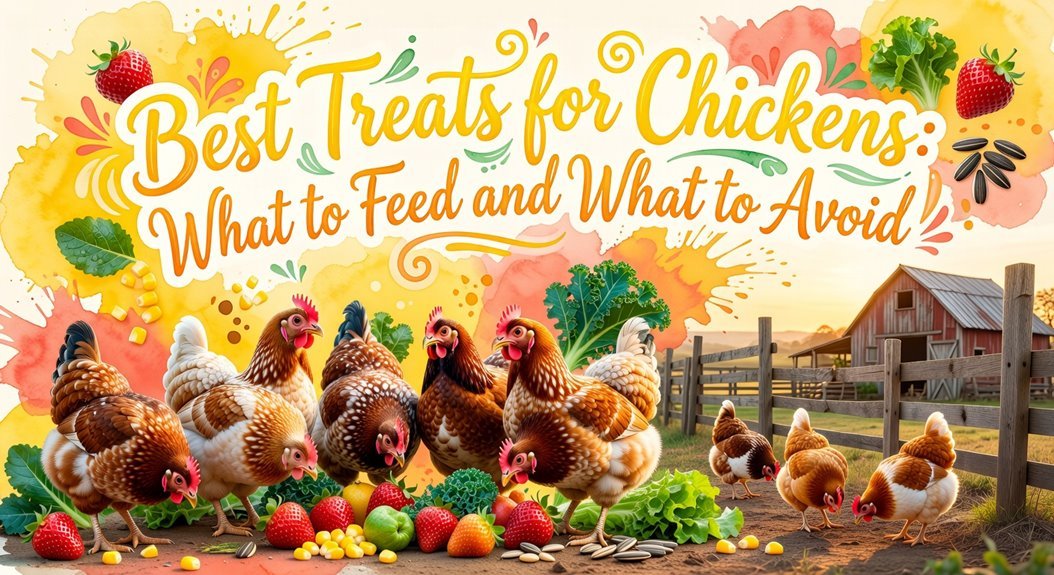
The best chicken treats include fruits like berries and apples (without seeds), mealworms, cooked eggs, and leafy greens. You should never feed your flock avocado, chocolate, raw kidney beans, apple seeds, or nightshade foliage—these cause serious toxicity. Keep treats at or below 10% of daily intake, roughly 2 tablespoons per hen. Rotating varieties prevents nutritional imbalances while supporting egg quality and immunity. Everything covered ahead will sharpen your flock-feeding strategy considerably.
What Can Chickens Actually Eat as Treats?
When selecting treats for your chickens, it is essential to understand which foods are genuinely safe and nutritionally beneficial. You can offer seasonal fruit like strawberries, blueberries, and raspberries, which deliver antioxidants and essential vitamins. Apples without seeds or cores provide additional nutritional value, while citrus fruits are safe only in moderation due to their high acidity.
Nutrient rich insects, particularly mealworms, represent the most biologically appropriate protein treat, aligning closely with a chicken’s natural foraging behavior. Scrambled eggs also supply concentrated protein effectively. Leafy greens like kale and lettuce support hydration and fiber intake, while cooked oatmeal and plain rice offer safe carbohydrate sources. Regardless of food type, keep all treats within 10% of their total daily diet. Feeding mealworms provides aprotein boost that can improve egg quality when used in moderation.


Predator Foods is a grower and distributor of high-quality organic mealworms located in the USA.

Worms for Reptiles and Birds: Mealworms are Darkling Beetles in their larvae stage, and make an excellent food source for all sorts of different reptiles including various lizards, a pet gecko or a bearded dragon, and even chickens and other birds!
Which Kitchen Scraps Are Safe for Chickens?
Many of the safe treats discussed above come directly from your kitchen, making scrap feeding a practical extension of your flock’s supplemental diet. Vegetables like squash, leafy greens, and cooked potatoes deliver scrum nutrient value year-round, while seasonal availability determines which produce scraps rotate through your kitchen. Cooked meat, fish, beans, and whole grains provide additional protein and energy. You’ll want to avoid raw potato peels, which contain toxic solanine, and any avocado parts except the soft flesh. Moldy, rotten, or heavily processed scraps with high salt content also pose real health risks. Remove uneaten scraps the same day to prevent mold growth and pest attraction, keeping your flock’s feeding environment clean and safe. Kitchen scraps should represent no more than 10% of a chicken’s total diet, with the remaining portion coming from a balanced layer feed to ensure all essential nutrients are met. Increased scratching can signal irritation from mite bites, so monitor your birds for this behavior when offering new treats.

【11" LARGE CHICKEN SHREDDER】 This chicken shredder is a multifunctional kitchen gadgets for food chopper, which can shorten dinner preparation time. Due to the middle upgraded rotate construction and visible clear cover of the meat shredder tool, you could shred the meats in seconds. It’s faster and more efficient than metal meat shredder claws, when you need to shred an entire family sized portion of meat and food

【TURN KITCHEN SCRAPS INTO FEED — CLOSE THE LOOP BETWEEN YOUR KITCHEN AND COOP】 Most backyard keepers already compost or feel guilty tossing veggie scraps, bread ends, and fruit peels. This feeder gives those scraps a better destination: straight to your flock. Load the tray with whatever came out of today's kitchen or garden, drop it in the coop, and watch nothing go to waste.It's the simplest way to build a real kitchen-to-coop cycle: your scraps become feed, your feed becomes eggs, your eggs come back to the kitchen. Sustainable keeping doesn't have to be complicated.

The Best Homemade Chicken Treats
Homemade treats give you direct control over ingredient quality, nutritional content, and portion size in ways that commercial options rarely match. You can adapt recipes across seasons, incorporating summer’s frozen ice blocks with berries and peas for hydration, or winter’s banana-egg pancakes stored in advance for consistent protein delivery.
For DIY presentation, you’ll shape protein-enriched oat-and-mealworm blocks, poke holes pre-baking, then hang them with twine for behavioral enrichment. Baked cakes combining applesauce, peanut butter, and seasonal flavors like fresh strawberries or apples provide vitamin variety at 350°F. Flock blocks using scratch grains, sunflower seeds, and mealworms bake at 325°F for 35 minutes. Refrigerate baked treats and consume within one week; freeze ice-based treats until needed. Adding cinnamon can support respiratory health and boost immunity.
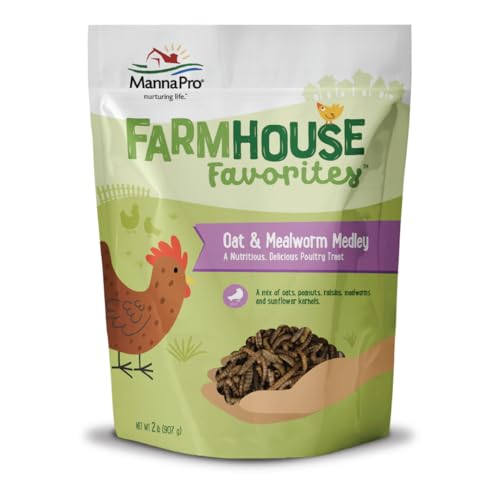
HIGH PROTEIN POULTRY TREAT – Mealworms are a great source of all natural protein.

HIGH PROTEIN POULTRY TREAT: Mealworms provide 50% source of all-natural protein, delivering a nutritious, high-energy treat for poultry that supports healthy growth, vitality, and overall well-being while encouraging natural foraging behavior.

Premium Quality Chicken Treats: Specially formulated, high-quality chicken snacks for laying hens, ensuring only the best for your pet chickens
Which Store-Bought Chicken Treats Are Actually Worth It?
Store-bought chicken treats vary widely in quality, so knowing which products deliver real nutritional and behavioral value saves you both money and effort. When conducting a cost analysis, Good & Gather Chicken Breast Nuggets stand out for store brand value, priced at $6.49 for a 29-ounce bag. Each serving provides 10g of protein with controlled sodium at 320mg. Tyson Crispy Chicken Strips and Foster Farms Crispy Chicken Strips offer reliable alternatives, though Foster Farms carries higher fat content due to dark meat composition. For gluten-sensitive flocks, products battered with rice and corn flours provide suitable options. Evaluate each product against its nutritional profile, ingredient transparency, and price per ounce to determine whether it genuinely supports your chickens’ dietary needs. In taste evaluations, Just Bear Lightly Breaded Chicken Breast Bites ranked as the top performer, praised for great flavor, crispy texture, and a strong protein-to-calorie ratio at 16g of protein per 160 calories. Providing adequate grit ensures proper digestion and nutrient absorption when introducing new treats. Including oyster shell helps maintain strong eggshells and healthy bones.


100% NATURAL – Our freeze-dried dog and cat treats are all-natural and made with only 1 single animal protein, real chicken. We provide a healthy treat you and your furry friend can trust that is grain free with no additives, preservatives, or fillers.

Foods You Should Never Feed Your Chickens
While selecting quality store-bought treats matters, knowing what to keep away from your flock matters just as much. Nightshade toxicity poses serious risks—green potatoes, tomato leaves, and eggplant foliage contain solanine and chaconine, which can sicken or kill your birds. Never feed green potato peels or unripe tomatoes.
Cyanide seeds present another documented danger. Apple seeds, cherry pits, and apricot pits release cyanide compounds that cut off cellular oxygen, potentially causing fatal outcomes. Always remove pits and seeds before offering fruit.
Additional hazards include raw kidney beans, which contain lethal phytohaemagglutinin, avocado skin and pits containing persin, which triggers cardiac necrosis, and chocolate, which delivers theobromine and caffeine. Cook all beans thoroughly, and eliminate avocado and chocolate entirely from your flock’s diet.
Moldy feed and bread pose equally serious threats, as mold can be lethal to chickens and any feed showing visible mold growth should be discarded immediately.
Exposure to excess salt can also lead to dehydration and toxicity, so ensure water and feed are not overly seasoned. Avoid giving chickens caffeinated beverages because caffeine can cause heart palpitations and death.
How Much and How Often Should You Give Chickens Treats?
Treats should never exceed 10% of your chickens’ daily diet—a threshold consistently cited across poultry nutrition sources. For laying hens consuming roughly ½ cup of feed daily, that’s a maximum of 2 tablespoons. Maintaining this diet proportion prevents obesity and nutrient dilution, since chickens prioritize treats over balanced feed.
Treat frequency varies by age and condition. Adult hens can receive treats daily on non-free-range days. Chicks under 2 weeks should receive none; after that, limit treats to 2–3 times weekly. Offer cooked eggs once weekly per 4 chicks, fruits once or twice weekly, and mealworms at 1 teaspoon weekly. Always reduce treats for recovering birds. Observe your flock regularly and adjust portions based on breed-specific responses and overall health indicators. Consider the extraordinary tail length when selecting treats for ornamental breeds like Onagadori.
Providing unlimited access to a complete feed ensures chickens can meet their nutritional needs while minimizing competition.

HIGH MEAT CONTENT GOODNESS: Full of hearty flavor with more than 70 percent real meat using real chicken and salmon as the first ingredients to give your kitty the nutrient-rich goodness in every tender bite.

SHIPMENT CONTAINS: 6 oz of chicken and waffle bites dog treats in a resealable bag to preserve freshness

🔄Upgraded Design of Clear Treat Tubes - These treat tubes boast a Clear design, enabling you to effortlessly monitor the remaining quantity of treats for chickens in real time. Furthermore, they possess the capacity to store up multiple types of treats(can be filled with crumbs, seeds, feed, insects, or even blueberries etc.)