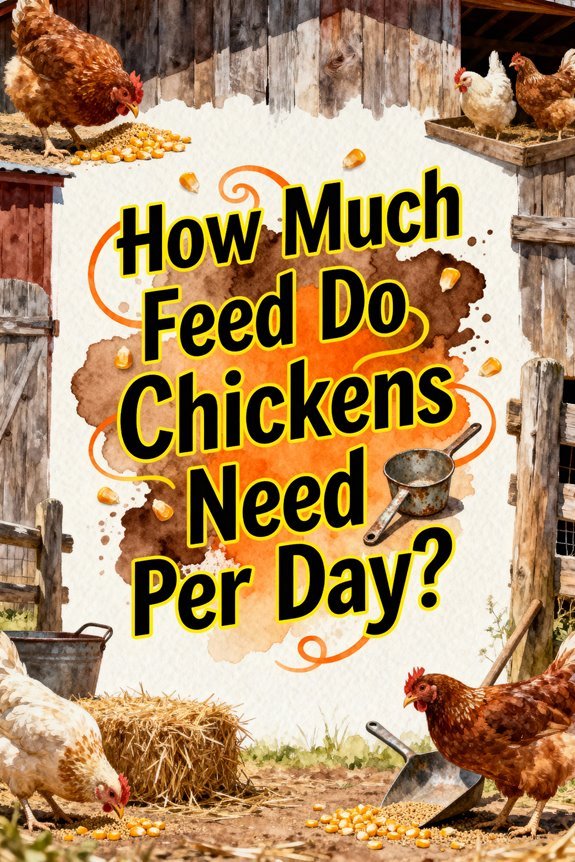
Your chickens’ daily feed needs vary based on their age and purpose. Starter chicks require 1 ounce of feed with 20% protein, while adult laying hens consume about 4 ounces daily with 12-16% protein. Meat birds need more during their growth phase, consuming roughly 14 pounds through the grower stage. You’ll need to adjust portions based on temperature, health, and management practices to guarantee ideal nutrition and production.
Daily Feed Requirements by Chicken Type
Chickens’ daily feed requirements vary considerably based on their age, purpose, and stage of development. Starter feed begins at 1 ounce daily for both meat chicks and egg chicks, with 20% protein content. While egg chicks continue starter feed for 6 weeks, meat chicks shift to grower feed after just 2 weeks. Clean, fresh water must be available at all times, as chickens consume twice as much water as feed under normal conditions.
You’ll need to provide grower feed until your egg chicks reach 16 weeks, while meat chicks require it until 8 weeks. Adult laying hens consume about 4 ounces of layer feed daily, with 12-16% protein and enhanced calcium levels. For meat birds, you’ll move to a finisher diet 7-10 days before processing. Your meat chickens will typically consume 14 pounds during their grower stage, requiring 5-6 fifty-pound bags to reach market weight for every 50 birds. Using crumble or pellets for feed can improve digestion efficiency and minimize waste in your flock. Supplementing with dark leafy greens can significantly improve egg yolk quality and overall hen health.

100% USA GROWN, ORGANIC, NON-GMO GRAINS: 100% of grains are certified Organic, certified Non-GMO, corn-free, soy-free (soy & corn fillers can lead to vitamin & mineral deficiencies), non-medicated, grown on local, U.S.A. family farms & milled fresh

100% USA GROWN, ORGANIC, NON-GMO GRAINS: 100% of grains are certified Organic, certified Non-GMO, corn-free, soy-free (soy & corn fillers can lead to vitamin & mineral deficiencies), non-medicated, grown on local, U.S.A. family farms & milled fresh

Complete All Flock Poultry Feed for Mixed Birds: Balanced nutrition for chickens, ducks, geese, turkeys, and game birds so you can feed your entire flock with one consistent, high-quality food
Factors That Impact Feed Consumption
Five key factors greatly influence how much feed your chickens consume: nutrient content, environmental temperature, water availability, health status, and management practices.
The nutrient density of feed directly affects intake levels, with high-energy feeds reducing quantity consumed while meeting nutritional requirements. You’ll notice your birds eat less when temperatures exceed 86°F but increase consumption in cold weather. Water accessibility is essential; restricted access immediately reduces feed intake. Your flock’s health status has a major impact on consumption – sick birds often reduce eating but continue drinking. Management factors, including feed accessibility through adequate feeder space and appropriate lighting schedules, play important roles in maintaining consistent intake. Birds raised on pasture typically consume more feed due to increased activity levels and energy expenditure. The balance between different feed ingredients must be carefully considered since high fiber content can decrease overall feed consumption efficiency. A complete layer feed containing 16-18% protein is crucial for maintaining optimal egg production in laying hens. Establishing feeding routines helps reduce waste while ensuring all birds get adequate nutrition throughout the day.
Creating an Effective Feeding Schedule
To create an effective feeding schedule that optimizes your flock’s health and productivity, you’ll need to implement a consistent routine based on scientifically-proven practices. Structure your feeding methods around 2-4 daily distributions of feed, guaranteeing portions align with your chickens’ natural foraging behavior. Remember that organic starter crumbles are essential for proper chick nutrition during their first 12-15 weeks. Consider selecting feed from quality commercial brands that offer specialized formulations for different life stages.
Calculate portion sizes based on your flock size, allocating approximately 1/4 pound of feed per adult hen daily. You’ll need to adjust these amounts according to your birds’ life stages, with chicks requiring 1-2 ounces daily during their first eight weeks. Implement automatic feeders or manual feeding systems that provide continuous daytime access to appropriate feed types. During cold weather, you may need to increase portions slightly as chickens consume more to maintain body heat. Always ascertain fresh water accompanies each feeding session. Breeds like the Green Queen chicken typically maintain excellent feed efficiency while producing up to 275 eggs annually.

100% USA GROWN, ORGANIC, NON-GMO GRAINS: 100% of grains are certified Organic, certified Non-GMO, corn-free, soy-free (soy & corn fillers can lead to vitamin & mineral deficiencies), non-medicated, grown on local, U.S.A. family farms & milled fresh

Non-GMO, Corn & Soy-Free: Made with high-quality ingredients to support healthy chick growth. This starter chick feed is free from genetically modified organisms and soy, ensuring a cleaner and more natural diet. A great choice for poultry owners looking for chick feed that prioritizes wholesome nutrition.

Watch Your Birds Flourish: Our nutritionally complete whole grain starter crumbles with 20.5% protein promotes strong development and growth in chicks and ducklings. Corn-free. Soy-free
Essential Nutrients and Feed Quality
Proper nutrition forms the cornerstone of poultry health and productivity through a complex interplay of proteins, vitamins, minerals, carbohydrates, and fats. Your feed formulation must include all 20 essential amino acids, with particular attention to methionine and lysine levels, which should comprise 2% and 5% of crude protein respectively. Commercial feed options ensure consistent nutrition delivery for different growth stages.
You’ll need to guarantee nutrient balance through careful ingredient selection, as no single component provides all required nutrients. Fat-soluble vitamins A, D, E, and K support critical functions, while water-soluble B vitamins drive metabolism. Both macro and microminerals are important, with calcium being particularly crucial for skeletal health and egg production. Carbohydrates provide primary energy, while fats enable vitamin absorption and serve as concentrated energy sources. A quality layer feed should contain 16-18% protein to support optimal health and egg production. Consider supplementing with crystalline amino acids to meet precise nutritional requirements. Birds efficiently utilize digestible carbohydrates from grains like corn, wheat, and barley for energy production.

Boosts Egg Production & Stronger Eggshells: 16% protein layer pellets formulated to support consistent egg laying, improved yolk quality, and stronger shells for reliable daily production
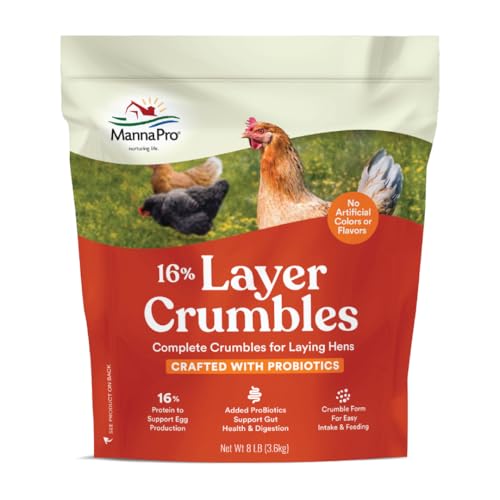
COMPLETE CHICKEN FEED FOR LAYING HENS: Manna Pro Chicken Feed delivers complete nutrition designed for laying hens, supporting strong egg production, healthy feathers, and overall wellness; balanced formula helps maintain optimal health in backyard flocks

Rich yellow yolks - A high level of xanthophyll, a coloring agent derived from marigolds, produces deep yellow egg yolks
Feed Storage and Management Tips
Successful feed storage hinges on five critical factors: environment, container selection, pest control, quantity management, and handling procedures.
You’ll need to store your chicken feed in a cool, dry area with good ventilation, using opaque, airtight containers that resist pest intrusion. For ideal feed accessibility, place storage containers on elevated platforms and maintain consistent temperatures. Your storage solutions should include metal bins or reinforced plastic totes with the feed kept in its original packaging. Light degrades nutrients rapidly, so protect feed from direct sunlight exposure.
Spreading agricultural lime around storage areas can help control moisture and deter pests that may contaminate feed supplies. Implement a first-in-first-out rotation system and purchase quantities lasting only 1-2 months. You’ll want to use dedicated scoops, inspect regularly for contamination, and keep storage areas clean. Consider freezing smaller portions if consumption rates are low. Place feeders away from chicken runs and secure containers with additional fasteners to prevent raccoon access.