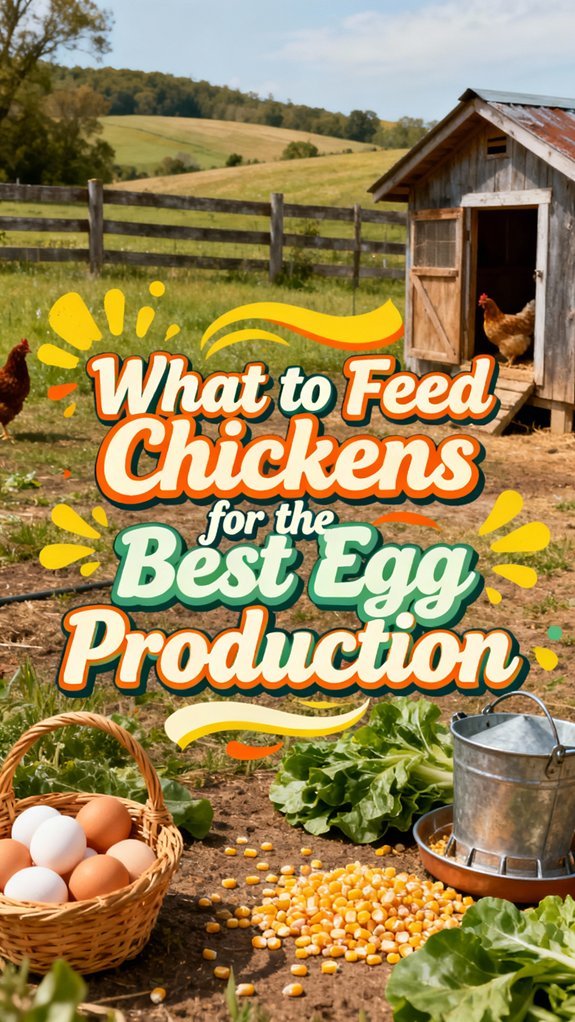
You’ll maximize egg production by feeding your hens a balanced layer diet containing 16–18% crude protein and 4–5 grams of daily calcium, which work together to support both quantity and shell quality. Incorporate all 38 essential nutrients, particularly vitamins D3 and A, which enhance nutrient absorption and metabolic processes. Provide 100–120 grams of feed daily per mature hen. The right nutritional foundation transforms your flock’s productivity, and understanding how each component contributes reveals even greater optimization opportunities.
Understanding Balanced Layer Feed Requirements
Because your hens’ egg production depends on precise nutritional balance, you’ll want to guarantee their layer feed meets specific protein, fat, vitamin, and mineral requirements. Protein levels between 16% and 20% support muscle development and egg formation. Fat content of 3% to 5% provides essential energy for sustained laying. You’ll also need phosphorus at 0.4% to 0.5%, working synergistically with calcium for eggshell development and metabolic function. Adequate calcium is crucial for strong eggshell formation, making it a key component of your hens’ diet. Additionally, providing herbs such as oregano can further enhance your hens’ immune health. Moderation in additional treats like fruits can help maintain this balance. Commercial layer feeds contain approximately 38 required nutrients, including metabolizable energy. Layer feed additives like probiotics and prebiotics enhance digestion and nutrient absorption while supporting immune function. Additionally, incorporating omega-3 fatty acids into their diet can improve egg nutrition and hen health. Crushed oyster shell should be included as a beneficial ingredient to optimize calcium levels for strong eggshell development. This nutrient balance aids your hens convert feed efficiently into consistent egg production while maintaining overall health and vigor.
The Critical Role of Calcium in Egg Production
While your layer feed provides essential nutrients, calcium stands apart as the single most critical mineral for consistent egg production and hen health. Your hens require 4-5 grams daily—roughly the amount contained in each egg they produce. Without adequate calcium, you’ll observe thin, soft, or shell-less eggs alongside reduced production and higher breakage rates. Additionally, crushed oyster shells offer a slow-release source of calcium that supports the hen’s health and ensures robust eggshell formation. To further enhance calcium intake, consider incorporating crushed eggshells, which serve as a natural supplement, especially beneficial for hens that have begun laying. It’s vital to understand that inadequate calcium intake can lead to serious issues like weak shells and osteoporosis. Furthermore, feeding a combination of small and large particle calcium is essential for optimal nutrient absorption and bone health.
In order to achieve optimal eggshell quality, it is crucial to provide oyster shells as part of their diet early in their laying period.
During peak laying, hens deplete skeletal calcium reserves up to 40% for shell formation. You can combat this by offering diverse calcium sources: combine your layer feed’s base calcium with free-choice oyster shell, which provides highly soluble particles for quick absorption. Small particle sizes work fastest during late afternoon shell formation, while larger particles support bone restoration. Offering calcium and phosphorus free choice allows hens to balance their mineral intake according to their individual needs.
Ensure fresh water and vitamin D3 availability to maximize absorption and maintain eggshell strength consistently.
Protein and Amino Acid Essentials for Laying Hens
Protein fuels egg production through its role in forming both the albumen and yolk, making it your second-most critical nutrient after calcium. You’ll want to formulate layer diets at 16–18% crude protein, increasing to 18% during peak lay or molt. Your hens’ daily protein requirement depends on breed—light breeds need ~17 g/day, while heavy-type layers require ~24 g/day. Bantam breeds may have different protein requirements due to their smaller size and shorter lifespans. Providing hens with access to quality feed containing high-protein content is essential for optimal egg production and overall health, including enhanced immune support during critical life stages. Additionally, incorporating diatomaceous earth can support overall poultry health through mineral supplementation, promoting well-being alongside optimal nutrition. The consistent quality and availability of soybean meal make it an ideal protein source for ensuring your hens meet their nutritional needs.
Methionine and lysine are your limiting amino acids; you must balance amino acid ratios to lysine to avoid overfeeding crude protein while meeting actual needs. Soybean meal provides your primary protein source with excellent amino acid profiles, though animal byproducts and insect meals offer digestible alternatives. Supporting hens during stress and changing energy needs helps maintain consistent protein utilization and egg production throughout seasonal transitions.
Use digestible amino acid values when formulating, not total values, ensuring your hens receive ideal protein support for consistent, high-quality egg production.
Vitamins That Maximize Egg Quality and Output
Beyond protein’s structural role, vitamins orchestrate the metabolic processes that sustain high laying performance and egg integrity. You’ll maximize egg quality by ensuring ideal vitamin absorption through proper nutrient synergy. Providing adequate grit and oyster shell can further enhance nutrient uptake and overall health, directly contributing to better egg production. Furthermore, a balanced layer feed that meets the essential nutrient needs of hens is crucial for supporting optimal egg production. Incorporating oregano oil can also support immune function and overall health, potentially leading to improved egg production. Adding high-protein treats like dried mealworms can further boost energy levels and egg production.
Vitamin A (8,000–12,000 IU/kg) supports vision, immunity, and embryonic development, directly improving hatchability. Vitamin D3 (2,500–3,500 IU/kg) facilitates calcium and phosphorus absorption, preventing rickets and weak eggshells. Vitamin E (15–30 mg/kg) functions as a potent antioxidant, protecting muscle health and yolk membrane integrity, while selenium supplementation enhances antioxidant defense and feed utilization.
B vitamins convert feed into usable energy for consistent egg production, while vitamin C (100–200 mg/kg) enhances stress resistance. Most vitamins cannot be synthesized sufficiently by poultry and must be sourced from dietary sources to prevent deficiency diseases. Supplementing 0.25 grams of vitamin powder per 250 milliliters of water measurably increases production and decreases mortality, strengthening your flock’s profitability and performance.
Selecting High-Producing Chicken Breeds
Genetic selection determines your flock’s baseline egg production capacity, making breed choice the foundation of a profitable operation. You’ll find specialized hybrids like ISA Browns and Golden Comets deliver 300+ eggs annually with early maturity at 16-18 weeks, maximizing your production window. ISA Browns typically start laying eggs between 16 to 22 weeks of age, making them an ideal choice for those seeking early production. Providing adequate nesting boxes can also improve the overall egg-laying experience for your hens, reducing stress and encouraging consistent production. White Leghorns achieve exceptional feed efficiency and world-record outputs exceeding 370 eggs yearly, though their skittish temperament requires careful handling. Heritage breeds like Rhode Island Reds offer dual-purpose versatility at 200-300 eggs annually with superior longevity. Sex links combine parent breed characteristics—Barred Rock and Rhode Island Red crosses—producing 280-320 large brown eggs while maintaining unfussy, adaptable dispositions. High egg production often correlates with declining health, so monitoring your flock’s wellbeing becomes essential alongside selecting for output. Your breed compatibility considerations should balance production intensity, lifespan sustainability, and management requirements against your operational goals and environmental constraints.
Daily Feed Intake Guidelines for Mature Hens
Once you’ve selected a breed that matches your production goals, you’ll need to understand how much feed your hens actually require daily to sustain ideal egg output. Your mature laying hens consume approximately 1/4 pound or 100-120 grams of feed daily, though feed variations exist based on body weight, breed, and activity level. Standard-sized breeds maintain this baseline intake at around 1700-1800 grams mature weight. Broiler chickens consume slightly more than this standard guideline. During peak lay at 32 weeks, your hens’ll stabilize at 100-105 grams daily, maintaining this consistent level through 68 weeks. Social interaction is also crucial for the overall well-being of your hens. To support digestion and overall chicken health, ensure they have access to grit for digestion along with their feed. Chickens need insoluble grit for proper digestion since they lack teeth to grind food. Cold weather increases consumption up to 1 pound per day, so monitor environmental temperature’s impact on your flock’s metabolic demands and adjust accordingly. To prevent obesity and maintain optimal health, limit treats to 1 dessert spoonful per hen daily alongside their primary feed allocation.
Maximizing Feed Efficiency and Conversion Rates
While meeting your hens’ daily caloric and protein requirements establishes a baseline for egg production, you’ll dramatically improve your operation’s profitability by optimizing how efficiently they convert feed into eggs. Implement phase feeding to match nutrient supply precisely to production stages, reducing overfeeding costly nutrients. Prioritize pelleted feed with controlled pellet quality—high fines increase selective feeding and waste. Deploy multi-enzyme complexes and phytase to boost digestibility of starch, protein, and phosphorus, lowering required inclusion levels. Select ingredients with analyzed amino-acid profiles using near-infrared data when available. Incorporate targeted probiotic and organic acid programs to stabilize microbiota, enhancing nutrient absorption and reducing subclinical enteric losses. Additionally, choosing feeds such as those that are antibiotic-free options can further enhance the health and productivity of your flock. These strategies collectively strengthen digestive health and minimize feed waste, directly lowering cost per egg produced. Enhanced feed efficiency through proper nutrition also supports stronger immune system development, reducing disease risk and further improving your operation’s overall sustainability and profitability.
Monitoring Production Peaks and Seasonal Decline
Even after you’ve optimized feed efficiency and nutrient delivery, you’ll find that egg production doesn’t remain constant throughout the year—it naturally fluctuates in response to daylength, molt cycles, and flock age. Peak production typically occurs during the first laying year, with output declining roughly 20% annually thereafter. Production monitoring reveals a bell-curve pattern: output rises when daylength exceeds 10 hours, peaks in late spring, then declines sharply after the fall equinox. Molt cycles redirect nutrients from egg formation to feather regrowth, causing production pauses lasting 2 weeks to 2 months. At Rock Bottom Ranch, natural sunlight is used to pace the egg production cycle rather than relying on artificial lighting interventions. Introducing treats like blueberries, which are nutritious for chickens, can provide supplemental vitamins and improve overall health during these fluctuations. Strategic seasonal variations management—including supplemental lighting during short days and nutrient adjustments during molt—helps you sustain consistent productivity and minimize winter production gaps.
Comparing Feed Performance Across Brands
How do you determine which layer feed truly delivers the results your flock needs? You’ll want to evaluate feed quality and ingredient sourcing across brands. Home Fresh Extra Egg Layer’s 17% protein with Yolk Rich technology produces visibly deeper yolks. Nutrena NatureWise Free-Range Egg Producer offers higher protein at 21%, plus Vitamin D3 for calcium absorption and FlockShield for immune support. Kalmbach Feeds provides Non-GMO Project Verification, essential if you prioritize ingredient sourcing standards. Leland Mills’ varied textures—mash, pellets, and foraging blends—yield comparable egg production results. New Country Organics’ soy-free formulation specifically resolves laying cessation in aging hens. Essential vitamins and minerals like calcium and phosphorus are included across quality feeds to strengthen overall bird health and reduce egg breakage. Compare protein percentages, calcium levels, and specialized additives against your flock’s performance metrics to select ideal feed.