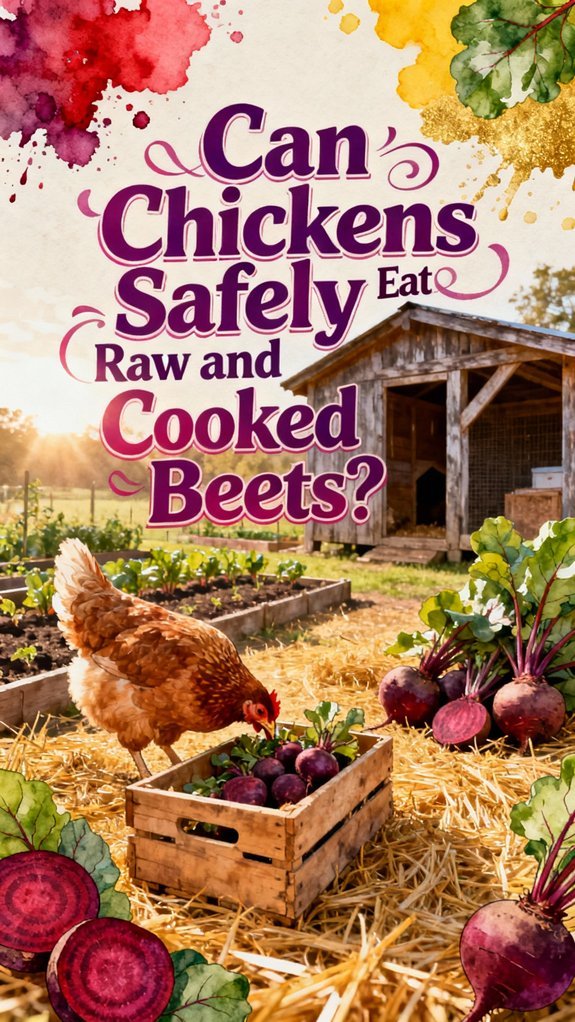
You can safely feed your chickens both raw and cooked beets. Raw beets are nutrient-dense and non-toxic, though you’ll want to cut or grate them to reduce choking risks. Cooked beets offer enhanced digestibility since cooking softens cell walls and lowers gizzard workload. Limit beets to 30-50 grams daily per adult layer, treating them as occasional snacks rather than staple foods. Monitor your flock for mild diarrhea during the first 72 hours. Understanding the specific preparation methods and nutritional advantages will optimize your feeding strategy.
Raw Beets: Safety and Feeding Guidelines
Raw beets offer chickens a nutrient-dense treat that won’t harm them when you feed it appropriately. You’ll find raw beetroot non-toxic to poultry, though raw beet safety requires moderation. The betalain pigments temporarily color droppings and feathers—don’t mistake this for blood. Oxalate concerns arise primarily with beet greens, which contain higher concentrations than roots. While oxalates bind dietary calcium, they won’t cause mineral imbalance if you limit greens to under 10–15% of total daily intake. You should discard spoiled, moldy, or fermented beets to prevent mycotoxin and bacterial contamination. Cut or grate beets to reduce choking risks and increase peckability. Raw beets provide antioxidants, natural sugars, fiber, manganese, potassium, iron, and vitamin C that support your chickens’ overall health and immune function. Including a variety of vegetables in their diet can help enhance their nutritional intake. Always provide fresh water alongside high-moisture treats, and monitor your flock’s body condition and egg production when introducing beets.
Cooked Beets: Preparation and Digestibility
Cooked beets transform their nutritional profile and digestibility in ways that can benefit your flock, though the method you choose greatly impacts nutrient retention. Steaming preserves more vitamins than boiling because it minimizes water contact and leaching. Additionally, providing adequate space in your hens’ diets ensures a balanced intake of nutrients alongside cooked beets. Fresh herbs, including fresh sage, can be safely incorporated into your hens’ diet as a nutritious addition. Cooking with wholesome ingredients such as beets can help ensure that your backyard flock receives essential nutrients to support their overall health. Roasting concentrates sugars and flavor but reduces heat-sensitive vitamins. Cooking softens cell walls, increasing carbohydrate and fiber digestibility for your birds’ enzymes while lowering gizzard workload compared to raw beets. Always cool cooked beets completely before feeding to prevent thermal damage and spoilage acceleration. Remove large pieces to reduce choking risks. Store leftovers refrigerated for 24–48 hours maximum. Plain preparation without seasonings guarantees safety while delivering bioavailable calories and minerals that supplement your flock’s nutritional intake. Moreover, incorporating a variety of feeds including layer feeds can help enhance your hens’ overall diet. Boiled root vegetables may reduce laxative effects compared to fresh beets, making them a safer option for layers prone to digestive upset. Additionally, ensuring that your coop is designed for adequate ventilation can further support the health of your flock by maintaining a comfortable environment.
Nutritional Benefits for Your Flock
Because beets contain a dense concentration of bioactive compounds, they’ll markedly enhance your flock’s health across multiple physiological systems. Beet benefits stem from extensive nutrient profiles that directly address flock nutrition requirements. You’ll observe improved immune function through high antioxidant content and betalains, which combat oxidative stress. The vitamin B9 (folate) supports cellular growth and development, while potassium, magnesium, and iron optimize metabolic processes. Your laying hens’ll experience increased egg production and elevated nutritional value in eggs when beets supplement their diet. The fiber content promotes digestive efficiency, enhancing nutrient absorption and supporting weight management. Asparagus is also considered a safe, nutrient-rich treat for chickens that can complement the benefits of beets. Natural sugars provide sustained energy for active birds. Chopping vegetables into small pieces further ensures that your chickens can safely enjoy their treats. Anti-inflammatory compounds reduce systemic inflammation, further bolstering overall flock health and resilience. During winter months, encouraging hydration becomes particularly important as chickens naturally consume less water in cold conditions, making beet juice an appealing solution to maintain proper fluid intake and support physiological functions. Additionally, providing chickens with high-quality poultry supplies can help create a healthy environment crucial for optimal growth and well-being.
Recommended Feeding Amounts and Frequency
While beets deliver substantial nutritional benefits to your flock, you’ll need to carefully control portion sizes to avoid digestive upset and nutrient imbalances. The importance of portion control can’t be overstated—limit boiled beets to 30-50 grams daily per adult layer, with beet pulp comprising no more than 5-10% of total diet.
Regarding feeding frequency, you should treat beets as occasional snacks rather than staple foods. Fodder beets suit year-round supplementation for adult layers, particularly during vitamin deficiency periods in fall, winter, molting, and early spring. The antioxidants in beets help reduce disease risk and support overall flock health during nutritionally demanding seasons. Monitor your flock’s reactions after each introduction to adjust frequency appropriately. If diarrhea develops, pause feeding for two weeks before resuming with reduced amounts. This measured approach maintains digestive health while optimizing nutritional intake.
How to Prepare Beets for Chickens and Ducks
Proper preparation methods directly influence your flock’s ability to digest and absorb beet nutrients while minimizing digestive complications. You can feed raw beets whole or halved to chickens, while ducks require grated beetroot for easier consumption. Steam or boil beets until soft to enhance digestibility and nutrient absorption, then mash and mix with regular feed.
For young birds, introduce crushed beets gradually from 10-15 days of age. You should chop green tops in summer as vitamin-rich supplements, mixing grated greens with boiled potatoes or mixed feed. Beet greens are particularly favored by both chickens and ducks as nutritious treats. After beet cultivation, utilize high-fiber beet pulp by soaking or feeding dry as a low-calorie supplement. Proper feed storage guarantees ingredient freshness. Combine these preparation techniques with appropriate quantities to optimize your flock’s nutritional intake, noting that pink or teal poop may occur after eating beets.
What to Expect: Side Effects and Monitoring
Once you’ve established a proper feeding regimen using the preparation methods outlined above, you’ll want to understand what physiological responses your flock may exhibit. Mild diarrhea monitoring is essential during the first 72 hours after introducing beets, as high fiber and natural sugars can cause temporary loose droppings. You’ll likely observe reddish fecal staining, which is benign and resolves quickly. Watch for persistent severe diarrhea extending beyond 48 hours, warranting veterinary evaluation. Regarding beet toxicity, beets alone rarely cause serious adverse events; however, oxalates can bind dietary calcium, affecting bioavailability over time, and spicy foods do not pose a threat to chickens, making their diet diversity safer. Record droppings, appetite, water consumption, and egg changes daily initially. Monitor egg shell quality for signs of calcium chelation. Maintain detailed logs of type, amount, and frequency to establish baseline responses and detect subtle production changes. To minimize potential issues, limit beets to less than 10% of your chicken’s overall diet to prevent nutrient imbalances.