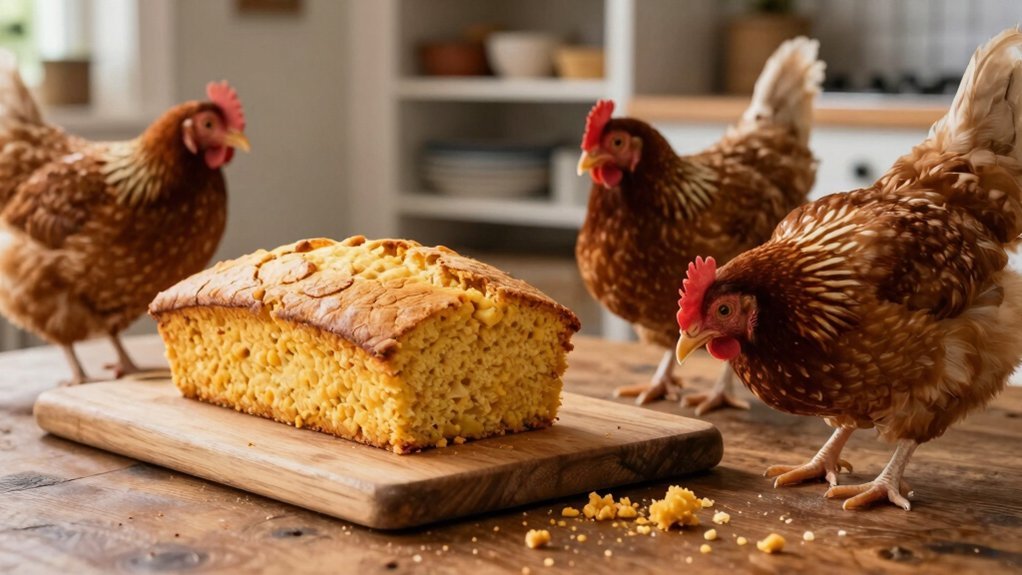
You’re probably wondering if a bite of plain cornbread is safe for your chickens, and the answer is a cautious “only in tiny, pea‑sized portions a few times a week.” Here’s the thing: baked goods are dense, salty, and often contain sugar or unhealthy fats that can cause digestive upset, nutrient dilution, and even mycotoxin poisoning if mold appears. So keep it rare, tiny, and fresh, or better yet swap it for leafy greens, fresh veggies, or mealworms for a healthier treat.
Can Chickens Safely Eat Plain Cornbread?
Can chickens safely eat plain cornbread? You’re probably wondering if that fresh slice from your kitchen can become a harmless snack. Here’s the thing: plain cornbread is safe in tiny portions, but you must follow feed moderation and freshness guidelines.
How much is too much?
Treats should stay under 10 % of a chicken’s total intake, so a bite a size of a pea is plenty. Anything larger risks displacing balanced commercial feed and throws off nutrition.
When is it okay to give?
Only serve fresh, mold‑free pieces. Stale but non‑moldy bread can work, yet fresh is best. Check leftovers for any spots or smell before offering. Remember that overfeeding scraps can lead to nutrient dilution which prevents hens from getting the essential proteins and calcium found in their primary diet. Since corn is a common ingredient in starter and grower feeds, offering it as a treat requires extra care to avoid unbalancing the specific nutritional formulations designed for different life stages. Always ensure treats are free of harmful additives like salt or spices, as these can be dangerous to your flock just like toxic foods.
What’s the takeaway?
Give a small, fresh piece sparingly, and keep the main diet on formulated feed. Next, ask yourself which other occasional treats you’ll rotate with the cornbread. Chickens love bird muffins as a special treat.
Why Cornbread Can Be a Hidden Hazard for Your Flock
Why might a tasty slice of cornbread turn into a hidden hazard for your flock? You’re right to wonder—cornbread looks harmless, but its carbs, calories, and texture can cause crop impaction and mold growth. When birds gulp a dry, starchy crumb, it expands in the crop, blocking passage and leading to digestive upset. If the loaf sits out too long, moisture invites mold, and mycotoxins can poison your hens. Here’s the thing: a single slice replaces nutrient‑dense feed, so you lose protein, calcium, and vitamins needed for strong shells. Over time, excess calories pile on, causing obesity, reduced mobility, and poorer egg quality. Corn provides quick energy but should be limited to a small portion of their diet. Unlike plain cornmeal, which is generally safe when given in moderation as a treat or mixed into regular feed, baked cornbread introduces risky additives and textures that complicate digestion. Furthermore, while proper grit is necessary for chickens to effectively digest whole or cracked corn, the soft, processed nature of cornbread bypasses this need while still posing significant nutritional risks if fed regularly. It is important to remember that feeding whole corn year-round is acceptable and does not cause overheating, yet the baked form lacks this safety profile due to its density and additives. All right, remember: treat cornbread sparingly, keep it fresh, and watch for signs of blockage or mold. The takeaway is simple—treats should never out‑compete balanced feed. Next, ask yourself which ingredients you must avoid to keep your flock safe.
Which Cornbread Ingredients to Avoid for Chickens
Now, you’re probably wondering which bits of a cornbread recipe could actually hurt your hens. The first red flag is any ingredient that spikes sodium content. Too much salt throws off hydration, causing electrolyte imbalance and kidney stress. Avoid salty toppings, seasoned butter, or added broth—keep the dish plain.
Next, ditch anything that invites mold growth. Moldy flour, stale cornmeal, or wet leftovers can harbor mycotoxins that damage the digestive tract. Store dry ingredients in airtight containers and bake thoroughly to prevent soggy spots.
Finally, steer clear of toxic add‑ins like avocado pits, chocolate, or nightshade skins. These compounds cause liver issues, neurological symptoms, or crop blockages. It is also critical to exclude raw beans, as they contain toxins that lead to digestive blockages and poisoning in your flock. You must ensure any legumes included are fully boiled, since phytohaemagglutinin toxins found in uncooked varieties can be fatal to poultry. Just as gardeners must remove highly toxic plants like foxglove to protect free-ranging flocks, bakers must rigorously screen ingredients to prevent accidental poisoning. The takeaway: keep cornbread simple, low‑salt, and mold‑free. Ready to decide which safe recipe to try next?
How Much Cornbread Can Chickens Eat Safely?
You’re probably wondering exactly how much cornbread you can safely slip into your flock’s diet. The answer is a tiny bite now not a daily buffet. Treat frequency matters more than the exact gram count, so aim for a handful of crumbled pieces once or twice a week.
What’s a safe portion size?
Break the loaf into bite‑sized crumbs—about the size of a pea for small birds and a chick for larger ones. This keeps dominant hens from gulping too much and prevents waste.
How often should you offer it?
Think of cornbread like a special dessert, not a staple. Offer it irregularly, no more than 10 % of the total treat budget, and never replace balanced feed. Just as processed meats like bacon are limited due to high fat and salt, cornbread requires similar moderation to avoid nutritional imbalances. Similar to how potato chips pose health risks due to excessive sodium and oils, baked goods can lead to dehydration and digestive upset if given frequently. Experts warn that feeding processed sausages regularly can cause organ damage, reinforcing why human foods high in preservatives and spices must remain rare treats.
Takeaway: Tiny, occasional servings keep nutrition on track. Next, consider healthier alternatives that still delight your chickens.
Healthier Treat Alternatives to Cornbread for Chickans
You’re probably wondering why corn‑bread isn’t the healthiest snack for your flock, and you’re right to question it.
What fresh veggies can replace baked treats?
Leafy greens like kale, cabbage, and Swiss chard are safe, nutrient‑dense snacks. Toss a handful into the coop for a crunchy, low‑calorie treat. They hydrate and add vitamins without the carbs of bread.
Which fruits give a sweet boost?
Apples, berries, and strawberries satisfy cravings in tiny portions. A few slices a day keep pecking interest high while avoiding excess sugar.
What protein options outshine corn‑bread?
Mealworms, scrambled eggs, and plain yogurt deliver high‑quality protein for molt or cold snaps. Mix a spoonful into a veggie mash for a balanced bite. Feeding live or dried mealworms encourages natural foraging behaviors while providing essential protein without the risks of baked goods. Dried mealworms are particularly valuable during molting periods when protein needs increase to support feather regrowth and immune health.
How to make DIY enrichment balls?
Blend oats, pumpkin, and seeds, then freeze in molds. The result is an invigorating, healthy snack that keeps chickens busy. Unlike simple frozen mixes, you can create sturdy baked flock blocks using binders like coconut oil to support digestion and immunity during colder months.
Takeaway: Swap carbs for fresh veggies, fruit, and protein‑rich treats to boost health and happiness. Ready to try a simple oat‑pumpkin ball tomorrow?