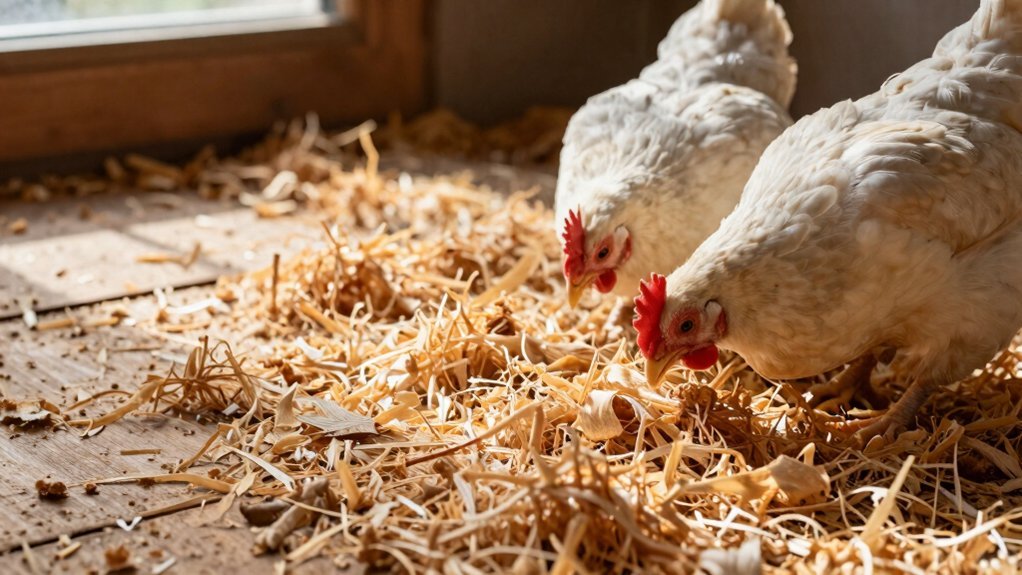
You’re right to wonder if pine shavings are safe and the top choice; they’re fine when dry, low‑dust, and kept clean, but they’re not automatically best for every coop. Fine pine dust can irritate a chicken’s lungs, especially the terpenes and abietic acid, so you’ll want a deeper, dry layer and regular raking to keep moisture below 10 % and avoid mold. If you sift the shavings, use kiln‑dried material, and maintain good ventilation, they work well—otherwise sand or hemp may suit you better. Keep an eye on ammonia smell and clumpy litter; when those appear, swap the bedding. Next, you’ll learn how to fine‑tune ventilation and dust control for ideal flock health.
Are Pine Shavings Safe for Chickens?
Are pine shavings safe for chickens? You’re probably wondering if the cheap, fluffy litter could hide a hidden danger. Here’s the thing: kiln‑dried pine shavings are generally safe for adult birds when you keep them dry, stir them regularly, and replace them before they cake or smell. Spill risks matter—if water pools, the bedding turns damp, mold can sprout, and ammonia spikes. Allergen considerations are modest; most chickens tolerate pine, but fine dust can irritate sensitive respiratory tracts, so opt for larger flakes over sawdust‑type material. Abietic acid can damage the respiratory system, so keep dust levels low. What should you watch for? Keep the coop well ventilated, spot‑clean spills promptly, and swap out any soggy patches. Takeaway: Properly managed pine shavings protect your flock, but you must control moisture and dust. Next, check how dust levels affect chicken breathing. Unlike cedar, which contains toxic plicatic acid that causes respiratory illness, pine remains a viable option when dust-extracted shavings are selected to minimize airborne irritants. Maintaining good ventilation within the coop is also essential to prevent the buildup of harmful gases and reduce the risk of respiratory infections. Experts strongly advise against using cedar shavings altogether because their aromatic compounds can damage chickens’ respiratory systems and livers.
Does Pine‑Shaving Dust Harm Chicken Respiratory Health?
You’re probably wondering if the fluffy pine you’re using could actually irritate your birds’ lungs. The fine particles that drift when you pour, scratch, or clean the shavings become airborne, and chickens inhale them just like they do dust from feed and feathers. Those tiny particles can reach the upper airways, and the smallest ones slip deeper, triggering sneezing, coughing, or wheezing—especially in young or already‑ill birds.
Here’s the thing: pine contains terpenes and resin acids such as abietic acid, which act like natural irritants. When dust settles, those chemicals hitch a ride on each particle, adding a chemical sting to the mechanical irritation. Studies on softwood dust show it can cause rhinitis‑like reactions and even occupational asthma in humans, so it’s reasonable to expect similar effects in poultry.
All right, you can keep the risk in check with regular dust monitoring and particle analysis. By measuring airborne concentration and size distribution, you’ll know if the load exceeds safe thresholds. If you spot a spike, increase ventilation or dampen the bedding briefly to settle the dust. Research indicates that pine dust may be carcinogenic, compounding the respiratory dangers posed by these airborne particles. Unlike high-dust pine options, hemp bedding is very low in dust, which benefits chickens’ respiratory systems and reduces mite infestations. While pine is popular for its fresh scent, choosing superior absorbency in alternatives like hemp can further reduce moisture-related ammonia fumes that exacerbate lung irritation.
Takeaway: Pine‑shaving dust can irritate chicken lungs, but simple monitoring lets you stay ahead of problems. Next, consider how to reduce that dust exposure in your coop.
How to Reduce Dust Exposure in a Pine‑Shaving Coop?
If you’re wondering why pine‑shaving dust still clouds the coop even after you’ve chosen low‑dust bedding, it’s because the fine particles become airborne whenever chickens move, scratch, or you the litter.
How can you keep dust from escaping?
Now, start with physical containment: sift the shavings through a mesh screen before you spread them, and store the bag in a dry place so it doesn’t clump. Use a deeper base layer—four to six inches—so droppings stay buried and you disturb the litter less often. This approach aligns with the deep litter method, which relies on layering carbon-based bedding to allow beneficial microbes to decompose manure gradually while minimizing frequent full cleanouts. Ensuring the coop has good ventilation is also critical to prevent moisture buildup and disperse any remaining airborne particles effectively. Unlike pellets that expand when wet to control humidity, pine shavings require consistent management to maintain dryness and reduce frostbite risk in winter.
What about daily activity?
Here’s the thing: place feed and water in stable spots, add droppings boards under roosts, and limit scratch grains. Lightly rake the bedding instead of tossing it, and remove any powdery patches right away.
Can you mix in other materials?
Obviously, adding a thin sand strip in high‑traffic zones reduces particle kick‑up. Use removable mats under nest boxes for extra particle filtration.
Takeaway: combine screening, deeper bedding, stable stations, and occasional sand to keep dust down. Next, consider how ventilation and moisture affect your coop’s overall health.
Five bags of pine shavings were used to achieve a 2‑3 inch thick layer across the coop floor.
Ventilation & Moisture: Why They Beat Any Bedding Choice
Now, think of ventilation like a kitchen exhaust fan: it pulls humid air up and out without blowing cold drafts across roosts. High roof vents, gable vents, and a gentle stack effect create a continuous, draft‑free airflow. This prevents condensation and keeps litter dry, letting any bedding work as intended. Without this airflow, harmful ammonia buildup can occur in dirty coops, causing stress and disease that significantly reduce egg production. Even highly absorbent options like pine shavings require this good ventilation to prevent mold and maintain their effectiveness. Complementing airflow with lime creates an alkaline environment that further suppresses pathogens and neutralizes odors more effectively than bedding alone.
All right, the takeaway: focus on a solid ventilation plan first; the bedding you choose becomes a secondary help. Next, check your coop’s vent placement and size to guarantee steady moisture removal.
Kiln‑Dried vs. Air‑Dried Pine Shavings – Which Is Safer?
You’ve probably wondered whether kiln‑dried or air‑dried pine shavings is the safer bet for your coop.
What does temperature sterilization really mean?
Kiln drying bakes the wood at 180‑200 °C, killing mold, bacteria, fungi, insects, larvae, and eggs. That heat also drives out a lot of moisture, so the bedding stays drier and less inviting to microbes. Air‑drying barely reaches 40‑50 °C, so it can’t promise the same level of temperature sterilization.
How does chemical retention differ?
Pine naturally holds phenols, resins, and volatile oils that can irritate chickens’ lungs. Kiln drying reduces some of these compounds, but it doesn’t erase them; they may even migrate to the surface, leaving a thin layer of chemical retention. Air‑dried shavings keep more of the original extractives, increasing the chance of respiratory irritation, especially for birds with existing issues.
Bottom line
If you prioritize low moisture and a lower risk of microbial growth, kiln‑dried pine is the safer choice. Check labels for “kiln‑dried” and no added chemicals, then monitor your flock for coughing or sneezing after you switch bedding. Just as construction-grade sand is recommended over finer options to prevent respiratory issues in dust baths, selecting the proper drying method for shavings is critical for lung health. Since mites often hide in cracks and crevices to cause harmful mite infestations, maintaining dry, heat-treated bedding helps eliminate potential hiding spots for these pests. Effective management also requires watching for stress-related behaviors like increased preening or feather pecking, which can signal that mites have breached your coop defenses despite your bedding choices. Next, compare pine to other bedding options to see which fits your coop best.
Pine vs. Straw, Sand, Hemp & Cedar: A Quick Comparison
It’s easy to feel torn when you see pine, straw, sand, hemp, and cedar all listed as coop bedding options. You’re wondering which balances cost, comfort, and health. Here’s the thing: pine shavings absorb moisture well, keep odor low, and break down quickly—high biodegradability rates—but they can dust and need frequent changes to curb mold risks. Straw insulates with hollow stems yet holds water, so mold risks rise if it mats down. Sand drains fast and stays dry, yet it’s heavy and offers little insulation. Hemp stays low‑dust, smells fresh, and composts nicely, though it costs more. Cedar’s aromatic oils irritate lungs and add volatile compounds, making it a poor long‑term choice. Pine shavings can harbor harmful pathogens if not managed properly.
Which bedding fits your coop climate?
If you prioritize easy cleanup and low mold risk, sand wins; for eco‑friendly, soft bedding, hemp leads. Choose the material that matches your climate, cleaning routine, and budget.
Takeaway: Pick the bedding that minimizes mold risks while fitting your upkeep style. Next, check how often you’ll need to replace each type.
Quick Checklist: Signs It’s Time to Change Pine Bedding
A strong ammonia smell or lingering odor is the fastest alarm bell that your pine bedding‘s done its job. You’re probably wondering why the scent spikes after a rainy spell or a cold snap. Here’s the thing: seasonal factors raise moisture, and the bedding’s absorbency drops, letting ammonia build up faster than you can spot it.
Is the bedding wet or clumpy?
If you press a shaver and it feels damp, or if you see clumps that won’t crumble, moisture is trapped. Wet spots nurture mold and harmful microbes, while clumps show the material can’t soak up droppings. Replace those sections immediately.
Do you see waste piles or pests?
Large manure mounds, flies buzzing, or tiny mites crawling signal that beneficial bacteria are overwhelmed and the coop’s hygiene is slipping. Deep clean whenever waste patches appear.
What about dust or compacted texture?
Fine, dusty shavings that look “cemented” choke airflow and irritate lungs. Fluffy, airy bedding protects your birds; if it’s compacted, toss it out.
Takeaway: Trust your nose, eyes, and feel. When any of these signs appear, fresh pine shavings restore a healthy environment. Next step? Set a weekly inspection schedule and note the first hint of change. Maintaining this level of sanitation is essential to reduce any chance of zoonotic transmission from bacteria like Salmonella that thrive in soiled coop environments. Adequate space is also critical, as larger spaces help reduce stress and health issues among hens by preventing the rapid accumulation of waste and moisture. Providing adequate space within the coop further supports this hygiene by preventing overcrowding, which can otherwise accelerate soiling and compromise the effectiveness of your bedding.