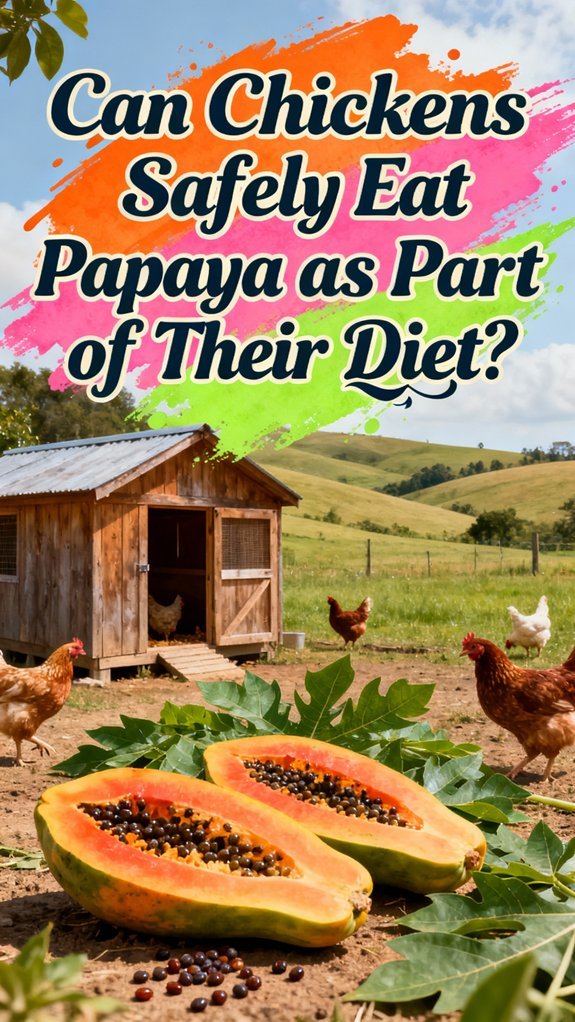
Yes, you can safely feed your chickens papaya through controlled supplementation. Research shows that including 5–15 g/kg of dried papaya seeds boosts egg production by approximately 5% while supplying vitamin C, calcium, iron, and papain—a protein-digesting enzyme that enhances nutrient absorption. You’ll want to limit papaya seed powder to 0.5–1.5% of their diet and avoid unripe fruit and whole seeds, which pose risks. The specific strategies for maximizing these benefits while minimizing potential concerns deserve careful consideration.
Nutritional Value and Beneficial Compounds in Papaya
Because papaya delivers a complete nutrient profile, it’s becoming recognized as a valuable dietary supplement for poultry operations. You’ll find the fruit contains more vitamin C than oranges, while its seeds provide considerable thiamine and niacin levels. The nutrient density increases notably in ripe papaya seeds compared to unripe varieties. Chickens can also benefit from homemade treats made with papaya, enhancing their diet further. Furthermore, incorporating protein-rich feed additives can significantly improve their overall growth and health. During hot weather, ensuring chickens are adequately hydrated is crucial for their survival and well-being, as they can only go for 12 to 16 hours without water before facing dehydration challenges.
You benefit from papaya’s rich mineral composition—iron and calcium support bone health and metabolic function. The seeds contain 24–30% protein with 47% comprising essential amino acids, making them viable protein-rich feed additives. Additionally, papaya provides protein-digesting enzymes like papain and chymopapain, alongside powerful antioxidant compounds including beta-carotene and lutein. All parts of the fruit including leaves, skin, flesh, and seeds are nutritious and can be incorporated into poultry feed. This vitamin profile and bioactive compound combination creates a thorough nutritional package that enhances your flock’s overall health when incorporated appropriately into their diet. Moreover, ensuring adequate calcium intake is critical for maintaining optimal egg production in laying hens.
Research-Backed Benefits for Laying Hens and Broilers
While papaya’s nutritional composition shows promise, controlled trials reveal how its various forms—seeds, pomace, peel, and leaf—actually perform in commercial laying and broiler operations. You’ll find that low-level inclusions of dried papaya seed (5–15 g/kg) and pomace (around 5%) consistently improve egg production by approximately 5%, enhance egg mass, and boost feed efficiency. These papaya benefits stem partly from papain and proteolytic enzymes that enhance nutrient digestibility and voluntary feed intake. Additionally, incorporating high-protein treats like dried mealworms can further support optimal health and productivity in chickens. You should note, however, that excessive inclusions—particularly high-fiber leaf or peel above 12–15%—impair performance in poultry models. Studies on alternative leaf meals like pawpaw demonstrate that crude protein content of approximately 30% supports improved nutrient utilization when included at optimal levels. Ideal results depend heavily on material type, processing method, and dosage, making precise formulation critical for maximizing chicken health and production outcomes in layer operations.
Potential Risks and Dose-Related Concerns
Although papaya’s performance benefits in poultry are well-documented at moderate inclusions, you’ll need to recognize that its bioactive compounds—particularly in unripe fruit, latex, and concentrated seed forms—carry dose-dependent risks that aren’t fully characterized across all poultry populations. You should establish feeding precautions by limiting papaya seed powder to 0.5–1.5% of diet and avoiding raw latex exposure. Toxicity levels remain incompletely mapped across breeds and ages, complicating safe extrapolation. You’ll encounter mechanical hazards when whole seeds risk intestinal blockage in young chicks. Grinding concentrates phytochemicals, elevating bioactive exposure per gram. Combining papaya with other botanical or pharmaceutical treatments warrants caution due to potential interactions. The high water content of ripe papaya flesh helps support hydration and reduces the concentration of potentially problematic compounds compared to unripe alternatives. You must prioritize ripe flesh over unripe fruit to minimize enzyme and isothiocyanate concentrations.
Safe Inclusion Rates and Feeding Guidelines
Now that you’ve established appropriate precautions around papaya’s bioactive compounds, you can confidently implement safe inclusion rates that enhance performance benefits while minimizing risks.
For layer hens, dried papaya seed supplementation at 5–15 g/kg basal diet markedly improves egg production, mass, and quality metrics. You’ll observe a 5% production increase at 5 g/kg, with enhanced egg weight and yolk height at 10–15 g/kg levels. This supplementation is particularly beneficial because hens fed with laying mash experience overall better egg production and shell quality. The Cream Legbar breed’s ability to produce high-quality blue eggs can also be positively influenced by a nutritious diet that includes such supplements. Your feeding techniques should incorporate papaya seed gradually into mash feed rather than pellets, preserving enzyme activity. Like other fruits and vegetables in chicken diets, papaya should be rinsed to remove any pesticides or contaminants before feeding to your flock.
For broiler enzyme application, inclusion levels range from 0.05–0.1% papain powder (500–1,000 mg/kg). You must restrict pomace below 7.5% to prevent performance decline. Before full-flock implementation, test your feeding protocols on ten birds for 7–10 days, ensuring maximum nutrient absorption without compromising feed conversion ratios.
Antiparasitic and Immune-Support Applications
Beyond production metrics, papaya seed’s bioactive compounds—particularly benzyl isothiocyanate and papain—deliver robust antiparasitic and immunomodulatory benefits that can substantially reduce your flock’s reliance on synthetic interventions. These mechanisms work through multiple pathways: papain directly digests parasitic worms and bacteria, while fatty acids induce mitochondrial dysfunction in parasites, lowering egg loads in excreta. Moreover, chickens’ natural behavior of roosting off the ground at elevated perches helps them remain more resilient against stress, further enhancing their health. Simultaneously, antioxidants like Vitamin C, E, and β-carotene sustain liver function and reduce inflammatory enzymes, strengthening immune response. Additionally, the use of food-grade diatomaceous earth has been shown to further aid in controlling external parasites like fleas in chickens. External pests are effectively managed through DE’s ability to damage the protective exoskeletons of these parasites. Furthermore, garlic’s natural antimicrobial properties can also be beneficial when combined with papaya seed treatments to enhance your flock’s overall health. Including herbs like oregano can provide additional immune-boosting properties that support the overall wellness of your chickens. Phenolic components further support immune health by maintaining hepatic integrity. Research on native chickens using pelleted seed formulations demonstrated that combined squash and papaya seed treatments achieved notable antiparasitic effects at reduced cost compared to commercial alternatives. At 5–15 g/kg supplementation, you’ll observe significant parasite reduction alongside enhanced serum total protein levels, effectively substituting antibiotic growth promoters while maintaining production performance in parasite-challenged environments.
Quality Control and Sourcing Considerations
While papaya seed’s antiparasitic potency hinges on consistent bioactive compound availability, you’ll need to verify sourcing integrity and processing methods to translate those benefits into reliable flock performance. Sourcing challenges emerge from papaya’s regional cultivation patterns and seed variability across cultivars. Fiber content fluctuates between 26.2–45.6% depending on variety selection, directly impacting inclusion rates and nutritional outcomes. You must prioritize quality assurance protocols that confirm ripe seed sourcing, which contains superior vitamin profiles compared to unripe alternatives. Processing methodology—whether sprouted, dried, or powdered—fundamentally alters digestibility and nutrient bioavailability. Sprouting demonstrates improved nutrient utilization, while powder formulations at 0.5–1.0% optimize antioxidant responses. Standardizing your procurement from reliable suppliers guarantees consistent papain and chymopain enzyme concentrations, maximizing growth and immune-support outcomes in your flock.
Monitoring Performance and Adjusting Your Flock’s Diet
Once you’ve established your papaya-inclusive feeding protocol with quality-assured ingredients, systematic performance monitoring becomes essential to validate whether your flock’s diet is delivering the anticipated growth, productivity, and health outcomes. Track weekly body weight uniformity, egg production rates (TE/HH), Feed Conversion Ratio, and mortality daily with documented causes. Insects, which are a significant source of nutrition, complement the benefits of adding papaya to ensure a well-rounded diet. Fresh, pesticide-free cucumbers are another example of a healthy treat that can be integrated into their diet. Additionally, soothing Epsom salt baths can be a helpful remedy to alleviate any stress or discomfort in chickens, further promoting their overall well-being. To optimize the benefits of dietary changes, ensure that your feed contains around 22% protein, enabling precise trend analysis. Additionally, monitoring pasty butt occurrence can help identify potential digestive issues related to diet changes, ensuring that your flock remains healthy and thriving. Record performance metrics alongside contextual metadata—diet batch, age, lighting schedule—enabling precise trend analysis. Compare results against genetic standards and historical baselines to identify underperformance. When thresholds deviate—declining egg size, rising FCR, weight lag—trigger defined corrective actions and diet adjustments. Van Limbergen et al. (2020) demonstrated that farmers achieve better performance evaluation scores by comparing performance data with previous batches, establishing the critical importance of longitudinal record-keeping in poultry management. Automated weighing systems and data dashboards streamline longitudinal data collection, reducing human error. Statistical analysis reveals whether papaya inclusion optimizes nutrition or requires reformulation, ensuring your flock achieves genetic potential.