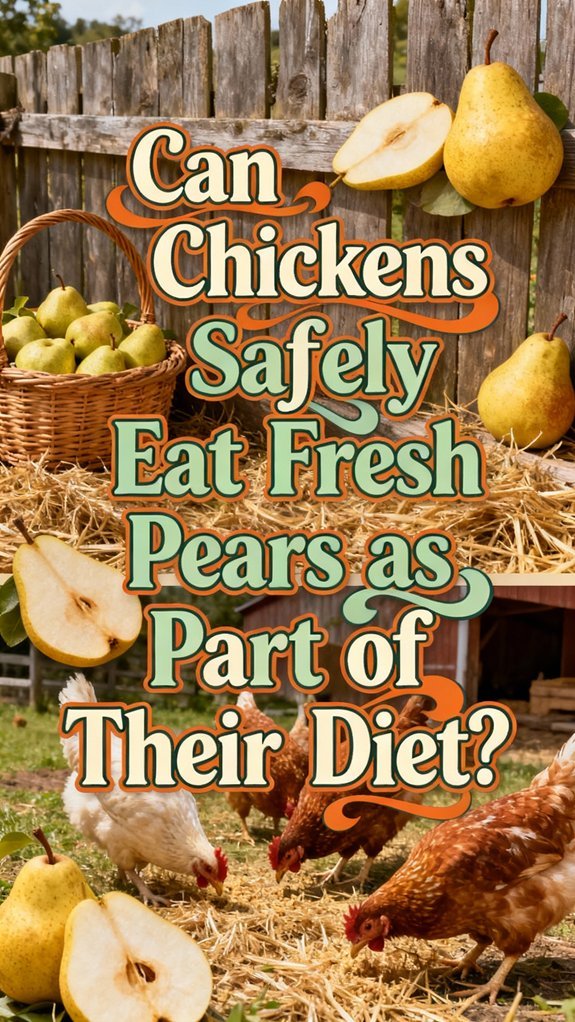
You can safely feed fresh pears to your chickens as an occasional treat, provided you remove all seeds, limit portions to no more than 10% of their daily caloric intake, and guarantee they’re at least two weeks old before introduction. Offer 1-2 small slices per hen, 1-3 times weekly. Peel conventional pears to eliminate pesticide residues, slice them thin, and cook them slightly for easier digestion. While pears provide beneficial fiber, potassium, and vitamin C, they shouldn’t displace balanced commercial feed. Understanding proper preparation methods and age-specific guidelines will optimize your flock’s nutritional health.
Safety Considerations for Feeding Pears to Chickens
While pears can be a nutritious treat for your flock, you’ll need to take specific precautions to confirm their safety. First, address pear seed toxicity by removing all seeds before feeding. Pear seeds contain cyanide, which blocks oxygen delivery to cells and can cause fatal poisoning in birds when ingested in quantity. Additionally, inspect fresh pears thoroughly for bacterial contamination and mold, which produces hepatotoxic compounds. You should only offer fully ripe pears, as unripe fruit contains high acid levels causing gastrointestinal discomfort and potential choking hazards. The pear skin contains antioxidants like quercetin that can protect your chickens from free radicals when properly prepared. Limit servings to a quarter pear twice weekly to prevent overfeeding and maintain balanced nutrition. Finally, verify your chickens are at least two weeks old before introducing pears to their diet.
Proper Preparation Methods for Pear Treats
Once you’ve confirmed your pears are safe and ripe, proper preparation guarantees your chickens can enjoy them without risk. Your slicing techniques should produce thin pieces between ⅛ and ¼ inch thick, retaining the skin on organic pears only. For conventional pears, employ peeling methods to eliminate pesticide residues before processing. Quarter the fruit if you prefer larger treat pieces. After slicing, cook the pears in a covered pot with water for 7-10 minutes on medium-high heat until they’re completely soft. You can then puree the cooked pears, straining ½ cup through a fine mesh sieve. This preparation method mirrors the pear rosemary glazing technique used in traditional poultry recipes, ensuring optimal texture and digestibility for your flock. Alternatively, dehydrate slices at 130-140°F for 8-10 hours until leathery, or oven-dry at 250°F for 1.5-2.5 hours. Dip slices in lemon juice-water solution to prevent browning during the drying process.
Nutritional Benefits and Health Advantages
Beyond their palatability, pears deliver substantial nutritional value that directly supports your chickens’ physiological functions and productivity. You’ll find that pears’ fiber content optimizes nutrient absorption within your birds’ digestive tracts, enhancing overall nutrient bioavailability. The fruit’s potassium regulates cardiovascular function and blood pressure stability, while its vitamin C strengthens immune responses and combats oxidative stress during laying season. Additionally, chickens thrive on animal fats like beef fat, showcasing their ability to benefit from a diverse diet. Pears’ natural sugars provide readily available energy for daily activities and egg production. The mineral profile—including magnesium and copper—supports cellular respiration and organ function. Furthermore, like other fruits, pears also deliver important antioxidant compounds that enhance your chickens’ overall health and well-being. Their water content promotes hydration and digestive efficiency, making them a vital component of a balanced diet, similar to cantaloupe which also supports hydration. Like other fruits such as apples and blueberries, pears offer antioxidant compounds that protect cells from damage. Moreover, fruits like pears contain low-calorie content that helps maintain a balanced diet when fed as treats. Furthermore, while pears are safe for chickens, just like apples, it is critical to remove seeds to prevent any potential health risks. By incorporating pears into your feeding regimen, you’re strategically supporting health enhancement across multiple physiological systems, ultimately improving laying performance and maintaining robust flock health throughout production cycles.
Potential Risks and Side Effects
Despite pears’ nutritional benefits, you’ll need to understand the genuine hazards they pose to your flock when fed improperly. Overfeeding consequences include digestive disruption from excess sugar, watery droppings, and nutritional imbalances when treats exceed 10% of their diet. High fructose intake contributes to obesity and reduced egg production, especially in layer chickens who rely on consistent nutrition for optimal egg output. Additionally, it’s important to note that certain foods, such as apple seeds and other fruit pits, contain cyanide compounds, which can pose serious risks to chickens. Notably, green onions and other members of the Allium family are also toxic to chickens and could lead to health issues if ingested.
Seed toxicity presents a more critical concern. Pear seeds contain cyanogenic compounds that release cyanide, blocking cellular oxygen and causing rapid cell death. While small amounts prove less dangerous since chickens typically reject the bitter taste, ingestion risks digestive problems and potential fatality. To minimize risk, inspect pears carefully for any remaining seeds before serving to ensure complete removal. Furthermore, it’s crucial to keep chickens away from other fruits with toxic parts to prevent accidental ingestion.
You should always remove seeds before feeding pears to your chickens. Additionally, only offer ripe pears, as unripe fruit’s high acid content causes gastrointestinal discomfort and choking hazards. Monitor your flock closely after feeding and consult a veterinarian if you observe persistent digestive issues.
Recommended Feeding Guidelines and Portions
To maximize the nutritional benefits of pears while protecting your flock’s health, you’ll need to follow structured feeding guidelines that account for portion sizes, preparation methods, and frequency. Offer approximately one to two small pear slices (1–2 tablespoons) per hen as an occasional snack. For whole small pears, limit servings to one-half to one pear per bird per feeding event. Scale portions by body size—bantams receive roughly half the standard hen allocation. Implement portion control using measured servings rather than free-access piles to prevent overfeeding. Establish treat frequency at 1–3 times weekly to maintain diet balance and limit sugar intake. Remember that treats should never exceed 10% of overall diet to prevent nutritional imbalances and health complications. Additionally, pears can provide important hydration benefits similar to those offered by watermelon during warmer months. Remove seeds before serving, chop flesh to reduce choking risk, and serve raw or lightly cooked pears. Rotate pear offerings with other fruits and vegetables to diversify micronutrient intake.
Age-Appropriate Feeding Recommendations
While portion control and feeding frequency establish the foundation for safe pear consumption, your flock’s age determines whether pears’ll actually benefit their development or compromise their nutritional balance.
Your feeding strategies must align with age-specific requirements. Starter chicks shouldn’t receive pears due to choking risks and immature digestive systems. Growers tolerate small, finely chopped pieces occasionally, though excess sugars can displace balanced ration intake. Additionally, proper timing in introducing any treats will help maintain their nutritional balance. Pre-lay pullets require minimal fruit treats to prevent disrupting their critical calcium conversion toward layer nutrition.
Laying hens handle pear treats safely when offered as small, seeded pieces—under 10% of daily intake. During molt or broody periods, restrict pears entirely to prioritize protein and nutrient-dense feed. Transitioning to layer feed at 16-20 weeks ensures hens receive the calcium and protein necessary for optimal egg production before introducing any fruit treats. Tailor your approach by evaluating each bird’s life stage, production demands, and current metabolic needs for best health outcomes.
Alternative Fruits and Treat Options
Since pears offer limited nutritional density beyond basic fiber and vitamin C, you’ll want to explore complementary treats that either fill specific dietary gaps or provide enrichment without disrupting your flock’s balanced ration. Lower-sugar fruit alternatives like leafy greens and vegetables—kale, lettuce, carrots, and zucchini—deliver nutrient density and tolerate more frequent feeding. Additionally, incorporating high mineral content foods like dandelions can enhance the nutritional value of your chickens’ diet. Chickens enjoy various vegetables like cabbage, which can provide beneficial nutrients that complement fruits such as pears. It is essential to integrate dark leafy vegetables like kale and chard to further improve yolk quality and overall health. Interestingly, contrasting other fruits, turnip greens offer significant nutritional benefits for chickens and can be a great addition to their diet. Cooked grains and plain oatmeal supply carbohydrates without sodium or seasonings that compromise poultry health. Pumpkin and squash flesh, particularly seeds, offer vitamins and potential deworming properties seasonally. For enhanced nutrition and hydration during heat stress or immune challenges, consider creating frozen fruit treats using Flock Fixer, which contains prebiotics, probiotics, vitamins, electrolytes, and organic oregano to support your flock’s overall well-being. You can present these options as poultry enrichment through whole or halved presentations that encourage natural foraging behaviors. Reserve commercial treats and scratch grains for occasional supplementation to maintain nutritional balance in your birds’ primary layer feed.
Creating a Balanced Diet With Fruit Treats
Because treats can quickly compromise nutritional balance, you’ll need to limit fruit offerings to no more than 10% of your flock’s daily caloric intake—roughly one tablespoon per chicken. Your primary diet should remain balanced commercial chicken feed, which provides essential nutrients for peak health and egg production.
You can strategically incorporate fruit treat combinations by mixing fresh pears with complementary ingredients like sunflower seeds, dried papaya, and mealworms. This approach maximizes nutritional density while maintaining portion control. Seasonal fruit variations allow you to leverage availability: offer berries during summer months for antioxidant benefits, and shift to dried fruits like raisins during winter for sustained energy.
Sprinkle these mixed treats on the ground to encourage natural foraging behaviors while preserving your flock’s nutritional integrity. For optimal nutritional support, choose treats fortified with NutriThrive® vitamins and minerals to ensure your chickens receive comprehensive micronutrient supplementation alongside fruit offerings.