You’ll find White Leghorns dominate commercial egg production, delivering 280-364 white eggs annually with superior feed efficiency of 1.19 kg per dozen eggs. ISA Browns and Australorps follow closely, producing up to 320 and 364 eggs respectively. Lohmann Browns and Red Stars consistently yield around 300 eggs per year. Your choice should factor in climate adaptability, as temperature variations can impact production by 7 eggs annually per 3°C change. Uncover how management practices can maximize your flock’s genetic potential.
Top Commercial Egg-Laying Champions
Five highly productive chicken breeds dominate commercial egg production, with the White Leghorn leading the pack at an impressive 280-364 white eggs annually. You’ll find this breed’s exceptional feed efficiency of 1.19 kg per dozen eggs makes it a top choice for large-scale operations.
Selective breeding traits have enhanced the commercial viability of these breeds over generations. In breed comparisons, the ISA Brown and Australorp stand out, both capable of producing up to 320 and 364 eggs per year respectively. The ISA Brown’s early maturity and consistent laying patterns make it ideal for commercial settings, while the Australorp’s favorable feed-to-egg conversion adds to its economic value. These breeds typically reach laying maturity between 16-18 weeks of age.
Modern hybrids like the Lohmann Brown and Red Star consistently deliver around 300 eggs annually, combining high productivity with adaptability. These commercial varieties offer the reliable output needed for profitable egg farming operations. The Golden Comet hybrid has proven particularly successful due to its impressive annual yield of 250-300 large eggs.

Designed for maximum protection, safety, and comfort by backyard chicken keeping author and consultant, Kathy Shea Mormino, The Chicken Chick

𝘾𝙃𝙄𝘾𝙆𝙀𝙉 𝙇𝙊𝙑𝙀 𝙏𝙃𝙀𝙎𝙀 - GRUBSFARM are premium dried black soldier fly larvae, a healthier GRAIN-FREE daily snack that backyard chickens LOVE. You will be surrounded with happy hens. Turkey, ducks, goose, bluebirds, wild birds also love fly bugs.

Core Decorative Feature: This Lawn Chicken Stake offers a charming simulated hen design that adds a vivid and eye-catching element to your garden or yard, making it an ideal lawn decoration for outdoor spaces
Essential Traits of High-Yield Layer Breeds
While genetic markers play an essential role in egg production, you’ll find that high-yield layer breeds share specific traits that distinguish them from other chickens. Through genetic selection, breeders target hens with heritability rates of 0.37-0.51 for key production traits, particularly eggshell strength and consistent laying cycles. You’ll notice these breeds exhibit early laying onset, efficient feed conversion, and robust skeletal structure to support continuous production. Optimal egg production begins when chicks reach full feathering and maturity around 6-8 weeks of age.
Superior layer breeds also demonstrate essential behavioral traits, including low stress responses and minimal broodiness tendencies. They’ll maintain steady production in varying environments while showing resilience to common diseases. The most productive breeds consistently lay medium to large eggs with uniform shell quality and strong albumen, adapting well to both confined and free-range systems. Breeds like Australorp chickens have demonstrated exceptional laying capability with one hen setting a record of 364 eggs per year. Popular breeds like Rhode Island Reds excel in both backyard and commercial settings, delivering between 200-300 eggs annually while maintaining excellent health.

PREMIUM CHICKEN FOOD FOR LAYING HENS WITH OMEGA-3: High-quality chicken layer feed made for strong egg production; fortified with chicken feed omega 3 & extra chicken feed calcium to support healthy shells & provide complete daily nutrition for your hens
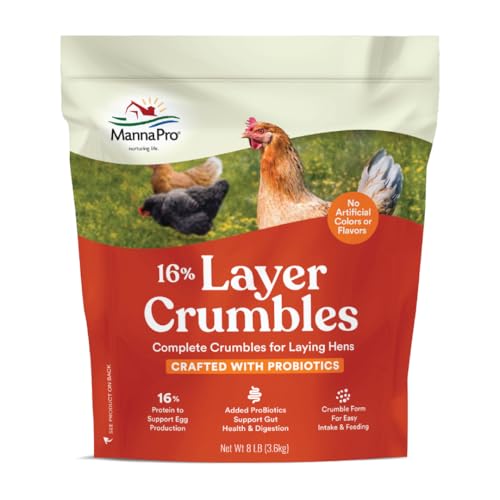
COMPLETE CHICKEN FEED FOR LAYING HENS: Manna Pro Chicken Feed delivers complete nutrition designed for laying hens, supporting strong egg production, healthy feathers, and overall wellness; balanced formula helps maintain optimal health in backyard flocks

Rich yellow yolks - A high level of xanthophyll, a coloring agent derived from marigolds, produces deep yellow egg yolks
Color Varieties and Shell Quality
Beyond production rates, a hen’s genetic makeup determines the distinct color and quality of its eggshells through specific pigment expressions. You’ll find that brown eggs contain protoporphyrin IX in their outer layers, while blue eggs feature oocyanin throughout the shell. Green eggs result from combining both pigments. Araucana chickens were the first breed discovered to lay naturally blue eggs in Chile.
The pea comb distinguishes these heritage breeds as hardy and adaptable to various climates. For consistent egg color variations, consider breeds like Barnevelder for dark brown speckled eggs, Whiting True Blue for pure blue shells, or Easter Eggers for mixed hues. Shell strength factors depend more on diet, health, and hen age than color itself. While brown eggs have pigment only on outer layers, blue eggs show uniform coloration inside and out. High-protein diets are essential for breeds producing heavily pigmented shells, particularly in high-yield varieties like the Whiting True Blue, which lays 250-300 eggs annually. Healthy chickens tend to produce more vivid and consistently colored eggs compared to stressed or ill birds.
Climate Considerations for Optimal Production
Although temperature considerably affects egg production across all chicken breeds, you’ll need to pay special attention to climate control for high-yield varieties like Leghorns and Rhode Island Reds. These breeds can lose up to 7 eggs per year for every 3°C rise in temperature above their ideal range of 18-24°C. Daily egg production is most strongly influenced by day length changes, making artificial lighting essential during shorter winter days.
To protect your flock from climate extremes, implement proper ventilation strategies in your coop design. Install fans and guarantee adequate airflow to maintain humidity below 80%, particularly critical for heat-sensitive breeds like Plymouth Rocks. You’ll also need to adjust feed energy density during heat stress periods, especially for prolific layers like Sussex hens. A predator-proof coop provides essential protection while maintaining proper airflow for temperature regulation. Providing high-quality layer feed formulations helps maintain consistent egg production during temperature fluctuations. In cold weather, provide insulated housing and increase feed portions to maintain metabolic efficiency. Remember, temperature-humidity index should stay near 68 for maximum egg production.
Backyard vs. Industrial Layer Performance
Since industrial and backyard settings prioritize different performance metrics, their breed selections reflect distinct production goals. Industrial operations favor Hybrid White Leghorns for their exceptional efficiency, producing 280-320 eggs annually with optimized feed conversion. Their genetics are specifically engineered for maximum output in controlled environments. For optimal performance, hens require layer feed transition between 16-20 weeks of age when egg production begins.
In contrast, backyard genetics emphasize hardiness and adaptability through dual-purpose breeds like Rhode Island Reds. While these birds lay 150-200 eggs yearly, they’re better suited for varied climates and diverse feeding patterns. The Australorp breed demonstrates remarkable backyard productivity with up to 364 eggs annually. You’ll notice greater production variability in backyard flocks due to seasonal factors and less standardized nutrition. The industrial efficiency gap stems from precisely formulated feeds and environmental controls that maintain year-round laying, whereas backyard hens typically follow natural production cycles influenced by daylight and local conditions. The industrial approach has led to an unnatural increase of 3,000% above natural egg-laying rates in modern production settings.
Managing Peak Production Periods
To maximize egg production during peak laying periods, proper lighting and nutritional management become critical success factors. You’ll need to maintain 14-16 hours of consistent light daily, with at least 1 foot-candle intensity at feed troughs. Implement lighting strategies using timers and sensors to enhance electricity while sustaining production targets. Birds reach peak 90% production approximately 6-8 weeks after beginning to lay eggs. Prolific layers like White Leghorns consistently achieve the highest annual production with up to 350 eggs per bird. Australorp chickens set industry records by producing up to 364 eggs annually.
Your nutrition management must focus on providing balanced, high-quality feed with adequate protein and calcium levels. Track feed conversion efficiency and body weights regularly, adjusting formulations as needed. Keep detailed records of hen-day production, egg weight, and feed consumption to identify trends quickly. Install proper ventilation systems and maintain ideal temperatures to reduce stress. Remember to cull non-productive hens 8-10 weeks into the laying cycle, concentrating resources on your high performers.

𝐁𝐎𝐎𝐒𝐓𝐒 𝐖𝐈𝐍𝐓𝐄𝐑 𝐄𝐆𝐆 𝐏𝐑𝐎𝐃𝐔𝐂𝐓𝐈𝐎𝐍: Adding chicken coop lights for winter provides extra light to your chicken coop, extending the perceived daylight hours. This helps maintain and boost egg production, especially during the shorter days of winter.

🐓【3-Color Dimmable Lighting & 4 Brightness Options】 This solar-powered chicken coop light offers three adjustable lighting modes—Daylight White + Warm White, Daylight White, and Warm White—plus four brightness levels to create a a soothing, glare-free environment for your flock. this lamp provides calm and comfortable illumination that supports your poultry’s natural rhythms—no harsh lighting, just happy chickens.
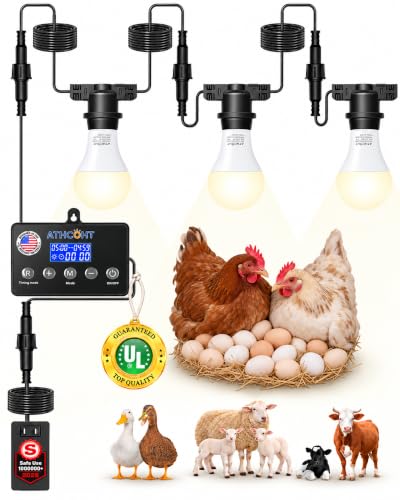
【Enhanced Egg Production】Extends perceived daylight hours to boost winter laying, giving hens ample light even in cold and rainy weather.