
You’re not crazy for considering it, but keeping a chicken indoors is a lot more involved than setting up a litter box and calling it a day. You’ll need permits in most cities, dedicated indoor space hitting four square feet minimum per bird, daily biosecurity habits, and serious ventilation planning. It’s genuinely doable, but only if your lifestyle fits. Stick around and everything you need to decide confidently is right ahead.
What Makes a Chicken a House Chicken in the First Place
So you’re actually thinking about letting a chicken live inside your house — and honestly, that’s not as unhinged as it sounds. Here’s the thing: a house chicken isn’t just a chicken that wandered indoors. It’s a bird you’ve intentionally integrated into your daily domestic life. Now, that distinction matters because your indoor climate becomes their climate. Chickens thrive between 60–75°F, which, conveniently, is basically human comfort range. Obviously you’re not running a barn, so you’re already halfway there. What separates a true house chicken from an outdoor bird is consistent human socialization — certain breeds genuinely enjoy contact, show curiosity, and adapt to indoor routines. If that sounds like your situation, you’re already thinking about this the right way.

ALL-IN-ONE CHICK STARTER KIT: This set includes everything you need for your new hatchlings. It comes with a spacious 45" brooder, a specialized feeder, a waterer, and a...
Do You Need a Permit to Keep a Chicken Indoors?
Before you fall in love with the idea of a house chicken, you need to know whether your city, county, or landlord will even let you have one — because the rules are messier than you’d expect. Here’s the thing: most permit laws don’t distinguish between indoor and outdoor chickens. If your city counts chickens by number, yours counts too. Sacramento limits you to three hens with annual licensing. San Francisco caps pets at four total. Now, permit costs vary wildly by location, so call your local planning department first. If you’re renting, get landlord consent in writing. And obviously, indoor ventilation becomes your personal responsibility since no coop setback rules apply inside. Knowing this upfront makes your decision feel a lot cleaner.

15W Solar Powered: solar powered exhaust fan is a solar powered that draws its energy directly from sunlight and operates only during the daytime, which means it is very economical, saving energy; The solar panel is made of monocrystalline solar cells with high conversion rate, which can provide sufficient power for the fan

NOTE: This solar fan kit does not have a built-in battery backup. Its performance maybe significantly reduced on cloudy days or when the solar panel is shaded. The fan will not operate during rainy weather or at night. For optimal performance, position the solar panel at a 45 degrees angle to face the sun for maximum efficiency.

Highly Efficient Ventilation: This 8-inch x 12-inch gable vent helps reduce humidity in sheds, chicken coops, garages, and attics. The built-in mesh screen facilitates air circulation
How to Set Up a Safe Indoor Space for a House Chicken
Setting up a safe indoor space for a house chicken sounds deceptively simple — until you realize your bird needs more square footage than your college dorm room, proper ventilation so your house doesn’t smell like a barnyard, and a roosting bar that actually meets a chicken’s very specific preferences.
Here’s the thing: per coop space minimums start at four square feet, and that’s not negotiable. Skimping causes stress and aggression — even with one bird. Now, ventilation design matters too. You need airflow without drafts, or you’re inviting respiratory illness straight into your living room. Add a two-inch-wide roosting bar raised twelve inches off the floor, one nesting box, and you’re actually getting somewhere. This isn’t complicated — it just requires doing it right.
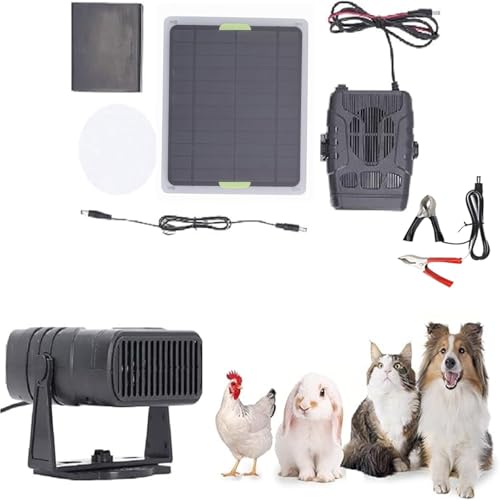
Equipped with a female output and a battery compartment with dual USB outputs, this solar panel heater ensures product protection and can charge a variety of 5V electronic devices. The kit includes a solar panel, a battery compartment, a heater and a connecting cable.(Battery not included: need three 18650 batteries)

30W Solar Power with Zero Wiring Required: Clean solar energy heater designed for car windscreen defogging, pet house warming, greenhouse heating, chicken coop insulation, and camping applications without requiring any outlet or wiring installation

Large Capacity: This large chicken coop (77.4"L x 25.59"W x 39.37"H) offers ample room for 2-4 chickens (or 4-6 depending on breed) to roam comfortably. Its well-ventilated design creates an ideal hen house for backyard flocks – because happy chickens lay better eggs
What Could Make Your Chicken: or You: Sick, and How to Prevent It
Once your indoor space is set up and your chicken is officially a roommate, here’s the part most people don’t want to think about — your bird is a walking germ factory, and that’s not an insult, it’s just biology. Salmonella and Campylobacter live on feathers, feet, and droppings, even on healthy-looking birds. You can’t see it. That’s the frustrating part. Children under five are especially vulnerable because, obviously, they touch everything then touch their faces. Here’s the thing — solid biosecurity protocols matter more indoors because the exposure is constant. Wash your hands every single time. Watch for nutritional deficiencies in your bird too, since a stressed immune system spreads pathogens faster. Keep it clean, stay consistent, and you’ll manage the risks just fine.

100% natural mineral odor eliminator for chicken coops - contains no perfumes, additives or chemicals

KEEPS YOUR COOP SAFE: The probiotics, acids and moisture absorbers in Healthy Coop help to keep your coop safe, neutralize odors, and keep bedding dry.

Eliminate Ammonia Instantly: Our enzymatic chicken coop cleaner neutralizes ammonia at the source for a smell-free home for chickens and ducks. A fragrance-free coop deo spray, it dissolves odors deep within wood, sand, and bedding without using perfumes
Keeping Your House Clean When You Have an Indoor Chicken
Let’s be honest — a chicken in your house is basically a tiny, feathered poop machine with great personality, and keeping up with that reality is the whole game. Some breeds go every 30 minutes. You’re not ready for that until you’ve mapped your feather flooring situation — think washable throw rugs, pee pads, and linoleum laid right over carpet for easy mopping.
Now, dust is sneaky. Without proper coop ventilation equivalents indoors — regular dusting, a wet-dry shop vac, a dedicated duster — your walls and fixtures get grimy fast. A Swiffer with a removable pad makes quick mop cleaning far more practical for daily maintenance.
Here’s the thing: chicken diapers exist, droppings boards work, and spill-proof feeders help. Pick your system, commit to it daily, and honestly? Living with a chicken gets surprisingly manageable.

Reveal Balloon Drop Backdrop: Forget flat, boring party banners that just hang there doing nothing. Our balloon drop backdrops for photography fondo para fiestas is cleverly designed with hidden folded pockets that secretly hold balloons, sequins, or confetti until the perfect moment. When you're ready, simply pull the bottom ribbon and watch decorations cascade down in a fun, theatrical release, creating a jaw-dropping surprise moment


Large Size: Our garage door banner measures 6.9x8ft (84x96in, about 210x244cm). It's large enough to cover your garage door or large walls, meets your decoration needs, and creats a stronger festive atmosphere with a more eye-catching effect
How Much Outdoor Time Do Indoor Chickens Actually Need?
If you’ve been keeping your chicken indoors and wondering whether you’re basically raising a house cat who clucks, outdoor time is one of those things that sneaks up on you fast — because the answer changes completely depending on your bird’s age, feathering, and your local climate.
Here’s the thing — feathered acclimation is your actual timeline. Before full feathering, around three to four weeks, you’re talking 15-minute supervised sessions max. After that, gradually stretch it daily. Now, predator proofing isn’t optional — buried runs, covered tops, zero gaps. Obviously, young birds can’t defend themselves.
Start with an hour before dusk. Keep it consistent. Your chicken will literally walk toward the coop when it’s ready. That’s your cue. Trust the process, protect the bird. Most chicks reach full feathering between four and six weeks, though breeds like Rhode Island Reds and Barred Rocks often lag behind on that timeline.
Daily Routines, Lifespan, and Vacation Planning for House Chickens
Keeping a house chicken fed, healthy, and alive while you’re binge-watching something on a Tuesday night is honestly easier than most people think — but only if you’ve built the right daily rhythm before life gets complicated. Mornings mean fermented feed, a quick health check, and a dust bath refresh. Afternoons, you scatter some corn, top up dry feed, and call it done. Here’s the thing — lifespan monitoring isn’t complicated. Daily visual checks catch problems before they become expensive. Now, vacation feeding stresses everyone out unnecessarily. Automated feeders, water towers, and a neighbor willing to peek in handle your absence cleanly. Clean the coop before you leave. Stock the grit. Set up a camera if you’re anxious. You’ve already done the hard part — just stay consistent. The entire daily care routine, from morning feeding to evening coop securing, requires only about 15 minutes of your time each day.
Noise, Mess, Other Pets, and Why Indoor Chickens Aren’t for Everyone
Mess management is its own project. Chickens scatter droppings constantly, especially when bored, cramped, or stressed. Other pets? Dogs and cats trigger alarm calls, turning your living room into chaos.
Obviously, roosters are completely off the table indoors — banned in most residential areas for good reason. Their crowing is controlled by an internal biological clock, meaning there’s no training them out of it.
If you’re close to committing, ask yourself honestly: can your space, your neighbors, and your lifestyle actually handle this? Some can. Many can’t.