You worry your flock sees blurry chaos, but they actually spot grains instantly with off-the-charts clarity. They enjoy a 300-degree panoramic view and see ultraviolet patterns you miss entirely. Their eyes work independently, scanning for threats while eating, though flickering fluorescent lights drive them crazy since they see strobes where you see steady glow. Obviously, they freeze in total darkness because night vision isn’t their strong suit. Stick around, and you’ll uncover exactly how to light their world right.
Do Chickens Have Good Eyesight Right After Hatching?
If you’re standing there wondering if a brand-new chick can actually see what’s right in front of its beak, you’re not alone; it’s a fair question when you’re staring at something so tiny. But here’s the thing: that tiny fluffball sees better than your newborn nephew ever did. You don’t wait weeks for clarity because these birds hit peak spatial detail within forty-eight hours. Seriously, they’re spotting grains immediately while human babies take months just to focus. Their early visual acuity is off the charts, letting them dodge obstacles and peck accurately from minute one. Plus, they’ve got innate color perception working overtime, spotting four wavelengths including ultraviolet light right out of the shell. Obviously, this means they find food and assess health instantly without any learning curve. So, if you doubted their sharp eyes, you can officially stop worrying and trust nature’s tiny engineers.

12PCS chicken toys: Chicken coop accessories include Chicken Xylophone, Chicken Swing, Chicken Ladder Bridge, Chicken Mirror, Fruit Skewers Hanging Feeder, Chicken Vegetable Skewers Bag, Chicken Pecking Toys. Chicken coop toys for hens is thoughtful toys

Engaging Feeding Experience: These slow feed release chicken toys encourage and provide a healthy outlet for natural chicken behaviors such as pecking and foraging; It makes treat time more satisfying, fun and enriching than just throwing it on the ground

【Natural Mint Grass Fiber & Digestive Health】Made from 100% natural mint grass compressed into a durable 3.9 inch/10cm ball. The plant-rich fiber helps accelerate intestinal motility and supports healthy digestion – a functional chicken enrichment toy that’s both fun and beneficial.
How a 300-Degree Field of Vision Keeps Them Safe
You’re probably still impressed that a day-old chick spots ultraviolet light, but you’re wondering how that tiny bird survives when a hawk dives from behind. Here’s the thing: chickens don’t need to turn their heads because they boast a massive 300-degree field of vision. While you struggle with a mere 180 degrees, their side-placed eyes grant a true panoramic view, eliminating dangerous blind spots. This setup allows independent eye control, meaning one eye scans distant threats while the other checks nearby bugs. Obviously, this constant peripheral vigilance keeps them safe while foraging. Their retinas detect motion far better than yours, spotting stealthy predators instantly. This extensive visual coverage is supported by independent dual magnification, letting them view normal and magnified scenes simultaneously to identify objects with precision. So, if you think they’re just pecking blindly, you’re wrong. This natural surveillance system makes choosing to understand their world an easy, smart decision for any curious observer today.

🐔 Purpose-Built for Backyard Poultry: The only smart security camera trained to monitor chickens—not just motion. Catch predators, egg-layers, and surprise flutters with precision alerts powered by EggsteinAI

【2K Ultra HD & Enhanced Night Vision】Crisp, clear 2560×1440 High Resolution video for real-time monitoring. 10m Infrared Night Vision with dual 850nm IR lights and IRCUT filter ensures color-accurate daytime footage and clear night vision, even in complete darkness.
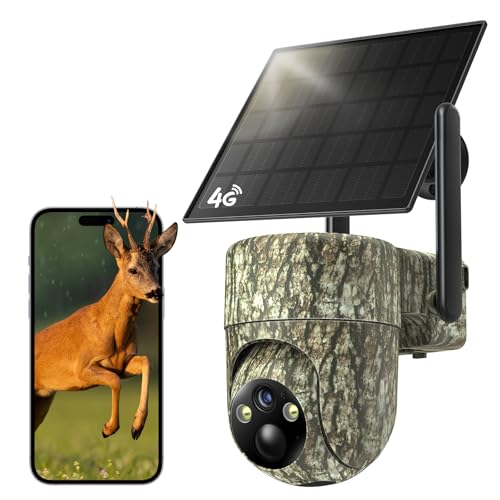
【Built-in SIM Card & 4G LTE Trail Camera】Tkenpro Hunting Camera features a built-in SIM card for superior compatibility. It automatically locks onto the nearest 4G network with the strongest signal, keeping you connected to wildlife observations anytime, anywhere. Enjoy 7 days of unlimited data right after your first activation. Once the trial ends, simply top up for cellular data via the app—plans start at just $19.9 per camera per month or $169.9 annually. (Wi-Fi not supported)
Can Chickens See Ultraviolet Light and Colors Humans Miss?
Ever wonder why your backyard flock seems to spot a shiny beetle in the grass that you completely miss? You’re stuck with three color cones, but chickens rock four, including one dedicated to ultraviolet light. This tetrachromatic vision lets them see a whole UV color spectrum invisible to your eyes. Suddenly, those boring seeds glow with hidden patterns you’d never notice. They spot UV-reflecting bugs against dull dirt effortlessly, turning foraging into a high-definition treasure hunt. While you squint at green blades, they distinguish subtle shades and vibrant contrasts we can’t imagine. Obviously, this extra cone makes their world far richer than yours. Their eyes, huge relative to their heads, capture tiny light fluctuations during the day. So, when they peck at nothing, they’re actually seeing something real. You don’t need their exact sight, but understanding it explains their quirky behavior perfectly. Now you know they aren’t just lucky; they’re biologically equipped to find food you’d overlook. Trust their instincts; they see what you can’t. This ultraviolet perception also plays a critical role in detecting concealed predators that blend into the background for human observers.
Why Do Chickens Detect Motion Better Than Humans Do?
While you’re squinting at what looks like a still patch of grass, your flock is already reacting to a bug’s tiny leg twitch that your eyes completely miss. You might wonder why they catch everything. Here’s the thing: chickens possess an extra cone type humans lack, supercharging their motion cone detection for subtle shifts. That fluorescent light humming above? It flickers annoyingly for them because their flicker sensitivity operates at a much higher rate than yours, turning steady beams into strobe lights. This biological upgrade lets them track predators or locate dinner with insane precision, spotting movements you’d never notice even if you tried. Obviously, this means they see a world moving faster than yours does. Their vision prioritizes catching that slightest velocity change over fine details, keeping them safe while you stand still. So, when you see them suddenly bolt, trust that they spotted something real. Understanding this unique perspective makes caring for them easier, doesn’t it? You’ll finally get why they act so jumpy sometimes.

【3 Lighting Modes + Motion Sensing Function】This solar barn lights outdoors have 3 lighting modes: MODE 1: Dim to Bright with motion at night(Indicator light is red). MODE 2: Off to Bright with motion at night(Indicator light is green). MODE 3: Constant ON at nighttime(Indicator light is blue). You can press the "MODE" button to switch the lighting mode to easily select different modes to meet your different requirements.

[Solar Powered] This solar barn light is crafted from durable aluminum and features three high-efficiency amorphous silicon solar panels.It includes a transparent cover that boosts bulb protection and brightness. With dimensions of 15.06"L x 9.88"W x 12.48"H, equipped with a remote control for convenience, it provides automatic operation from dusk till dawn.

[Solar Powered] This solar barn light is crafted from durable aluminum and features three high-efficiency amorphous silicon solar panels.It includes a transparent cover that boosts bulb protection and brightness. With dimensions of 15.06"L x 9.88"W x 12.48"H, equipped with a remote control for convenience, it provides automatic operation from dusk till dawn.
How Does Each Chicken Eye Work Independently?
Since you’ve probably caught your flock acting like they’re ignoring half the world while staring intently the other, it’s easy to assume they’re just being stubborn, but here’s the thing: their eyes literally don’t work together like yours do. Your brain merges two views; a chicken’s brain processes two distinct scenes simultaneously. This asymmetric setup means the right eye focuses on near food while the left scans distant skies. It’s not a glitch, it’s survival. Each retina holds dual foveae, acting as built-in magnifiers for specific ranges without lens adjustment. You see one clear picture; they see two specialized ones. Obviously, this lets them forage and watch for predators at the same time. Their head swivels because minimal eye movement limits their scan. So, when you see that weird head tilt, know they’re multitasking masterfully. Trust this unique vision; it keeps your flock safe while you relax. Chickens possess double cones in their retina that enable the perception of rapid movements invisible to humans, further aiding their ability to avoid predators and capture insects while managing these independent visual fields.
Can Blind Chickens Still Sense Light and Seasons?
How does a chicken that can’t see a thing still know when spring has sprung? You’d think blindness stops everything, but here’s the thing: your blind hen isn’t missing the sun. Light穿透s her thin skull straight to the pineal gland, acting as an internal eye. Obviously, she doesn’t need actual vision to track the pineal photoperiod. This tiny organ detects day length changes you can’t even feel, triggering seasonal hormone cycling that dictates her laying schedule. Even without sight, she senses the shift from winter to spring perfectly. Her body knows exactly when to start producing eggs because bright light initiates that essential hormone cascade. So, don’t worry if your flock loses their sight; their internal clocks keep ticking. Trust this biology—it’s reliable. Your chickens will stay on schedule, making the choice to keep them an easy, smart decision. This light sensitivity functions independently of their complex visual system, which normally relies on tetrachromatic vision to perceive ultraviolet spectra and vibrant environmental colors.
How Do Three Eyelids Protect Stationary Chicken Eyes?
You’re probably wondering how a bird with eyes that barely move survives a dusty coop without going blind. Here’s the thing: that hidden nailid acts as a transparent barrier, sweeping across horizontally for instant debris removal. You see, this independent reflex triggers automatic dust‑shielding whenever your flock scratches the ground, ensuring vision continuity even during chaos. It’s not just a cover; it delivers protective lubrication through a dedicated duct, guaranteeing constant ocular hydration. Obviously, moisture retention prevents dryness while the membrane cleans like a tiny windshield wiper. When danger approaches, reflexive closure shields the eyeball without blocking your chicken’s view completely. This clever system balances safety and sight perfectly. So, when you watch them forage, know their eyes stay safe and wet automatically. Trust this natural design; it’s why your birds thrive where others might struggle.
Why Do Fluorescent Lights Irritate Sensitive Chicken Eyes?
While you might think your coop lighting is fine, those humming fluorescent tubes are actually screaming at your chickens’ eyes. Your flock sees a chaotic UV‑spectrum flicker because their tetrachromatic vision detects frequencies up to 120 Hz, while standard bulbs stutter at 100. Obviously, this constant visual noise triggers aggression and stops them from foraging properly. You’re unknowingly causing distress with light that lacks the balanced UV-A they need. Now, here’s the thing: you can’t just rely on human lux meters since they miss the ultraviolet range entirely. To fix this, you must prioritize intensity‑stress mitigation by switching to full-spectrum LEDs or dimming those harsh whites. Red or amber options cut pecking dramatically, giving your birds the calm they crave. Don’t let cheap fixtures ruin their welfare; swap them out today for a happier, quieter coop.

INDOOR GARDENING is perfect for many different environments, such as small kitchen herb gardens, apartments with limited sunlight, basement fruit/vegetable gardens, anywhere you want to grow!

ALLOWS YOU TO SIMULATE NATURAL PHOTOPERIOD: In nature, birds experience a cycle of light. This natural photoperiod triggers and regulates hormones in birds. Our scientifically developed birdcage light mimics these photoperiods by using consistent lighting intervals when connected to a timer for happier birds.

4000K DAYLIGHT: Imitate the solar spectrum, customize a more ideal full life cycle full spectrum supplementary light program, covering the entire visible spectrum of 400nm-780nm; Color rendering index Ra is close to 100, infinitely close to natural light, suitable for every cycle of plant growth, effectively promotes plant growth, and improves crop yield and quality
How Does Poor Night Vision Affect Chicken Behavior?
Ever wonder why your flock turns into statues the second the sun dips? You see them freeze because their eyes simply can’t handle the dark. Chickens lack the sensitive cells needed for night vision, so they stop moving to stay safe. This isn’t stubbornness; it’s pure survival instinct. Their lateral eyes spot daytime hawks perfectly but fail completely against nocturnal threats. Consequently, your birds rely heavily on nighturnal roosting to avoid becoming dinner. They know wandering blindly invites disaster, so they huddle tight instead. This behavior drives effective predator avoidance by keeping them hidden and still until dawn returns. You might worry they’re scared, but they’re actually just smart. They understand their limitations better than we sometimes do. So, when dusk hits, trust their instinct to lock down. It’s the safest play for your feathered friends, every single time.
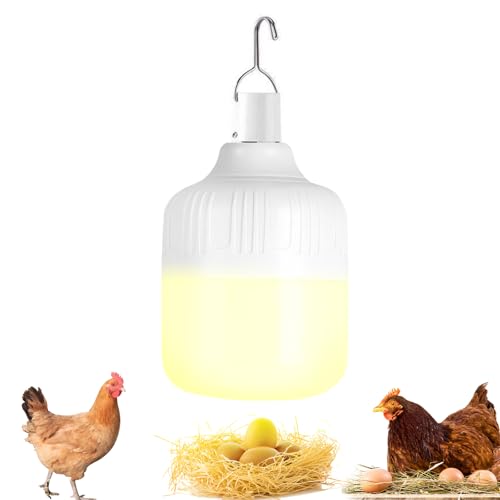
*Gentle 3000K Warm Light**:Soft yellow illumination creates a calming environment for poultry without disrupting natural routines. No harsh glare for animal comfort.

ENCOURAGES YOUR FLOCK TO ROOST SAFELY – The Omlet Chicken Coop Light gently illuminates your hen house from within as daylight fades, guiding your poultry flock inside before the door closes for the night. A calm, warm glow helps reduce stress and encourages natural roosting behavior.

[Adorable Chicken Egg Night Light ]: Features soft warm LED lighting that is perfect for late-night feeding and quick check-ins without disturbing your baby’s sleep. Its charming design adds a fun and whimsical touch to any nursery or kids’ room decor.