You’re probably wondering why wild chickens seem so energetic, and the answer’s simple: they mix protein‑rich insects and earthworms (grasshoppers can be 57 % protein, earthworms 41‑66 %) with carbs from seeds, grasses, and berries. In spring and summer they feast on bugs and fresh greens; in fall and winter they rely on stored seeds and occasional fruit, which can create a protein gap. Adding mealworms, sprouted grains, or leafy greens to your coop fills that gap and mimics nature’s balance, so you’ll see healthier birds and better egg production.
What Chickens Eat in the Wild – Insects, Worms, and Seeds
What does a wild chicken actually eat? You’re probably wondering why they seem to hop everywhere, pecking at the ground. Here’s the thing: in natural foraging habitats they hunt insects like grasshoppers, crickets, beetles, and even spiders, then they scratch for earthworms and other soil‑dwelling critters that pack a protein punch. While these worms are a common food source, it is important to remember that earthworms can absorb pollutants if they come from contaminated environments.
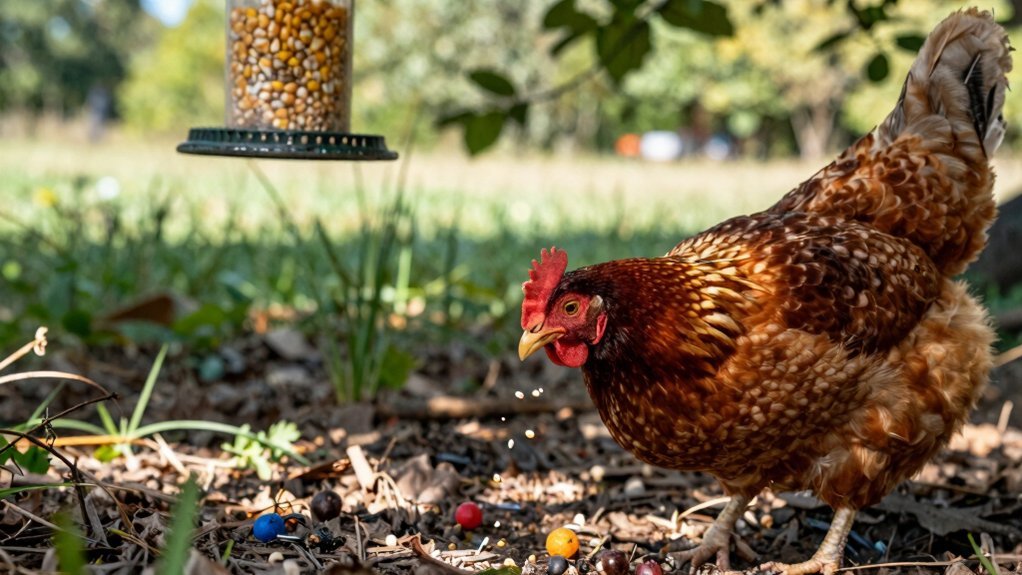
Now, the seed side is just as essential. You’ll find sprouted grasses, wheat, oats, barley, and spilled corn kernels scattered across open fields, providing carbs and fiber. Nutrient comparison charts show insects deliver up to 20 % protein, while seeds offer 8‑12 % and worms sit around 15‑18 %.
All right, the takeaway: a wild chicken’s diet blends high‑protein insects and worms with carbohydrate‑rich seeds and grasses, keeping them healthy and productive. Want to explore how this mix influences egg quality? Delve into the next section.
Additionally, allowing chickens to consume these bugs supports their natural behavior and fulfills critical dietary needs that supplements like mealworms can only replicate when wild insects are scarce. For backyard flocks, owners can safely introduce Black Soldier Fly grubs as a nutritious supplement rich in protein and calcium, provided the grubs are sourced from clean, uncontaminated feed.
Wild Chicken Diet – Protein Powerhouses (Bugs & Worms for Egg Production)
Why do wild chickens rely on bugs and worms for egg production? You’re probably puzzled why they chase tiny critters instead of just pecking grass. Here’s the thing: insects and earthworms are high‑protein snacks that hit the exact nutrient timing hens need when they’re laying. A single grasshopper can deliver up to 57 % crude protein, and earthworms pack 41‑66 % protein plus lysine and methionine—amino acids that fuel yolk formation.
How does this help you understand their diet? You can picture a runner refueling with a protein bar right before a sprint; the birds do the same, grabbing bugs right after a burst of foraging to keep egg output steady. Similar to how dried mealworms provide about 53% protein as a dietary complement, these wild-sourced insects offer the concentrated nutrition necessary for sustained laying. This high-protein intake is especially valuable during molting when protein needs increase to support feather regrowth and boost the immune system. While these treats are vital, owners must practice moderation to prevent chicken obesity and ensure the flock receives a balanced diet alongside complete feed.
Takeaway: Bugs and worms supply the concentrated protein and amino acids hens need at the right moment, keeping their eggs rich and their bodies strong. Next, explore how plant‑based foods complement this protein powerhouse.
Wild Chicken Diet – Plant‑Based Energy (Grasses, Leaves, Berries, Grains)
You’re probably wondering why wild chickens nibble on grass and berries instead of just hunting insects. The answer is simple: plant‑based foods give them steady energy, fiber benefits, and moisture sources. They’ll scratch young grasses like clover and dandelion, which pack carbs and water, then swap to tender leaves that add bulk and vitamins.
Now, seeds and grains pop up when they’re abundant. Wheat, barley, and corn heads provide concentrated starches and fats, boosting calories without extra effort.
All right, berries and soft fruits add quick sugars, extra moisture, and more fiber, rounding out the menu.
Takeaway: wild chickens balance grasses, leaves, seeds, and berries to meet energy, hydration, and digestive health. What plant foods will you observe in your own flock’s foraging? Incorporating grass into their diet can also improve egg quality by providing essential micronutrients and supporting natural foraging behaviors. Fast-growing greens such as mustard greens can be harvested quickly to keep the run green and healthy while providing ongoing fresh forage. However, owners must ensure clippings are fresh and organic to avoid chemical residues and prevent crop impaction from long fibrous strands.
Seasonal Influences on the Wild Menu – How Food Availability Shifts
Why does the wild chicken’s menu change with the seasons? You’re right to wonder—seasonal foraging patterns drive every bite. In spring and summer, warm weather fuels insects, worms, and soft greens, so you’ll see chickens pecking at a protein‑rich buffet that fuels growth and breeding. As fall arrives, insects drop off, day length shortens, and seed heads mature, pushing birds to scratch more ground for dried seeds and fallen fruit. Winter brings the toughest nutritional bottlenecks: cold raises energy needs, snow blocks fresh forage, and protein sources plummet, so chickens rely on stored seeds, dormant buds, and any grain they can find. While wild flocks adapt naturally, domestic chickens often face rat infestations when seasonal scarcity drives rodents to seek the warm shelter and accessible feed found in coops. Rats are primarily drawn to unsecured chicken feed rather than the birds themselves, making proper storage essential during these lean months. Although chickens are opportunistic feeders, they do not actively hunt rodents, so relying on them for rodent control is ineffective.
What shifts most dramatically? The drop in insect abundance creates a clear protein gap, while seed availability rises.
Takeaway: Expect a menu that swaps insects for seeds as temperatures fall, and plan for tighter protein supply in winter.
Next step: Consider how you might support a wild flock during those lean months.
Bridging Wild Diet Gaps With Simple Backyard Supplements
When you wonder why wild chickens seem to miss a beat in winter, it’s because their natural menu shrinks and protein‑rich insects vanish. You’re right to ask how to fill those gaps without over‑complicating things. The answer lies in simple backyard supplements that mimic what they’d find in the wild.
How can you boost protein?
Add mealworms, earthworms, or a few cooked eggs to the daily feed. A compost heap or damp mulch encourages soil enrichment, drawing native worms and insects right to the coop. This brood supplementation keeps hens laying and feathers glossy. Research shows that black soldier fly larvae offer a sustainable, methionine-rich alternative that supports egg quality without negative effects. For those seeking convenient options, bulk mealworms from specialized suppliers provide high-protein treats formulated specifically to boost egg production and feather health.
What greens should you offer?
Scatter kale, spinach, and dandelion greens in a shaded corner. Cut‑and‑come‑again patches let chickens scratch, just like they would on a pasture, delivering vitamins A and K plus calcium.
How do you supply energy?
Scatter wheat, barley, or sunflower seeds in litter. Sprouting these grains adds freshness and boosts carbohydrate intake for constant foraging.
Takeaway: Small, natural add‑ons—worms, greens, and seeds—bridge the protein, vitamin, and energy gaps while keeping your flock healthy and happy. Next, think about where to place a compost nook to maximize soil enrichment and insect presence. Additionally, you can further reduce costs by fermenting feed to boost probiotics and nutrient content while decreasing the total amount of commercial feed required.
Practical Wild‑Style Treats You Can Add to Your Coop
If you’re wondering how to give your flock the excitement of wild foraging without leaving the yard, the answer lies in simple, hanging treats that turn a coop into a mini‑habitat.
What can I hang for instant enrichment?
Use pecking piñatas like watermelon halves, corn on the cob, or cabbage “tetherballs.” Hang them from sturdy wire or a foraging frame to keep birds busy. The bright color and moisture of watermelon keep them pecking for minutes, while corn adds a familiar crunch.
How do I keep treats cool in summer?
Freeze watermelon rinds or mash sweet potato into silicone molds. The icy cubes melt slowly, offering a cooling snack and a slow‑release of nutrients.
What protein boosts work well?
Hang black‑oil sunflower heads or pumpkin seeds. They’re high‑protein, easy to strip, and reduce feather‑picking. Remember that chickens can safely eat raw or roasted pumpkin seeds as a nutritious treat rich in protein and minerals, provided they are unseasoned and offered in moderation due to their high fat content. Since these seeds are calorie-dense, they should strictly serve as a supplement to prevent dietary imbalance. Avoid feeding processed human snacks, as added salts can be harmful, and prioritize black oil sunflower seeds for their thinner hulls and superior nutrition.
Takeaway: Mix hanging fruit, frozen cubes, and seed heads in a foraging frame for a balanced, wild‑style diet. Next, try a simple pecking piñata and watch your chickens thrive.