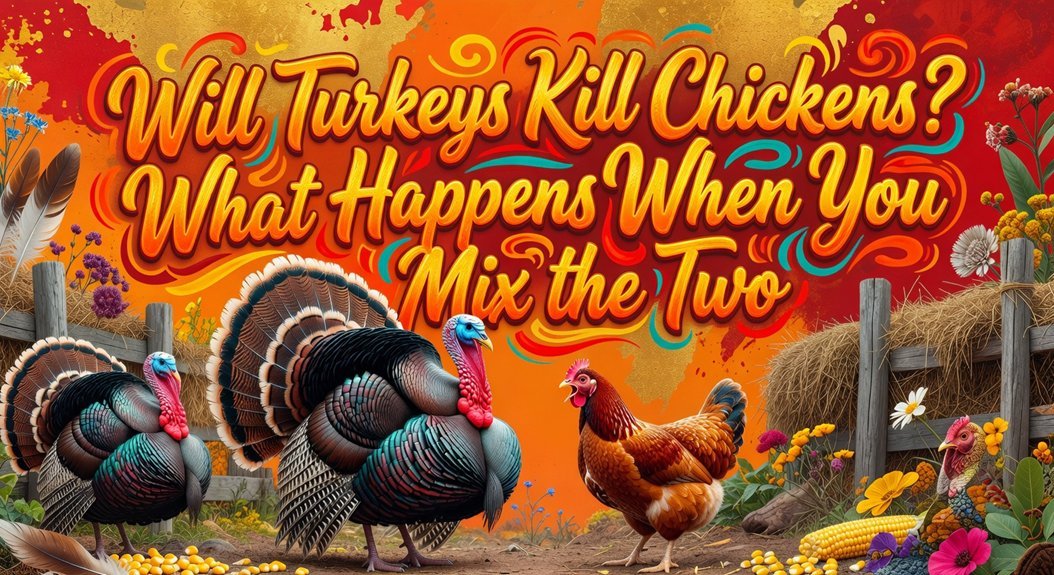
Yes, turkeys can kill chickens — tom turkeys get aggressive during breeding season, and their size advantage alone turns shared feeding areas into danger zones. But here’s the thing: physical violence isn’t your biggest problem. Chickens carry a parasite that’s fundamentally harmless to them but can wipe out your entire turkey flock within two weeks. If you’re seriously considering mixing these two, you’ll want to understand exactly what you’re signing up for first.
Will Turkeys Kill Chickens?
Keeping turkeys and chickens together sounds like a perfectly reasonable homestead idea — until you start digging into what can actually go wrong. Here’s the thing: turkeys can absolutely kill chickens, and not always intentionally. During breeding season aggression peaks, tom turkeys get territorial and violent — roosters challenging them often trigger confrontations that end badly for the chicken. Obviously, size alone creates problems. A turkey outweighs a chicken considerably, meaning accidental trampling during shared feeding feed routines is a genuine risk. Turkey hens have killed chicks within minutes. Now, none of this means cohabitation is impossible — plenty of homesteaders pull it off successfully. But you need to understand the real risks before committing, not after you’ve already mixed your flocks. Turkeys are poultry that truly thrive with their own kind, and without a proper flock, they will seek out chickens as substitute companions — making mixed-species management a constant challenge on any homestead.
How Turkeys Behave Around Chickens: and When It Turns Violent
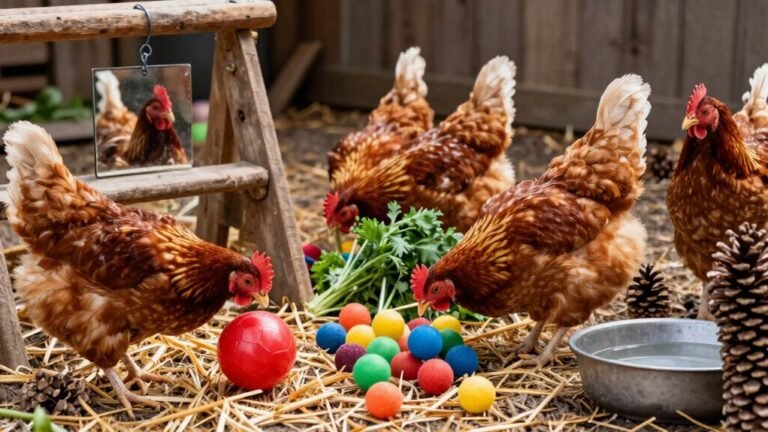
Most of the time, turkeys are surprisingly chill around chickens — non-aggressive, unbothered, even friendly during the long stretches between breeding seasons. They’re not plotting against your flock. Here’s the thing: turkeys naturally slot into a sentinel behavior role, watching for hawks while chickens keep their heads down foraging. It’s actually a solid partnership.
Now, violence? It happens, but you’re usually looking at a cranky rooster throwing the first punch — literally pecking a turkey hen who got too close. That turkey isn’t going to take it. She’ll kick back fast, dominate the exchange, and walk off. Done.
Mixed flock hierarchy sorts itself out quickly. Turkeys win disputes, roosters learn their lesson, and everybody moves on. Honestly, the drama resolves itself. When hawks or eagles circle overhead, turkeys sound alarms that send chickens sprinting for cover in the coop.
The Bigger Threat to Turkeys and Chickens: Blackhead Disease
Now, the parasite travels through cecal worm eggs in contaminated soil, bedding, and earthworms ****— meaning shared spaces become biological landmines fast. No vaccine development exists yet, and biosecurity protocols remain your only real defense.
Separate your flocks completely. Worm your chickens regularly with flubendazole. Keep wild birds out. All right, it sounds like extra work — but compared to losing an entire turkey flock within two weeks? Honestly, that decision makes itself.

Broad-Spectrum Chicken Dewormer for Layers, Broilers, Replacement and Breeding Chickens: Formulated with fenbendazole to help manage common internal parasites, including roundworms, hookworms, whipworms, and tapeworms. Designed to support effective parasite control across all production stages.

Dewormer for Horse, Poultry & More, Ivermectin for All Wormers, Tapeworms, Roundworms &Hookworms

Our formula uses all natural ingredients to deliver a safe and easy process for your poultry (and any other fowl friends!)
How Blackhead Disease Spreads From Chickens to Turkeys
Blackhead disease doesn’t just show up one day out of nowhere — it works its way into your turkey flock through a surprisingly efficient delivery system that starts, almost always, with your chickens.
Here’s the thing: your chickens carry *Heterakis gallinarum*, cecal worms harboring *Histomonas meleagridis* inside their eggs. Those infected eggs shed into droppings, contaminating your shared soil. Egg transmission dynamics make this brutal — those eggs survive up to ten years. You can’t just wait it out.
Now, turkeys pick up the infection through contaminated ground, direct contact, even cloacal drinking from fouled water. Without serious vector control — managing soil, equipment, and shared spaces — you’re fundamentally handing your turkeys a death sentence the moment chickens move in.

ELIMINATE DAILY COOP CHORES: No more lugging heavy waterers every morning or worrying about thirsty birds during weekend trips; this gravity fed chicken waterer system automates your homestead hydration by maintaining a steady fresh supply whenever the water level drops

Dual Nutrient Blend of Vitamins & Minerals: Formulated with scientifically matched vitamin and mineral ingredients to support balanced nutrition intake for your poultry. Essential vitamins help support steady growth status, while included minerals assist normal feather development, offering all-around daily nutritional support for your flock.

ELIMINATE DAILY COOP CHORES: No more lugging heavy waterers every morning or worrying about thirsty birds during weekend trips; this gravity fed chicken waterer system automates your homestead hydration by maintaining a steady fresh supply whenever the water level drops
How to Prevent Blackhead When Keeping Turkeys and Chickens Together
Preventing blackhead when you’re running turkeys and chickens together isn’t impossible — but it does demand you stop treating the two flocks like one big happy family. Here’s the thing — chickens carry heavy caecal worm burdens without showing a single symptom, quietly seeding your soil with dormant eggs your turkeys will absolutely find.
Now, your two biggest weapons are pasture rotation and separation discipline. Rotate your flocks onto fresh ground regularly, and never run turkeys on land chickens previously occupied. Clean boots between areas. Use separate feeders. Encourage roosting to keep birds off contaminated ground.
All right, want a natural layer of protection? Herb additives — garlic, oregano, thyme — genuinely reduce infection severity. Worm your chickens with flubendazole regularly. Adding hot red pepper powder to your birds’ feed can help kill Histomonas parasites as a natural alternative to chemical treatment. Do these consistently, and you’ve dramatically shifted the odds in your favor.

Immune System Boost - Made with a blend of organic, antioxidant-rich herbs, this feed helps boost immunity, supports overall health, and strengthens resilience against common illnesses, keeping your birds vibrant and thriving.

Formulated for Chickens, Effective for All Poultry: Specially developed to provide balanced nutrition support for chickens while remaining effective for ducks, turkeys, and other poultry. This E+S blend (with selenium for chickens) helps maintain vitality, balance, and overall condition in diverse flocks of all ages.
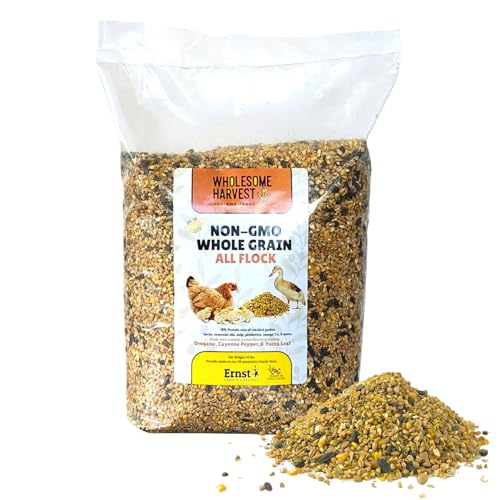
Premium Quality: Proudly made at Ernst Grain & Livestock, our 7th generation family farm, ensuring trust and quality in every bag of chicken feed.
What Actually Happens When You Mix Turkeys and Chickens
So you’ve done everything right — separate feeders, rotated pastures, garlic in the water — and now you’re wondering whether any of that effort is even worth it when the two species are sharing the same yard. Here’s the thing: poultry integration actually works for most backyard keepers when you nail space optimization early. You’ll notice feed competition around shared stations, turkeys muscling smaller chickens out. Fix that fast. Dust-bathing dynamics sort themselves out surprisingly quickly — both species often share spots without drama. Egg-sharing rituals get weird; hens sometimes claim turkey nest boxes. Now, feed feeding schedules matter more than you’d think. Keep turkeys on their own ration. You’ve already done the hard research — committing to a smart setup just makes sense.