
To build a perfect chicken coop for 5 hens, you’ll need a minimum 15-20 square foot interior space and a 50 square foot outdoor run. Start with an 8-inch deep foundation trench filled with crushed stone, then frame with pressure-treated 2x4s spaced 16 inches on center. Install 7/16-inch plywood flooring, two 2×2-foot windows for ventilation, and secure all openings with 1/4-inch hardware cloth. These foundational elements set the stage for vital interior features and predator-proofing measures.
Planning Your Coop Size and Space Requirements
When planning a chicken coop, precise space calculations serve as the foundation for a successful backyard flock. For five standard-breed hens, you’ll need a minimum interior coop space of 15-20 square feet, plus a 50-square-foot outdoor run. Your spatial layout must include 6-12 inches of roosting bar per bird and two nesting boxes to accommodate your flock. The Homestead Coop design offers an excellent template for sizing, with generous dimensions that exceed minimum requirements.
Consider environmental needs when determining coop dimensions. You’ll want extra space beyond minimums to prevent stress and allow natural behaviors like wing-stretching and dust bathing. A larger coop helps prevent the accumulation of bacteria and parasites that can harm flock health. Installing exterior-accessible boxes makes daily egg collection more convenient while minimizing flock disturbance. Before construction, verify legal considerations, including local ordinances and zoning requirements that may affect your coop size. Design your layout to facilitate maintenance, ensuring adequate room for cleaning, feeding, and egg collection while maintaining proper ventilation throughout the structure.

【Stop the Mess, Keep the Coop Dry】 Tired of soggy bedding and constant cleaning? Our Gravity-Fed Automatic Chicken Waterer Cups feature a precision-engineered drinking valve that refills only when the water level drops. This prevents overflow and leaking, ensuring your coop floor stays dry and your poultry enjoys a cleaner environment


🐓Chicken Waterer Cups: Our 12pcs chicken waterer cups is the perfect addition to your coop. Designed to keep water levels where they should be, our cups ensure no water is wasted, spilled, or dirtied, reducing your workload and saving time while providing fresh water for your chickens around the clock.
Building a Strong Foundation and Floor System
A solid foundation serves as the critical first step in chicken coop construction, protecting your flock from moisture, predators, and structural instability. Begin by clearing vegetation and digging 8-inch trenches below the frost line for concrete footers or piers. Layer crushed stone beneath your foundation materials to guarantee proper drainage. For optimal flock health, ensure your foundation supports a spacious walk-in design that allows easy access for cleaning and maintenance.
For peak floor stability, construct the frame using pressure-treated 2×4 joists spaced 16 inches on center. Use 3″ ring shank nails to secure all floor connections. Secure these to your foundation using ring-shank nails or screws. Install 7/16-inch plywood flooring over the joists, sealing it for moisture resistance. You’ll need to incorporate wire mesh around the perimeter, extending 12 inches below ground to prevent predator access. Consider adding a removable vinyl covering for easier cleaning and maintenance, while making sure all gaps between floor and walls are properly sealed. The floor system should provide elevated sleeping quarters to protect your hens from ground moisture and cold.
Constructing the Frame and Walls
Building sturdy walls begins with selecting the right lumber and precise assembly techniques. Choose pressure-treated 2x4s for your frame materials, spacing studs 16 inches on center. Pre-assemble wall frames on a flat surface, guaranteeing corners are square by measuring diagonals.
Install bottom plates on your foundation, then raise and secure each wall frame, maintaining plumb with temporary braces for wall stability. Add horizontal blocking between studs to support future roosts and nesting boxes. Consider building your coop with urban-friendly design features if you live in a residential area. For a coop housing 5 hens, aim for minimum space requirements of 15-20 square feet total. Cover the frame with exterior-grade OSB sheathing, followed by a weather-resistant barrier and appropriate flashing around openings. Seal all seams with construction tape. Plan for adequate window placement to ensure proper ventilation and natural lighting.
For predator protection, verify there aren’t any gaps larger than 1/2 inch in your walls, and reinforce corners with metal brackets to prevent shifting.


Diameter: 1/4" | Length: 2" | Head width: 7/16"

Many Uses - This product is suitable for new home construction, renovation projects, and more and has been tested for many different jobs.
Installing Essential Windows and Ventilation
Proper ventilation serves as the cornerstone of a healthy chicken coop’s design, requiring strategic placement of both windows and vents. For your 5-hen coop, install two opposing windows measuring 2×2 feet each, positioned at lower wall levels to create cross-ventilation while preventing direct drafts. Cover these with 1/2-inch hardware cloth for predator protection. Clean air exchange helps prevent respiratory issues and supports optimal chicken health. A Dutch-style barn design can enhance natural airflow through its distinctive peaked roof structure. With proper spacing standards, each hen needs 3-4 square feet of indoor space to maintain comfort and reduce stress.
Your ventilation design should include adjustable roof vents totaling 3-4 square feet of area during winter months, increasing to 5 square feet in summer. Position these vents at the coop’s highest points to leverage natural thermal uplift. Install a minimum of two 12×12-inch vents on opposite walls, covered with mesh screens, to facilitate proper air exchange. Monitor interior humidity levels with a hygrometer, maintaining levels between 40-60% through seasonal vent adjustments.

# Galvanized and rustproof: galvanized After Welding. Made of heavy duty galvanized wire, providing a maximum durability and corrosion resistance and long life. Wider weave not too stiff, the material will confirm to rolled shape as tree guards for fruit trees.

Durable Galvanized Hardware Cloth: This 1/4-inch mesh hardware cloth roll measures 24 inches by 50 feet (23 gauge) and is hot-dip galvanized for superior rust and corrosion resistance. Packed in a sturdy carton to ensure safe delivery and protect against damage

【Specifications and Material】 1/2'' x 1/'' Mesh, 36'' W x 100' L (0.914 m x 30.5 m), 19 Gauge (0.91 mm diameter), using high quality annealed wire as base material, to ensure the superior performance of the product later. Please pay attention to the length and mesh size when purchasing to avoid wasting time and finish at once.
Creating Safe and Secure Access Points
When designing a secure chicken coop, you’ll need two distinct types of access points: a 10×13-inch pop door for your hens and a full-sized entry door measuring at least 30×72 inches for maintenance access. Position the pop door 6 inches above ground level to prevent flooding and predator entry. Creating accessible entries helps minimize stress during egg-laying, especially for young hens who may experience discomfort. Proper door placement ensures good ventilation to maintain respiratory health.
Install two-step security latches that require multiple motions to open, as simple hook or pin mechanisms won’t deter clever predators. For maximum protection, reinforce all entry points with 1/4-inch hardware cloth, extending it 12 inches underground to prevent digging. Consider installing an automatic pop door system that operates on a timer, opening at dawn and closing at dusk. Since predators can strike at various times, vigilant monitoring of all access points throughout the day is essential. Confirm all doors swing outward and seal completely without gaps, creating an impenetrable barrier against nocturnal threats.
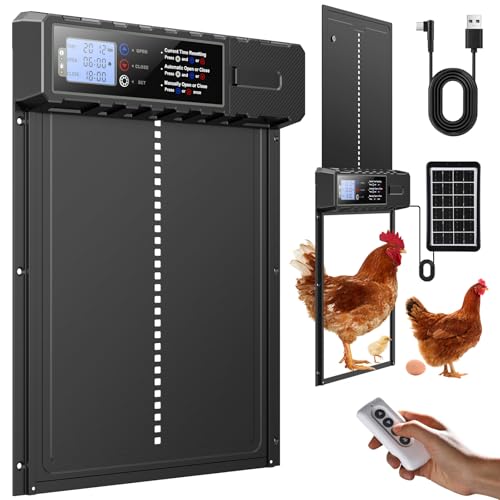
【Upgraded XL Size Spacious Passageway – More Space, healthier Hens!】With extra-large dimensions (10.8" W x 14.2" H)26 x 36CM, our automatic chicken coop door offers more spacious passageway than any competitor. It improves ventilation, reduces humidity & odor, and ensures smooth, stress-free entry—keeping your flock healthy and your eggs plentiful.

【Upgraded XL Size Spacious Passageway – More Space, healthier Hens!】With extra-large dimensions (10.8" W x 14.2" H)26 x 36CM, our automatic chicken coop door offers more spacious passageway than any competitor. It improves ventilation, reduces humidity & odor, and ensures smooth, stress-free entry—keeping your flock healthy and your eggs plentiful.

Opening Size - When the door is opened, the entrance of the door is 8.2 inches wide and 9.6 inches high. Warm tip: The opening of the chicken coop door is not suitable for turkeys
Setting Up the Perfect Interior Layout
The perfect interior layout of your chicken coop starts with allocating 2-3 square feet of floor space per bird to guarantee ideal health and productivity. For your 5 hens, you’ll need 10-15 square feet of interior space minimum. A deep litter method using pine shavings will keep the dirt floor dry and odor-free with regular maintenance. With a standard 4×8 coop providing 32 square feet, you’ll have ample space for your small flock. While this exceeds the minimum requirements, extra space benefits your chickens’ overall well-being and happiness.
Install roosting bar placement at 24 inches above ground level, using 2×4 lumber flat-side up, with 8-10 inches of space per bird. Position bars 18 inches from walls and each other, or 12 inches apart if using a stair-step configuration. Your nesting box design should include two boxes elevated off the ground in a quiet, dimly lit area. Mount them below roost height but protected from droppings. Install adjustable ventilation points high and low, screened with hardware cloth. Position feeders and waterers at chicken height, away from roosting zones to prevent contamination.
Predator-Proofing Your Chicken Coop
Securing your chicken coop against predators requires implementing multiple layers of defense, starting with ¼-inch hardware cloth as your primary barrier. Install this material across all openings and bury it 12 inches below ground level to prevent digging predators. Understanding local wildlife patterns will help you select appropriate security features. Allow your chickens access to free-range areas where they can naturally hunt insects and reduce garden pests. Since night attacks pose the greatest risk to chickens, ensure all birds are safely locked in the coop before dusk.
Install two-step lockable latches on all access points, as raccoons can manipulate simple closure systems. Cover your run with netting or solid roofing to deter aerial predators, and maintain a clear 10-foot perimeter around the coop. Consider predator behaviors when selecting coop materials – use solid wood and metal construction with no gaps larger than ¼ inch. Establish weekly inspection schedules to check for structural weaknesses, and immediately repair any compromised areas to maintain maximum protection against potential threats. Remember to use screws and washers when securing hardware cloth, as they provide superior strength compared to staples.

[Heavy Duty]: Gbekery Hardware cloth is crafted from high-quality, robust materials.

Product Details: ArdeFentium 8in x 25ft hardware cloth chicken wire roll with 1/4 inch square openings and 23 gauge steel wire is ideal for small animal barriers and chicken fence projects. This 1/4 inch wire mesh is perfect for repairing damaged areas, adding extra protection to existing garden fencing, coop doors and fence bottoms.

Size Specification: 2 sheets wire mesh, the size of each piece is 13.7 x 40 inches, wire diameter 0.52 mm