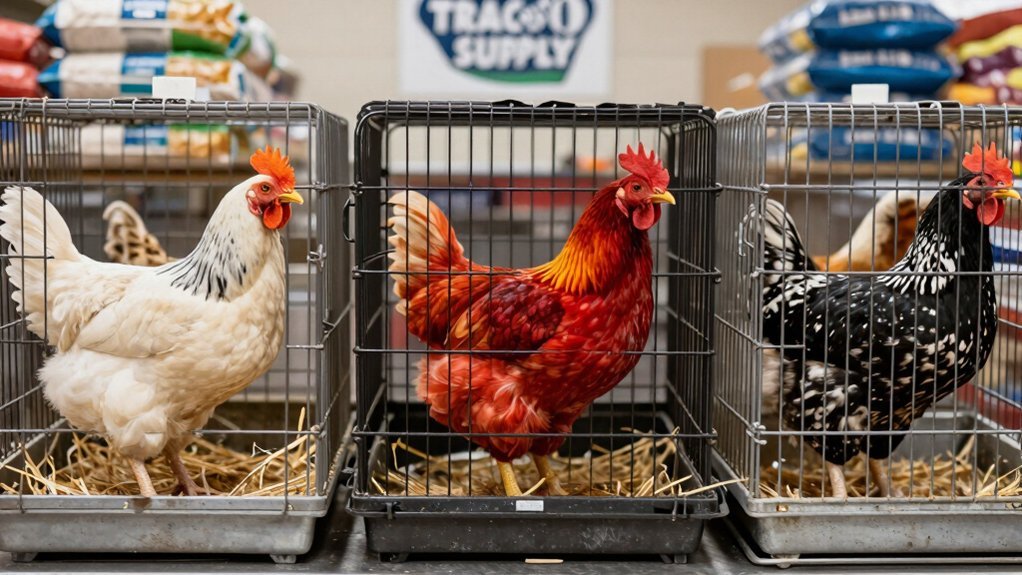
You’re probably wondering which meat‑chicken breeds you can actually get at Tractor Supply and which one fits your needs. You’ll find fast‑growing Cornish Cross packs (10‑, 40‑, 80‑chick options) that hit a 6‑lb carcass in six weeks, mixed assortments pairing Cornish Cross with slower Rudd Rangers for side‑by‑side comparison, and dual‑purpose breeds like Wyandottes, Turkens, and Buckeyes that lay eggs and provide decent meat. If you want small, flavor‑rich birds, Silkies and other specialty bantams are also stocked. The right choice depends on your timeline, space, and whether you value egg production alongside meat. Keep an eye on stock and price ranges (Cornish Cross $55‑$65, bundles $80‑$120) and you’ll be ready to decide which flock matches your goals.
Cornish Cross: Fast‑Growing Meat Chickens at Tractor Supply
If you’re wondering why the Cornish Cross shows up so often in the live‑poultry catalog, it’s because these birds hit a 6‑lb. carcass in roughly six weeks—nearly double the speed of heritage breeds. You’ll see them listed in 10‑, 40‑, and 80‑chick packs, all sourced from Hoover’s Hatchery. Because they grow that fast, you need careful live handling to keep stress low and prevent leg issues.
Here’s the thing: feed management drives their efficiency. They convert feed at a remarkable rate, so a high‑protein starter followed by a balanced grower mix keeps the weight gain steady without blowing your budget. These birds typically require brooding indoors for about two to three weeks before gradually transitioning to outdoor systems. To maintain flock welfare during this transition, providing secure fencing is essential to protect the birds from predators while allowing outdoor pasture access. When designing their housing, ensure you provide one square foot of floor space per bird to support optimal growth and prevent overcrowding.
All right, remember the trade‑off: rapid growth means you must watch heart health and leg development closely. If you can meet those husbandry demands, you’ll enjoy a tender, high‑yield carcass in just two months. The takeaway? Master live handling and precise feed management, and the Cornish Cross becomes a reliable meat bird for any small farm. What’s your next step—checking your coop setup or planning a feeding schedule? Pastured daily with supplemental heat despite summer temperatures.
Mixed Meat‑Chicken Assortments: One‑Order Variety at Tractor Supply
What’s the deal with mixed meat‑chicken packs? You’re probably wondering why Tractor Supply bundles 5 Rudd Rangers with 5 Cornish Cross chicks in a single 10‑count order. The answer is simple: you get a side‑by‑side growth comparison without juggling two shipments.
How does the mix help you test feed efficiency? You’ll feed both breeds the same ration, then watch the Cornish Cross hit market weight in six weeks while the Rudd Ranger grows slower but uses less feed per pound of gain. This contrast highlights how broilers are specifically bred for rapid muscle growth to reach market weight quickly, whereas other breeds prioritize different traits over a longer lifespan. Evaluating these differences is essential for calculating a fair selling price that covers your specific raising costs while remaining competitive in the local market. While the Cornish Cross dominates due to its exceptional feed conversion, the slower-growing Ranger offers a different set of management challenges and meat qualities.
Why choose a mixed pack over a bulk carton? It fits small‑order budgets, lets you evaluate carcass traits, and avoids committing to a single breed before you see results.
Takeaway: a mixed assortment gives you real‑world data on growth and feed efficiency in one easy order. Ready to compare breeds without the hassle? The minimum order of 10 chicks ensures you can try both breeds without excess inventory.
Dual‑Purpose Meat Chickens: Wyandotte, Turkens, Buckeye at Tractor Supply
Wyandottes weigh 6‑9 lb when mature, lay 150‑200 eggs a year, and tolerate confinement, making processing a modest, valuable harvest for homesteaders. These hens also produce large, cream-to-brown eggs starting at four to six months old, adding consistent table fare alongside their meat utility. Turkens sport a naked neck, stay cool, and produce both eggs and a decent carcass, perfect for hot climates and small‑scale processing. Buckeyes thrive in cold weather, forage actively, and the roosters reach a larger size, giving you a hearty meat yield plus reliable egg production. Like other dual-purpose birds, they offer flavorful, sizable carcasses that balance meat yield with egg production for various climates. The Silver Laced variety specifically features dense feathering and rose combs that reduce frostbite risk, enhancing their hardiness in colder environments.
Takeaway: All three breeds balance meat utility and egg output, fitting neatly into self‑sufficient backyard flocks. Ready to compare hatch dates and decide which fits your climate?
Silkies & Specialty Meat Chickens: Small‑Size, Flavor‑Rich Options at Tractor Supply
What makes Silkies a “specialty meat” option? You’re probably wondering why a tiny, fluffy bantam shows up on a meat‑chicken list. Silkies are small—about half the size of a standard broiler—so you get a modest carcass, but the black skin and bones deliver a rich, gelatinous flavor prized in Asian dishes. Because they lay only 100‑130 cream eggs a year and stay broody, you’ll use them more for novelty or niche culinary projects than for volume meat. Their bluish-black skin is caused by a melanotic gene that also colors their bones and meat, distinguishing them from typical poultry. How do you keep them safe? Silkie housing must be secure, well‑ventilated, and predator‑proof; a low‑profile coop with a deep litter works best. Think of it like a cozy rabbit hutch, just scaled for chickens. What should you expect? Silkie purposes range from ornamental shows to small‑batch specialty meals. They won’t replace fast‑growing broilers, but they add unique taste and visual appeal to a dinner plate. Takeaway: If you crave a flavor‑rich, small‑size bird for a special recipe, Silkies fit the bill—just plan for proper housing and modest meat yield. Next, consider how many birds you need for your culinary experiment. One distinct physical trait is their five toes, which sets them apart from the usual four found on most chicken breeds. In the U.S. and Canada, these birds are typically classified as true bantams, with adult hens weighing around 3 pounds and standing just 8–10 inches tall.
Choosing the Right Tractor Supply Meat Chickens for Your Goals
If you’re puzzling over which meat chicken to pick at Tractor Supply, you’ve landed in the right spot.
Which breed fits your timeline?
Cornish Cross hits market weight in 6‑8 weeks, so if you want fast turnover, it’s the go‑to. Rangers take 10‑12 weeks—slower but still quick—while heritage birds like Jersey Giant need 16‑21 weeks for a bigger carcass. Specialty hatcheries often allow beginners to start small by offering options to order as few as 3 chicks.
What climate adaptation matters?
Cold‑hardy birds such as Buckeye, Barred Rock, and Wyandotte thrive in harsh winters, while Turkens and Rhode Island Red handle heat and cold alike. Choose a breed that matches your local weather to avoid stress and loss.
How does feed quality affect you?
Cornish Cross converts feed efficiently, meaning you’ll spend less on feed per pound of meat. Pasture‑friendly Rangers and dual‑purpose breeds need higher‑quality forage and may require supplemental feed. Monitoring the Feed Conversion Ratio is crucial for understanding how efficiently your chosen breed turns intake into weight gain and managing overall costs.
Takeaway: Align growth speed, climate tolerance, and feed efficiency with your goals, and you’ll pick the right meat chicken for your setup. Next, check which breeds your local Tractor Supply currently stocks. Unlike the commercial broilers bred for rapid growth that often suffer skeletal and heart issues, the breeds available for small flocks allow you to prioritize animal welfare alongside production speed.
Finding Current Prices & Stock for Tractor Supply Meat Chickens
Any time you’re wondering where to find the latest prices and stock for meat‑chicken chicks at Tractor Supply, you’ve hit the right spot. You’re probably confused by fluctuating numbers and seasonal shelves, so let’s clear that up.
How do I check online availability?
Now, head to the live birds catalog and apply the meat‑chicken filter. The Cornish Cross page shows a 10‑chick pack, with “Pickup at Post Office” or shipping notes, meaning the stock is active. Barred Rock and Turkens appear too, but filter them out if you only want broilers. While browsing, remember that customers can also order days-old chicks directly from Hoover’s Hatchery through the platform alongside in-store options. Regardless of the breed you select, ensuring a secure coop is vital to protect your flock from predators once they arrive home.
What’s the best way for price tracking?
Here’s the thing: search snippets list $54.99‑$64.99 for Cornish Cross, $54.99‑$84.99 for Barred Rock, and bundles at $79.99‑$119.99. Prices can shift by store, so bookmark the product page and refresh weekly. Keep in mind that while most purchases are one to two days old, the store may also carry chicks at various ages up to a few weeks old depending on current inventory.
Takeaway
Online availability lives in the filtered catalog; price tracking means watching those snippets and noting seasonal changes. Next step: open the catalog, set the filter, and note the current price range for the breed you prefer.