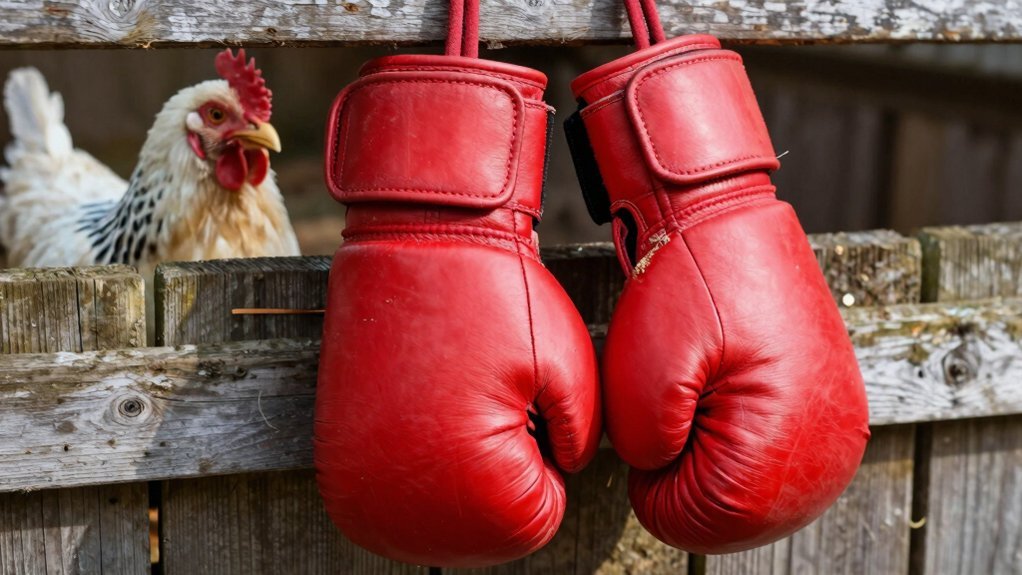
You’re probably wondering what those tiny “boxing gloves” for roosters actually are and when you’d ever need them. They’re just small spur‑guards—about 1.5 × 4 inches—made of leather, rubber, or vinyl that wrap snugly around a bird’s lower leg to stop puncture wounds during supervised sparring, vet checks, or brief handling of aggressive birds. Use them only for short, controlled situations like training or health exams; never in fights, because that makes the gear illegal and harmful. If you keep the fit tight but comfortable, dry and inspect them after each use, you’ll protect both the rooster and yourself. Next, you’ll want to learn how to pick the right size and keep the gear in good shape.
Define Boxing Gloves for Chickens
What exactly are “boxing gloves” for chickens? You’re probably puzzled because the name sounds absurd, but they’re simply protective covers for a rooster’s leg and spur. Think of them as tiny “spur guards” that keep sharp points from puncturing another bird or your hand during sparring, handling, or breeding.
What are they made of?
Glove materials range from leather and rubber to vinyl, cloth, or synthetic blends. Most designs are compact—about 1.5 × 4 inches—and wrap around the lower leg with straps or ties. Some add extra padding around the spur for extra cushioning.
When do you use them?
Application scenarios include short‑term restraint, training bouts, or any situation where a rooster might scratch or cut. They act as a barrier, limiting accidental cuts and protecting both birds and handlers. Just as bathing requires gentle handling to avoid injury, these guards ensure safety during physical contact. Since roosters rely on internal testes near their backbone for hormone production rather than external organs, these leg guards provide necessary protection without interfering with their unique anatomy. Similar to how dog training utilizes secure enclosures to manage interactions, these gloves create a safe boundary during close contact.
Takeaway: These aren’t human‑style boxing gloves; they’re lightweight, leg‑sized protectors that keep spurs safe during specific handling tasks. Ready to explore when you actually need them?
When to Use Boxing Gloves for Chickens?
When you’re wondering why you’d ever put tiny “gloves” on a rooster’s leg, the answer is simple: you want to keep spurs from turning a friendly sparring session into a blood‑speckled mess.
When do you actually need them?
Now, you’ll use them during supervised sparring, training competitions, or exhibition bouts where you want short‑duration spur protection. They’re perfect for practice drills that mimic combat but prioritize safety over real fighting.
What about flock integration?
Here’s the thing: when you introduce a new rooster to an established flock, a brief, monitored interaction can get rough. The gloves blunt spur strikes, preventing scratches and broken spurs while the birds get used to each other. Since these weapons are actually bony cores covered in keratin that harden as the rooster matures, blunting them temporarily is crucial to avoid deep puncture wounds during these transitions. This is especially important because repeated feather loss on a hen’s back can cause pain and reduce egg production, making saddle feathers a critical area to protect during mating interactions. It is also wise to monitor for head shaking which can indicate distinct health issues like ear mites rather than injury from sparring.
And handling aggressive birds?
Obviously, if a rooster charges during routine care—catching, moving, or veterinary checks—the gloves shield both you and the bird. They let you restrain safely without causing puncture wounds.
Takeaway: use the gloves only for short, controlled, where spur injury is a real risk. Next, ask yourself how to pick a safe, well‑fitted glove for your chickens.
The product is made from grade A leather which provides a durable yet flexible fit for the rooster’s leg.
Choose a Safe, Well‑Fitted Boxing Glove for Chickens
If you’re wondering why picking the right glove feels tricky, you’re not alone—most people get stuck on sizing before they even think about material.
How do I measure my bird’s leg?
Measure the circumference just above the spur and compare it to a 1.5 × 4‑inch chart. A snug strap or hook‑and‑loop fastener should hold the cover without sliding toward the hock.
What material protects best?
Leather, silicone, or reinforced synthetic textile give durability, while a smooth inner lining prevents abrasion. Padding over the spur line cushions blows, and reinforced stitching survives scratching.
Will it limit movement?
A lightweight, flexible design lets the chicken balance and turn naturally; avoid bulk that pins the toes or restricts stance. Unlike confined rolling devices that cause distress, proper gear must respect the animal’s natural behavior to ensure safety.
How does this fit into training?
Proper training methods require a stable fit so you can focus on owner safety precautions, not gear adjustments.
Takeaway: Measure, check adjustable fasteners, and choose padded, breathable material for a secure, comfortable fit. Next, learn how to use the gloves safely during sparring.
Since most chickens have four toes arranged with three forward and one back, ensure your glove design accommodates this natural gripping structure without crowding the digits.
Just as trimming requires identifying the quick to avoid injury, selecting gear must prioritize the bird’s anatomical safety and comfort.
Avoid Common Welfare Mistakes With Boxing Gloves for Chickens
You’re probably wondering why a glove that looks safe can still cause trouble for your chicken. Here’s the thing: gloves work only for non‑contact handling, not for fighting. If you let birds strike or grapple, you turn protection into a welfare hazard, and stress monitoring will show rapid breathing, wing flapping, and vocalizing.
All right, avoid heat and restraint problems by keeping handling brief, calm, and loose‑fitting. Tight straps trap moisture, cause bruises, and raise temperature, so you’ll see overheating signs quickly. Use a single, clean glove per bird and dry it after each use to prevent skin and feather damage.
Obviously, never mix enrichment with combat. A rubber glove used for “training” is still combat gear and spikes aggression. The takeaway: treat gloves as injury prevention tools, not fighting accessories. Next, check your handling routine for stress indicators and adjust accordingly. Preventing chickens from expressing their natural instincts can lead to harmful behaviors born of frustration, which is why equipment should never interfere with their essential behavioral goals. Remember that addressing root causes like overcrowding or lack of food is often more effective than relying solely on protective gear to manage flock aggression. Ensuring adequate space and proper nutrition addresses the underlying stressors that often trigger the aggression protective gear attempts to mask.
Identify Legal vs. Husbandry‑Only Boxing Gloves for Chickens
What makes a glove legal or just a husbandry tool? You’re probably wondering why “sparring muffs” sometimes spark legal debates while other times they’re just safety gear. The key is intent: if the glove’s marketed for handling, transport, or breeding, it’s a husbandry‑only product, usually rubber or leather “safety gloves” that protect handlers from spurs. Those designs stay within animal‑cruelty statutes because they’re not for combat.
Now, the public policy side. States like Oklahoma and Louisiana have examined padded gear as a loophole for cockfighting, but legislators have rejected it, keeping fighting devices illegal. Even when a law permits veterinary or educational use, it won’t cover public spectacles. This distinction mirrors how local zoning laws vary widely across municipalities to regulate specific animal practices based on community standards. Just as cities enforce detailed legislation to manage noise, sanitation, and neighborhood harmony for backyard flocks, regulations on equipment focus on preventing abuse rather than facilitating it. While historical breeding focused on aggression for fighting sports, modern regulations strictly prohibit any equipment designed to facilitate such contests. All right, remember: a glove used in a controlled, non‑sport setting stays legal; once it’s tied to a fight, it becomes a prohibited device. Your next step is to check the product description for words like “breeding muffs” versus “sparring muffs.”
Fit, Clean, and Store Boxing Gloves for Chickens Correctly
Even though the term “chicken boxing gloves” sounds odd, you’re right to wonder how to fit, clean, and store them properly.
How do I get the right fit?
First, measure the bird’s leg thickness and spur length; the cover should hug the spur tip without choking the leg. Use flexible vet wrap or elastic sleeves so you can adjust as the spur grows. Secure with a turn‑and‑lock fastener, avoiding pinch points. Check the fit each time you put them on—tight enough to stay, loose enough for normal walking.
How should I clean and dry them?
Wash reusable covers after every use, rinse with warm water, and air‑dry completely before storage. If a wrap gets damp during a fight, remove it right away and dry it. For any minor cuts discovered during inspection, you can safely apply a 50/50 Betadine solution to disinfect the area without irritating the bird’s skin. While maintaining gear hygiene is crucial, remember that effective flock management also involves using products designed to mask wounds and discourage further pecking by aggressive birds.
When do I replace them?
Inspect for frayed fabric, cracked rubber, or embedded dirt every use; frequent inspections reveal wear early. Follow a replacement schedule—swap out any gear that shows damage or can’t be fully cleaned. While managing physical gear, remember that treating actual injuries often requires applying Blue-Kote spray to prevent infection and stop other chickens from picking at the wound.
Takeaway: Proper fit, thorough cleaning, and regular checks keep your chickens safe; next, set a weekly inspection routine.