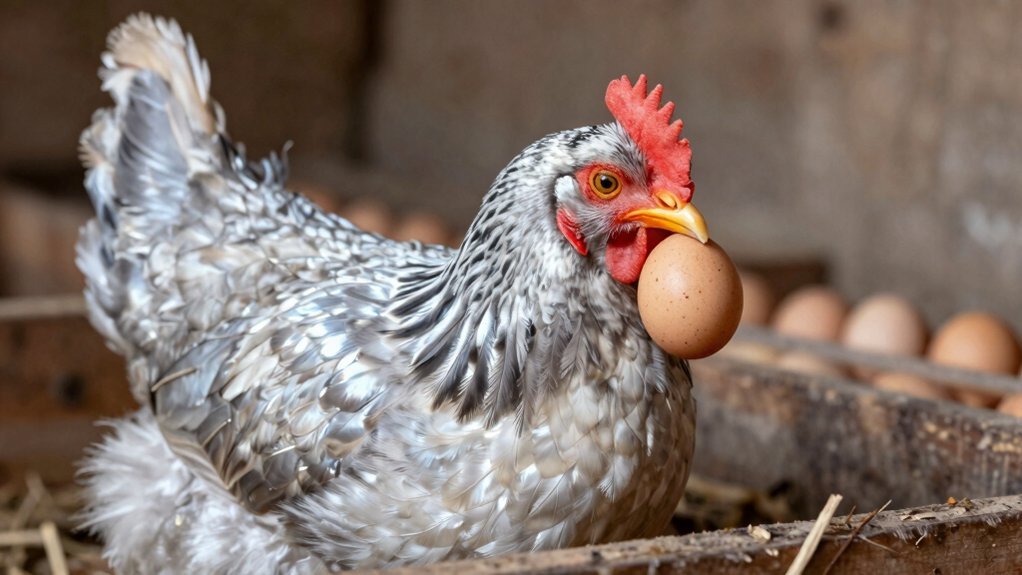
You’re probably wondering how many eggs a Silver Laced Wyandotte will actually give you each year, and the answer is about 180‑240, with 200‑240 being typical when you give them 14‑16 hours of light, balanced layer feed, and calcium grit. They usually lay 3‑4 eggs a week, peaking in spring and fall, and a short winter dip can be offset with supplemental lighting. If you keep the diet steady and avoid broodiness, you’ll see a reliable, year‑round supply.
How Many Eggs Does a Silver Laced Wyandotte Lay Yearly?
How many eggs does a Silver Laced Wyandotte lay yearly? You’re probably wondering why the range jumps from 150 to 240 eggs. Here’s the thing: a typical healthy hen gives you about 3–4 eggs a week, which adds up to roughly 180–240 eggs a year. If you hit the high end, you’re seeing a peak‑condition bird that can lay up to 240 eggs, especially with good lighting and nutrition.
Now, if you slip on nutritional deficiencies, you’ll see a dip in that total and maybe even health complications like weak shells or reduced vigor. Obviously, age, season, and genetics also play a part, but solid feed and a steady daylight schedule keep you near the upper range. While Silver Laced varieties are common, their Blue Laced Red cousins demonstrate how specific genetic traits can influence both appearance and flock rarity. Beyond appearance, these birds are specifically valued for their cold-hardiness which helps maintain consistent production even in harsher climates. This resilience is largely due to their dense feathering and a frostbite-resistant rose comb that allows them to thrive in various climates. Takeaway: aim for balanced nutrition and consistent light to hit 200‑plus eggs annually. Next, ask yourself how weekly patterns affect those numbers.
What Weekly Laying Pattern Do These Hens Follow?
You’re probably wondering why the numbers you saw for yearly production don’t translate into a neat daily schedule. The breed typically lays four to five eggs each week, not one a day. You’ll see a couple of busy laying days, then a short pause, because the hens spread their output across the week. Since hens generally produce one egg every 24 to 26 hours, their specific laying time shifts slightly later each day, contributing to this varied weekly rhythm.
Here’s the thing: lighting schedules and coop layout shape that rhythm. Consistent artificial light of 14‑16 hours nudges hens to lay earlier in the day, while a well‑organized coop with easy‑access nest boxes reduces stress and keeps the cadence steady. Notably, egg production can decrease significantly during winter due to reduced daylight. To counteract this drop, providing supplemental artificial lighting helps maintain the 14 to 16 hours of daily exposure needed to stimulate the hen’s reproductive cycle.
All right, expect a reliable, moderate cadence—usually three to five eggs spread over four to six days. The takeaway: plan for a handful of eggs most days, not a daily guarantee. Next, check how seasonal changes might tweak this pattern.
How Do Seasons Affect Silver Laced Wyandotte Egg Output?
Winter daylight can feel like a dimmer switch for your Silver Laced Wyandottes, and that’s why you’re seeing fewer eggs in the colder months. You’re probably wondering why daylight matters more than breed. Light is the main seasonal driver; when days shrink from 16.5 hours in summer to about 8 hours in December, your hens’ pineal glands receive less signal to produce hormones that trigger laying. Consequently, egg output drops, even though your Wyandottes tolerate cold well.
Now, consider how you can help. Supplemental lighting that mimics 14‑16 hours can keep production steadier, and managing light pollution—by shielding coop windows from streetlights—prevents confusing the birds’ natural rhythm. Global warming may lengthen spring, but it won’t erase the need for consistent day length. To further support your flock during this energy-intensive time, providing a balanced diet rich in protein and calcium through specialized layer feed and supplements like crushed oyster shells is essential for maintaining strong eggshell formation. Additionally, keeping the living environment mildly warm and protected from cold winds can encourage consistent laying alongside your lighting efforts. Gathering eggs 2–3 times per day ensures they remain clean and reduces the risk of breakage or stress-related issues in the nesting boxes.
All right, remember the takeaway: daylight, not temperature, drives seasonal egg numbers. Adjust lighting, reduce light pollution, and you’ll see a smoother output curve. Next, ask yourself how nutrition and molt timing will affect your flock’s performance.
How Does Egg Size and Shell Quality Change With Age?
You’re probably wondering why your Wyandottes start laying tiny eggs and later produce larger ones. In the first few weeks, shells are thin and uneven because the hen’s calcium demand spikes while she’s still growing. As she reaches 7‑9 months, body growth stabilizes, calcium absorption improves, and shells become thick and uniform—just in time to fend off predatory threats that might probe a weak egg. Here’s the thing: age pushes egg size upward. By the time she’s a mature layer, you’ll see medium‑to‑large brown eggs, even though total output drops. Older hens still lay big eggs, but shell consistency can wobble if calcium or grit wanes, especially after incubation interruptions. Takeaway: monitor calcium, keep grit handy, and expect larger, sturdier eggs as your Wyandottes age. Next, ask yourself what feeds and supplements will keep that consistency going. Since laying hens require increased calcium to support eggshell formation, ensuring their diet contains adequate calcium levels between 2.75% and 4.1% is critical for maintaining the shell quality described as your birds mature. Beyond nutrition, factors like heat stress can also compromise shell integrity, leading to the crumbly or fragile eggs often seen in older flocks. Providing large particle calcium separately allows hens to regulate their intake overnight, preventing deficiencies that cause weak shells or osteoporosis.
Which Feeds and Supplements Keep These Hens Laying Consistently?
Now, feeding schedules matter. Offer the layer feed daily, and keep a separate dish of oyster‑shell grit for free‑choice calcium, especially in winter. The calcium strengthens shells and steadies production. Providing free-choice access prevents health issues from overconsumption by non-laying birds while ensuring hens consume calcium according to their specific needs. Transitioning pullets to this protein-rich layer feed at 16 to 18 weeks ensures they have the necessary nutrients to support continuous egg production and overall health.
Here’s the thing: nutritional supplements keep you on track. Toss in occasional high‑protein treats, and consider a vitamin‑D supplement if you use artificial light. It is also vital to provide insoluble grit to aid digestion by helping grind food in the gizzard.
Takeaway: Stick to stage‑based feeds, add grit and calcium, and sprinkle in protein treats. Next, ask yourself how lighting and stress affect those numbers.
How Do Age, Broodiness, and Genetics Impact Annual Totals?
How does age shape your Wyandotte’s yearly egg count? You start laying at 4‑6 months, but those early eggs are tiny and irregular, so first‑year totals sit below the mature range of 150‑240. Once the hen hits full body maturity, you’ll see about 3‑4 eggs a week, peaking in spring and fall.
Now, what about broodiness? When a hen goes broody, she pauses laying, sometimes for weeks, and that can knock 30‑50 eggs off your annual tally. Managing broodiness—removing the hen from the nest or using a dummy egg—helps keep numbers up.
Here’s the thing: genetics set the ceiling. Productive lines hit 200‑240 eggs, while exhibition‑focused lines may linger near 150. Your flock management, health considerations, and line selection together dictate the final count. Similar to other dual-purpose breeds like Barred Rocks, adequate light exposure of 12 to 16 hours daily is essential to maintain consistent productivity throughout the year. This natural cycle relies on light sensed through the pineal gland to trigger the reproductive system as daylight hours increase after winter. While Wyandottes are steady layers, they produce fewer eggs annually than record-holding breeds like the Australorp, which can lay up to 364 eggs per year.
Takeaway: younger, broody, or low‑productivity genetics lower totals; mature, non‑broody, high‑productivity lines boost them. Next, ask yourself which line fits your backyard goals.
Why Are Silver Laced Wyandotte Hens a Reliable Backyard Layer?
If you’re wondering why Silver Laced Wyandotte hens keep showing up on backyard lists, it’s because they blend steady egg output with rugged winter performance. You’ll see roughly 3‑5 eggs a week, hitting 180‑240 a year, so your fridge stays stocked without surprise gaps.
How do they handle cold weather?
Here’s the thing: dense feathering and a rose comb keep body heat in, so they keep laying when other breeds slow down. You’ll notice only a slight dip in egg nutrition during frosty months, giving you a reliable year‑round supply. These hens typically start laying at about four to six months old and maintain better production rates in winter compared to some breeds, especially with supplemental lighting.
What makes them easy to manage?
All right, their docile temperament means less stress, which translates to consistent laying. They enjoy environmental enrichment like perches and dust baths, staying healthy and producing thick, uniform brown shells. Like their Gold Laced relatives, they thrive in varied climates and perform well in both free-range and confined settings.
Takeaway: You get dependable egg numbers, hardy winter performance, and low‑maintenance behavior. Next, consider how you’ll set up a simple enrichment area to keep them happy and productive.