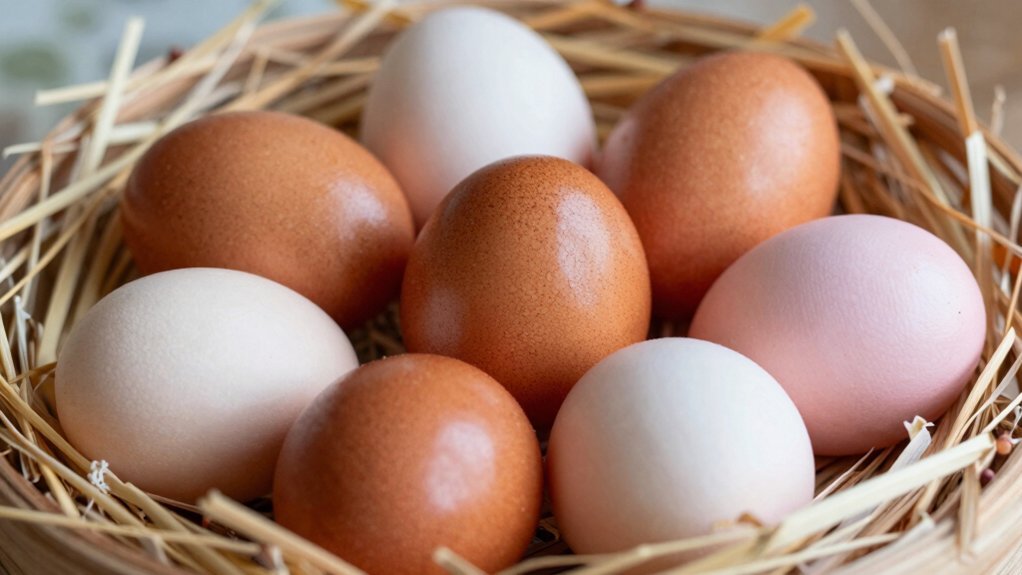
You’re probably wondering why Wyandotte hens always give you brown‑tinted eggs, and the answer’s simple: their genetics lay protoporphyrin pigment, so every variety—Silver Laced, Gold‑Laced, Blue‑Laced Red, Columbian, Buff, or Black—produces shells ranging from creamy beige to rich brown. Obviously the feather lacing patterns don’t change the hue; they’re just a visual cue. Now you know the exact shade range for each line, and the next step is to see how those colors stay consistent year‑round.
What Egg Color Do Wyandotte Hens Lay?
What egg color do Wyandotte hens lay? You’re probably wondering if the shade tells you anything about flavor or hatch management. Obviously, Wyandotte hens lay medium‑to‑large eggs that range from creamy beige to light brown, with a smooth, uniform shell and occasional dark speckles.
Here’s the thing: the shell color stays consistent across a flock, so you won’t see blue or white eggs from this breed. The USDA says color doesn’t affect nutrition, but some backyard cooks claim the richer brown eggs taste slightly fuller, though taste differences are minimal and mostly perception. Notably, this reliable production of medium to large brown eggs is a hallmark trait of the breed alongside their calm temperament and hardiness. These birds can remain productive for 5-7 years while consistently laying 200-300 eggs annually. However, even healthy layers can produce fragile shells if they suffer from calcium deficiencies or other nutritional gaps.
All right, when you plan hatch management, focus on incubation temperature and humidity rather than shell hue. The takeaway: expect dependable brown‑ish eggs, and let hatch protocols drive success, not color. Next, you might ask how those brown shades vary among Wyandotte varieties.
Wyandotte Egg Shades: Brown Variations Across Varieties
If you’re wondering why your Wyandotte eggs aren’t all the same shade, you’ve hit the right spot. Here’s the thing: color genetics drive the brown spectrum, so each variety nudges the hue a bit. Silver‑Laced hens usually lay light‑to‑rich brown, while Gold‑Laced birds tend toward beige or very pale brown. Blue‑Laced Red and Columbian types produce cream‑to‑brown shells, and Buff or Black lines sit comfortably in the brown bucket.
Now, lay frequency doesn’t flip the palette, but it can reveal subtle shifts. A consistent dozen often shows a uniform shade, yet occasional speckles or a few lighter eggs appear because individual genetics vary. Your flock’s diet and season won’t jump you to a new color category. While external factors like molting may cause temporary variations, the fundamental pigment deposition process remains governed by the hen’s breed-specific DNA. Unlike breeds that lay blue eggs due to oocyanin, Wyandottes rely solely on brown pigments for their shell coloration.
All right, you can expect most Wyandotte eggs to market as brown, with descriptors like cream, light brown, or beige. The takeaway: brown variations are normal, rooted in genetics, not nutrition. Next, check how your hens’ lacing patterns might influence those shades. This occurs because the protoporphyrin IX pigment is applied to the outer layers of the shell in the hen’s shell gland based on her specific genetic traits.
How Wyandotte Lacing Patterns Influence Egg Shade?
Do lacing patterns really change the color of Wyandotte eggs? You’re probably wondering because the striking feather pigmentation on Gold, Silver, or Blue Laced birds looks like it could affect the shells. Here’s the thing: the genes that create that dark outline—Pg, Ml, and Co—control eumelanin in feathers, not pigment in shells. Egg color genetics operate separately, producing the brown‑to‑cream shades you see across all varieties. Obviously, lacing doesn’t dictate shade; your hen’s individual genetics, nutrition, and age do. So, stop using feather pattern as a predictor. Expect any Wyandotte, regardless of lacing, to lay brown eggs. Two copies of the Bl gene produce splash colouration, which appears almost white. Next, ask yourself how nutrition might tweak that brown hue. While feather patterns do not influence shell color, these chickens are highly valued for their friendly temperaments and adaptability to various backyard environments. Proper care includes providing high-protein feed to maintain optimal egg production throughout the year. Much like the prized Black Copper Marans, some breeders seek specific lineages for their distinctive hues and consistent shell quality.
Do Seasons Change the Hue of Wyandotte Eggs?
How much does the season really affect the color of your Wyandotte eggs? You’re probably wondering if spring blues or winter grays will turn your cream‑brown shells into something else. Here’s the thing: daylight, not temperature, drives laying cycles, so winter lighting shortens ovulation intervals and drops production, but it doesn’t rewrite the pigment palette. Seasonal molting can make a hen’s bloom look a shade lighter after she resumes laying, yet the base hue stays in the cream‑to‑brown range. You may notice a subtle darkening in spring, but it’s usually due to age or diet, not the season itself. While reduced light triggers a slowdown via the pineal gland, this biological mechanism influences the frequency of laying rather than the shell’s coloration. Since the reproductive cycle typically lasts about 24 to 27 hours, seasonal shifts primarily disrupt this timing rhythm without altering the genetic factors that determine shell hue. To maintain consistent production during these darker months, many keepers rely on supplemental artificial lighting to mimic longer days without altering egg shade. Takeaway: Expect modest, individual variations, not dramatic color shifts. Next, check how diet influences shade consistency.
Does Wyandotte Brown Egg Color Affect Nutrition or Cooking?
You’re probably wondering whether that brown shell on a Wyandotte egg means it’s healthier or cooks differently. The short answer: it doesn’t. Shell pigment comes from genetics, not nutrients, so the brown hue adds no extra protein, vitamins, or minerals. USDA guidance confirms that color doesn’t affect nutrition, so any nutrient myths you’ve heard are just marketing fluff. While shell color is irrelevant, factors like diet and environment can significantly influence the actual quality and frequency of egg production. This natural coloring process involves porphyrin pigments added during egg formation, which affect only the shell appearance across various breeds without altering the interior quality. As seen in other breeds like White Plymouth Rocks, the brown pigment is deposited on the eggshell surface during formation regardless of the chicken’s feather color.
Now, let’s talk cooking tips. Freshness, size, and thickness matter, not shade. A large brown‑shell Wyandotte behaves like any other large egg—boil a minute longer than medium, scramble the same, and bake with identical weight. Shell color won’t change texture or flavor.
All right, remember: choose eggs for freshness and size, not shell color. Your next step? Compare a few eggs by weight and see how they perform in your favorite recipe.
Quick Cheat‑Sheet: Variety vs. Egg Color
If you’re wondering whether a Wyandotte’s feather pattern tells you its egg hue, you’re on the right track.
Which variety gives which shade?
Silver Laced lays light‑to‑medium brown, Gold Laced produces beige‑to‑pale brown, Blue Laced Red yields light brown, and Columbian offers cream‑to‑brown. Other varieties stick to brown or cream‑brown, never white or blue.
Why the confusion?
Wyandotte egg myths and folklore claim feather color dictates shell hue, but the data shows no link. All varieties produce large eggs, roughly 150‑240 per year, with consistent brown tones. Unlike breeds where earlobe color serves as a genetic indicator for white or brown shells, Wyandottes maintain their specific brown egg production regardless of their diverse feather patterns. This contrasts with blue egg layers, where the genetics of egg color determine shades ranging from pale sky blue to deep turquoise independent of diet.
Bottom line
Feather pattern doesn’t change egg color; expect brown or cream‑brown across the board. Next, compare production rates to pick the most reliable layer for your flock.
While Wyandottes consistently lay brown shades, other breeds like Ameraucana or Marans demonstrate how genetic factors specifically influence the diverse blue, green, or dark brown eggs found in different chicken varieties.