You’ll find that most chickens have four toes arranged in an anisodactyl pattern: three facing forward and one backward hallux. Each toe contains sharp keratinous claws for gripping and scratching. However, certain breeds like Silkies and Dorkings exhibit polydactyly, displaying five toes instead. This variation stems from genetic mutations on chromosome GGA2p. The tarsometatarsus bone fuses with proximal phalanges, creating structural stability for both perching and foraging. Understanding these anatomical differences reveals how specialized adaptations drive functionality across breeds.
The Standard Four-Toe Configuration
When you examine a chicken’s foot, you’ll find four toes arranged in what’s called an anisodactyl configuration—the same arrangement you’d see in most perching birds. Three forward-facing toes project ahead, while a smaller hind toe extends backward. Each primary toe features a sharp claw for gripping and scratching, while the backward toe enables secure roosting. This toe number variability rarely occurs in standard breeds, though it holds evolutionary significance for avian adaptation. The configuration demonstrates how chickens evolved for efficient ground locomotion and perching. Their digitigrade posture—walking on toes rather than flat feet—maximizes agility. The tarsometatarsus, where lower foot bones fuse, extends the lever length, enhancing balance and stability across varied terrain while supporting essential foraging and roosting functions. The metatarsus region between the tarsus and toes provides support and flexibility necessary for chickens to navigate uneven surfaces during their daily activities.

Safe and Solid Material - Vehomy Chicken ladder perch is made of natural solid pine wood, safe to peck and play on it for chickens. With special sturcture, it is enough stable to support at least 30lb.

Square Chicken Roosting Bar:The unique square design prevents rotation,ensuring chickens stand stably.The widened, thickened perch has a flat surface, reducing toe pressure and protecting sensitive feet.The larger base area offers more solid support

Customizable Width & Height: Koutemie chicken roosting perch is designed with an adjustable screw mechanism, allowing you to effortlessly modify both the width and height to perfectly fit your coop’s unique requirements. Whether you have young chicks or mature hens, this perch ensures optimal comfort for chickens of all ages and sizes
Understanding Phalangeal Structure
Because you’re examining a chicken’s foot structure, you’ll find that phalanges—the small bones comprising each digit—form the foundation of toe mobility and function. You’ll notice that chickens possess 21 phalanges distributed across four digits, reflecting their unique phalangeal anatomy and toe evolution from ancestral avian species. The adaptability to different climates of chickens further illustrates the evolutionary advantages of their unique anatomy.
You’ll unveil that the second digit contains three phalanges, while the third digit also features three. The hallux, or first toe, distinguishes avian phalangeal anatomy with its single phalanx. The fourth digit completes the four-toe configuration.
You’ll observe that avian phalanges appear rudimentary compared to mammalian counterparts. The proximal interphalangeal joint functions as a simple hinge, stabilized by tendons and ligaments, enabling one-axis flexion. You’ll recognize that this specialized phalangeal structure directly supports chickens’ distinctive terrestrial locomotion and scratching behaviors. The manus reduction through digit disappearance evident in avian evolution demonstrates how chickens adapted their forelimbs for flight while maintaining functional hindlimb digits for ground-based movement.
How Toes Connect to the Foot
At the foundation of each chicken’s foot lies the tarsometatarsus, a specialized bone that fuses with the proximal phalanges of the three forward-facing digits and anchors the structural framework you’ll observe in avian anatomy. This junction marks where the foot’s skeletal system shifts to individual toes, creating distinct toe joint anatomy that allows inward curling and precise gripping motions. The metatarsal pad, positioned at the tarsometatarsal bone end, provides cushioning at this critical connection point. Tendon organization proves essential here, with dorsal tendons controlling extension while ventral tendons manage flexion. These tendons attach directly to the phalanges, enabling you to see how chickens achieve their characteristic toe positioning and gripping capability through this integrated structural design. The phalangeal formula of 2, 3, 4, 5 determines how many bones compose each forward-facing toe, establishing the foundational structure for all toe movements and load-bearing capacity. For optimal health, ensuring that chickens receive enough calcium supplementation is crucial, as it supports their overall skeletal integrity and helps maintain strong eggshell quality for laying hens. To achieve optimal health and mobility, it’s important that chickens maintain species-appropriate diets, allowing for strong skeletal development and overall well-being. Incorporating homemade chicken treats into their diet can further enhance their nutritional intake and overall health, especially those that include essential nutrients critical for bone integrity.
The Role of Interdigital Webs
Though chickens aren’t waterfowl, they’ve evolved partial webbing between their toes that plays a functional role in their terrestrial lifestyle. You’ll find interdigital membranes connecting toes II through IV in semipalmate webbing patterns. These interdigital membranes extend only to the basal phalanges’ distal ends, with curved free edges that maintain toe independence.
The webbing functions primarily during scratching, where chickens’ short, minimally curved claws benefit from the membrane’s structural support. This anatomical arrangement enhances ground locomotion and stability while foraging. In addition to this, chickens that have access to natural supplements may experience improved overall health, which further aids their foraging abilities. The intermediate web joins toes II-III, while the lateral web joins toes III-IV, creating a balanced support system. You can observe these structures covered in reticulate scales at the dorsal-ventral toe junction, representing an evolutionary adaptation balancing aquatic and terrestrial needs. The BMP signaling pathway plays a crucial role in how chicken embryos develop these interdigital membranes during the developmental process.

HEALING AID & SKIN REPAIR: Use a few times daily to help with a variety of wounds, such as pecking sores, flank wounds, breast blisters, vent prolapse, frost bite, or bumblefoot

100 natural

Breed-Specific Variations and Polydactyly
While most chickens sport four toes per foot, certain breeds have evolved or been selectively bred to display five toes—a condition known as polydactyly. You’ll find polydactylous breeds across both Chinese and European lines, including Silkies, Dorkings, Houdans, and Sultans. These genetic mutations occur independently on chromosome GGA2p, with researchers identifying a ~0.39 Mb region responsible for the trait. Polydactyly exhibits two distinct subtypes: subtype I develops from the second phalanx, while subtype II emerges from the first phalanx. The dominant allele controlling five toes shows complete penetrance in tested Chinese indigenous breeds. Among European breeds, the Dorking breed has roots tracing back to Roman legions and remains one of the most recognizable polydactylous varieties. You may occasionally encounter mixed-breed chickens displaying five toes on one foot and four on the other, demonstrating the trait’s variable inheritance patterns across different genetic backgrounds.

COMPLETE ALL FLOCK FEED FOR MIXED BACKYARD FLOCKS: Versatile poultry feed & all flock feed designed to support chickens, ducks, turkeys, geese, & more; a balanced bird food that simplifies feeding a diverse species in your backyard or homestead

COMPLETE ALL FLOCK FEED FOR MIXED BACKYARD FLOCKS: Versatile poultry feed & all flock feed designed to support chickens, ducks, turkeys, geese, & more; a balanced bird food that simplifies feeding a diverse species in your backyard or homestead
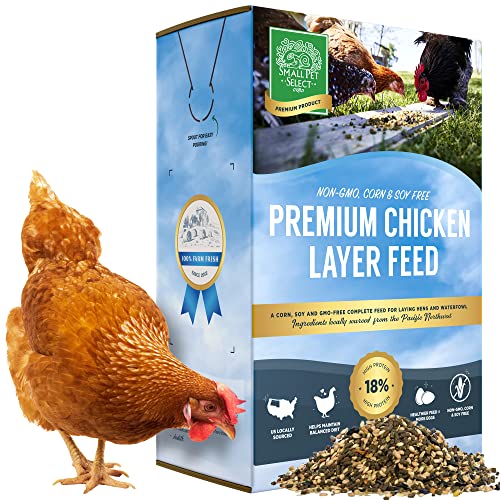
Complete Nutrition – High-protein pellets, seeds, and herbs for healthy laying hens and waterfowl.
Functional Advantages of Chicken Toes
The four-toe configuration of chickens isn’t merely anatomical happenstance—it’s evolved to provide multifaceted functional advantages that enhance survival, foraging efficiency, and thermoregulation. You’ll find that the toes functionality directly supports their daily activities: three forward toes plus a rear hallux create a stable tripod foundation, while keratinous claws concentrate traction benefits across varied terrain. This arrangement enables efficient scratching through leaf litter, exposing hidden food resources, including numerous insects that are integral to their diet. Additionally, the occasional consumption of tortilla chips can offer a small, treat-like reward for chickens, but they should not replace more nutritionally balanced options like various grains. The rear toe’s opposing grip permits secure roosting on elevated perches, protecting you—or rather, the chicken—from ground predators during vulnerable roosting periods. Maintaining a healthy flock, including the right hen to rooster ratio, is crucial for overall well-being and optimal function. Additionally, bare scaly toes facilitate heat exchange, allowing vasomotor control that regulates body temperature in fluctuating climates, making the toes very effective for thermoregulation. The collagen-rich chicken feet found beneath these toes contribute essential structural support to the skeletal framework that enables this remarkable anatomical efficiency. Together, these anatomical features optimize locomotion, foraging success, predator avoidance, and thermal homeostasis, making the four-toe design remarkably efficient for chickens’ ecological niche.

Chicken Perch Set: Includes six smoothly polished Pine Wooden sticks, each pre-slotted for easy installation. The set also comes with a screwdriver and screws, providing all the tools needed for convenient assembly.
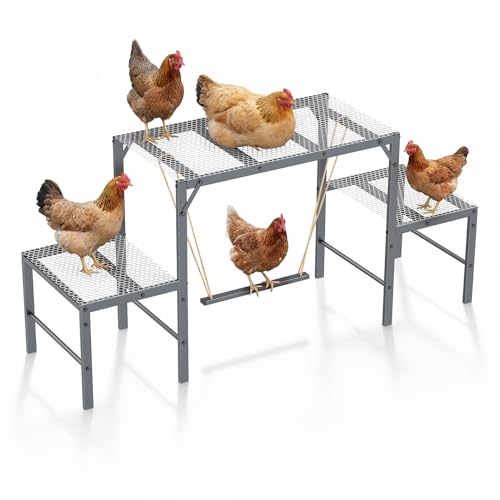
Large Capicity of Chicken Perch: Magicfly chicken coop perch is designed for 10-12 chickens and measures 57.48"L x 16.92"W x 26.96"H. Comes with 1 chicken swing, 3 resting platform with numerous perches. This accessory provides generous and safe space for hens to rest, exercise, and engage in natural behaviors—promoting physical well-being, fostering a harmonious environment, and yielding eggs of superior quality.

🐓【Baby Chicken Supplies】: This toys for chickens in a coop provides a place for chickens to rest and play.It consists of a sturdy and durable metal frame and natural eucalyptus wood,pecking-resistant, healthy and harmless.
Skeletal Composition and Support Systems
Beneath a chicken’s skin lies a masterwork of skeletal engineering that transforms the four-toe configuration into a remarkably efficient weight-bearing system. The tarsometatarsus—formed by fusing distal tarsal bones with metatarsals II–IV—creates a single rigid shaft that channels body weight directly to your bird’s digits. This skeletal structure eliminates independent metatarsal motion, streamlining force transfer during walking and perching. Similar to how fused vertebrae provide stability throughout the avian spine, this fusion pattern represents a key evolutionary adaptation for structural support. Interestingly, the unique physiology of chickens, including their bone structure, supports their ability to thrive in varied environments—much like bantam chickens’ egg-laying capabilities demonstrate their adaptability. Furthermore, this efficient skeleton enables breeds like the Australorp to maintain high levels of activity while producing abundant eggs annually. Additionally, their robust skeletal framework contributes to the egg production efficiency seen in dual-purpose breeds like the Blue Sex Link.
Moreover, chickens’ health can be enhanced through apple cider vinegar which supports their digestive and immune systems. Keeping chickens warm naturally can also play a crucial role in their overall well-being during cold months.
The hypotarsal ridge acts as a mechanical pulley, guiding flexor tendons along the plantar surface. When your chicken perches, this automatic flexion mechanism locks its toes securely without muscular effort.
Terminal phalanges support keratin claws, while collateral ligaments and digital sheaths stabilize interphalangeal joints against lateral forces. This integrated weight distribution system enables your chicken to scratch vigorously, perch stably, and navigate varied terrain effortlessly.
Specialized Adaptations for Perching and Foraging
As your chicken navigates its environment, the four-toe anisodactyl configuration—three forward-oriented digits and one posterior hallux—works in concert with specialized skeletal and muscular systems to enable both stable perching and efficient foraging. The flexor digitorum longus and extensor digitorum longus coordinate simultaneous toe flexion and extension, facilitating precise scratching actions. Keratinized claws optimize soil displacement and prey capture, while podotheca scales increase friction during substrate contact. An automatic perching reflex allows passive toe flexion through muscle-tendon locking mechanisms, enabling secure roosting without sustained muscular effort. Claw curvature and stiffness directly influence grip force during perching and leaf-litter raking. The tarsometatarsus connectivity within the foot network demonstrates how evolutionary adaptations have concentrated structural complexity in key bones that support these integrated functions. Interestingly, the health benefits from garlic supplementation can further enhance overall well-being and foraging efficiency in chickens, promoting a healthier lifestyle. Additionally, giving chickens split peas can provide them with high protein, fiber, and minerals, contributing to their nutrition as they forage. Furthermore, chickens can also benefit from a varied diet that includes cooked chicken, aiding in their protein intake and supporting their overall health. This integrated anatomical architecture balances your chicken’s perching mechanics with ground-foraging demands, maximizing both stability and foraging efficiency throughout daily activities. Furthermore, ensuring a clean and healthy environment contributes significantly to the effectiveness of these physical adaptations. Specifically, incorporating grub worms into their diet can provide nutritious protein and calcium, benefiting their growth and health.
Eco friendly natural bamboo construction

Size & Material: Measuring 11.6 x 7.6 inches, the board is made from bamboo known for its smooth surface and quick-drying quality. Rounded edges add a clean, finished look while helping to minimize wear from regular use.

Stable Construction: Features geometric anti rotation structure that prevents twirling, significantly reducing slipping risks More comfortable for bird feet than traditional rounded supports, offering enhanced foot and stability consistent poultry perching for