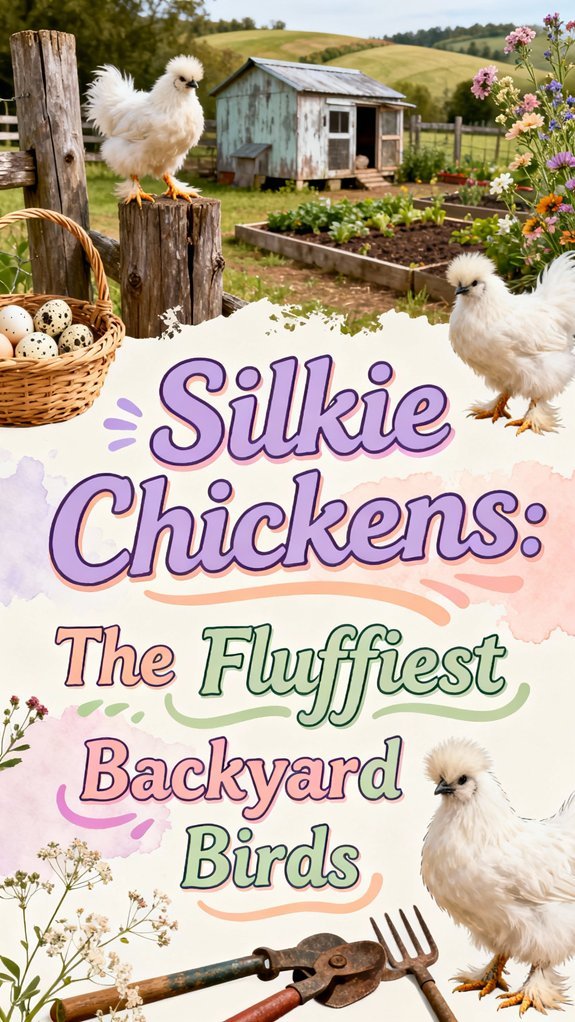
You’ll recognize Silkie chickens by their fluffy, compact silhouette and distinctive blue-black skin, bones, and flesh. Their loose feathers lack barbicels, creating that signature pom-pom crest appearance. They’re docile, friendly birds that thrive in clean, ventilated housing with low roosts since they can’t fly. You’ll appreciate their strong maternal instincts and reliable brooding behavior. With proper nutrition, routine grooming, and dust bathing areas, you’ll maintain ideal health. Understanding their specialized care requirements and eight recognized color varieties reveals why they’re exceptional backyard companions.
What Makes Silkies Look So Unique
Their silhouette’s unmistakable—a fluffy, compact form that stands apart from conventional chicken breeds. You’ll notice the distinctive feather structure immediately: Silkies lack barbicels, those tiny hooklets that interlock feathers in typical chickens. Instead, you’re looking at a downy, fur-like texture covering their entire body. This hookless feather mutation, an autosomal recessive trait, keeps individual feathers loose and fluffy rather than rigid and vaned. Silkies are also known for their gentle temperament, making them suitable for family settings and ideal for backyard flocks. The calm demeanor of these birds makes them especially endearing as they easily blend into family dynamics. Moreover, despite their charming characteristics, Silkies have a lower egg production compared to typical laying breeds, laying about 100-120 eggs annually. They are known to lay creamy brown eggs, contributing to their appeal as backyard pets.
Beyond plumage, you’ll observe their unique features: a prominent pom-pom crest obscuring their head, turquoise earlobes, and characteristic five-toed feet instead of the standard four. Many Silkies display fibromelanosis, an autosomal dominant trait producing blue-black pigmentation in skin, bones, and flesh. Their dark beaks, combs, and wattles create an atypical facial appearance. Combined with bearded muffing on some varieties, these distinctive characteristics make Silkies instantly recognizable among chicken breeds. The blueish-black beak is one of the most striking visual markers that distinguishes them from standard chicken breeds.

Dimensions and Material: Made from high-quality metal, this 15.8x4 inches tin sign ensures long-lasting durability and vibrant multicolor designs, perfect for both indoor and outdoor use in various spaces

Silkie Hair Bows: Just gather up your silkie’s fluff and put it in this adorable mini tulle hair bow. It’s attached to a small elastic rubberband to easily place some feather inside to secure it on top of their cute little head.

Bell: The chicken mirror has two small bells and a star charm at the bottom
Understanding Their Distinctive Personality
While Silkies’ physical peculiarities certainly capture attention, their behavioral characteristics prove equally distinctive. You’ll observe docile temperament and low aggression levels that distinguish them from other poultry breeds. Their behavioral traits include exceptional friendliness toward humans—they’ll readily sit in your lap and follow you throughout your garden. Unlike many other breeds, Silkies thrive when provided with a clean, ventilated shelter, ensuring their overall health and well-being. The addition of an automatic feeding system can also enhance their living conditions by ensuring consistent access to feed. Silkies are especially valued in Asian cuisine for their unique culinary traits and are known for their broodiness, making them wonderful mothers to their chicks. With the right care, Silkies can enjoy a lifespan of 7 to 9 years, allowing for a long companionship with their owners.
The social dynamics within Silkie flocks reveal fascinating patterns. You’ll notice they remain cohesive units, communicating constantly through vocalizations while integrating seamlessly into mixed flocks. Roosters display protective instincts, whereas hens demonstrate remarkable inclusivity by adopting eggs from other birds. Their strong maternal instincts make them excellent mothers for raising chicks and nurturing younger birds within the flock.
You’ll also appreciate their confinement tolerance. Their limited flight capacity keeps them contained without extensive fencing, while their friendly demeanor encourages positive social interactions. These birds exhibit individual personalities—some display bossy traits—yet maintain consistently gentle dispositions that make them ideal family companions.
Brooding and Egg Production
Because Silkies possess exceptionally strong maternal instincts, they’ve become prized for their reliable brooding behavior and capacity to incubate eggs from multiple species. You’ll recognize broody behavior when your hen remains continuously in the nest, plucks breast feathers, and produces large, distinctive droppings. She’ll leave only briefly for essential bodily functions.
You can encourage egg incubating by placing dummy eggs in the nest area. Silkies reliably respond to hormone surges that trigger broodiness, though frequency varies by individual genetics and seasonal factors. Your Silkie can accommodate up to ten bantam eggs or six standard eggs, maintaining consistent temperatures throughout the incubation period. Broody behavior can be contagious among hens, so monitor your flock for spreading broodiness.
Separate your broody hen from the main flock and monitor her daily nutrition and hydration. She’ll successfully hatch chicken eggs in twenty-one days and serve as an excellent natural mother to diverse offspring.
Keeping Silkies Healthy and Hardy
Maintaining ideal health in Silkie chickens requires attention to their specialized nutritional and environmental needs, which differ considerably from standard chicken breeds. You’ll implement diet recommendations that include layer feed at point of lay, supplementing with free-choice oyster shells and grit for optimal digestion and eggshell quality. Feed 1/8 to 1/4 lb per bird daily to sustain fitness. Additionally, incorporating ornamental chicken breeds like Silkies into your backyard can add aesthetic charm and diversity.
Grooming techniques prove essential due to their fluffy feathering. You’ll trim crest and foot feathers regularly to prevent vision obstruction and winter freezing. Dust bathing amenities deter external parasites—mites, lice, and fleas—which proliferate in their dense plumage. Conduct frequent inspections during handling to detect hidden infestations early. Their dark blue or black skin also requires monitoring for signs of injury or discoloration that may indicate underlying health concerns.
You’ll also monitor for breed-specific vulnerabilities: head injuries from bullying, cold-induced complications, and potential Marek’s disease. Routine worming prevents parasitic issues. With proper care, your Silkies’ll live 7-9 years.

NATURAL CHICKEN DUST BATH FOR CLEAN, HEALTHY FEATHERS - Give your flock a premium chicken dust bath that helps remove excess oil, dirt, and moisture. Supports natural feather conditioning for happier, cleaner hens in any dust bath for chickens setup.

Prevents Digging in Yard: No more worrying about chickens digging craters for dust baths. This dust bath tub makes it easy to mix sand, soil, ash, chili powder, DE, or lime. It helps poultry groom their feathers more efficiently, comfortably, and enjoyably—promoting their overall well-being.

ALL-NATURAL CHICKEN DUST BATH MIX FOR HEALTHY, HAPPY FLOCKS – Provide your chickens with the ultimate hygiene solution with this premium chicken dust bath mix, specially formulated to keep them clean, comfortable. This is more natural, effective and loved by flocks instead of chicken sand solution. This is a must-have for any chicken coop, as this fine, all-natural blend mimics a natural dust bath, allowing your flock to roll, fluff, and preen even when dry soil isn't available.
Color Varieties and Breed Standards
When you’re preparing Silkies for show or simply seeking to understand breed standards, you’ll need to familiarize yourself with the eight primary color varieties recognized by the American Poultry Association (APA) and equivalent bodies: black, blue, buff, gray, partridge, splash, white, and self-blue (also called lavender). These accepted colors must meet specific criteria including black skin, five toes, dark eyes, and proper feather structure. Show eligibility varies between bearded and non-bearded varieties, so verify current standards before entering competition. Non-standard varieties—including cuckoo, chocolate, paint, and cream—appear in hobbyist flocks but lack uniform registry acceptance. While non-standard colors may not have show status, they can lead to future acceptance if bred well and are important for backyard flocks. Blue genetics follow incomplete dominance patterns, enabling predictable breeding outcomes. Registries periodically update color classifications, so you’ll want to consult your local breed club’s active standards.
Housing and Care Requirements
Silkies’ unique physiology demands specialized housing that accounts for their distinctive characteristics and limitations. Your coop design must incorporate sturdy timber construction with galvanised wire mesh to guarantee predator protection. Install sturdy locks on doors and provide low roosts—just 4-6 inches off the ground—since Silkies can’t fly well. Additionally, providing a dust bathing area is crucial to prevent parasites, similar to how Golden Sex Links thrive in a clean environment.
You’ll need draft-free nesting boxes and insulated walls with metal roofs featuring steep slants for snow shedding in cold climates. Allocate minimum 3 square feet per bird within a fenced run, adding long, low-angle ramps for easier navigation. Regular cleaning is necessary to maintain coop hygiene and prevent disease buildup. Ensuring a clean environment and providing regular veterinary care can help prevent health issues common in Polish chickens.
For safety measures, include a dust bathing area to prevent parasites and guarantee adequate bedding using fine pine shavings. Implement routine worming protocols and maintain electricity for lighting. In extreme cold, use heat lamps and ground-level shelters, as their non-waterproof feathers require extra protection from moisture.

High quality raw materials: Our hardware cloth chooses the strength, toughness and ductility of low carbon steel wire as the inner core. This determines the basis of the high quality of our products
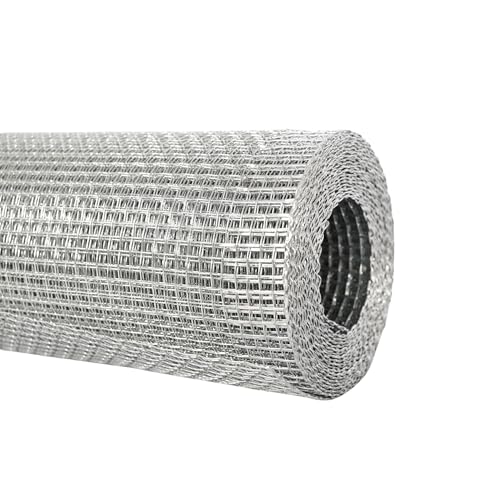
【Heavy-Duty Galvanized Hardware Cloth Made from hot-dip galvanized steel, this wire mesh is rust-resistant, weatherproof, and built to last in outdoor or indoor settings

Product Details: ArdeFentium 8in x 25ft hardware cloth chicken wire roll with 1/4 inch square openings and 23 gauge steel wire is ideal for small animal barriers and chicken fence projects. This 1/4 inch wire mesh is perfect for repairing damaged areas, adding extra protection to existing garden fencing, coop doors and fence bottoms.
Silkies as Family Pets and Show Birds
Beyond their specialized housing requirements, Silkies excel as companion animals and exhibition specimens due to their inherently calm temperament and distinctive physical characteristics. Your silkies companionship experience benefits from their docile nature—they’ll readily sit in your lap and follow you like dogs. Their silkies temperament remains consistently non-aggressive, making them ideal for families with children who develop empathy through handling. Additionally, their need for clean living conditions helps ensure they remain healthy companions.
Show enthusiasts value Silkies for their eye-catching features: fluffy plumage, black skin, turquoise earlobes, and five-toed feet. You’ll find them competing in poultry exhibitions across standardized colorations—white, black, blue, partridge, and gold varieties. Silkies are particularly prized for their diverse color varieties that appeal to collectors seeking unique aesthetics.
Their flightless biology enables easy confinement in suburban backyards. Even roosters remain remarkably gentle and quiet. This combination of behavioral traits and striking appearance positions Silkies as premier choices for both family companionship and competitive showing.
Breeding and Raising Silkie Chicks
Because Silkies maintain strong maternal instincts and breed naturally without human intervention, they’re well-suited for small-scale poultry operations. You’ll achieve predictable results by maintaining a 1:12 rooster-to-hen ratio, which minimizes aggression while ensuring consistent fertilization.
Your breeding techniques should emphasize genetic tracking across generations. You’ll separate chicks by color and quality for effective line breeding, sourcing stock from show breeders to maintain superior genetics. Standard colors—black, blue, buff, and partridge—yield reliable outcomes; avoid non-standard crosses that introduce dominant gene complications.
During chick development, you’ll reach maturity between 8-12 months, with hens producing approximately 100 eggs yearly. Silkies excel as broodies, reliably hatching their own or foster eggs. Maintain detailed records of hatchings to document genetic lines and monitor for inherited defects like improper toe spacing. Monitor for susceptibility to Marek’s Disease within your breeding lines, as this breed carries higher risk for the condition compared to other poultry breeds.

FITS BANTAMS and SMALL BIRDS adjustable comfortable straps with quality metal snaps

It's A Silkie Thing You Wouldn't Understand - Great headband and glasses design for a silkie chicken lover, poultry veterinarian, or anyone who is into silkie chicken, a fluffy plumage breed of chicken. Ideal for a vet assistant or silkie chicken breeder.

EXTRA LONG increased by 1.9" to give better protection of the tail area from featherpecking