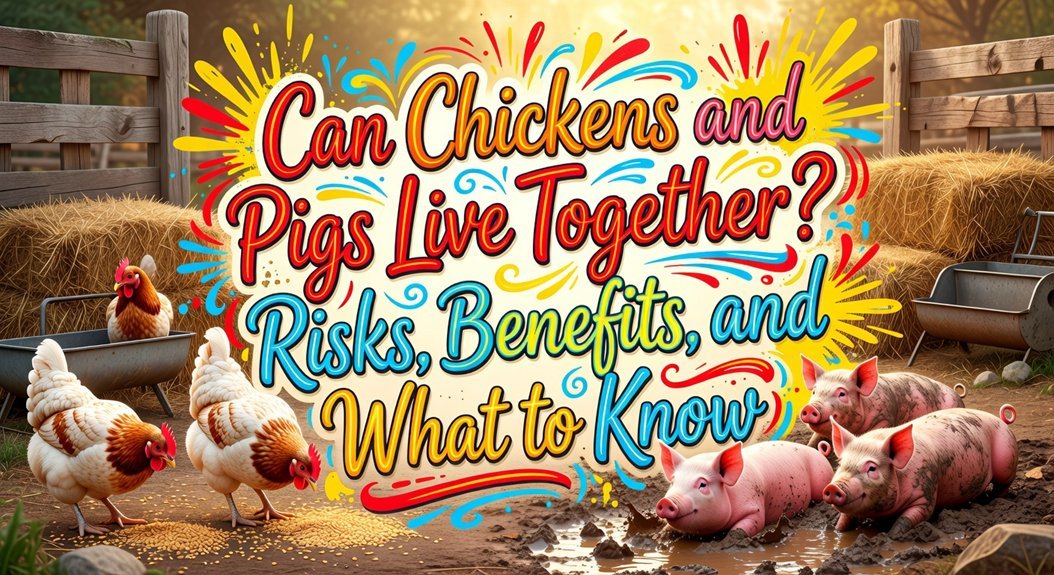
You’re staring at that empty pasture, wondering if mixing pigs and chickens is a permaculture hack or a feathered massacre. Here’s the thing: it works beautifully if you respect the pig’s appetite and the chicken’s fragility. Pigs break soil while chickens clean up, but you must separate feeding zones to stop bullying. Obviously, tiny bantams won’t survive, so stick to sturdy Wyandottes and playful Punicuni pigs. If you manage their space right, you’ll cut feed costs and boost soil health without the drama. Stick around to see exactly how to set it up so everyone thrives.
Can Chickens and Pigs Live Together Safely?
Look, you’re probably staring at your empty pasture wondering if mixing chickens and pigs is a brilliant hack or a one-way ticket to disease town, and honestly, that hesitation makes total sense because nobody wants to turn their homestead into a petri dish. Here’s the thing: studies actually show no increased pathogen transmission when they roam together. You get massive wins instead. Pigs root deep, breaking up compacted ground while chickens scratch behind them, grabbing insects and leftover bits. This dynamic duo masters nutrient cycling naturally, turning waste into rich fertilizer without your heavy lifting. Obviously, you still need enough soilune space for everyone to forage without stress, but the efficiency gains are real. They clean each other’s areas, reducing parasites while improving pasture health through complementary actions. If you want sustainable, low-input farming that works with nature rather than against it, this setup fits your needs perfectly. Stop overthinking the risks and start planning your rotational grazing system today; your land will thank you for it. Beyond sanitation, the pigs act as a physical barrier that aggressively deters foxes, raccoons, and hawks, dramatically reducing predator losses that traditional fencing often fails to prevent.
What Are the Real Risks of Pigs and Chickens Co-Housing?
While the previous section painted a sunny picture of symbiotic harmony, you’re probably side-eyeing that big hog wondering if it’s going to turn your favorite hen into an afternoon snack, and honestly, that fear isn’t just paranoia. Pigs occasionally attack chickens, especially if hungry or unsupervised, turning your flock into instant pork bait. You must secure feed because pigs greedily devour chicken rations and fresh eggs, creating serious feed competition that leaves your birds malnourished. Don’t ignore the ground either; constant rooting compacts wet earth into brick, trapping moisture that breeds soil disease while stressing your prey-animal hens. Large hogs might accidentally trample small chicks during play, and piglets often roughhouse too hard. Confined spaces amplify these dangers markedly, increasing injury risks alongside potential pathogen transfer from concentrated manure loads. You need separate feeding zones and strict supervision to prevent disaster. Obviously, unsupervised cohabitation invites tragedy, so plan your layout carefully before committing to this mixed barnyard experiment today. Furthermore, rotating livestock onto fresh cover-crop land is essential to reduce the negative soil effects caused by excessive compaction and manure accumulation.
How Do Chickens and Pigs Benefit Each Other on the Farm?
Since you’re still sweating over whether those hogs will turn your hens into hors d’oeuvres, let’s flip the script and talk about why this mismatched duo actually works like a charm when you get the layout right. Your chickens pick through pig manure for bugs, slashing fly populations while speeding up drying. Meanwhile, pigs root the ground, exposing worms for your flock. This constant scratching creates incredible pasturesoil aer aer aerPasture enrichment, boosting overall soilutrient enrichment naturally. You’ll see faster nutrient cycling as chickens level rooted areas, restoring pasture health without extra labor. Pigs even shield hens from hawks, while hens clean parasites off pigs. Obviously, sharing space cuts your feed costs and maximizes acreage. It’s a win-win where waste becomes resource. Stop worrying about conflict; this symbiotic relationship thrives on cooperation. Ready to let them work together? Your farm will thank you.

【Funny Chicken Toys】7 Pcs chicken coop accessories contains: 2 x chicken swings, 1 x chicken xylophone, 1 x chicken pecking toy, 1 x chicken mirror with bells, 2 x hanging chicken feeder

【Chicken Feeders and Waterers】- This set includes chicken picnic table and 2 chicken waterer. Get this chicken feeder kit will allow your chickens, ducks and other poultry to enjoy a good meal while still having clean water. A must have for your chicken coop

[ IP65 Waterproof]: Solar bulb lights with 3pcs 3M/9.8ft Extension Line with waterproof connecters. Solar panels can be installed the outdoor where the sun shine is good. Solar lights can be hanged indoor or outdoor,No need worry about the rainning.
Which Pig and Chicken Breeds Coexist Best?
If you’re still wrestling with the fear that your chosen pigs will turn your prized hens into afternoon snacks, you need to pick breeds that actually know how to share a yard without drama. Grab friendly layers like Wyandottes or Naked Necks, but skip flighty Bantams that pigs might bully. Punicuni pigs work great here, showing real playfulness rather than aggression. You’ll boost breed health by avoiding specialized meat birds needing separate care. Obviously, standard chickens handle shared space better than tiny varieties. Now, manage your land with smart pasture rotation to keep parasites down while chickens handle predator deterrence by eating bugs off pigs. They’ll even help with manure composting by scratching through waste. This setup works if you want low-drama cohabitation without constant supervision. Just pick the right partners, and you’re golden. Observations confirm that playful chasing occurs occasionally while the animals coexist peacefully with no major issues arising from their shared environment.
How to Manage Pigs and Chickens Without Injuries
Even when you’ve picked the perfect breeds, watching a 200-pound pig chase your hens across the yard can make you second-guess this whole homesteading dream. Don’t panic; you just need smarter spacing layout and strict handling protocols. Design your yard with solid fencing buried deep to stop diggers, and add roof covers so hawks don’t snatch your chicks. Obviously, you’ll want motion lights for night prowlers too. When moving pigs, stay calm and use sorting boards instead of your knees; it saves backs and reduces stress. Always handle healthy animals first to stop disease spread between species. Wear dedicated boots and gloves because cross-contamination is real. Small groups move easier, and gentle touches prevent balking. It’s not magic, just smart planning. Get these systems right, and your mixed flock will thrive safely without chaos or injury ruining your day. To further protect your herd, remember that a valid VCPR relationship with a veterinarian who has seen your animals within the past year is required to prescribe medications and guide regional disease management.
Is Mixed Species Farming Right for Your Homestead?
Although you’re staring at that empty pasture wondering if adding pigs to your chicken coop is genius or madness, the real question isn’t about the animals—it’s whether your bank account and back can handle the juggle. You crave stability, and mixing species actually spreads your risk when crops fail or prices dip. Your manure becomes free fertilizer, slashing input costs while boosting soil health. However, don’t ignore the heavy lift; divided attention kills economies of scale, and disease monitoring demands constant vigilance. If you love complex pasture management and can afford high startup costs, this model builds incredible resilience. But if you prefer simple routines, stick to one species. Ultimately, successful livestock economics depends on your capacity for labor, not just land. So, assess your schedule honestly before buying those piglets. If you’re ready to work harder for greater long-term security, jump in.