You see your hen shaking her head with coffee-ground gunk in her ears, and yeah, that’s ear mites draining her health. Don’t panic; you can fix this. Scrape those crusts, then apply neem oil drops daily for ten days or use permethrin if you need speed, though watch your laying hens. Obviously, you must scrub your coop too, or they’ll just come back. Quarantine new birds and offer ash dust baths to keep them gone. Stick with this plan, and you’ll find out exactly how to protect your whole flock next.
How Do You Spot Ear Mite Symptoms in Chickens?
Look, you didn’t start raising chickens to watch them suffer in silence, yet here you are squinting at a bird that just won’t quit shaking its head. You see excessive scratching, maybe some social withdrawal, and that restlessness screams trouble. Now, effective ear mite detection starts with your own two eyes before things get ugly. Check for crusty scabs, dark waxy discharge looking like coffee grounds, or even a weird head tilt. Obviously, bald spots and dull feathers signal deeper issues too. Use this mental symptom checklist: inflamed ears, weight loss, pale combs, or reduced egg production. If they’re yawning excessively or losing balance, the inner ear’s involved. Don’t wait for anemia or death; act when you spot that first scratch. Grab your flashlight, inspect closely, and trust your gut. You’ve got this, so stop guessing and start treating today. Remember that scabs or inflammation around the vent area often indicate mite presence, which can accompany other infestation signs.

NATURAL AND NON-TOXIC FORMULA: Made from natural essential oils, Premo Poultry Spray is a safe alternative to harsh chemicals like permethrin and mite dusts. Veterinarian and farm approved. Apply directly on all poultry. Treat your entire flock, pens, roosts, coops, nest boxes, and yards. Enjoy peace of mind knowing that your chickens and other poultry is protected naturally and safely
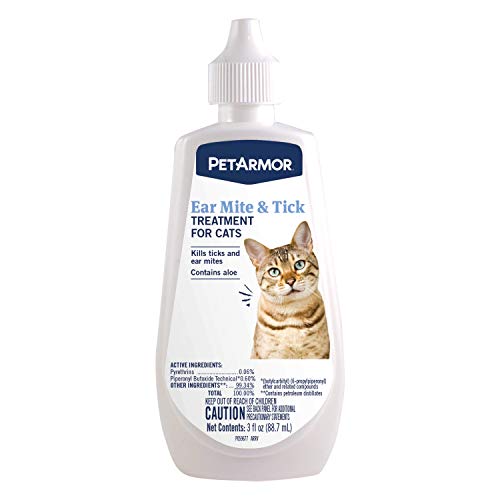
Kills Ear Mites and Ticks: PetArmor Ear Mite & Tick Treatment contains active ingredients that kill ear mites and ticks.

NATURAL AND NON-TOXIC. Made from natural essential oils Premo Poultry Spray is a safe alternative to harsh chemicals like permethrin, and mite dusts. Veterinarian and farm approved. Apply directly on all poultry. Treat your entire flock, pens, roosts, coops, nest boxes, and yards. Enjoy peace of mind knowing that your chickens and other poultry is protected naturally and safely.
What Types of Mites Attack Chicken Ears?
Since you’ve already spotted the scratching, you need to know exactly which microscopic bullies are digging into your flock’s ears before you grab the wrong treatment. Knemidocoptes mutans specifically burrows into ear canals, causing those nasty crusty scales you hate seeing. Then there’s the Northern Fowl Mite, living right on feathers and feeding day and night. You’ve got to understand the ear mite lifecycle because some hatch in just twenty-four hours, exploding your problem overnight. Don’t ignore ear mite transmission either; rodents and wild birds easily drop these pests into your coop. While Poultry Red Mites hide in cracks until nightfall, Tropical Fowl Mites mimic their northern cousins, confusing everyone. Each type demands a different approach, so guessing won’t cut it. You need specific targeting to stop the blood loss and anemia dead in its tracks. Pick the right fighter now.
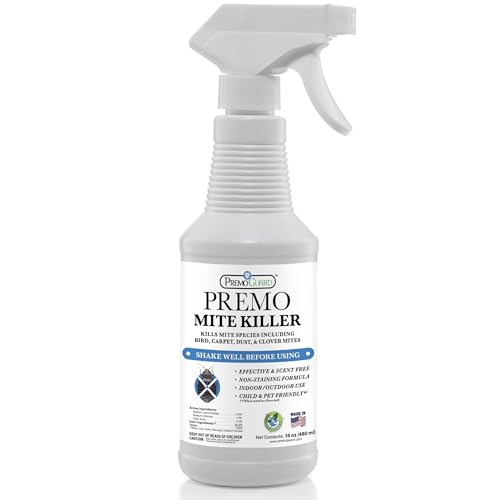
NATURAL & NON-TOXIC FORMULA: Plant-based ingredients provide a safe alternative to harsh chemical treatments. Designed for use in homes, farms, chicken coops, cages, and pens when used as directed

NATURAL NON-TOXIC FORMULA - Plant-derived mite treatment ingredients designed for use in homes, cars, farms, chicken coops, pens, cages and agriculture, when used as directed.

NATURAL AND NON-TOXIC: Made from natural essential oils Premo Poultry Spray is a safe alternative to harsh chemicals like permethrin, and mite dusts. Veterinarian and farm approved. Apply directly on all poultry. Treat your entire flock, pens, roosts, coops, nest boxes, and yards. Enjoy peace of mind knowing that your chickens and other poultry is protected naturally and safely
How Can You Diagnose Ear Mites Accurately?
You’ve pinned down the pest, but guessing which mite is crashing your coop won’t stop the itching or save your flock from anemia. Obviously, staring at dark, waxy discharge helps, yet direct visualization misses one-third of cases because those tiny critters hide deep inside. You need proper diagnostic sampling to catch low-number infestations that simple swabbing skips. Grab a cotton-tipped swab coated in mineral oil, collect debris from both ears, and transfer it immediately to a slide. Now, microscopy validation becomes your best friend here, revealing mites invisible to the naked eye while distinguishing parasites from bacterial issues. Don’t rely solely on head shaking or redness since normal-looking ears sometimes harbor heavy loads. Combining cytology with thorough physical exams removes doubt effectively. Trust this process, and you’ll finally know exactly what’s bugging your birds before moving forward.
What Is the Best Treatment for Chicken Ear Mites?
How do you actually stop the itching without poisoning your breakfast eggs? You’ve got options, but let’s keep it safe. Permethrin drops work fast, yet they carry residue risks you can’t ignore in laying hens. Instead, grab an organic spray spray containing neem or pyrethrin for a safer bet. Apply three drops daily for ten days, then repeat. Obviously, thick barrier creams like vaseline suffocate mites effectively too, though you’ll need to scrape crusts first. Don’t forget the coop; disinfect everything or they’ll just hop back on. If you’re overwhelmed, prosassistant tools can guide your application technique perfectly. This approach balances speed with safety, ensuring your flock recovers without tainting your omelet. Trust me, consistent topical treatment beats waiting for severe issues later. Start today, stay gentle, and watch those scabs vanish.

MitesBGone Dried Herbs For Chickens is a mix of all-natural nesting herbs for chicken coops, houses, and dust baths. These herbs are traditionally used to prevent and repel mites (insects that can cause scaly leg mites) and chicken lice.

Extra-Strength Formula for Stubborn Mite Problems: Powered by Geraniol and a high-performance surfactant (Sodium Lauryl Sulfate), this extreme-strength spray provides enhanced coverage for homes, coops, barns, tack rooms, and animal housing. Ideal for widespread or recurring mite and crawling insect concerns

🌿 PLANT-BASED FORMULA MADE FOR POULTRY ENVIRONMENTS Formulated with natural essential oils for everyday poultry and chicken coop care, supporting clean, fresh, and well-maintained housing areas.
How Do You Handle Severe Ear Mite Infestations?
When the itching turns into raw, bloody scabs and your hens start plucking themselves bare, you know you’re past the point of a simple home remedy. You need a vet immediately to prescribe systemic ivermectin, though you must watch that toxic dose carefully. Isolate those suffering birds right now while you treat the entire flock, because ignoring hidden carriers ruins everything. Combine permethrin sprays with spinosad dips for maximum impact, repeating every week to crush hatching nits. Obviously, treating birds alone fails without strict environmental control; scrub your coop thoroughly and disinfect every crack. This bio treatment approach hits mites from all angles. While culling sounds harsh, sometimes destroying severely affected birds saves the rest. You’ve got to act fast and hard here. Don’t hesitate to make the tough call today, because your flock’s survival depends on your decisive action right now.

GENTLE, PLANT-BASED FORMULA Crafted with a blend of naturally-derived essential oils, this spray offers a simple, plant-powered way to keep your flock comfortable. Designed for use directly on birds and throughout their living areas—including coops, roosts, bedding, nest boxes, and outdoor enclosures.
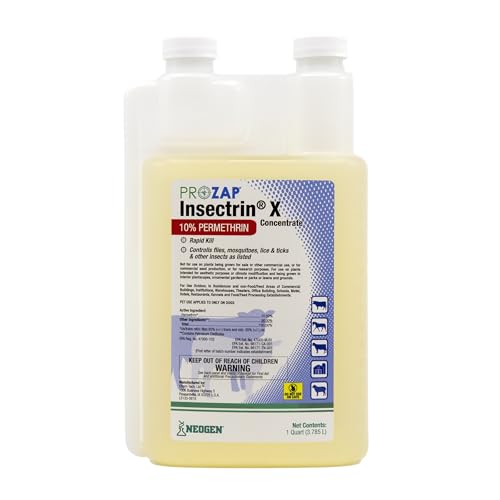
VERSATILITY: Insectrin X Concentrate can be used as a spot treatment, or diluted to be used as a spray or as a backrubber
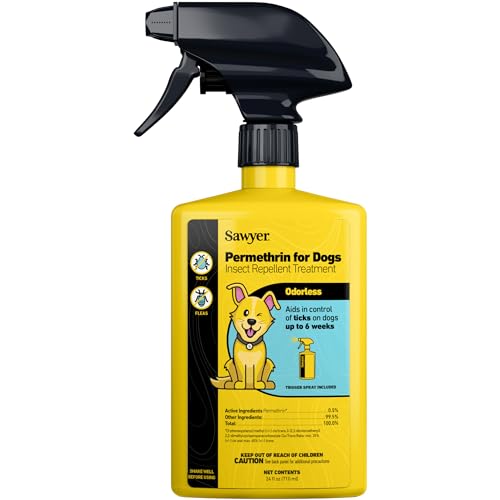
Permethrin spray bonds to fabric fibers for up to 6 weeks or through 6 washings (whichever comes first) won't stain or damage clothing, fabrics, plastics, finished surfaces, or outdoor gear; fragrance free
How Can You Prevent Future Ear Mite Outbreaks?
Since you’ve just fought through the nightmare of a severe infestation, the last thing you want is to wake up tomorrow and find those pesky mites back for another round. All right, let’s lock that door tight. You need a strict quarantine protocol for any new birds, isolating them for three weeks while you inspect every feather. Obviously, skipping this invites disaster. Next, guarantee your flock has constant access to a clean dust bath mixed with wood ash; they’ll naturally suffocate any lingering pests while rolling around. Don’t forget to scrub your coop thoroughly, hitting every nook where mites hide. Regular monthly checks catch problems before they explode. It’s not glamorous work, but it beats treating sick chickens again. Start these habits today, and you’ll sleep soundly knowing your flock stays healthy and mite-free forever.

ALL-NATURAL CHICKEN DUST BATH MIX FOR HEALTHY, HAPPY FLOCKS – Provide your chickens with the ultimate hygiene solution with this premium chicken dust bath mix, specially formulated to keep them clean, comfortable. This is more natural, effective and loved by flocks instead of chicken sand solution. This is a must-have for any chicken coop, as this fine, all-natural blend mimics a natural dust bath, allowing your flock to roll, fluff, and preen even when dry soil isn't available.

NATURAL CHICKEN DUST BATH FOR CLEAN, HEALTHY FEATHERS - Give your flock a premium chicken dust bath that helps remove excess oil, dirt, and moisture. Supports natural feather conditioning for happier, cleaner hens in any dust bath for chickens setup.

Prevents Digging in Yard: No more worrying about chickens digging craters for dust baths. This dust bath tub makes it easy to mix sand, soil, ash, chili powder, DE, or lime. It helps poultry groom their feathers more efficiently, comfortably, and enjoyably—promoting their overall well-being.
What Happens If You Ignore Chicken Ear Mites?
Why would you ever gamble with your flock’s health when the stakes are this high? If you ignore those mites, your chickens scratch until their skin bleeds, inviting nasty bacterial infections. That dark wax builds up, causing chronic inflammation and scarring. Soon, you’re facing real economic welfare consequences as egg production plummets and birds lose weight. It isn’t just messy; it’s dangerous. Severe cases lead to ear hematomas needing surgery or even permanent ear loss. Your flock becomes lethargic, withdrawn, and susceptible to other illnesses because their immune systems crash. Obviously, letting this slide means watching your birds suffer unnecessarily while your costs skyrocket. Don’t wait until you see pus or hear silence where clucking used to be. Treat them now, save your sanity, and keep your coop happy. You’ve got this, so go fix it today.