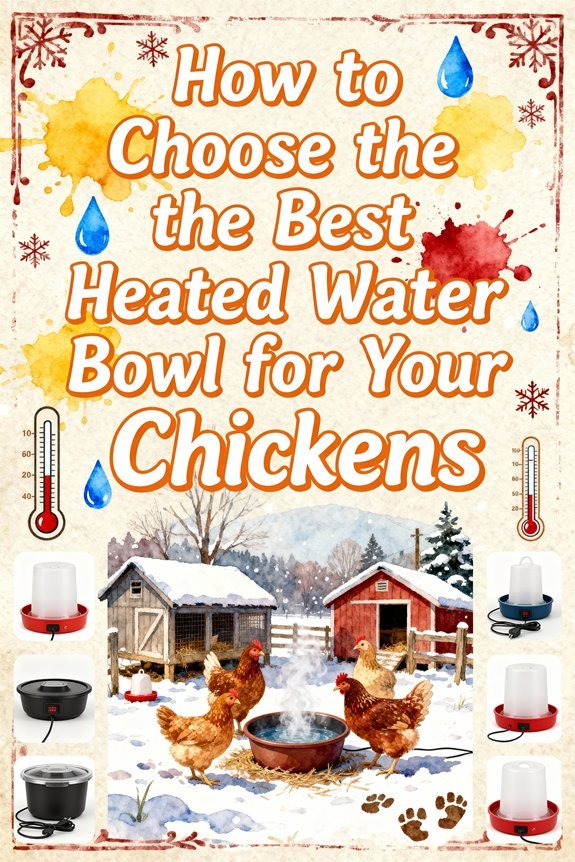
When selecting a heated water bowl for chickens, you’ll need to match the heating element wattage (50-150W) to your climate conditions and flock size. Choose UL-certified units with thermostatic controls that activate at 32°F and shut off between 60-77°F for maximum efficiency. Calculate capacity requirements at 1-2 gallons per 10 birds, and verify BPA-free materials with double-wall construction. Understanding additional safety features and performance metrics will guarantee your investment maintains proper flock hydration through winter.
Understanding Heating Elements and Thermostat Functions
When selecting a heated water bowl for chickens, understanding the heating element and thermostat mechanisms is crucial for maintaining unfrozen water through winter conditions. Most units utilize electric heating elements ranging from 50W to 150W, with higher wattages suitable for extreme cold down to -20°F. You’ll find these elements either integrated into plastic waterers or as standalone heated bases. For optimal flock hydration, maintain one waterer per 10-12 birds.
Thermostat types vary across models, but they typically activate near 32°F and deactivate between 60-77°F to conserve energy. Look for units with automatic on/off heat cycles that provide consistent temperature control. Modern thermostats are integrated into heater bases to guarantee uniform warming without exceeding lukewarm temperatures. For peak performance, consider models featuring Teflon-coated elements that resist mineral buildup and extend the heater’s lifespan.

25 Watt Heated Bowl: 1 quart heated water bowl that keeps drinking water from icing over outdoors, so dogs, cats and rabbits in a kennel, run or hutch can drink through the cold

COLD WEATHER USE: Heated pet water bowl prevents water from freezing, even in sub-zero temperatures, keeping your pet hydrated no matter the weather

Thermostatically Controlled: Bowl is thermostatically controlled to automatically turn on when necessary and turn off when not, seamlessly activating when needed and deactivates when not to ensure optimal functionality and energy efficiency
Key Safety Features to Look For
Safety considerations rank paramount when selecting a heated water bowl for chickens. You’ll need to verify UL certification for the entire unit, not just components, confirming compliance with installation requirements and hazard prevention standards. Select models featuring integrated overheat protection and tilt-sensor kill switches that automatically cut power if knocked over.
Look for waterproof ratings that protect against moisture-related electrical faults, and verify the heating elements are properly sealed and embedded to prevent direct contact with chickens. Choose units constructed from non-flammable materials with uniform heat distribution to avoid dangerous hot spots. The design should include detachable power cords and spill-proof caps. The standard 60 watts power consumption helps maintain ice-free water while minimizing electrical hazards. Avoid using unauthorized extension cords, and maintain proper clearance from combustible bedding materials like straw or wood shavings.

Keep Water Warm in Cold Winter: Heated water bowl for cats and dogs can provide warm water to outdoor feral animals in winter, even in sub zero temps, it still keeps water above freezing. Black appearance is not only more fashionable, but black coloured bowls can have a better heat absorption function under sunlight and better lock in temperature, Just plug it in, the heated outdoor water bowl will heat water gradually and stay at the proper temperature, which is suitable for dog, cat,chicken
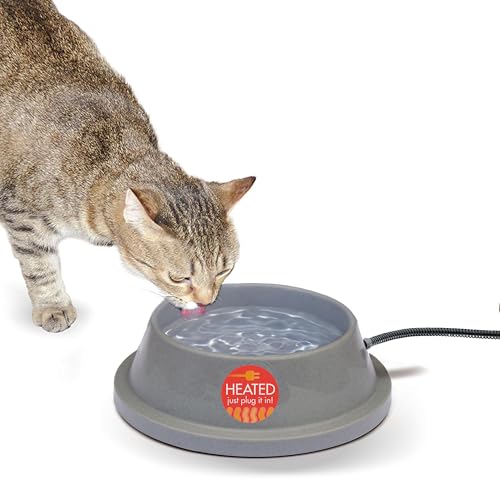
COLD WEATHER USE: Heated pet water bowl prevents water from freezing, even in sub-zero temperatures, keeping your pet hydrated no matter the weather

Cold weather use: Water and food are kept from freezing in heated pet bowls, keeping your pet watered and nourished even in below-freezing weather.
Size Requirements Based on Flock Numbers
Beyond electrical considerations, proper sizing of heated water bowls directly impacts your flock’s hydration and health outcomes. You’ll need to match container capacity to your flock’s specific requirements: 1-2 gallons for fewer than 10 birds, 2-3 gallons for 10-35 birds, and proportionally larger volumes for flocks exceeding 35 chickens. A 3-gallon capacity waterer provides an ideal solution for medium-sized flocks while ensuring clean, unfrozen water year-round.
Monitor your flock’s water consumption patterns, as factors like cold weather and egg production can increase intake needs. Placing your waterer in a cold wind protected location helps maintain consistent temperatures throughout winter. For ideal accessibility, guarantee your water bowl provides adequate surface area for multiple birds to drink simultaneously. If you’re managing a mixed flock including waterfowl, select deeper containers of at least 2 gallons with dimensions of 12×12 inches or larger. Position the bowl at your birds’ back height to maintain water temperature and facilitate easy access.

Heated Chicken Waterer for Winter - GIFANK chicken waterer with heater is built-in temperature control chip maintains water temperature between 40°F and 70°F, effectively preventing water from freezing. It supplies warm drinking water for your poultry even in frigid cold weather.

Poultry Water Fountain: Keep your chickens and other poultry hydrated all year round with this chicken water heater fountain that makes refills and feeding all the more convenient

❄【Winter Heating Design Prevents Freezing】Our FMATOZ heated chicken waterer for winter keeps drinking water unfrozen in cold weather so your poultry stay hydrated all winter long. This chicken waterer features stable heating performance, maintaining water temperatureto provide continuous fresh, unfrozen water for chickens, ducks, turkeys and other poultry.
Material Quality and Durability Factors
Three essential material factors determine a heated water bowl’s longevity and performance: composition, structural integrity, and weather resistance. You’ll want to verify material certifications that confirm BPA-free plastic types and UL-approved electronics for your chickens’ safety. Look for cold-weather resistant plastics with UV protection to prevent degradation and cracking during freeze-thaw cycles.
Consider bowls featuring double-walled construction and thermostatically controlled heating elements, as they provide superior structural strength and efficient heat distribution. The K&H Thermal-Bowl operates with energy efficient wattage between 12-25 watts depending on size. The best options include protective features like anti-chew cords and sealed electronics to prevent moisture damage. When evaluating durability, check for abrasion-resistant materials and weather-tight seals that protect against rain, snow, and ice. You’ll maximize your investment by selecting products with thorough warranties that guarantee material quality.

Heated pet bowl is made of BPA-free plastic, maximum capacity is 2.2L. With indicator light display, the light is on when in use. 1.65 meters long anti-bite power line, strong and durable. Also can use a extension cord to connect it as needed.

🐾【1.45 Gallon Extra-Large Capacity&Easy to Use】This rectangular outdoor heated dog bowl measures 14.4× 9.7×3.9 inches and weighs 3 lb,providing stability and preventing tipping.With a 1.45-gallon (186 oz / 5.5 L) capacity, it’s perfect for animals of all sizes—from large dogs to tiny kitties—and also works for chickens,or multiple pets at once,keeping them hydrated throughout the day.The extra-large size reduces frequent refills—even if you skip a day,your pets will still have plenty of water. Easy to use:just add water and plug in to keep your pets’ water warm all day.

【5.5L Extra-Large Capacity – All-Day Warm Water, Fewer Refills】Qvamodo 5.5-liter extra-large heated water bowl keep your pets hydrated all day — perfect for large dogs, multiple pets, or outdoor use. No more constant refilling! The generous capacity ensures continuous access to warm water, even during the coldest winter days. Ideal for busy pet owners, farms, kennels, or multi-pet households who want set-it-and-forget-it convenience.
Water Capacity and Refill Frequency
After establishing your waterer’s material integrity, determining ideal water capacity becomes a key selection criterion. Your flock’s water requirements directly influence best container sizing – single birds consume 1 pint daily in winter, increasing to 1 quart during summer months. For a 25-bird flock, you’ll need minimum 3-gallon daily capacity. Thermostatically controlled units can reduce operating costs by 40-60% compared to continuous heating models. Consider how capacity affects your refill schedules. While 64-ounce containers demand daily maintenance, 3-gallon systems can support up to 35 adult birds with reduced refill frequency. You’ll need to factor seasonal consumption variability, as summer heat increases water intake substantially. Research shows chickens require twice normal water during hot weather to maintain proper hydration levels. Top-fill designs with quick-fill ports streamline replenishment, while nipple systems minimize contamination and evaporation. Just as feed storage quality affects chicken health, proper water system sizing prevents bacterial growth and ensures consistent hydration. When selecting capacity, balance convenience of fewer refills against risks of freezing or stagnation in your specific climate conditions.
Cold Weather Performance Ratings
When selecting a heated water bowl for chickens, understanding temperature performance ratings becomes critical for reliable winter operation. You’ll need to evaluate models based on their specified cold weather performance thresholds, which typically range from 0°F to -20°F. Units with thermostatic controls activate only when water approaches freezing temperatures, optimizing energy efficiency while maintaining ice-free conditions. Positioning waterers in sunny areas can help maximize their heating effectiveness through natural warmth.
For moderate climates, choose poultry-specific waterers rated to 0°F. If you’re in regions experiencing extreme freezing temperatures below -10°F, opt for higher-wattage units or stock tank de-icers. Consider that heating elements perform differently based on container materials – some are specifically designed for metal tanks, while others work best with plastic bowls. Verify the unit’s insulation features, as integrated thermal barriers greatly enhance cold weather performance.
Maintenance and Cleaning Considerations
Regular maintenance of heated water bowls stands crucial for ideal chicken health and equipment longevity. You’ll need to perform daily cleaning using warm water and mild soap, paying special attention to corners where biofilm can develop. For deep sanitization, utilize vinegar or poultry-safe cleaners to remove stubborn mineral deposits and scale buildup.
When maintaining your heated bowl, you’ll find stainless steel options offer superior bacteria resistance compared to plastic variants. Always disconnect power before cleaning and use GFCI-protected outlets for safety. To prevent biofilm formation, implement a consistent drainage and refilling schedule, and consider using filtered water to minimize mineral accumulation. Regular inspection ensures water remains unfrozen during harsh winter conditions. Monitor heating elements for signs of wear, and promptly address any damage to electrical components to guarantee continued safe operation.
Design Features for Water Quality Protection
Superior water quality protection in heated chicken waterers relies on multiple integrated design features that work synergistically to prevent contamination. No-roost top designs prevent droppings from entering the water, while removable filter rings enable efficient debris capture. The waterers’ construction incorporates smooth, non-porous surfaces that minimize bacterial adherence and biofilm formation.
You’ll find that gravity-fed mechanisms promote continuous water flow, reducing stagnation and microbial growth. The thermostatic controls maintain ideal temperatures without encouraging bacterial proliferation. The three-gallon capacity ensures consistent water availability while minimizing refill frequency. Spill-proof caps and heavy-duty tanks constructed from galvanized steel or durable plastics prevent environmental contaminants from compromising water quality. When selecting a heated waterer, prioritize models with detachable components that facilitate thorough cleaning and feature rounded surfaces to minimize dirt accumulation.
Energy Efficiency and Operating Costs
Understanding your heated water bowl’s energy consumption patterns proves critical for optimizing operating costs and efficiency. When conducting your cost analysis, consider that wattage ratings between 20W and 100W considerably impact both performance and energy expenses. Thermostatically controlled units offer substantial energy savings by activating only when water temperatures drop below set thresholds, preventing unnecessary power consumption during milder conditions. The Farm Innovators model uses 60 watts of power to efficiently heat water without excessive energy usage.
Bowl capacity directly influences energy efficiency, as larger volumes require more power to heat but reduce refill frequency. You’ll need to balance your flock’s water needs against power consumption. Track your electricity usage with energy meters to quantify actual costs, and consider that seasonal operation will affect your annual expenses. For maximum efficiency, select a bowl with reliable thermal controls and appropriate capacity for your specific requirements.

𝐑𝐚𝐩𝐢𝐝‑𝐇𝐞𝐚𝐭𝐢𝐧𝐠 & 𝐀𝐧𝐭𝐢‑𝐅𝐫𝐞𝐞𝐳𝐞: This heated base delivers rapid heating to prevent water from freezing. Turn the cord‑mounted knob clockwise to adjust heating output. When the temperature is below zero, please adjust the knob to the maximum value to achieve rapid de-icing and maintain water melted, For best results, place indoors or in sheltered coops off cold ground

Save Time and Effort: thermostatically controlled outlet eliminates the need to manually turn on or off the power. It activates when the temperature drops below 32°F and intelligently shuts off around 50°F. Save time and energy while enjoying cozy warmth

Save Time and Effort: thermostatically controlled outlet eliminates the need to manually turn on or off the power. It activates when the temperature drops below 32°F and intelligently shuts off around 50°F. Save time and energy while enjoying cozy warmth
Health Benefits for Your Chicken Flock
When evaluating heated water bowls, the extensive health benefits for your chicken flock extend far beyond basic hydration maintenance. You’ll observe significant immune support through consistent access to clean, temperature-regulated water, which optimizes nutrient absorption and physiological functions. These systems effectively prevent bacterial proliferation and minimize disease transmission pathways among your birds. Fresh water changes at least once per day are essential for maintaining optimal flock health. Proper hydration helps chickens process essential amino acids needed for growth and egg production. Just like fresh plums provide important antioxidants and vitamin C, proper hydration supports immune system function.
Your flock’s stress levels decrease substantially with reliable access to unfrozen water, particularly during extreme weather conditions. This enhanced comfort promotes natural behaviors and reduces competition-related injuries. Additionally, heated bowls serve as efficient delivery systems for immune-boosting supplements while preventing wet bedding conditions that typically harbor pathogens. The cumulative effect manifests in improved egg production, enhanced growth rates, and reduced mortality – ultimately extending your flock’s productive lifespan through superior hydration benefits.