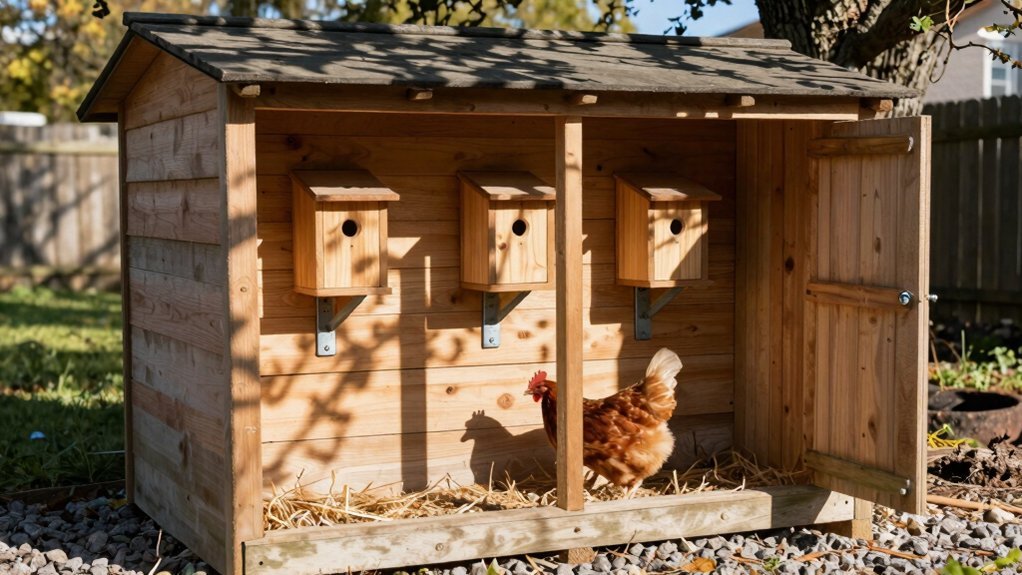
You’re probably wondering exactly how high to mount those boxes, and the answer depends on breed size and coop layout. For most hens, aim for 18‑20 inches off the floor; bantams do better at 16‑18 inches, while heavy breeds can handle up to 24 inches if you add a ramp. Keep the roost at least a few inches higher so chickens perch there at night, and make sure bedding stays 2‑4 inches deep so the usable height stays above 10 inches. Adjust gradually as birds age, and you’ll soon have a tidy, stress‑free laying area.
Quick Answer: Recommended Nest Box Height Ranges
You’re probably wondering whether 18 inches feels too low or 24 inches too high, and you’re right to ask.
What’s the sweet spot?
Most sources settle on 18‑20 inches as the go‑to range. That height balances easy access with keeping the floor clean. When you do breed comparisons, larger breeds still thrive at 18‑20 inches, while bantams often prefer 16‑18 inches.
Why does the exact number matter?
Height calculations must factor in litter depth; a 2‑inch layer of bedding adds to the effective reach. If you raise the box to 24 inches, you may need a ramp for heavier birds. Conversely, dropping to 12‑15 inches helps birds with limited jumping ability. Incorporating front rails into your design at this height helps keep bedding and eggs secure regardless of the box’s elevation. To further optimize the setup, ensure the boxes are no more than three levels high to prevent hens from crowding or avoiding upper tiers. Proper sizing is also critical, with 14″ x 14″ boxes recommended for larger breeds to ensure hen comfort.
Takeaway
Stick with 18‑20 inches for most flocks, adjust down for tiny birds, or add a ramp if you go higher. Next, decide which height best fits your coop layout.
Select the Right Nest Box Height for Your Breed
Which height works best for my chickens? You’re probably wondering if a single height works for every bird, but breed flexibility changes that. For bantams, start around 16‑18 inches; medium layers like Leghorns feel comfortable at 18‑20 inches; full‑sized hens prefer 18‑24 inches, with the lower end helping heavy breeds such as Brahmas. Since Pekin Bantams are a true bantam breed with heavily feathered legs and a round shape, ensuring the entry is low enough prevents them from dragging or soiling their foot feathers. Now, here’s the thing: use height experimentation. Begin with the recommended range for your breed, observe how easily they hop in, and adjust a few inches up or down if they hesitate or lay on the floor. All right, remember: the goal is quick, stress‑free entry, not a gymnastics routine. Test a height, watch the behavior, and settle on the spot that lets every hen step in without a jump. Takeaway: match box height to the smallest, least mobile birds in your flock, then fine‑tune. Next, compare how different breeds actually use the space you set. While determining the perfect elevation, ensure you also provide one nesting box for every 4-5 hens to prevent overcrowding and competition that could discourage hens from using the boxes regardless of their height. To further support this setup, you can construct the boxes using plywood and 2×4 lumber to create sturdy, appropriately sized compartments that accommodate your specific height requirements.
Compare Height Ranges for Bantam, Medium, and Large Hens
What height should I pick for each breed? You’re probably wondering why the numbers differ. Here’s the thing: bantams thrive at 16‑18 inches because their tiny bodies need a short step‑up, and a lower perch distance reduces floor traffic and predator avoidance concerns. Medium hens feel comfortable between 18‑20 inches; this range balances easy entry with enough height to keep predators at bay while still allowing smooth movement across the coop floor. Large hens also sit well at 18‑24 inches, but you’ll want a sturdy mount to handle material differences and weight. Obviously, the higher you go, the more you risk awkward jumps for heavy birds. While focusing on box height, remember that adjacent roosts require sturdy roost bars secured firmly to prevent injury from collapse and ensure overall coop safety. To maintain a healthy environment, you must also ensure the coop provides adequate ventilation above head height to keep your flock comfortable and safe from respiratory issues. When constructing the interior, installing a sloped roof on the nesting boxes will effectively discourage hens from roosting on top of them.
Takeaway: match each breed’s size to its sweet‑spot height, keep the perch close enough for safe access, and choose a robust material that handles traffic and predators. Next, consider how the roost height should relate to these nest placements.
Ideal Number of Boxes is at least two per three hens, with an extra box for each additional three to four birds.
Explain Why Roost Height Must Exceed Nest Box Height
Why does the roost need to be higher than the nest box? You’re wondering why roost dominance matters, and the answer is simple: chickens instinctively seek the highest perch for sleep. When the roost sits above the nest, you create hierarchical perching that mirrors nature, so birds ignore the boxes at night and stay on the bars. This prevents them from soiling bedding and contaminating eggs, because they defecate heavily while perched.
Now, think of a ladder: the top rung is the safest spot. By placing roosts at 18‑30 inches and keeping nest tops lower, you reinforce that safety hierarchy and keep the laying area clean. This arrangement also supports the flock’s social structure, allowing dominant birds to occupy the highest positions while lower-ranking hens take the lower spots. Although chickens can typically fly up to about 10 feet, they naturally prefer the highest stationary perch available for sleeping rather than attempting to reach elevated nesting boxes. Providing adequate space, such as 6 inches per bird for roosting, ensures each hen has room to settle comfortably without crowding others off the preferred high perches.
Takeaway: higher roosts enforce roost dominance, protect egg quality, and simplify flock management. Next, check how many roost levels you need for your birds.
How Bedding Depth Changes Effective Nest Box Height
You’re probably wondering how the bedding you add actually shrinks the space your hen can use inside the nest. Here’s the thing: a 12‑inch box sounds roomy, but a 3‑inch layer of straw cuts the interior height to nine inches, and litter compaction can shave another half‑inch as the material settles.
Why does that matter? Egg cushioning improves with a moderate 2‑4‑inch depth, but go deeper and you risk making the nest feel cramped, especially for larger breeds. A shallow layer lets eggs hit a hard bottom, increasing breakage. While pine shavings are popular for their fresh scent, hemp bedding offers superior absorbency that helps maintain consistent loft without settling as quickly as other materials. Its natural antibacterial properties also help keep the nesting area cleaner and drier, further preventing the bedding from matting down and reducing usable height over time.
How can you keep things balanced? Measure the box after you spread the bedding, then adjust the box height or reduce the layer if the usable clearance drops below about 10 inches. Selecting materials with optimal moisture absorption helps maintain this critical depth by preventing the bedding from becoming soggy and compacting further.
Takeaway: always check usable height after bedding, because the effective nest box height changes with every extra inch you add. Next, consider whether a free‑standing or built‑in box best fits your coop layout.
Free‑Standing vs. Built‑In Nest Boxes: Adjusting Nest Box Height
Free‑Standing or Built‑In: Which Height Works Best for Your Flock? You’re probably wondering if a free‑standing box or a built‑in unit gives the right mounting accessibility and height stability. Here’s the thing: free‑standing boxes usually sit 18‑20 inches (45‑50 cm) above the coop floor, which keeps them above roost bars but still low enough for hens to hop in without a ramp. Built‑in boxes sit on a shelf; if your roosts are 18 inches high, the nest base may be just 6 inches off the floor, and 12 inches when roosts reach 24 inches.
Now, consider stability. Free‑standing units need a solid frame or brackets; otherwise they tip and break eggs. Built‑in boxes gain height stability from the coop’s structure, but you must guarantee the opening stays clear for easy access. While adjusting heights, remember that a well-designed coop for 12 hens typically includes sufficient nesting boxes to support egg-laying without overcrowding. Design considerations should also prioritize ample room to ensure ease of cleaning and maintain overall chicken health alongside proper nesting placement. Since overcrowding can lead to health problems, it is best to provide larger, well-ventilated coop space to support your flock’s well-being alongside correct nest box positioning.
All right, the takeaway: choose free‑standing for flexibility and adjust the height as your flock matures, or opt for built‑in if you want a permanent, stable placement that aligns with roost heights. Next, decide whether a corner or central location will suit your coop layout. One nest box per three to four hens helps prevent crowding and encourages consistent use.
Corner vs. Central Nest Box Placement: Height, Security, and Privacy
Which spot gives my hens the most peace while still being easy for me to reach? You’re right to wonder—privacy and convenience clash in a coop.
Do corner nests give better privacy?
Corners hide the box from two sides, creating a low‑traffic, dark nook. You can seal the back and sides, cutting predator paths and minimizing flock disturbance. This boosts space efficiency because the box fills otherwise unused corners, freeing central area for feeders.
Are central nests easier to manage?
A centrally placed box sits at eye level, letting you inspect and collect eggs without climbing ladders. Good airflow often keeps it drier, and you can add simple screens to curb competition.
Which height works for both?
Mount the box 12‑18 in. the floor—high enough to stay out of bedding mess, low enough for hens to hop in comfortably.
Takeaway: Choose corners for privacy and space efficiency; pick center for accessibility and maintenance. Next, decide which layout fits your coop’s shape best, keeping in mind that a well-designed structure requires secure framing to ensure long-term durability against the elements and predators. For external installations, you must also modify the coop siding to attach a sturdy 2×4 frame that supports the weight of the boxes and keeps them firmly fastened.
Adjust Nest Box Height for Young Chicks and Older Hens
What about older hens? Their legs and joints demand geriatric ergonomics, so you shouldn’t force a high jump. Keep the box no more than 12–14 in off the floor, or even lower if you have heavy breeds. Raise it slowly, in 2‑inch steps, only after they’re consistently laying.
Takeaway: Begin low, confirm use, then lift gradually—matching height to age and ability. Next, consider how to ease the shift if you need to go higher.
Use Ramps or Steps When Nest Box Height Exceeds 24 in
Why add a ramp or steps once the nest box tops 24 in? You’re probably wondering if the extra height will keep hens from using the box. Obviously, a steep climb can cause awkward jumps, especially for heavier breeds, and that leads to missed landings and injuries.
Here’s the thing: a gentle ramp gives you ramp traction, while a set of low steps offers step stability. Aim for a slope no steeper than 1:12 and make each step at least 6 in wide, with a non‑slip surface. Align the ramp or steps directly with the entrance so hens don’t have to wobble to turn.
All right, when you add these aids, hens will approach the nest confidently, lay more consistently, and you’ll collect cleaner eggs. Take a moment now to measure your box height and decide whether a ramp or steps will fit your coop layout.
Common Nest Box Height Mistakes and How to Fix Them
You’re probably wondering why your hens ignore the nests even though you’ve added ramps or steps.
Are they too high?
If the box sits above roosting bars, hens treat it like a perch and lounge instead of laying. Lower it to about 18‑20 inches, then check after you add bedding—deep litter can cut clearance.
Are they too low?
Boxes near the floor look like litter, so hens scratch, nap, or break eggs. Raise them a few inches and keep the floor clear of deep litter; you’ll see fewer broken eggs and cleaner bedding.
Do you need to adjust for breed, age, or season?
Larger birds and older hens need more headroom; young pullets need a gradual rise. Seasonal changes affect coop ventilation—higher boxes improve airflow, but don’t block vents.
Takeaway: Match height to your flock’s size, age, and coop layout, and adjust as they grow or seasons shift. Next step: measure your roosts, then set boxes a few inches below them for ideal laying.
Mounting height should be approximately 18 inches off the coop floor to ensure optimal comfort.