
If you’re frustrated by vague answers about egg production, here’s the honest truth: most backyard hens lay 3–4 eggs weekly, but breed choice changes everything. Your standard hybrid like an ISA Brown cranks out nearly a daily egg, while a Buff Orpington gives you maybe 3.5 weekly. Pure breeds offer personality and hardiness alongside moderate output. For a family of four, you’re typically looking at 6–8 hens. Keep scrolling and the full breed-by-breed breakdown will make your decision obvious.
How Many Eggs Does a Chicken Lay Per Week?
If you’ve ever stood in a grocery store doing the math on whether backyard chickens would actually save you money, you already know the first question you need answered is how many eggs one bird’s actually going to produce. Here’s the thing — most healthy hens average around 3.5 to 4 eggs per week, roughly half an egg daily. That’s your realistic baseline. Seasonal variations matter more than people expect — shorter winter days tank production fast without supplemental lighting. Feed optimization also moves the needle considerably; hens skimping on protein and calcium lay noticeably less. Now, seven solid hens can realistically produce around 24 eggs weekly. That’s two dozen. Suddenly the grocery store math starts working in your favor, doesn’t it?
How Many Eggs Does the Average Hen Lay Weekly?
Here’s the thing — knowing the average weekly output per bird is where the math either works for you or falls apart completely. Most hens land somewhere between four and six eggs weekly, depending heavily on breed genetics and egg health conditions you’re either managing or ignoring. Obviously, environment matters. Now, high-performance breeds like White Leghorns or ISA Browns push five to six eggs weekly during peak production. Standard layers like Rhode Island Reds settle comfortably around four to five. All right, here’s your honest benchmark — plan around five eggs per hen weekly, and you’ll rarely feel disappointed. Under-promise, over-deliver. If you’re close to choosing your flock, that number tells you exactly how many birds you actually need. Keep in mind that egg formation takes 24 to 26 hours, which is why skipping a day between lays is completely normal for even your best producers.
What Affects How Many Eggs a Chicken Lays Each Week?
Five factors are quietly running the numbers on your egg count every single week — and most backyard keepers only think about one or two of them.
Here’s the thing: genetics decide your ceiling. Nutrition — specifically calcium and protein levels — keeps production consistent. Light triggers laying, so anything below 14 hours slows your hens down fast. Age matters more than people admit; production drops dramatically after 12 months. Now, environment ties everything together. Poor ventilation, bad temperature control outside that 13–23°C sweet spot, and sudden stress can stop laying cold.
Obviously, you can’t control everything. But you can control most of it. Once you understand these five levers, managing your flock stops feeling like guesswork and starts feeling like a system.

BLEND OF SOURCES OF CALCIUM : Chick’N Calcium from the Chick’N Swell product line is made from a blend of sources of calcium: calcium chloride and calcium propionate to provide essential calcium for all laying poultry including chickens, ducks, and quails; from backyard flock to commercial farms, our product is the perfect addition to your chicken water.

Superior calcium from Oolitic Aragonite: Provides high-quality calcium sourced from naturally occurring Oolitic Aragonite for optimal poultry nutrition

STRONGER EGGSHELLS, FEWER BREAKS – Eggshells are 94–97% calcium carbonate; this crushed oyster shell replenishes what laying hens lose daily, reducing cracked and thin-shelled eggs.
How Many Eggs Do Hybrid Chickens Lay Per Week?
Wondering why your egg basket stays half-empty while your neighbour’s overflows? Here’s the thing — they’ve probably got hybrid chickens. ISA Browns, Red Stars, and Shaver Browns consistently deliver 5.8–7 eggs per hen weekly. That’s nearly a daily egg, every single day.
Now, hybrids don’t perform miracles independently. Hybrid nutrition matters enormously — they’re consuming around 120g of quality feed daily to sustain that output. Lighting strategies matter too; you’re maintaining 16-hour day lengths year-round, including winter.
Obviously, nothing’s perfect. These birds burn bright and fast, with production dropping substantially after year one. They’re built for output, not longevity.
But if you want real eggs filling real baskets right now? Hybrids make that decision feel pretty obvious.
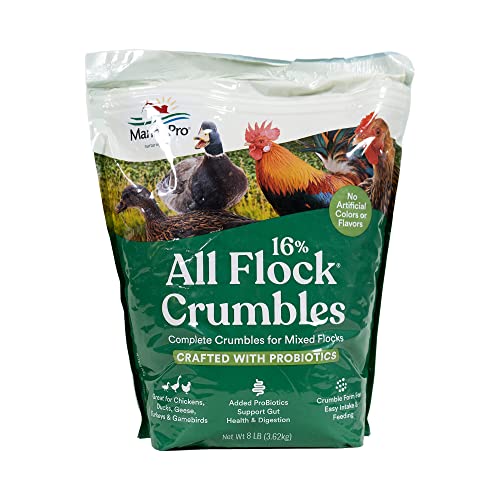
COMPLETE ALL FLOCK FEED FOR MIXED BACKYARD FLOCKS: Versatile poultry feed & all flock feed designed to support chickens, ducks, turkeys, geese, & more; a balanced bird food that simplifies feeding a diverse species in your backyard or homestead

COMPLETE ALL FLOCK FEED FOR MIXED BACKYARD FLOCKS: Versatile poultry feed & all flock feed designed to support chickens, ducks, turkeys, geese, & more; a balanced bird food that simplifies feeding a diverse species in your backyard or homestead

Boosts Egg Production & Stronger Eggshells: 16% protein layer pellets formulated to support consistent egg laying, improved yolk quality, and stronger shells for reliable daily production
How Many Eggs Do Pure Breed Chickens Lay Per Week?
Pure breeds rarely match hybrid output — and if you’re already reading this after the hybrid section, you probably already suspected that. Here’s the thing: the egg output gap is real, but it’s not dealbreaking depending on what you actually want. Leghorns hit around 300 eggs yearly — that’s your closest rival to hybrids. Rhode Island Reds and Speckled Sussex land between 200–250. Light Sussex pushes 250–270. Buff Orpingtons? A modest 180. Now, every breed breed has its trade-off. You’re choosing character, hardiness, and heritage alongside production. Obviously, hybrids win on numbers. But if you want a backyard flock with personality and solid laying, pure breeds absolutely deliver. Pick your breed, match it to your lifestyle, and you won’t regret it.
How Many Hens Do You Need for Weekly Eggs?
Before you buy a single chick, figure out how many eggs you actually need — because this one calculation saves you from either running short every week or drowning in more eggs than your neighbors can eat.
Here’s the thing: a family of four typically needs six to eight hens. Obviously, that assumes decent egg laying genetics and solid seasoning management through molting and winter slowdowns. Now, most hens average about 0.5 eggs daily, so you’re looking at roughly three eggs per hen weekly.
Want a dozen weekly? Three to five hens cover you. Two dozen? Budget for six to ten. All right, here’s the honest nudge — always add two extra hens beyond your minimum. You’ll thank yourself every single winter. For consistent production year after year, plan to replace hens after three years as output drops significantly with age.