You’re losing sleep worrying about owls turning your flock into a midnight snack, and honestly, it’s terrifying. Lock that coop tight with heavy latches and drape bright orange netting overhead to block dives immediately. Prune nearby trees and let a rooster patrol if your neighbors allow it. Hang spinning CDs for chaos and keep porch lights on to blind their night vision. Remove any dead birds fast so you don’t invite more trouble. Stick with these steps, and you’ll see exactly how to reclaim your yard.
Secure Your Coop Before Dusk to Prevent Night Attacks
Because owls hunt when your flock is most vulnerable, you’ve got to get that coop locked down before the sun dips below the horizon. You know that sinking feeling finding feathers scattered at dawn? It stops here. Chickens naturally roost at dusk, so make your nightly lock-up routine ironclad. Count every bird, then slam that door shut using heavy-duty latches raccoons can’t twist open. Thin steel won’t cut it; you need serious hardware. Motion lights startle these silent hunters, offering immediate predator deterrence without keeping your hens awake. Sure, automated doors cost more, but they never forget like tired humans do. If you’re manual, check for structural weaknesses daily. Eliminate feed scraps nearby too. This isn’t just advice; it’s your peace of mind packaged in wood and wire. Lock it tight tonight, sleep soundly, and let the owls hunt elsewhere.
Block Diving Owls With Overhead Orange Netting
Since you’ve already locked the doors at dusk, you might think you’re safe, but let’s be real: a great horned owl doesn’t need an invitation to dive-bomb your flock from above. You need overhead protection now. Drape bright orange net netting across your run’s top immediately. Owls spot that specific hue perfectly, acting as a visual raptor deterrent that stops dives cold. Unlike clear nylon, this color warns them before they crash or get tangled. Secure it tightly with clips on your frame so nothing slips. Obviously, you’ll want the 2.4-inch knotted weave; it blocks eagles too without harming anyone. Sure, it costs about fifty bucks for a huge section, but losing hens costs way more. This setup lets your birds free-range safely while you relax. Just measure your coop first, then grab that orange gear. It’s the smartest move you’ll make today. To ensure complete security, you should also cover floorless coops with wire netting or tarp secured with mounting clips.

BIRD NETTING FOR CHICKEN COOP: Are you worried that hawks or owls might attack your chicken? This high-tenacity nylon netting features ultra-strong multifilament fibers—finer than ordinary coarse ropes yet with a 5.26kg tensile strength for superior tear resistance. You can keep Keep predator like hawks or owls out by simply draping your chicken run with this mesh netting. It keeps your chicken safely contained—no more jumping into neighbor's yard or destroying your garden!

【Heavy Duty Bird Netting】 Made of nylon multifilament net which is UV-proof, our lightweight but heavy duty bird net won't tangle and tear easily, highly durable and reusable, stronger than plastic, so you can use over and over again, season after season.

REINFORCED EDGES & TANGLE-FREE DESIGN | EASY INSTALLATION : Our heavy-duty bird netting features a premium woven square mesh structure that effectively resists tangling with fallen leaves, weeds, or twigs. The upgraded reinforced edges come with integrated ropes, ensuring a neat appearance and a frustration-free setup and storage process.
Eliminate High Perches Within 100 Yards of Runs
Even if you’ve got that orange netting stretched tight overhead, you’re still handing owls a VIP ticket to your flock if you let them park on nearby trees or posts. You hate seeing those silent hunters scanning your chickens from thirty feet up, don’t you? It’s frustrating. Now, you must aggressively tackle perch pruning. Cut those lower limbs back at least fifteen feet high using sharp loppers; obviously, dead snags attract them most, so grab your saw. Next, focus on pole removal. Dismantle every unused T-post or tall fence post within that hundred-yard radius because owls love those artificial lookout points. Flatten high woodpiles and cap remaining poles under five feet. Sure, it looks a bit bare initially, but statistics show seventy percent fewer predators after clearing these sites. You’re not just trimming trees; you’re deleting their dinner reservations. Make your yard boring for owls today, and watch your flock finally relax without constant aerial threats looming above. While managing the landscape, remember that installing thick nylon backstop netting painted to match your walls provides an essential final layer of defense against any owls that manage to get close.

【Heavy Duty Baseball Nets】 The baseball backstop netting is made of premium high quality Nylon material, which has strong abrasion resistance and durability. The ball stop netting has a break strength of 163lb, it's more resistant to impact than Polyethylene material. There's always one size for you

【Heavy Duty Bird Netting】 Made of nylon multifilament net which is UV-proof, our lightweight but heavy duty bird net won't tangle and tear easily, highly durable and reusable, stronger than plastic, so you can use over and over again, season after season.
【Heavy Duty Baseball Nets】 The baseball backstop netting is made of premium high quality Nylon material, which has strong abrasion resistance and durability. The ball stop netting has a break strength of 163lb, it's more resistant to impact than Polyethylene material. There's always one size for you
Use Roosters as Living Alarms and Active Defenders
When you’re tired of watching your hens panic under a silent owl’s shadow, you’ll find that a good rooster doesn’t just sit there; he becomes your living alarm system. He constantly scans skies, emitting sharp whistles that send your flock scrambling for cover instantly. Now, don’t expect every bird to heroically fight; some just hide. You need a true protector who confronts threats head‑on. Establish a solid rooster patrol by keeping one male for every fifteen hens, or add more for larger flocks. While you can’t exactly do formal alarm training, selecting birds with proven protective traits guarantees reliability. Once danger is spotted, the rooster gathers hens into a protected area and walks back and forth to keep the flock together until the threat passes. Obviously, check your local laws first, since cities often ban these noisy guardians. If you’re legal and need a low‑cost, natural defender who prioritizes flock safety over his own skin, adding a loyal rooster is your smartest, most immediate move tonight.
Distract Predators With Hanging CDS and Pie Pans
You’ve got the rooster on patrol, but that silent owl still finds ways to slip through when your guard bird is looking the other way. Here’s the thing: you need chaotic light to mess with their vision. Hang old CDs and pie pans around your coop perimeter immediately. The CD glitter creates a prism effect under sunlight, flashing wildly to irritate sensitive eyes. Meanwhile, spinning pie‑pan reflections mimic unpredictable predator movements, freaking out approaching owls before they strike. You’ll want to thread these on fishing line so wind keeps them dancing constantly. Obviously, birds might eventually adapt, so rotate spots often. This trick works best if you layer it with other defenses, not alone. It’s cheap, effective short-term chaos that buys your flock precious time. Go grab those shiny discs today and start hanging them up now. Space the hanging discs every 5–6 ft to ensure adequate coverage across the entire perimeter.

10 PACK REFLECTIVE BIRD DETERRENT DISC STRANDS – This set includes 10 preassembled hanging disc strands, each with 3 large 3-inch reflective discs, totaling 30 double-sided discs. The strong mirrored surface creates bright light reflections and gentle motion to help deter birds from nesting or perching in unwanted areas like balconies, gardens, and orchards.

Bell: The chicken mirror has two small bells and a star charm at the bottom
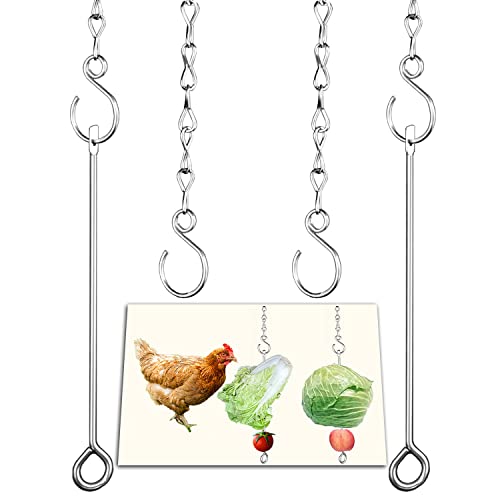
The feeder skewer built with 304 stainless steel, rustproof and safe for your favorite pets
Position Fake Owl Decoys Far From Chicken Zones
Two plastic owls won’t cut it if you park them right next to the nesting box, because you’ll just end up with a flock of nervous chickens and a real owl that knows it’s a fake. You need smart dec placement to trick those territorial hunters without scaring your hens. Mount your visual deterrent on a high post facing away from the coop, giving owls a clear view of a rival while keeping your birds calm. Obviously, stationary fakes lose impact fast, so move them two or three times weekly between perching spots. This strategy works best if you’re willing to climb a ladder often; otherwise, you might need lights later. All right, grab some gravel for stability, hoist that fake predator up, and rotate it regularly. You’ll fool nature’s instincts and keep your flock safe without the stress. Avoid filling the base with water since it creates a leakage risk that compromises the decoy’s stability over time.
Scare Owls With Motion-Activated Lights and Sound
Why let a silent hunter sneak up on your flock when you can blast it with light and noise the second it gets close? You hate waking up to missing hens, right? These gadgets solve that instantly. A quality solar powered deterrent spins its head and glows red eyes automatically, scaring owls without draining your wallet on batteries. Obviously, you need smart sensor placement near coop perimeters, not hidden in bushes. If the motion detector misses the dive, you lose a chicken. Some units even emit scary hoots, adding auditory chaos to the visual shock. Just remember, owls are clever; move the device weekly so they don’t realize it’s fake. This setup works best if you want active, automated protection without constant wiring hassles. Grab one today, position it carefully, and finally sleep soundly knowing your flock’s got a loud, bright bodyguard watching their backs tonight. Be aware that unlike some stationary owl devices, effective deterrents must include head movement to maintain the illusion of a living predator.

Solar Powered - This owl is equipped with a solar panel to collect solar energy for outdoor use. A USB cable is included for convenient recharging on rainy days.

SCARE BIRDS AWAY - Ultimate eco friendly bird and rodent repellent which uses the sun for 24 hours of continuous operation eliminating the need for batteries and manual charging.

Breathing Intermittent Deterrent Mode: unlike traditional repellers that flash constantly, this owl deterrent uses an innovative breathing-style intermittent light pattern; Effectively deters raccoons, deer, squirrels, dog, rats, skunk, rabbit, foxes and cat
Leave Porch Lights On to Exploit Sensitive Eyes
Since owls hate having their super-sensitive night vision blasted by sudden glare, you can stop them cold just by leaving your porch lights on. Their huge pupils and dense rod cells simply overload under bright artificial beams, disorienting hunters instantly. Now, here’s the thing: you’ve got to nail your light porch placement. Mount fixtures outside coop entrances at predator eye level, not inside where you’d ruin your chickens’ sleep. Obviously, constant illumination works, but timing matters too. Set your dusk illumination timing so lights activate automatically when shadows lengthen, mimicking rival eyes that trigger territorial fears. While single methods aren’t perfect, decades of backyard success prove this trick works wonders when combined with other tactics. Don’t overthink it; just flip that switch tonight. Your flock will thank you while those confused owls find easier prey elsewhere. It’s a simple, smart move you can make right now.
Rotate Scarecrows and Decoys Weekly for Effectiveness
You’ve got the lights blazing, but let’s be real: a smart owl figures out that plastic statue isn’t going to peck its head off after about three days of staring at it. Birds acclimate fast, so you must trick them constantly. Mount your vertical decoy on a tall pole where wind spins its head, mimicking a live predator scanning for dinner. Obviously, a frozen fake fails quickly without movement. Here’s the thing: you need a strict weekly shift to keep those hooters guessing. Move the decoy to a new spot every few days, alternating between owl and hawk shapes around your coop’s perimeter. This rotation mimics real patrols, extending protection from mere days to weeks. Don’t get lazy with placement; static targets invite investigation. Commit to this simple schedule, and you’ll stop owls before they even consider your flock as their next late-night snack. Just as seven squirrels operate in pairs unless with offspring, varying your decoy strategy prevents pests from recognizing a predictable pattern.

Why Choose Our Bird Deterrent Garden Protectors: The horned owl scarecrow scares birds away from fruit trees or vine, squirrels, pigeons, rabbits, seagulls, varmints, raccoons and small mammal etc. Especially big yellow bright eyes and realistic physique to frighten birds, Keep the annoying visitors out of your garden, backyard, patio, and deck

🦉 LIFELIKE DESIGN - Stimulated real big owl size at 16.5 inches height and hand-painted vivid color.

Rotating Head Owls Sculpture. Our owl sculpture’s head can sway along the breeze. Connected by a flexible spring, the head of this owl decoy sculpture can be adjusted to your desired position. Its body can be filled with sand, or pebbles to weight up for stability and a rod can be attached to the bottom for ease of securing to structures or fixtures.
Remove Dead Birds Immediately to Stop Attracting Owls
Even though it feels like extra work when you’re tired, leaving a dead bird in the run is basically rolling out a dinner bell for every owl in the neighborhood. You don’t want that. Owls spot carrion instantly, and once they know your coop serves easy meals, they’ll keep coming back. Proper dead‑bird disposal isn’t just about cleanliness; it’s your first line of defense for serious predator‑attraction reduction. Grab those gloves, bury or burn the remains immediately, and scrub the area thoroughly. Sure, it stinks, and yes, you’d rather be inside watching TV, but skipping this step invites disaster. Think of it as locking your front door after finding a spare key under the mat. Do the hard thing now so you don’t lose more chickens later. It’s simple, effective, and honestly, the smartest move you’ll make all week. Additionally, you must avoid pesticides to prevent secondary poisoning that could harm the local ecosystem while managing your flock’s safety.