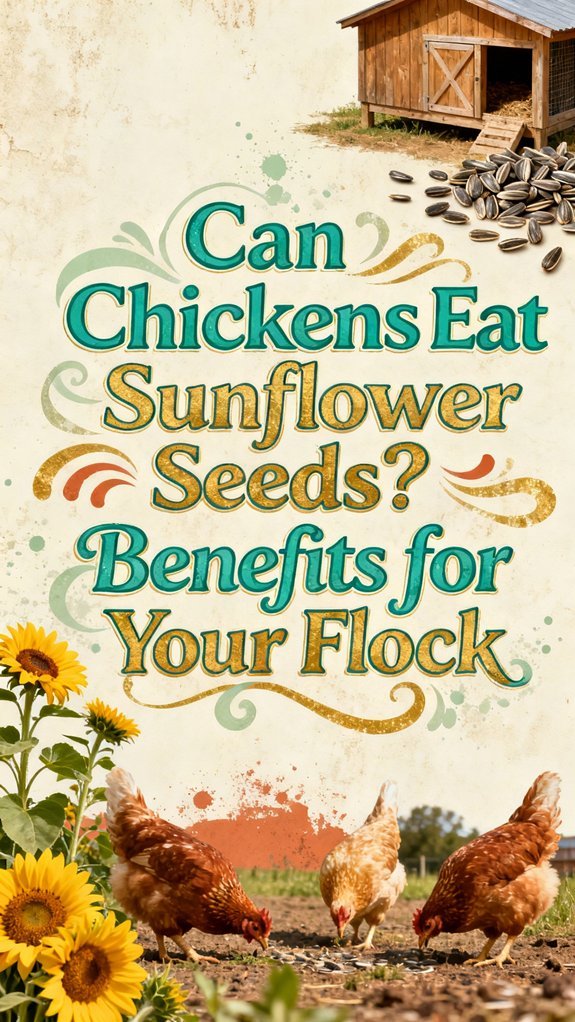
You can safely feed your chickens sunflower seeds to boost their 20% crude protein content, support feather regeneration during molt, and enhance egg quality. Limit intake to several times weekly—about one tablespoon per three to six birds—keeping seeds at 10-15% of daily intake to prevent obesity and nutritional imbalances. Store seeds in airtight containers and check for mold before feeding. Soaking seeds improves digestibility. Monitor your flock’s response and adjust portions seasonally for best results throughout the year.
Nutritional Powerhouse: What Sunflower Seeds Offer Your Flock
Why should sunflower seeds be part of your flock’s diet? These seeds deliver exceptional nutritional value as reliable protein sources and energy providers. You’re getting approximately 20% crude protein with 80.4% digestibility in broilers, plus essential amino acids including methionine and lysine at 0.57%. Additionally, sunflower seeds can be an excellent high-protein layer feed alternative to traditional grains, enhancing dietary variety. Moreover, when offering sunflower seeds, it’s important to ensure your chickens also have access to grit for digestion, as it aids in the effective breakdown of their food.
The energy values are equally impressive. Black oil sunflower seeds contain roughly 50% fat, yielding apparent metabolizable energy of 5,225 kcal/kg in roosters and 5,132-5,162 kcal/kg in broilers aged 18-35 days. This high-energy content supports ideal growth and production.
Beyond macronutrients, you’re supplying vitamin E for antioxidant protection and critical minerals like selenium, magnesium, and zinc. These nutrients strengthen cellular function and tissue integrity throughout your flock’s development. The healthy fats in sunflower seeds also enhance feather quality and support overall skin health in your birds.
Feather Health and Molt Support Through Seed Feeding
During molt, your flock’s feather regeneration demands considerably more protein than regular maintenance requires. Black oil sunflower seeds, containing approximately 26% protein, effectively address this nutritional gap. Supplementing your birds’ diet with seeds elevates protein intake to 18–20%, markedly reducing molt duration and preventing compromised feather quality. Additionally, while whole sunflower seeds can be safely offered to your chickens, it’s essential to ensure the size is appropriate to avoid choking hazards. Notably, chickens can also benefit from olive oil in moderation, which aids in improving feather quality and resilience during this demanding period.
To prevent issues like mite control during this time, maintaining coop hygiene is also vital to your flock’s overall health. Beyond protein, these seeds deliver vitamin E, an antioxidant that protects developing feather and skin cells while promoting superior feather texture—resulting in shinier, softer plumage post-molt. The healthy fats supply essential energy during this physiologically demanding period, reducing fatigue and maintaining metabolic demands. Notably, including nutritious treats like sweet potatoes can further enhance overall dietary benefits for your chickens. Softer and shinier feathers are particularly noticeable in chickens consuming sunflower seeds during the molting process. Including sunflower seeds can also help supplement their diet with essential fatty acids that may be lacking during seasonal changes.
Feed one handful per chicken every two to three days during winter molt. Use black oil varieties for easier digestion, and mix sparingly into regular feed to maintain balanced nutrition without attracting rodents.
Egg Quality and Production Benefits
Sunflower seed inclusion affects your flock’s egg output in ways that depend heavily on how much you’re feeding and how you’ve formulated the rest of the diet. High-level inclusions of full-fat sunflower seeds reduce total egg production and laying rate, while moderate amounts show minimal impact. Feeding hens a specially formulated diet will help maintain egg mass by correcting diets for metabolizable energy and limiting amino acids like lysine. Additionally, ensuring that your hens have a safe environment like a well-built chicken coop can support their overall health and productivity. Providing a balanced diet with appropriate protein levels will further optimize their egg production potential. It’s also beneficial to consider the impact of supplements such as solar-powered water systems, which can enhance the availability of fresh water and improve overall flock health. Regarding yolk composition, sunflower seeds increase n-6 polyunsaturated fatty acids, raising the n-6:n-3 ratio. High-oleic varieties shift yolk lipids toward monounsaturated fats. Vitamin E supplementation becomes necessary when increasing unsaturated fats to prevent oxidation. Notably, using commercial feeds that balance these nutrients can further enhance the health benefits of including sunflower seeds. Sunflower seed meal exhibits no anti-nutritional factors, making it a desirable ingredient for layer diets. You’ll notice eggs don’t develop off-flavors as they do with flaxseed enrichment at similar levels.
Safe Feeding Amounts and Frequency Guidelines
Once you’ve optimized your diet for nutrient balance and egg quality, controlling portion sizes becomes your next management priority. You’ll want to limit sunflower seeds to several times weekly, offering a small handful per bird to prevent obesity and nutrient imbalances. For larger flocks, a tablespoon suffices for three to six birds. Never exceed one cup of seeds per six cups of formulated feed daily—this ratio maintains calcium-to-phosphorus balance while preventing overfeeding. Feeding frequency matters equally; treat sunflower seeds as occasional snacks rather than daily provisions. Pears are also a nutritious treat that can be included in your chickens’ diet, providing vital vitamins and minerals. This approach protects against calorie-density complications and guarantees your birds don’t develop treat dependency. Additionally, maintaining healthy, disease-free birds is essential for the overall wellbeing of your flock. Providing a warm environment during colder months can also help with the overall health of your flock. Black oil sunflower seeds contain approximately 50% fat and 20% protein, making them energy-dense and best reserved for supplemental feeding rather than primary nutrition. Moderation is key, as too many high-fat treats can lead to nutritional imbalances in your flock. Scatter seeds in your run to encourage natural foraging behavior while maintaining strict portion discipline.
Black-Oil Seeds Versus Sunflower Hearts: Which to Choose
How you choose between black-oil sunflower seeds (BOSS) and hulled sunflower hearts hinges on your flock’s nutritional needs and your management priorities. Black oil benefits include easier cracking due to thinner shells and lower cost, making them ideal for foraging enrichment. Hearts comparison reveals concentrated nutrients per gram—they eliminate shell bulk that dilutes nutrient density. You’ll find hearts superior for younger chicks, smaller breeds, and gizzard health since they bypass shell-fragment wear. However, BOSS encourages natural scratching behavior when scattered. For molt or winter supplementation, hearts deliver equivalent calories and protein in smaller portions, simplifying portion control. When introducing either option to your flock, introduce gradually to observe their response and prevent overfeeding. Choose BOSS if you prioritize foraging enrichment and cost; select hearts when you need maximum nutrient density and minimal gizzard stress within strict feeding limits.
Preparation Methods for Maximum Nutrient Absorption
While you’ll find sunflower seeds nutritionally dense, they’ll only deliver their full potential when you’ve properly harvested, dried, and stored them. To maximize nutrient absorption, you should consider processing methods tailored to your flock’s needs.
Soaking seeds softens their shells, enhancing digestibility and nutrient availability. Grinding seeds into meal or pellets increases surface area for ideal nutrient extraction. This processing particularly benefits lysine availability, your sunflower’s first limiting amino acid.
For broilers, incorporate ground sunflower seed meal at 28-30% of their diet, which surpasses whole seed percentages. Pelletizing ground meal further improves feed efficiency and consumption rates.
You’ll achieve superior results by matching preparation methods to your feeding strategy—whether providing whole heads for natural foraging or integrating processed seeds into complete rations. Black Oil Sunflower Seeds are the preferred variety for chickens due to their superior nutritional profile and palatability.
Common Risks and How to Avoid Them
Though sunflower seeds offer substantial nutritional benefits, you’ll encounter several risks if you don’t manage their integration into your flock’s diet carefully. Overfeeding risks include obesity and visceral fat accumulation, potentially causing sudden death in your birds. Pesticide contamination poses another significant threat, particularly with striped varieties treated with harmful chemicals. You’ll want to source seeds exclusively from verified feed-grade suppliers rather than commercial retailers.
Additionally, excessive seed consumption without adequate grit supplementation causes crop impaction and digestive blockages. Seeds lack sufficient fiber for proper digestion when comprising too large a dietary proportion. Store sunflower seeds in moisture-proof, rodent-proof containers to prevent unhealthy mold growth that can further compromise your chickens’ digestive health. Limit sunflower seeds to treat-level portions only—roughly 10 percent of daily intake—to maintain balanced nutrition and prevent these complications while maximizing their nutritional advantages for your flock.
Storage and Quality Control Best Practices
Proper storage directly determines whether your sunflower seeds retain their nutritional value or degrade into a health hazard for your flock. You’ll want to use airtight, opaque containers that limit oxygen and light exposure—food-grade plastic or sealed metal bins work well. Regular container maintenance is essential: clean and sanitize between fills to prevent mold spores and insect eggs from accumulating. Be mindful that storing seeds in areas susceptible to pests can increase the risk of other pests infiltrating your chicken coop. Additionally, providing seeds as part of a nutritious diet can significantly enhance the well-being of your Columbian Plymouth Rock chickens.
Since sunflower seeds’ high oil content causes rancidity quickly, store smaller quantities you’ll use within 1–3 months. Keep seeds in cool (≤60°F), dry conditions away from temperature fluctuations that promote condensation. Storing seeds off the ground on pallets or shelving prevents moisture absorption from damp floors. Chickens, being opportunistic feeders, may inadvertently consume spoiled seeds if proper care is not taken. Additionally, using seeds that are part of a balanced diet can enhance your chickens’ overall health and productivity.
Implement monthly pest control inspections for chew marks, droppings, or webbing. Rotate stock using first-in, first-out principles to minimize pest attraction periods. Before feeding, check for off-odors, visible mold, clumping, or color changes—discard anything suspect immediately.
Seasonal Integration Into Your Flock’s Diet
How can you leverage sunflower seeds’ nutritional profile to support your flock through seasonal shifts? Time supplementation with predictable stressors—moult, winter, extreme weather—to avoid undermining balanced feed intake. During cold months, scatter-feed seeds to encourage foraging activity that promotes circulation and heat-retention behaviors. In summer, reduce quantities since high fat content risks digestive upset when energy demands drop. Align seed offerings with your flock’s biological cycles: boost protein during moult for feather regrowth, increase calories during cold snaps, and monitor egg metrics during laying season to prevent calcium displacement. Additionally, consider how proper restraint techniques can ensure any necessary treatments are applied safely to your chickens. Introducing poultry-safe sprays can also mitigate any negative effects from pests that may emerge during seasonal changes. Incorporating herbs like oregano and thyme into your flock’s diet can further enhance their immunity and respiratory health, particularly during times of stress. Introduce seasonal diet changes gradually, allowing your flock’s digestive microbiota to adjust. Vitamin E in sunflower seeds acts as an antioxidant supporting immune function during seasonal transitions when flocks face environmental stress. Track flock behavior and production shifts post-supplementation to detect unintended effects and refine your integration strategy.