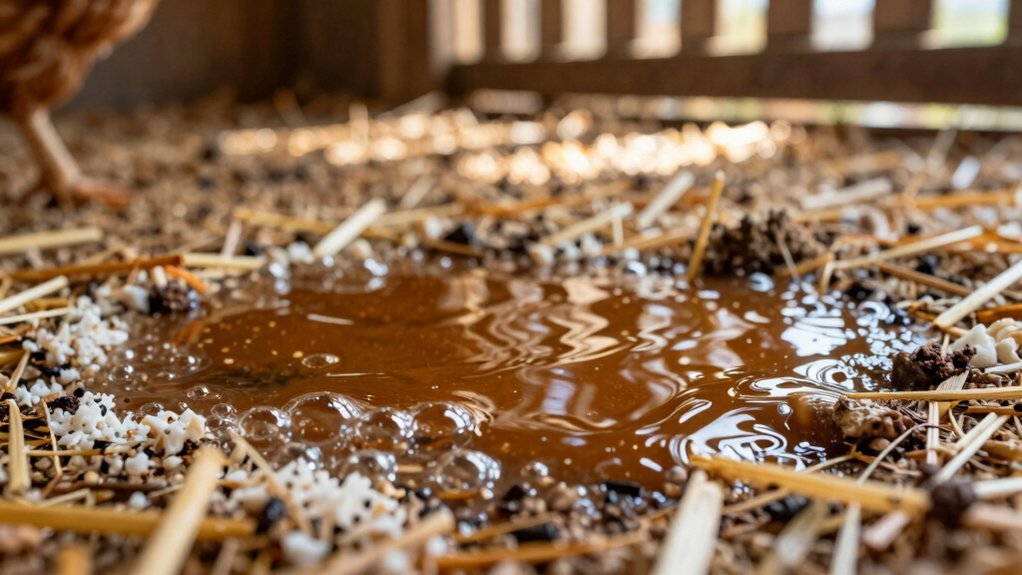
You’re probably wondering if those clear, watery spots with a white urate cap are just a normal water‑intake spike or something to worry about. Here’s the thing: a single droppings a few times a day, especially after a hot day or a diet change, is usually fine—think of it as a chicken’s version of a quick coffee break. However, if you see them every 20‑30 minutes, the litter stays soggy, or you spot blood, lethargy, or pale combs, it could be coccidia, a bacterial upset, or even kidney stress, so isolate the bird, fresh clean water, and a simple fecal test. Take a quick look at recent feed, water quality, and temperature; fixing those often stops the problem before it escalates, and the next steps will show you how to pinpoint the exact cause.
Spotting Normal vs. Trouble Watery Chicken Droppings
If you’ve ever stared at a soggy pile and wondered whether it’s just a hot‑day quirk or a warning sign, you’re asking the right question. You’ll notice that normal breed variations and seasonal fluctuations often explain a single watery dropping. A single, clear spot that still has the white urate cap usually means the bird drank more water after a hot spell or ate juicy greens.
Here’s the thing: when the droppings stay moist but the white cap covers 30‑50 % of the stool, it’s still normal. The bird’s vent looks clean, and the bird behaves normally, you’re likely seeing a temporary response to heat or diet.
All right, watch for persistence. Repeated, runny droppings without the white urate, or any blood, pus, or odd color, signal trouble. While diet often explains color shifts like blue or teal tint, persistent wateriness combined with abnormal hues requires investigating diet, water intake, and possible disease. Take a quick note of how often it happens and move on to checking for deeper issues. Since chickens can produce waste as often as every 20-30 minutes, distinguishing between this high natural frequency and genuine illness is essential for accurate diagnosis. Remember that inadequate access to clean water quickly leads to dehydration and health problems that can manifest in abnormal droppings.
Immediate Action When You First Notice Watery Droppings
What should you do the moment you see watery droppings? First, isolate the bird or small group in a clean, quiet area to stop any spread. Then, give hydration support: fresh water all day, and add electrolytes if the chickens look weak. Now, check the environment—move them out of heat, fix ventilation, and replace wet litter. Here’s the thing: start a quick review of recent feed or water changes; note any new treats, moldy feed, or sudden diet shifts. Identifying causes early saves you time and prevents deeper problems. Finally, scrub the coop**, clean waterers, and keep a simple log of what you changed. Takeaway: isolate, hydrate, and scan the basics before calling a vet. Electrolyte solution restores essential salts lost through diarrhea.
Red Flags: Blood, Crystal‑Clear Droppings, Lethargy
When you spot blood, crystal‑clear droppings, or a lethargic chicken, you’re looking at the three biggest red flags for a serious gut issue. You’re probably wondering why they matter together. Here’s the thing: blood in the vent often means coccidiosis or necrotic enteritis, and it can appear within 4‑8 days of exposure. Crystal‑clear, watery stool signals dehydration and gut upset, especially when it lingers. Lethargy, puffed‑up feathers, and huddling are early illness clues that precede visible droppings changes. While chicken coccidia are host-specific, practicing good sanitation is essential to reduce any chance of zoonotic transmission and limit bacterial risks like Salmonella. Effective treatment involves using amprolium to mimic thiamine and starve the parasite via medicated drinking water. Reliable sources confirm that Corid, which contains amprolium, is available in both liquid and powdered forms to treat and prevent coccidiosis in poultry.
What should you do first?
Now, start regular vent cleaning to reduce pathogen load and keep an eye on each bird’s behavior. Outbreak monitoring means logging droppings color, frequency, and activity levels daily. If you see all three signs cluster, act fast—treat as a potential coccidiosis outbreak.
Takeaway: Blood, clear droppings, and lethargy together flag a serious gut problem; clean vents and monitor closely to catch the outbreak early.
Testing: Simple Fecal Exams and Vet Checks
You’re probably wondering why a simple fecal exam matters after spotting those red‑flag droppings. The test gives you an egg count, letting you see if parasite confirmation is needed before you blame water contamination or dietary influences.
How do you collect a sample?
Grab a fresh, clean dropping—about one gram is enough. Keep it free of bedding, label it, and store it cool until you send it to the vet or lab.
What happens in the lab?
Technicians mix the feces with a sugar‑based flotation solution, strain out debris, and slide a cover slip under a microscope. They count eggs, identify oocysts, and report whether parasites persist. Adding a Fasciol solution to the mixture helps float the eggs for easier detection. Accurate identification is crucial because treatments like Safe-Guard Aquasol specifically target roundworms without requiring an egg withholding period. Since roundworm infestations often affect the whole group, vets typically recommend treating the entire flock whenever one bird shows signs of infection to prevent spread. Heavy worm burdens significantly reduce health, production, and feed efficiency in affected birds.
Why check with a vet?
A vet interprets the microscopy, confirms species, and advises treatment. Follow‑up testing after medication shows if the egg count drops, proving the plan worked.
Takeaway: a quick fecal exam gives concrete data, not guesswork. Next, decide whether to send a sample now or wait for a change in your flock’s droppings.
Feed Triggers That Wet Watery Chicken Droppings
If you’ve just switched a new feed and your birds’ droppings look like soup, you’re probably wondering which ingredients are the culprits.
Which feed components cause watery droppings?
High‑salt mixes, excess potassium from soybean meal, and over‑rich protein all push water into the gut. You’ll see a noticeable increase in litter moisture when sodium climbs above 0.3 % of the ration. Likewise, crude protein above 20 % can overflow the digestive capacity, spilling nitrogen‑rich fluid into the feces. While high protein in chicks is necessary, maintaining the correct protein levels for your flock’s specific life stage is crucial to avoid digestive upset caused by excessive nitrogen. Feeds with unbalanced calcium and phosphorus ratios can also disrupt gut function and contribute to abnormal droppings.
How does feed texture affect stool?
Fine feed particle size irritates the intestinal lining and speeds transit, leaving less time for water re‑absorption. Ingredient rancidity, especially in poorly stored fats, creates toxins that inflame the gut and leak fluid into droppings.
What’s the takeaway?
Check salt, protein, and particle size first; replace rancid ingredients and adjust electrolyte balance. Next, test a small batch of the new feed before full rollout. Remember that gradually transitioning diets helps maintain digestive health and prevents the sudden shifts that often lead to loose stools.
Water, Weather, and Management Effects on Watery Chicken Droppings
Heat and water habits often puzzle you, but they’re really just the birds’ way of staying cool. You’re wondering why droppings turn watery when the sun blazes. Obviously, heat stress spikes water intake, diluting feces and raising urates. The droppingspp causes are simple: hot weather, excess drinking, and poor water quality.
Here’s the thing: high dissolved salts—over 1.5 g/kg TDS—create osmotic stress, and above 3 g/kg you’ll see very runny droppings. Your treatment plan starts with cooler water, fresh supply, and a closed‑system drinker to cut contamination.
All right, check your housing. Wet litter, low drinkers, and stagnant water all worsen moisture. Clean and flush waterers daily, adjust drinker height, and improve ventilation. Implementing poultry nipple drinkers ensures a constant, clean water source while significantly reducing the contamination risks associated with open waterers. Utilizing an automatic watering system provides a continuous flow of fresh water without the risk of stagnation found in manual refilling methods. Although chickens typically do not drink once they have settled to roost for the night, keeping water accessible during extreme heat can help prevent heat stress before they go to sleep.
Takeaway: manage temperature, water quality, and hygiene to keep droppings firm. Next, ask yourself if your flock’s feed still fits the picture.
Bacterial & Viral Infections That Make Chickens Diarrheal
Identify the specific bacterial or viral agent behind the diarrhea, then tailor your response. You’re probably wondering why your chickens suddenly have watery droppings. Here’s the thing: Pullorum disease, a Salmonella pullorum infection, often shows white feces around the vent and kills young birds fast. E. coli complications can also turn a normal gut into a leaky pipe, especially when stress lets a virulent strain overgrow.
What virus could be at fault? Rotavirus or adenovirus attacks the intestinal lining, so fluid leaks out and you see soggy droppings. The damage also invites secondary bacterial growth, worsening the mess. Unlike human pathogens, poultry-specific agents like Mycoplasma gallisepticum spread through direct contact and contaminated environments but pose negligible zoonotic risk to handlers. While infections weaken birds, maintaining a rodent-proof environment is equally critical since mice and rats introduce diseases that compromise flock health.
Takeaway: Pinpoint the pathogen—Pullorum disease or E. coli complications for bacteria, rotavirus/adenovirus for viruses—to decide if you need isolation, supportive care, or lab testing. Next step: Check a few birds for white vent feces and run a quick lab panel. While some infections require specific antibiotics, remember that treatment often helps control but not eliminate the disease, making biosecurity measures essential to prevent spread and reinfection.
Parasitic Culprits Behind Watery Chicken Droppings
What makes the gut leak?
Intestinal nematodes and other helminth burdens irritate the intestinal wall, sometimes after a heavy worm load triggers secondary bacterial diarrhea. Worms can hide in the ceca, crop, or even the esophagus, and they travel on beetles, ants, and snails.
How can you tell?
Bloody diarrhea, lethargy, ruffled feathers, and pale combs point to a parasitic problem. Young birds suffer most, but adults can show subtle signs. Specific parasites cause distinct issues, such as gapeworms affecting the respiratory system and resulting in coughing or gasping. Amprolium serves as a proven coccidiostat effective for controlling outbreaks in chickens as well as other livestock like cattle, goats, sheep, turkeys, and rabbits.
Takeaway
If you spot watery droppings, suspect coccidia first, then check for intestinal nematodes and helminth burdens. Clean litter, control humidity, and consider a diagnostic fecal test.
Next step: Do you have a sanitation plan that limits oocyst buildup?
Kidney Issues That Mimic Watery Chicken Droppings
You’re probably wondering why your chickens’ droppings look like water even when they’re not fighting worms. Kidney trouble often mixes excess urine with feces in the cloaca, creating clear, soggy spots that lack the usual white urate cap. You’ll also see birds drinking more, eating less, and the droppings persisting for days, not just a hot‑day spike.
Why does kidney disease look like diarrhea?
Visceral gout and chronic nephritis both cause uric acid buildup, leading to watery droppings and swollen joints. Infectious bronchitis, Marek’s disease, or urolithiasis can damage the kidneys, so the urine becomes thin and abundant.
What clues point to the kidneys?
Watch for pale combs, weight loss, and a runny white urate layer. Respiratory signs plus watery droppings often signal bronchitis. If older layers keep producing clear droppings, suspect renal issues over gut upset.
Takeaway: Persistent, clear droppings plus increased drinking flag kidney problems like visceral gout or chronic nephritis. Next, check your flock’s water quality and consider a veterinary kidney panel.
Quick Fixes & Long‑Term Strategies for Dry Droppings
You’re probably wondering why your birds’ droppings look crumbly and what you can do today. Here’s the thing: a sudden feed change or too many watery treats can dry things out, so start by swapping high‑moisture snacks for a balanced layer feed and add a probiotic for a week.
Now, for heat reduction, shade the coop, place frozen water bottles in the drinker, and improve cross‑ventilation; keeping the temperature below 29 °C (84 °F) stops stress‑induced dehydration.
Bedding maintenance matters too—use dry pine shavings, change litter weekly, and clean the coop to lower bacterial load.
Takeaway: adjust diet, cool the environment, and keep bedding dry. Next, monitor stool consistency for 48 hours; if it stays firm, you’ve hit the sweet spot. Provide aloe vera water to boost hydration and soothe the digestive tract.