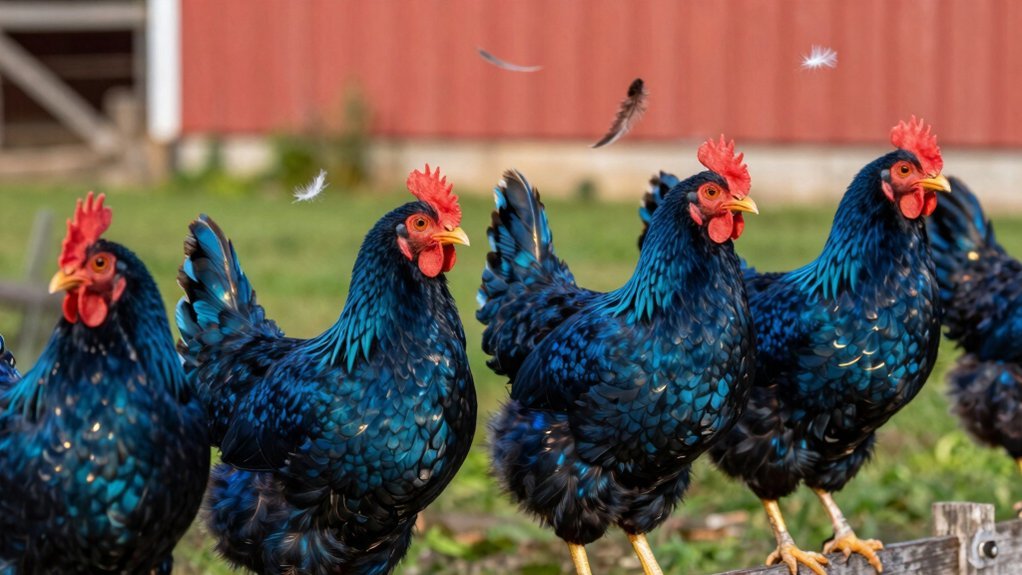
You’re probably wondering why Whiting True Blue hens lay such vivid blue eggs and how they fit into a backyard flock. Here’s the thing: they’re a medium‑sized, athletic layer that drops 250‑300 large powder‑blue eggs a year, with the pigment running through the whole shell thanks to a dominant blue‑egg allele inherited from Leghorn‑Araucana crosses. They’re hardy, need about 4 sq ft indoor and 8‑10 sq ft outdoor per bird, and stay calm with other docile chickens, though they can be a bit skittish. If you keep a few together, give them shade, fresh water, and regular feed checks, you’ll see consistent blue output and a lively, free‑ranging flock. Next, you’ll learn how to breed for that perfect blue hue and manage their space efficiently.
Key Characteristics That Set Whiting True Blue Chickens Apart
You’re probably wondering what makes Whiting True Blue chickens stand out from other backyard breeds. You’ll find their heritage origins trace back to a carefully preserved genetic lineage that emphasizes both color and productivity. Here’s the thing: the breed consistently lays 250‑300 blue eggs a year, starting around five months, and the hue runs through the shell and yolk, not just the surface. All right, their temperament feels like a friendly neighbor—docile, curious, and low‑maintenance. They’re natural free‑rangers, foraging pests while staying independent enough not to demand constant handling. Obviously, they handle heat and cold well, stay medium‑sized at 5.5‑7 lb, and rarely go broody. Takeaway: you get a hardy, prolific layer with true blue eggs and a laid‑back personality. Unlike older varieties, this new breed was specifically developed to combine high egg production with climate hardiness. Like other blue-egg layers, their shell color results from genetics, not diet rather than what they eat. While distinct from hybrids like the Olive Egger breed, Whiting True Blues offer a consistent, vibrant blue rather than the greenish-olive shades found in crossbreeds. Ready to explore how their physical traits differ?
Identifying Whiting True Blue Physical Traits & Color Variations
What do the birds actually look like? You’ll see a medium‑sized, athletic hybrid weighing 5.5–7 lb, with a Leghorn‑type body that’s narrow and lightweight. The small pea comb is the most common comb style, and yellow legs hint at Leghorn ancestry. Feather textures range from sleek, tight plumage to softer, slightly looser strands, especially around the neck where beards or muffs may appear. Color isn’t fixed—white, gray, black, or any mix can show up, even within a single hatch. Some birds look sleek and Leghorn‑like, others sport fuller faces with decorative feathering.
How can you tell a Whiting True Blue from lookalikes? Look for the variable feather textures and the occasional facial feathering; the breed lacks a uniform standard, so you’ll see a spectrum of shades and patterns. The pea comb stays consistent, while other breeds may show larger single combs. While specific genes like *SOX5* or *MLPH* drive color in other breeds, the Whiting True Blue’s varied palette reflects a complex genetic background rather than a single fixed trait like melanin and carotenoids pigments found in standardized breeds. Unlike breeds with V-Shaped Combs that resemble horns, the Whiting True Blue consistently displays the three-pointed pea comb ideal for various climates. Although sexing this hybrid can be challenging due to its diversity, observing larger, redder combs in males by 6 to 8 weeks can help distinguish them from females.
Takeaway: Expect diversity in color and feather texture, but a small pea comb and athletic frame are reliable identifiers. Next, compare egg characteristics to confirm the line.
Whiting True Blue Egg Production Numbers & Blue Egg Consistency
How many eggs can a Whiting True Blue lay, and are they reliably blue? You’re probably wondering if the hype matches reality. The breed typically produces 250‑300 large blue eggs a year, averaging about 4‑6 each week, and the powder‑blue shells stay consistent across cycles.
Here’s the thing: you’ll see strong shell quality from the first lay, and the yolk stays rich as the hen matures. Egg size grows from small to large within weeks, then stabilizes if you give enough protein and calcium.
All right, let’s talk laying longevity. Most hens keep high output for 3‑5 years, and many stay productive up to a decade with good care. The takeaway? Expect a steady stream of solid‑shelled blue eggs for years, not a quick burst.
Ready to plan your coop schedule? Think about feeding and lighting to maximize that longevity. The flock often returns with more birds than planned, a phenomenon known as chicken math. While egg color does not affect nutritional value, the distinct blue hue results from pigment deposition occurring throughout the shell formation process. Unlike some breeds that may show variation, the classic Ameraucana shell color is a pastel blue that remains distinctively consistent. It is important to note that while brown pigments can create green eggs, the blue color in this breed is determined by genetic makeup which deposits pigment early to color the shell throughout.
Temperament, Free‑Range Behavior, and Flock Compatibility
If you’re wondering why Whiting True Blues seem so lively yet a bit hard to keep in a tight coop, you’ve hit the right spot. They’re active, curious, and alert, so they sprint out at the first chance. The socialization challenges stem from their skittish nature; many avoid handling, but a few become friendly with steady exposure.
Here’s the thing: free‑range behavior shines when you give them room to forage. They’ll patrol the garden, sniff every movement, and stay alert for predators. Training strategies focus on gentle coaxing back into the coop—use treats and consistent calls, not force. This outdoor access supports natural pest control while allowing the birds to enjoy a varied diet that reduces stress. Providing adequate outdoor space is essential to support these natural behaviors and prevent the stress that comes from confinement. Since chickens are social animals that require companionship to form a normal social order, ensuring your Whiting True Blues have at least two or three flock mates is crucial for their well-being.
All right, flock compatibility works best with calm, non‑aggressive birds. Whiting True Blues respect larger, docile companions and rarely peck over food. If you pair them with bully breeds, they’ll become the target, not the aggressor.
Takeaway: give them space, gentle routine, and peaceful flock mates, and you’ll enjoy an active, alert layer. Ready to set up a secure run and a calm flock?
Hardiness Factors – Heat, Cold, and Space Requirements
Why does heat matter for Whiting True Blues? You worry about clutch size and feed efficiency, but scorching temps can shrink both. When shade, airflow, and cool water stay constant, the birds stay active, keep laying, and convert feed into eggs without waste. Overcrowding raises temperature, so give each bird about 4 sq ft inside and extra run space; you’ll see steadier egg production and healthier clutches. Providing 12 to 16 square feet of indoor coop space for a small flock further reduces stress and prevents the heat buildup that negatively impacts laying rates.
How do they handle cold? Their pea comb reduces frostbite risk, and dry, wind‑protected shelter keeps them comfortable. Insulated bedding and draft‑free coops let you maintain feed efficiency even in freezes. Overcrowding can lead to health problems, so it is best to err on the side of a larger, well-ventilated coop.
What space do they need? A roomy coop plus a spacious run prevents heat stress and moisture buildup, supporting clean air and stable temperatures. While Whiting True Blues are standard-sized, adhering to the general guideline of 8 to 10 square feet of outdoor run space per bird ensures they have ample room to forage and move comfortably, which is vital for their overall well-being.
Takeaway: Manage shade, ventilation, and space to protect clutch size and feed efficiency year‑round. Next, ask yourself how to balance indoor and outdoor areas for ideal egg output.
Whiting True Blue Breeding Tips for Consistent Eggs & Plumage Diversity
You’re probably wondering why some Whiting True Blues keep laying vivid blue eggs while others drift toward pale or speckled shells. The secret lies in genetic testing and the breed origin. By tracing each hen’s lineage back to the original blue‑egg cross—Leghorn with Ameraucana or Araucana—you can confirm she carries the dominant blue‑egg allele.
Now, pick the darkest or brightest blue eggs for hatch, and test‑breed roosters to verify they pass the trait. Keep only the hens that produce 100 % blue‑shell offspring, and you’ll lock in color consistency. Unlike surface-stained shells, the blue pigment in these eggs penetrates the entire shell, a trait inherited from ancestors like the rumpless Araucana which also lays blue eggs throughout the shell thickness.
All right, remember plumage isn’t a performance metric. Expect blue, black, splash, or bi‑colored feathers, because the breed was built for egg output, not uniform looks. While Whiting True Blues are selected for specific traits, other hybrids like Easter Eggers display a wide range of feather colors and patterns without standardized appearance goals.
Takeaway: Focus on proven blue‑egg genetics and selective hatching; let feather diversity be a bonus. Next, plan your breeding schedule to maintain high lay rates while preserving those true‑blue shells.
It is crucial to distinguish your flock from the regular Sapphire chicken, a different breed that also lays blue eggs but is often confused with the Sapphire Gem which produces brown eggs.
Daily & Seasonal Care Checklist for Whiting True Blue Flocks
What should I do every day to keep my True Blues healthy? Check feed and water containers, refill them, and make sure they sit upright. Spot‑clean the coop, removing droppings and uneaten feed, and do a quick health monitoring scan—look for limp birds, abnormal droppings, or respiratory sounds. Your feeding strategies should include constant access to fresh feed, clean water, and for chicks, multiple water checks a day.
How often should I clean the coop?
Weekly, rake the run, replace shavings, and top off oyster shell and grit. Adjust frequency if winter snow piles up, and consider offering crushed eggshells separately to provide essential calcium without risking toxicity from mixing it directly into feed.
What’s the monthly routine?
Swap bedding, restock supplies, and inspect feeders for wear.
When do I deep‑clean?
Seasonally, remove all bedding, scrub with bleach‑water, rinse, and dry. Alternatively, you can adopt the deep litter method to minimize labor by only requiring a full cleanout once or twice a year while generating natural heat and nutrient-rich compost.
Takeaway: Consistent daily checks, weekly tidying, monthly restocking, and seasonal deep‑cleaning keep your flock thriving. Ready to set up a calendar for each task?